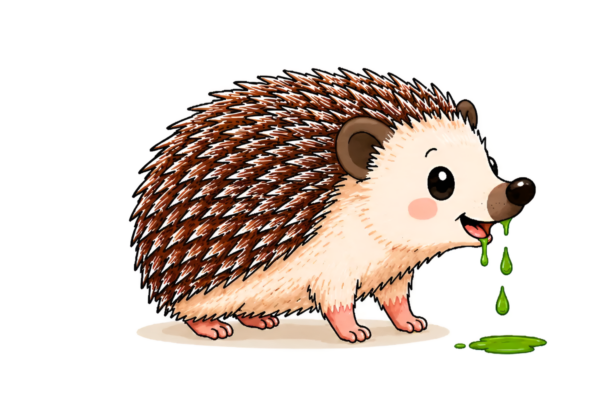

The spiky exterior, the low-to-the-ground waddle, the fact that they curl into a ball and stay completely still when startled — it’s easy to see why people occasionally wonder whether hedgehogs might be reptiles. But the answer is a firm no. Hedgehogs are mammals, and they have been for a very long time. Understanding why helps you appreciate just how remarkable these little animals actually are.
What Kind Of Animal Is A Hedgehog?
Hedgehogs are small mammals belonging to the family Erinaceidae and the order Eulipotyphla — a group that also includes moles, shrews, and moonrats. There are 17 species of hedgehog across five genera, found throughout Europe, Asia, and Africa, with the African pygmy hedgehog being the species most commonly kept as a pet in the western world.
They’ve been around for a long time too. The hedgehog is estimated to have evolved approximately 15 million years ago, making them one of the more ancient mammal lineages still walking the planet today. Their basic body plan has stayed remarkably consistent throughout that time — which tells you something about how well it works.
Why People Confuse Them With Reptiles
The confusion almost always comes down to the quills. Reptiles have scales, and hedgehog quills can look vaguely scale-like at a glance — rigid, overlapping, covering the back of the animal. But they’re not scales at all. Hedgehog quills are hollow, modified hairs made entirely of keratin — the same protein that makes up human fingernails and hair. They’re not attached to scales, they’re not reptilian in structure, and they work nothing like reptile skin does.
You can read much more about how the quills work and what they’re made of on our hedgehog quills page, but the key point here is that the quills are a mammalian feature — modified hair — not anything reptilian.
Another reason for confusion is that hedgehogs can seem cold and stiff when you first pick them up, or when they curl into a defensive ball. People sometimes associate that stillness with reptile behavior. But a hedgehog being motionless is a stress response, not a sign of cold-bloodedness.
The Differences Between Mammals And Reptiles
The distinction between the two classes of animals is clear and well-established. Mammals are warm-blooded, have fur or hair, give birth to live young, and produce milk to nourish them. Reptiles are cold-blooded, have scaly skin, and typically lay eggs. Those are not minor differences — they represent fundamentally different biology.
Hedgehogs tick every mammal box:
Warm-blooded. Hedgehogs regulate their own internal body temperature. In fact, this is so essential to their survival that if their environment gets too cold, they can slip into a dangerous torpor — their bodies instinctively try to hibernate, which is a genuine health emergency for a pet hedgehog. You can read more about this on our do hedgehogs hibernate page. A reptile’s body temperature simply fluctuates with its surroundings — a hedgehog’s does not.
Fur under the quills. The belly, face, and legs of a hedgehog are covered in soft fur. Even the quills themselves, as established above, are modified hairs — not scales. Reptile scales are made of protein and serve mainly as protection and moisture retention. Hedgehog quills serve a defensive purpose, but they are structurally and biologically nothing like reptile scales.
Live birth. Hedgehogs give birth to live young, typically in litters of three to seven after a gestation period of around 35 days. Reptiles lay eggs with leathery shells. There are rare mammalian exceptions to live birth — monotremes like the echidna lay eggs — but hedgehogs are not in that category.
Milk production. Like all true mammals, hedgehog mothers nurse their young with milk. No reptile does this.
Are Hedgehogs Related To Any Reptiles?
Not in any meaningful way. Hedgehogs share distant common ancestry with all vertebrates, as all vertebrate life does, but in terms of their place on the evolutionary tree they are placental mammals most closely related to moles and shrews. Their lineage diverged from reptiles hundreds of millions of years ago.
The animal that people sometimes genuinely confuse with a hedgehog is the echidna — a spiny, small, insect-eating creature found in Australia and New Guinea. Echidnas also have keratin quills and a similar silhouette. But echidnas are monotremes, a rare subclass of mammals that do lay eggs, and they are not related to hedgehogs either. The resemblance is a case of convergent evolution — two completely separate lineages arriving at a similar body plan because it solves similar survival problems.
So What Makes A Hedgehog A Hedgehog?
Beyond the broad mammal classification, hedgehogs have a few traits that are distinctly their own. They can have between 5,000 and 7,000 quills on their backs, each lasting around a year before being shed and replaced. When threatened, a specialized muscle running along their sides contracts to pull those quills upright and curl the animal into a tight, spiky ball — one of the more effective low-tech defense mechanisms in the animal kingdom.
They’re also naturally nocturnal, relying on an extraordinary sense of smell and acute hearing rather than vision to navigate the world at night. Their hearing range extends from 250 Hz to 45,000 Hz — well beyond what humans can detect — which makes them highly effective hunters in the dark despite their relatively poor eyesight.
They’re insectivores by nature, though in practice they eat a varied diet that includes insects, worms, snails, and occasionally small vertebrates. You can find a full breakdown of what hedgehogs eat here.
And despite their solitary nature and prickly exterior, they’re surprisingly intelligent animals — capable of learning their owner’s scent, responding to familiar voices, and navigating complex environments with confidence.
Conclusion
Hedgehogs are about as far from reptiles as a spiny animal can get. They’re warm-blooded, fur-bearing, milk-producing mammals with an ancient and fascinating evolutionary history — and the quills that make people second-guess their classification are themselves a mammalian feature, just hair that evolution decided to make very, very stiff. Once you understand what hedgehogs actually are, it makes the experience of keeping one as a pet feel all the more remarkable. And if you’re thinking about welcoming one into your home, our best hedgehog products page has everything you need to set them up properly from the start — because even the most ancient mammal lineage deserves a comfortable home.