
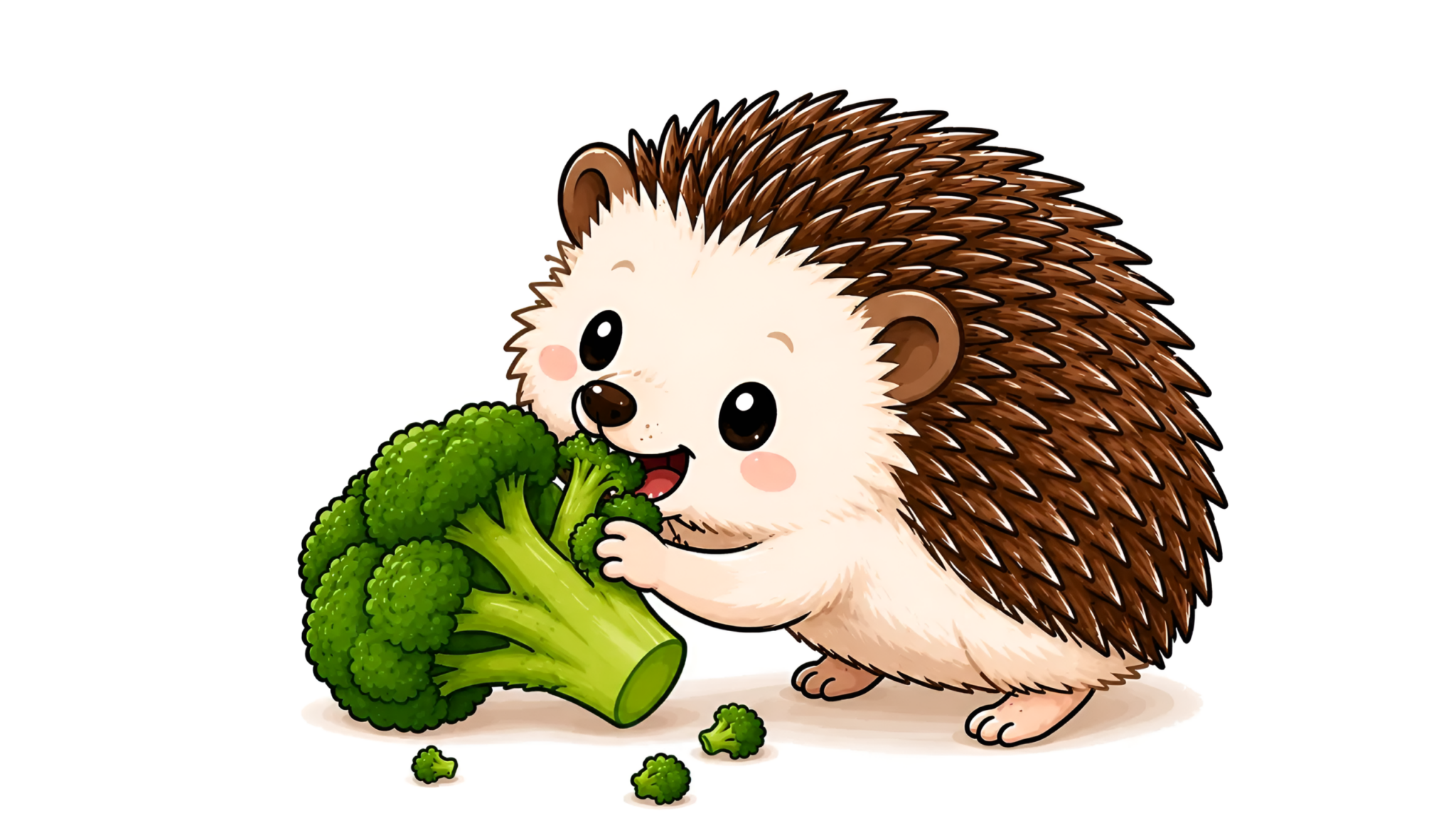
There’s a good chance you’ve found yourself standing in the kitchen, a floret of broccoli in hand, wondering if your hedgehog might want a nibble. It’s one of the most nutritious vegetables in a human diet, after all — so it’s a reasonable question. The short answer is yes, hedgehogs can eat broccoli. But as with most things in hedgehog care, the full picture is a little more nuanced than a simple yes or no.
Hedgehogs Are Insectivores First
Before we dive into broccoli specifically, it’s worth understanding where vegetables fit in a hedgehog’s diet overall. Hedgehogs are natural insectivores, meaning the bulk of their nutritional needs come from animal protein — insects, mealworms, and similar sources. As the Merck Veterinary Manual notes, a proper hedgehog diet should contain around 22% protein and be supplemented with adequate fiber, typically derived from insect exoskeletons (chitin) rather than plant matter.
That said, hedgehogs in the wild do encounter and consume small amounts of plant material alongside their insect prey, so fruits and vegetables aren’t entirely foreign to them. The key word there is small amounts. If you want to learn more about the foundations of what hedgehogs should be eating day to day, our guide on what hedgehogs eat covers the full picture.
So, Can They Actually Eat Broccoli?
Yes — broccoli is not toxic to hedgehogs and can be offered as an occasional treat or dietary supplement. It contains a solid lineup of nutrients: vitamin C, vitamin K, potassium, iron, calcium, and a decent amount of fiber. According to the USDA FoodData Central, 100 grams of raw broccoli contains around 2.6 grams of fiber and 91 milligrams of vitamin C, making it one of the more nutrient-dense vegetables you could offer.
However, broccoli does come with a caveat worth taking seriously. Hedgehogs have a limited ability to digest cellulose — the structural fiber found in plant matter — which means their digestive systems are not really designed to process vegetables in large quantities. Some veterinary sources, including a hedgehog guide from veterinarian Sharon Vanderlip cited on Hedgehog Central, specifically flag broccoli as a vegetable that can cause gas and intestinal upset in some animals. Every hedgehog is different, and while many tolerate broccoli just fine, others may react with digestive discomfort.
The bottom line: treat broccoli as exactly that — a treat. Not a staple, not a daily addition, and never a replacement for protein-based food.
What Broccoli Actually Offers Your Hedgehog
When offered in moderation and prepared correctly, broccoli does bring some genuine nutritional value to the table. Here’s what makes it worth including occasionally:
Vitamin C is present in impressive amounts. While hedgehogs don’t require vitamin C supplementation the way some animals do, it still contributes to general immune health.
Fiber supports digestive function and helps keep the gut moving properly. Hedgehogs benefit from fiber in their diet, though as mentioned above, the preferred source is animal-based chitin rather than plant cellulose.
Potassium plays a role in muscle function and overall cellular health.
Vitamin K is important for blood clotting and bone metabolism.
Iron supports oxygen transport and energy production.
Broccoli is also low in fat and relatively low in sugar compared to many other treat options, which is a point in its favour given that hedgehog obesity is a genuine and common health concern. If you’re ever weighing up treat options for your hedgehog, low-fat and low-sugar choices are always the safer direction.
The Risks to Keep in Mind
There are a few things that can go wrong if broccoli is offered incorrectly or too frequently.
The biggest risk is digestive upset. As noted above, hedgehogs aren’t built to process large amounts of plant fiber, and too much broccoli in one sitting — or offered too regularly — can lead to gas, bloating, or loose stools. If you notice any of these signs after introducing broccoli, simply remove it from the rotation.
Sugar content, while relatively low compared to fruit, is still something to keep an eye on. Hedgehogs are prone to obesity and the health problems that come with it, including fatty liver disease and diabetes, according to exotic vet guidance. Even small amounts of sugary or starchy food can tip the scales over time, so broccoli should never crowd out protein-rich foods in the diet.
Pesticide residue is also worth considering. Commercially grown broccoli is frequently treated with pesticides, and a hedgehog’s small body is more vulnerable to the effects of these chemicals than a human’s would be. Washing broccoli thoroughly before serving is non-negotiable, and organic broccoli is the better option if you can get your hands on it.
How to Prepare It
Preparation matters more than most people realise. Raw broccoli is quite tough and fibrous, and while hedgehogs are capable of gnawing on it, steamed or lightly boiled broccoli is a much gentler option for their digestive systems. Cooking softens the cell walls and makes the nutrients more accessible, and it removes the crunch that can be difficult for smaller hedgehogs to manage.
A few things to keep in mind:
- Cut it small. Broccoli florets should be chopped into very small pieces — small enough that there is no choking risk and easy enough to swallow without effort.
- No seasoning. Plain and simple. No salt, no oil, no garlic, no sauce of any kind.
- No raw frozen broccoli. Always bring it to room temperature and cook it properly before serving.
- Introduce it gradually. If your hedgehog has never had broccoli before, offer a tiny amount first and watch how they respond over the following 24 hours before offering more.
Also don’t forget to clean up any leftover broccoli from the cage after feeding. Vegetable matter can spoil quickly, and old food sitting in a warm enclosure is an easy source of bacterial contamination.
How Often Should You Offer It?
Two to three times a week is a reasonable upper limit, and the portion should be small — a piece or two of floret alongside their main meal rather than a bowl of it on its own. Broccoli should complement a high-protein diet, not compete with it. If you’re not sure what a balanced feeding routine looks like for your specific hedgehog, an exotic vet is always the best person to ask. The Chewy vet guide on hedgehog diet is also a reliable starting point.
Pair broccoli with other safe vegetables like cooked carrots or leafy greens to add variety, or offer it alongside a portion of quality hedgehog food to round out the meal. And if your hedgehog turns their nose up at it entirely — which is entirely possible — don’t force it. Hedgehogs have strong individual taste preferences, and a hedgehog that won’t eat broccoli is not a hedgehog that is missing out on anything essential.
A Few Vegetables to Keep Away From Them
Since we’re talking about vegetables, it’s worth quickly noting a few that should never appear in your hedgehog’s dish. Garlic, onions, avocado, and grapes are all considered toxic to hedgehogs, according to PangoVet’s hedgehog nutrition guide. Potatoes and starchy vegetables are best avoided too, as they offer little nutritional value while contributing to unnecessary calorie intake. And dried fruits and vegetables should generally be skipped — they’re often high in sugar and may contain preservatives that aren’t safe for small animals.
Conclusion
Broccoli is a safe and nutritious treat for hedgehogs when it’s prepared properly and offered in moderation. It brings a useful mix of vitamins and minerals to the diet, and most hedgehogs will happily eat a small piece when it’s soft, plain, and cut into manageable chunks. Just remember that it’s a supplement to a protein-rich diet, not a replacement for one, and always keep an eye on how your hedgehog responds after you first introduce it.
Getting the diet right is one of the most important parts of hedgehog ownership — and having the right supplies to go with it makes things a lot easier. Take a look at our best hedgehog products page for everything you need to keep your hedgehog’s feeding setup in great shape.