
Most hedgehog owners know the basics — high protein, low fat, easy on the treats. But when it comes to corn, the picture gets a bit more complicated. Unlike a lot of foods that are either clearly fine or clearly off the table, corn sits in a grey area that’s worth understanding properly before you decide whether to offer it at all.
The Short Answer
Plain, cooked sweet corn kernels are not toxic to hedgehogs, and a small amount offered very occasionally is unlikely to cause immediate harm. However, corn is far from an ideal food for hedgehogs, and several reputable sources — including experienced breeders and some veterinary guides — advise leaving it out of the diet entirely. The reason comes down to two things: its nutritional profile and how poorly hedgehogs digest starchy plant matter in general.
As natural insectivores, hedgehogs are built to extract nutrition from protein and animal-based fiber, not from carbohydrate-dense vegetables. You can read more about how this shapes their overall diet in our guide on what hedgehogs eat.
The Calcium-to-Phosphorus Problem
This is the most important reason to be cautious with corn. Sweet corn has an extremely poor calcium-to-phosphorus ratio — roughly 2mg of calcium to 89mg of phosphorus per 100g serving, according to USDA nutritional data. That’s a ratio of around 1:45, which is far from the roughly 1:1 ratio that hedgehog diets should aim for.
Why does this matter? Hedgehogs are already consuming significant phosphorus from their daily mealworms. As the team at Rose City Hedgehogs — a well-respected hedgehog breeder — explains, when phosphorus levels become too elevated relative to calcium, hedgehogs can develop hyperphosphatemia. This condition disrupts the body’s ability to absorb calcium properly, which over time can lead to bone damage, kidney problems, and heart disease. This is also why experienced hedgehog keepers are careful to avoid cat foods that contain peas or legumes, which have a similar phosphorus problem.
This alone is reason enough to treat corn with real caution rather than just as a harmless snack. Quill Valley Exotics specifically lists corn as a food to avoid in their hedgehog feeding guidelines for exactly this reason.
The Carbohydrate and Sugar Load
Corn is predominantly a carbohydrate food. Sweet corn contains around 19 grams of carbohydrates per 100g, with a notable sugar content — significantly more than most vegetables you’d consider offering as treats. For hedgehogs, which are prone to obesity and have a real susceptibility to diabetes, regularly consuming starchy, sugary foods is a genuine health risk.
Exotic veterinarians frequently flag obesity as one of the most common preventable health issues in pet hedgehogs. When a hedgehog’s diet includes too many carbohydrate-dense foods on a regular basis, the consequences can include weight gain, fatty liver disease, and blood sugar instability. The Oregon Veterinary Medical Association specifically notes that hedgehogs thrive best on very low-fat, insectivore-appropriate diets, with limited extras.
What About Different Types of Corn?
Not all corn-derived foods are equal, and some are more problematic than others.
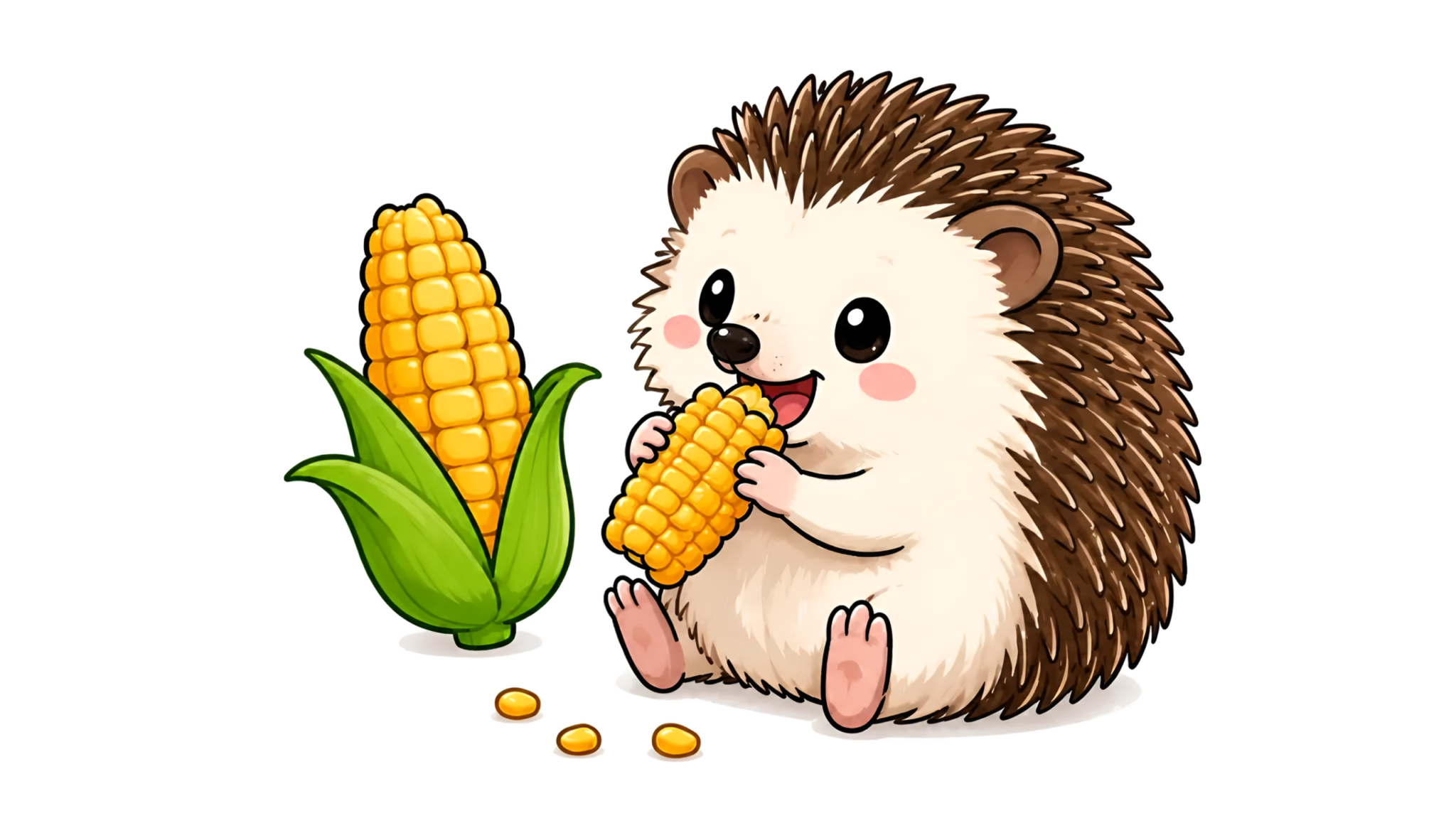
Sweet corn kernels — the plain, cooked kind — are the least harmful option if you do choose to offer corn. Even so, they should only be offered very occasionally, in small amounts, and never as a regular part of the diet.
Corn on the cob — this is technically the same thing, just served differently. If the kernels are soft and you’re only offering a small amount, it’s equivalent to plain sweet corn. The cob itself should not be given.
Cornflakes — a firm no. Commercial cornflakes are processed, often contain added salt, sugar, and malt flavoring, and offer nothing of nutritional value to a hedgehog. The texture can also pose a choking risk.
Canned corn — also best avoided. Canned vegetables are processed and typically contain sodium and preservatives that aren’t suitable for hedgehogs, even in small quantities. Fresh is always preferable when it comes to any vegetable.
Popcorn — absolutely not. Popcorn is a choking hazard, often salted or flavored, and has no place in a hedgehog’s diet.
If You Do Offer Corn
If you choose to offer corn despite its drawbacks, here’s how to do it as safely as possible:
Buy fresh, organic corn where possible to avoid pesticide residue. Wash it thoroughly regardless of whether it’s organic. Cook the kernels until they’re soft — boiling or steaming works well — and make sure no salt, butter, or seasoning is added at any stage. Crush or chop the kernels into small pieces before serving, as whole kernels can be difficult for hedgehogs to chew and swallow properly, and may cause indigestion if swallowed in chunks.
Introduce it in a tiny amount the first time and monitor your hedgehog for any signs of digestive upset over the following day. Because hedgehogs have a limited ability to digest plant cellulose, their gut can react poorly to vegetables — even ones that aren’t inherently toxic. If you notice loose stools, bloating, or a loss of appetite, remove corn from the rotation entirely.
At most, corn should appear once a month as a very minor element of a treat, never as a side dish served with a main meal. Keep the focus of their diet firmly on high-quality protein — whether that’s a good hedgehog food or a pea-free cat kibble — supplemented with mealworms for chitin.
Foods That Work Better as Treats
If you’re looking for vegetable treats that carry less nutritional baggage than corn, cooked carrots, green beans, and small amounts of leafy greens are generally considered safer choices by most veterinary sources. Even with those, moderation is the rule — hedgehogs are insectivores first, and plant matter should always play a supporting role rather than a starring one. For a closer look at what other treats are appropriate, our guide on are hedgehogs good pets touches on the broader lifestyle and care commitments involved, including diet.
Conclusion
Corn isn’t toxic to hedgehogs, but it’s not a food that does them many favours either. Between its lopsided calcium-to-phosphorus ratio, its high carbohydrate and sugar load, and hedgehogs’ general difficulty digesting plant matter, it makes sense to treat corn as a very occasional, very small indulgence — or to leave it out of the diet entirely and opt for better alternatives. If you’re ever unsure whether a particular food is safe for your hedgehog, a quick check with an exotic vet is always the best move.
Getting the diet right is just one part of keeping a hedgehog healthy and happy — having the right equipment makes everything easier. Browse our best hedgehog products page for feeding bowls, food options, and everything else your hedgehog’s setup needs.