
Cucumber doesn’t exactly have a reputation as a powerhouse food. Ninety-five percent water, mild flavour, barely any calories — it’s the vegetable even other vegetables don’t talk about much. But for a hedgehog owner looking to add a little variety to their pet’s diet without any real risk, that simplicity is actually the point. Cucumber is one of the safer, lower-fuss treats you can offer a hedgehog, and understanding what it does and doesn’t bring to the table helps you use it well.
The Short Answer
Yes, hedgehogs can eat cucumber. It’s non-toxic, easy to prepare, and most hedgehogs will happily eat a small piece. It’s not something that’s going to transform your hedgehog’s health, but offered occasionally and in sensible amounts, it’s a perfectly fine addition to the rotation. The caveats, as we’ll get into, are mostly about quantity rather than safety.
What Cucumber Actually Offers Nutritionally
Let’s be honest about what cucumber is: mostly water with a modest supporting cast of nutrients. According to USDA nutritional data, raw cucumber is around 95% water by weight, with only about 15 calories per 100g. That makes it one of the least calorie-dense vegetables you could offer.
What it does contain, albeit in modest amounts, is worth noting. Vitamin K supports healthy blood clotting and bone metabolism. Potassium helps with muscle function and maintaining fluid balance — cucumber provides around 136mg per 100g according to nutrition-and-you.com. There are small amounts of vitamin C, magnesium, and B vitamins too, though none in quantities that would dramatically move the needle for a hedgehog.
The honest summary: cucumber’s nutritional profile is subtle. Its real value for hedgehogs is as a low-calorie, low-sugar, low-fat hydration source — something safe to offer that adds a little variety without adding much else. Given that hedgehogs are prone to obesity, a treat that brings almost no caloric load is not a bad thing.
Hydration: The Real Benefit
Here’s where cucumber earns its place in the treat rotation. Hedgehogs can be reluctant drinkers, especially those fed primarily on dry kibble. A small piece of cucumber alongside their main meal adds a passive hit of moisture to their diet without requiring the hedgehog to visit their water bowl. During warmer months in particular, this can be a genuinely useful contribution.
That said, cucumber should never be thought of as a substitute for fresh water, which should always be available. It’s a supplement, not a solution. For tips on keeping your hedgehog’s setup properly equipped, our best hedgehog water bottle guide is a good reference point.
The One Risk Worth Knowing About
Because cucumber is so high in water, too much of it in one sitting can cause loose stools or mild diarrhea. Hedgehogs have sensitive digestive systems, and a sudden influx of water-dense food — especially if cucumber is being introduced for the first time — can upset the gut. As VCA Animal Hospitals note in their hedgehog feeding guide, all dietary changes should be introduced gradually to avoid gastrointestinal upset.
The fix is simple: keep portions small, particularly at first. A few small pieces — think the size of your thumbnail — is plenty. If everything looks normal after the first introduction, you can offer it a couple of times a week without concern. And if you ever notice loose or unusually watery stools after feeding cucumber, just dial it back or take a break from it entirely. You can read more about what normal and abnormal hedgehog digestion looks like in our guide on hedgehog poop.
How to Prepare It
Cucumber is one of the more straightforward vegetables to prepare for a hedgehog, which is part of its appeal.
Wash it thoroughly first. Commercial cucumbers are often waxed or treated with pesticides, so a good rinse under running water is non-negotiable. Better still, buy organic when you can.
On the skin: opinions vary. Cucumber skin does contain dietary fiber, and it isn’t toxic to hedgehogs. However, conventional cucumber skin can harbour residue from waxes and pesticides that are harder to wash away fully. If you’re using non-organic cucumber, peeling it is the safer call. For organic cucumber, leaving the skin on is fine.
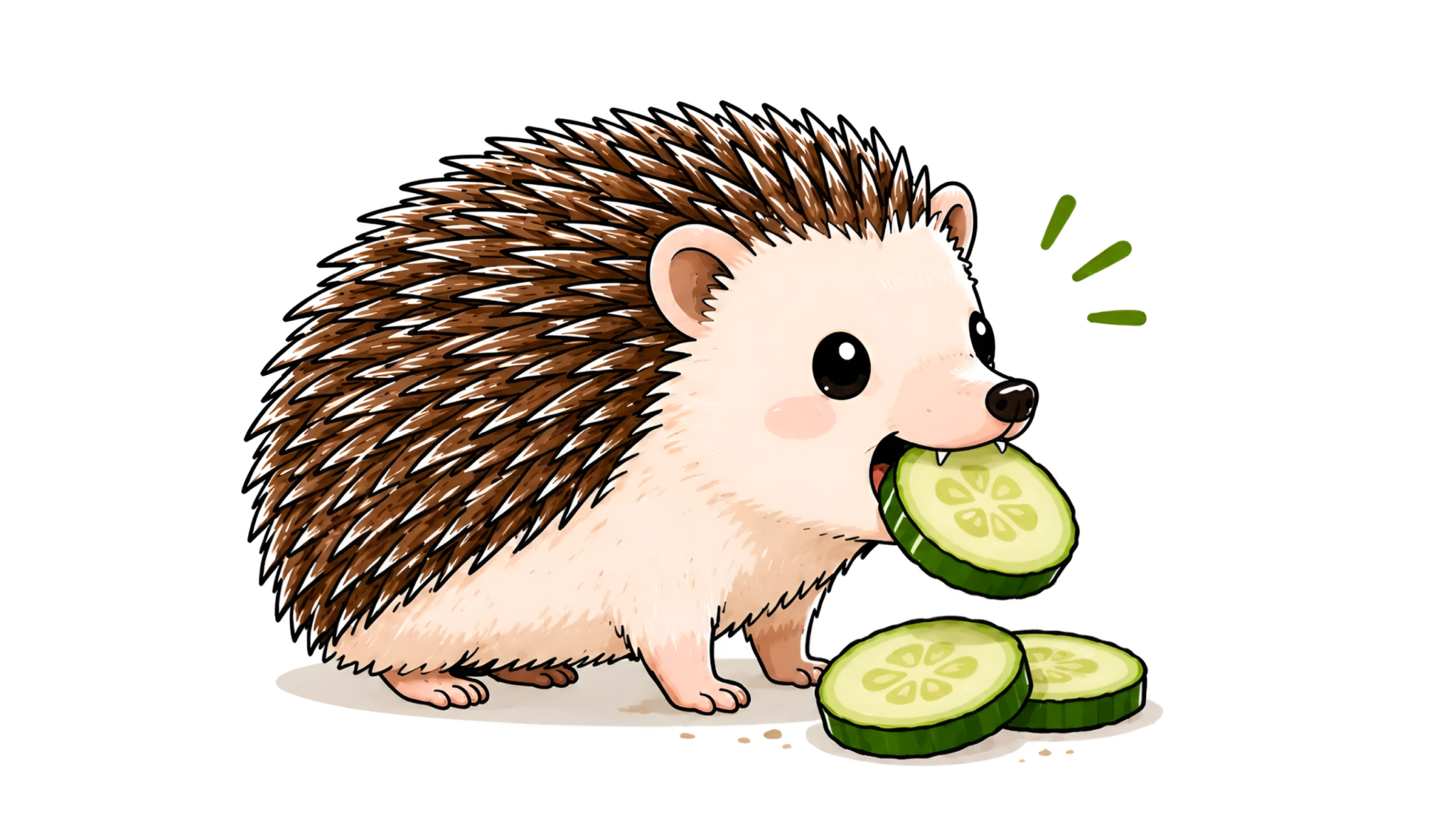
Cut it small. Slice the cucumber into thin rounds or small cubes — pieces a hedgehog can pick up and chew comfortably without any risk of choking. There’s no need to cook it; raw cucumber is perfectly fine and gives your hedgehog a bit of satisfying crunch.
No seeds required. The seeds are not harmful, but they’re also not adding anything useful. If you’re scooping out the seedy centre before serving, that’s fine, but it’s not strictly necessary.
No seasoning, ever. Plain, washed, and cut is all that’s needed. Salt, vinegar, and dressings have no place near a hedgehog’s food.
As with any fresh food, remove any uneaten cucumber from the enclosure after a few hours. At room temperature, it doesn’t take long for fresh vegetable to spoil, and you don’t want your hedgehog eating something that’s been sitting out for half a day.
How Often Is Sensible?
Two to three times a week is a reasonable frequency, with a small serving each time — a few pieces rather than a whole slice. Cucumber should complement the main diet, not crowd it. The foundation of any hedgehog’s meals should be a quality protein source, whether that’s a dedicated hedgehog food or a suitable pea-free cat kibble, supplemented with insects. Cucumber, like all vegetables, plays a supporting role at best. For a broader picture of what a balanced hedgehog diet actually looks like, our guide on what hedgehogs eat covers it in full.
The Pender Veterinary Centre’s hedgehog care guide recommends no more than about half a teaspoon of fruits or vegetables daily across the board, which gives a useful sense of the scale we’re talking about. Cucumber is just one of several vegetable options available, so it should be rotated with others rather than offered exclusively.
What About Pickled Cucumber?
A quick but important note: pickled cucumber — gherkins and the like — should never be offered to hedgehogs. Pickling involves vinegar, salt, and often sugar and spices, none of which have any place in a hedgehog’s diet. The salt content alone is enough to cause problems. Stick to fresh.
Conclusion
Cucumber won’t revolutionise your hedgehog’s health, but that’s not really the point. It’s a safe, genuinely low-risk treat that adds hydration and variety without the calorie load or sugar content that comes with most fruit. Keep portions small, introduce it gradually, peel it if it’s not organic, and you’ve got a reliable little addition to the treat rotation that’s as easy to prepare as it is to serve.
For everything else you need to keep your hedgehog happy, healthy, and well-fed, our best hedgehog products page has the full range — from feeding bowls and food recommendations to bedding, wheels, and beyond.