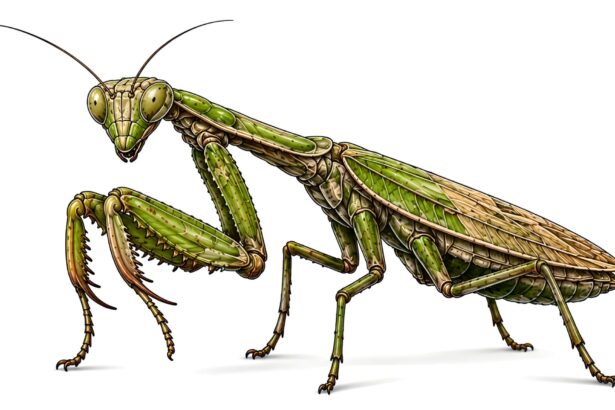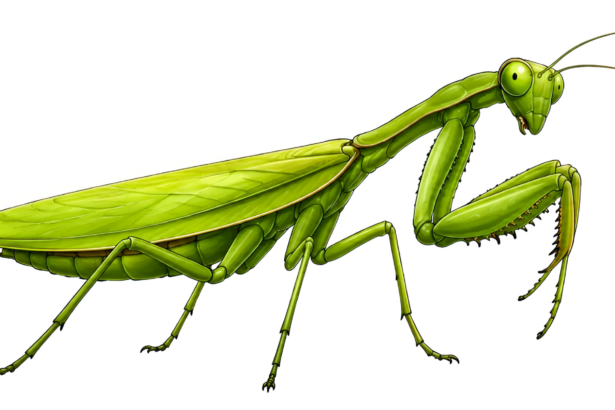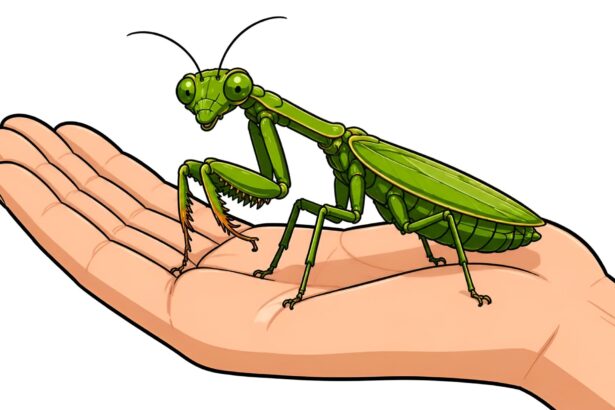


If you’ve ever spotted a praying mantis sitting perfectly still on a plant in your garden, blending in so well you almost missed it entirely, then you already have a little insight into just how adaptable these insects really are. But where exactly do praying mantises live, and what kinds of environments do they prefer? Read on to find out more.
Where Do Praying Mantises Live In The World?
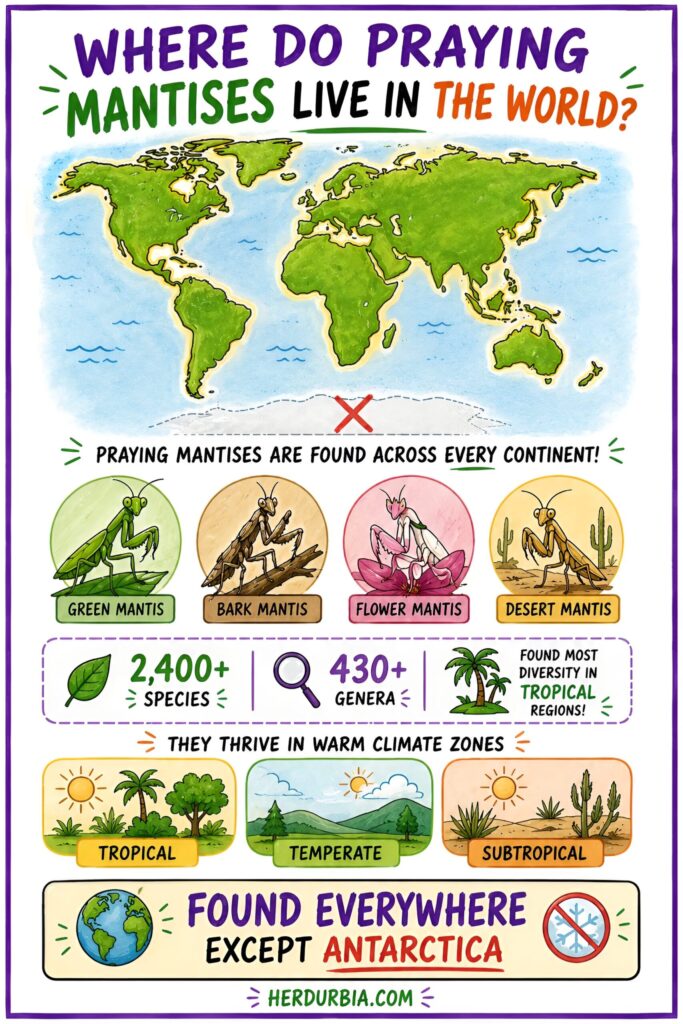
Praying mantises are found on virtually every continent on the planet. They inhabit every continent except Antarctica, with their presence particularly notable in warmer tropical and temperate regions across the world. Different species have adapted to various climates, allowing them to thrive from the Americas to Africa, Asia, and Australia.
There are over 2,400 species of praying mantis distributed across approximately 430 genera worldwide, and the sheer variety of environments they occupy is remarkable. Most are tropical, belonging to the Mantidae family, but they can be found throughout the world in tropical areas and sunnier areas in temperate zones, including North America and southern Europe.
What Specific Habitats Do Praying Mantises Prefer?

While praying mantises are spread across the globe, they’re not equally happy in every environment. They have some very clear preferences, and those preferences all come back to one thing — vegetation.
Mantises typically thrive in environments that offer dense vegetation, which is crucial for both camouflage and hunting. Gardens, meadows, and forest edges are common habitats, and they also inhabit shrublands, grasslands, and even urban areas that possess sufficient plant life. The preference for areas with tall grasses, shrubs, and other foliage provides ideal cover for ambushing unsuspecting prey.
Forests and woodlands are among their most popular homes. Forests and woodlands offer numerous hiding spots among trees and bushes, allowing mantises to blend with their surroundings. Leafy canopies provide protection from predators, and abundant insects ensure a consistent food supply.
Grasslands and meadows are just as popular. Tall grasses and flowering plants offer excellent camouflage and a dense population of small insects for mantises to hunt, with their green or brown coloration helping them integrate with the vegetation. They’re so well hidden in these environments that you could walk right past one without ever knowing it was there.
Gardens and farms are another place you’ll commonly find them, and for good reason. The University of Utah Extension notes that mantises are considered beneficial insects in gardens because they naturally keep pest populations under control without the need for chemicals. Many gardeners actually welcome them for exactly this reason. You can find out more about their role as predators in our article on what do praying mantises eat.
Where Do Praying Mantises Live By Region?
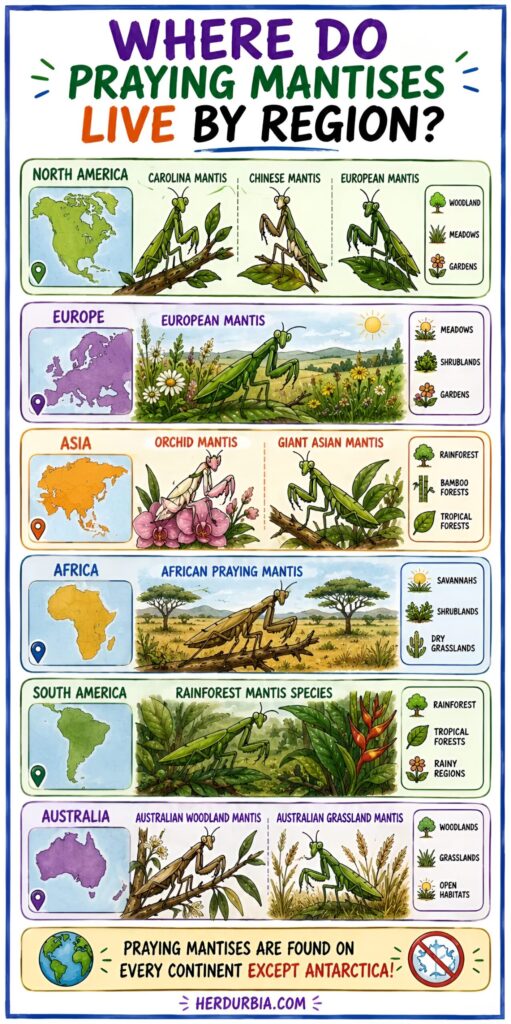
North America
Two species, the Chinese mantis and the European mantis, were deliberately introduced to North America in the hope that they would serve as pest controls for agriculture, and they have spread widely in both the United States and Canada. The only mantis truly native to North America is the Carolina mantis, which you can read more about in our article on the Carolina praying mantis. There’s also a lot of interesting discussion around whether certain introduced species are now considered invasive — something we cover in our article on are praying mantises invasive.
Europe
Europe features several native praying mantis species, with the most recognizable being the European mantis. This species is widely distributed across southern and central Europe and prefers warm climates with ample sunlight, usually inhabiting meadows, gardens, and scrublands. Countries like Spain, Italy, and Greece have the warmest and most suitable conditions for them, though their range has been slowly spreading northward in recent years.
Asia
Asia is arguably the most mantis-rich continent on earth. Asia stands out as a significant home for mantises, featuring extensive and diverse terrains that host numerous species across countries like India, China, and Japan. Due to the moderate weather conditions in most regions, coupled with tropical and temperate areas, mantises thrive exceptionally well. Some of the most visually stunning species in the world come from Asia, including the giant Asian praying mantis and the breathtaking orchid mantis.
Africa
Africa is home to an enormous variety of mantis species across a wide range of habitats. Many species of praying mantises are found in Africa, particularly in the continent’s tropical and subtropical parts, with numerous habitats ranging from rainforests to savannahs explaining why there are so many of them. The African praying mantis is one of the most well known species to come from this region.
South America
South America is home to a diverse range of praying mantis species due to its rich biodiversity, with countries like Brazil, Colombia, and Ecuador boasting numerous native species adapted to various habitats including rainforests and savannas.
Australia
Australia rounds things out with its own unique collection of mantis species spread across forests, grasslands, and even urban areas, thanks to the variety of microhabitats the country offers across its different climate zones.
What Temperature Do Praying Mantises Need?
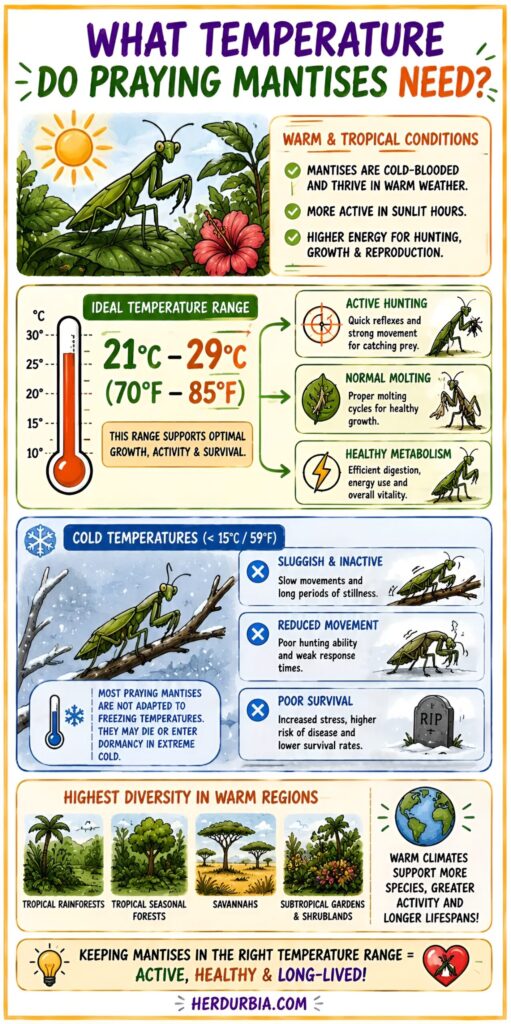
Temperature plays a huge role in where mantises can and can’t survive. As ectothermic creatures, mantises rely on external heat sources to regulate their body temperature, making them sensitive to climatic conditions. They generally thrive in temperatures between 21°C and 29°C, which supports their metabolic processes, growth, and active hunting behaviors. Regions with warmer climates and mild winters are particularly favorable, as colder temperatures can hinder their activity and survival. This is exactly why you’ll find the greatest variety and density of mantis species in tropical regions rather than cooler ones. If you keep a mantis as a pet, getting the temperature right is just as important indoors as it is in the wild — our guide on how to heat a praying mantis enclosure is a great resource for this.
How Does Camouflage Help Them Survive In Their Habitat?
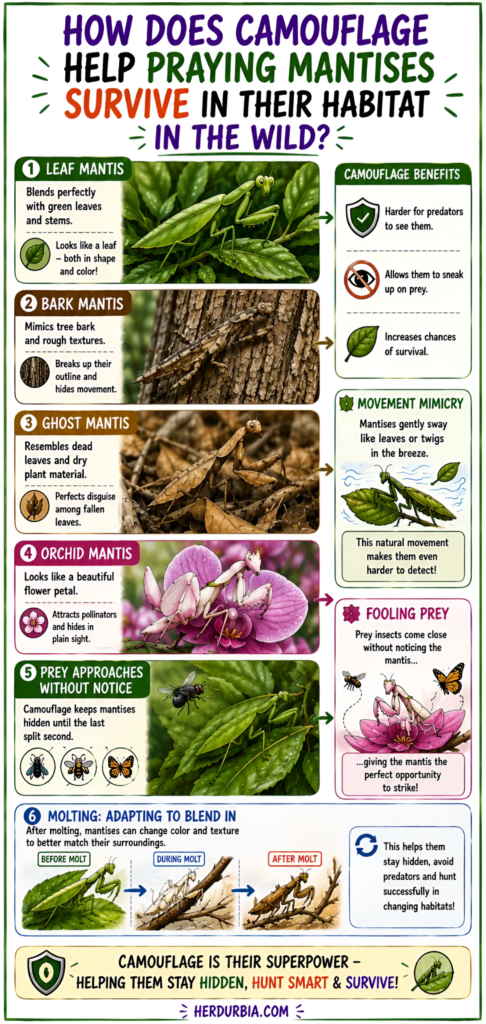
One of the most fascinating things about praying mantises is that their habitat and their appearance are directly connected. They don’t just live in places with dense vegetation — they have physically evolved to look like part of it. Praying mantises have evolved to look uncannily similar to the microhabitats they live in, and these master hunters even behave like the parts of a plant they resemble. Their staggered steps make a walking mantis look like a leaf or stem swaying with the breeze, making them perfectly inconspicuous to unsuspecting prey and potential predators alike.
Some species take this to an extreme. The orchid mantis has evolved to look almost exactly like a flower petal, allowing it to lure prey directly to it rather than even having to chase anything down. And species like the ghost praying mantis are so extraordinarily camouflaged that spotting one in its natural environment takes a seriously trained eye. This ability to change color after molting also helps them stay perfectly matched to their surroundings as they grow.
Conclusion
Praying mantises are genuinely one of the most widespread and adaptable insects on the planet. From the tropical rainforests of South America to the gardens of suburban North America, from the savannahs of Africa to the woodlands of southern Europe, these insects have found a way to make themselves at home almost everywhere. What ties all of these environments together is dense vegetation, warm temperatures, and a reliable supply of prey — and wherever those three things exist, there’s a good chance a praying mantis is already there, perfectly still, waiting patiently for its next meal.