
If you’ve been thinking about getting a praying mantis as a pet, you’re in for a treat. These fascinating little creatures are some of the most entertaining and low-maintenance pets you can own. But here’s the thing — not every mantis species is created equal, especially when you’re just starting out. Some species are incredibly easy to care for, while others will have you pulling your hair out trying to meet their very specific needs. So if you’re a beginner and you’re asking yourself which praying mantis you should get first, then keep reading. We’ve put together a list of the best praying mantis species for beginners so you can make the right choice from the start.
What Makes A Mantis Good For Beginners?

Before we dive into the list, it’s important to understand what actually makes a mantis beginner-friendly. The best starter species are ones that don’t need extreme temperatures or very specific humidity levels to survive. They should be big enough to handle comfortably, easy to find from reputable sellers, and not too fussy when it comes to food. If you’re brand new to insect keeping, it’s worth reading up on are praying mantises good pets before committing — understanding what you’re signing up for will set you up for success from day one.
Chinese Mantis
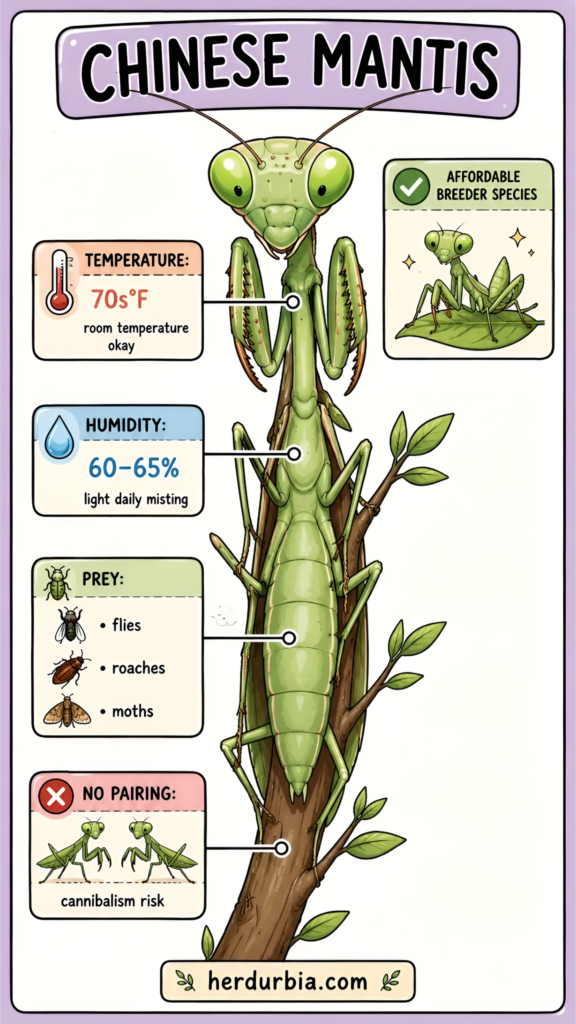
The Chinese Mantis (Tenodera sinensis) is easily one of the best mantis species you can start with. It’s big, it’s calm, and it’s widely available in the pet trade. Adults can grow over 4 inches long, making them easy to handle and observe. Keeping Exotic Pets describes it as an ideal first pet praying mantis that is easy to look after and breed, which naturally makes it readily available and affordable. And when it comes to care, it doesn’t get much simpler than this.
Room temperature in the 70s works just fine for this species, so you won’t need any special heating equipment in most homes. Humidity should be kept around 60–65%, which you can easily achieve by lightly misting the enclosure once a day. As for food, the Chinese Mantis is about as far from a picky eater as you can get. Flies, roaches, moths — it will happily eat just about anything you offer it. To understand what praying mantises eat more broadly, it’s worth getting familiar with the range of feeder insects available to you.
One thing you absolutely need to know is that Chinese Mantises are highly cannibalistic, so they should always be housed alone. Keeping Insects confirms that Chinese mantids are ferocious predators that will also prey on each other and should never be housed in the same cage. Other than that, this species is one of the most forgiving pets you’ll ever keep.
Giant Asian Mantis
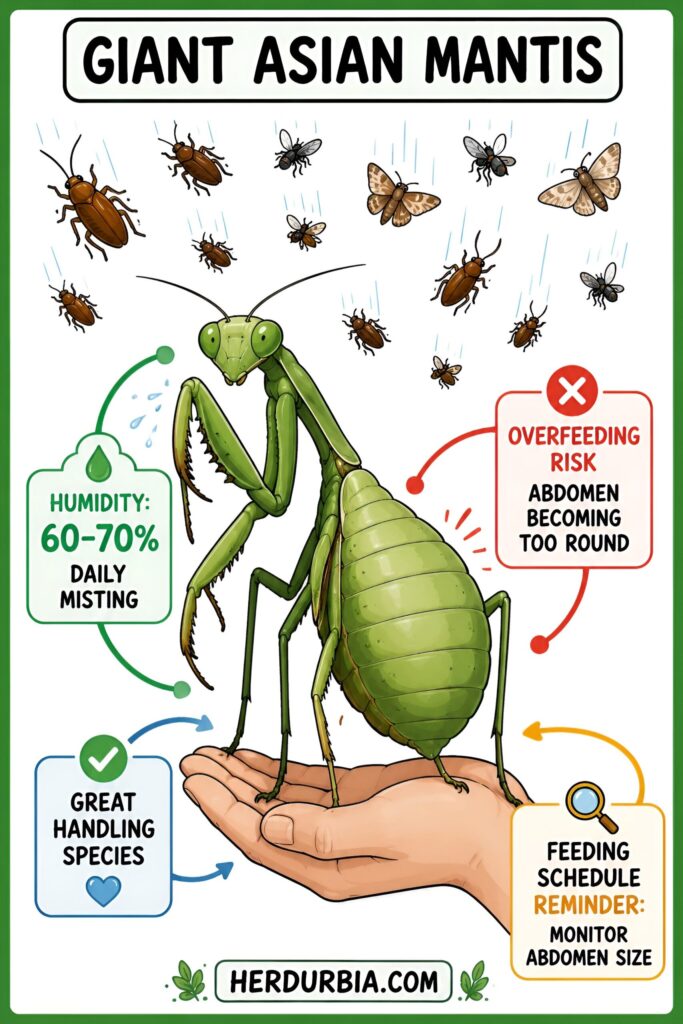
If you want a mantis that is big, bold, and absolutely stunning to look at, the Giant Asian Mantis (Hierodula membranacea) is the one for you. Females can grow up to 4 inches long and are heavily built, making them one of the largest beginner-friendly mantis species you can find anywhere in the pet trade. According to Wikipedia, this species inhabits shrubs and trees in hot, humid climates across southeast Asia, which is reflected in its hardy, adaptable nature in captivity.
This species thrives at room temperature and doesn’t demand too much when it comes to humidity either. A target humidity of around 60–70% relative humidity is ideal, and daily misting is enough to keep your mantis hydrated and comfortable. Bug Pets describes the Giant Asian Mantis as a notable glutton, warning that some owners actually have to regulate its diet because it will eat so voraciously it risks making itself ill — so keep an eye on how round that abdomen is getting and hold off on feeding for a few days if it starts looking overloaded.
Just like the Chinese Mantis, this species needs to be housed alone since it will absolutely not tolerate a roommate. If you’re wondering whether can you hold a praying mantis, the Giant Asian Mantis is one of the best species to start with — it’s considered docile and handleable for its size.
African Mantis
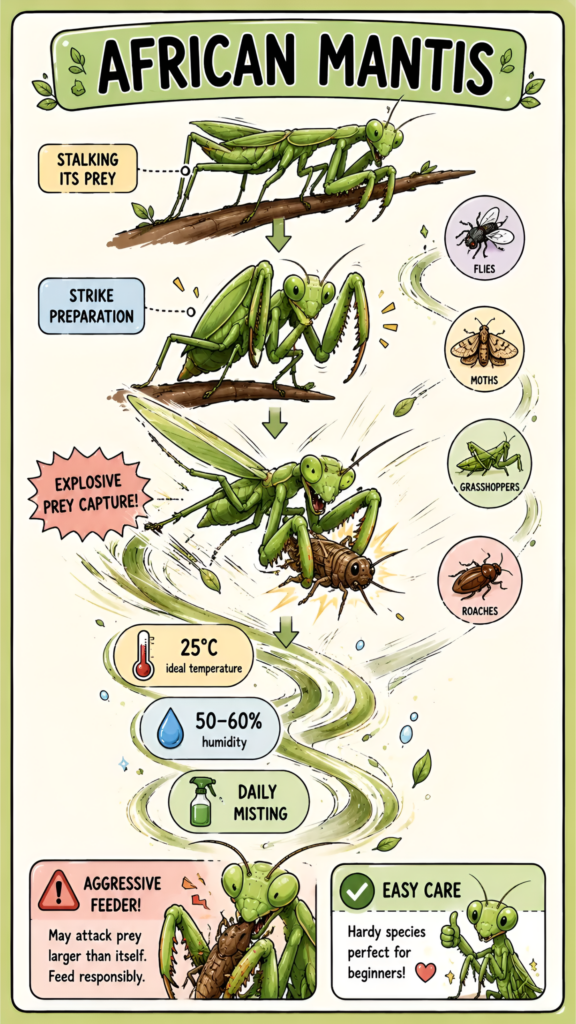
The African Mantis (Sphodromantis lineola) is another great option for first-time mantis owners. It’s a large, fierce-looking mantis that is actually surprisingly easy to care for. Keeping Insects notes that females reach about 8 cm in length, and they are well-known for their aggressive and entertaining hunting behavior.
This species does perfectly well at room temperature with a target of around 25°C, and it doesn’t need high humidity either. Humidity of around 50–60% is all it needs, and spraying the enclosure once a day takes care of that. When it comes to feeding, the African Mantis will eat crickets, roaches, flies, moths, grasshoppers — pretty much anything you put in front of it. It’s one of those species that just makes life easy for you as an owner. You can also read more about the African praying mantis specifically if you want a deeper dive into this species before purchasing.
The only real downside with the African Mantis is that it can sometimes be a little harder to find compared to the Chinese or Giant Asian Mantis, since most breeders tend to focus on rarer or more exotic species. But if you can get your hands on one, it’s an excellent beginner mantis.
Ghost Mantis

Now here’s where things get really interesting. The Ghost Mantis (Phyllocrania paradoxa) is hands down one of the most uniquely beautiful mantis species in the hobby. Originally from Africa and Madagascar, this species mimics dead, weathered leaves so perfectly that you’ll find yourself doing a double-take every time you look at its enclosure.
The Ghost Mantis needs humidity levels of around 60–90% and temperatures between 65–80°F, which is a little more specific than the species above — PanTerra Pets’ care sheet confirms this range and notes that daily misting is the easiest way to maintain it. But it’s still very manageable for a beginner who is willing to put in a little extra attention. And what makes this species truly special is that unlike virtually every other mantis out there, Ghost Mantises can actually be kept in groups — as long as they are well-fed and have enough space. Keeping Insects explains that because they prefer to eat flies rather than crawling insects, Ghost Mantises are far less likely to prey on each other, which is what makes communal housing a realistic option with this species.
One thing to keep in mind is that Ghost Mantises strongly prefer flying prey like flies and moths rather than crawling insects. So you’ll want to make sure you always have a good supply of house flies or blue bottle flies on hand. Understanding do praying mantises drink water is also important for this species, since maintaining the right misting routine does double duty for both humidity and hydration. Other than that, this species is calm, easy to handle, and a total joy to keep.
What About Other Species?
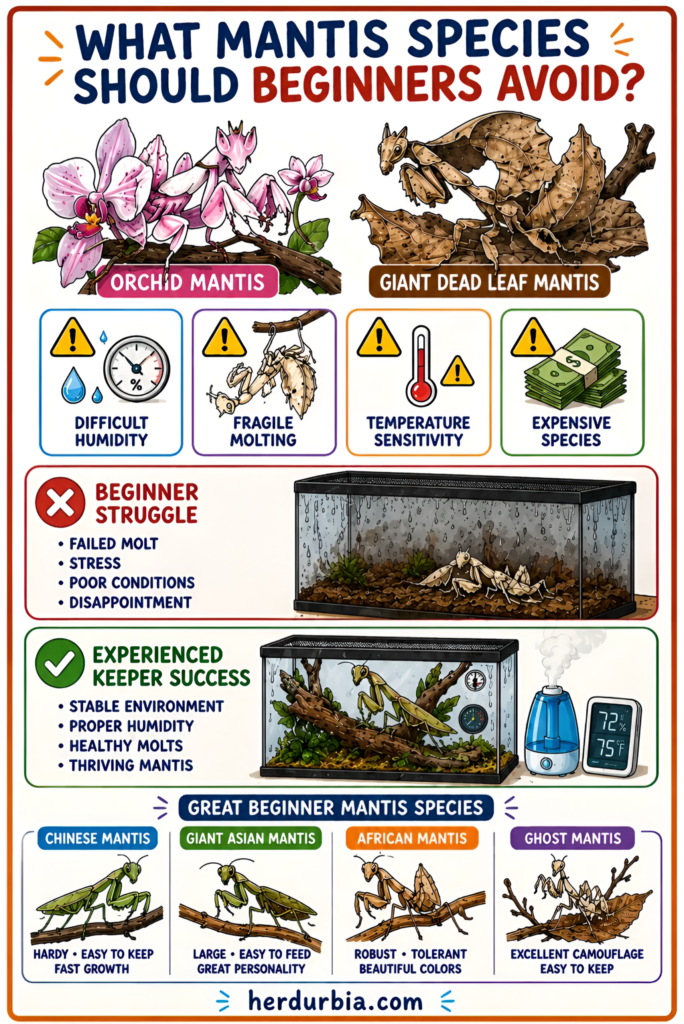
You might have heard about other popular mantis species like the Orchid Mantis or the Giant Dead Leaf Mantis. And while they are absolutely stunning creatures, we wouldn’t recommend them as starter species. These mantises have very specific care requirements that can be difficult to nail down when you’re still learning the ropes. Once you’ve built up some experience with the species listed above, then absolutely go ahead and explore those more challenging species. But for now, start simple and build your confidence first.
Conclusion
Praying mantises are some of the most rewarding pets you can keep, and the species listed above are proof of just how accessible this hobby can be. Whether you go with the easygoing Chinese Mantis, the impressive Giant Asian Mantis, the fierce African Mantis, or the stunningly unique Ghost Mantis, you’re going to have an amazing time. Just make sure you do your research on whichever species you choose, set up their enclosure properly before they arrive, and keep up with regular feeding and misting. You might also want to learn about do praying mantises shed their skin early on — understanding the molting process is one of the most important parts of keeping any mantis healthy. Do all that, and you and your new mantis are going to get along just fine.