
If you’re a new mantis owner and you’ve been staring at your mantis’s enclosure wondering whether you need to provide water and how exactly to do it, you’re asking exactly the right question. Water is one of the most important — and most underestimated — parts of keeping a healthy praying mantis. Get this wrong and things can go downhill surprisingly fast, even if you’re feeding your mantis perfectly. So let’s get into everything you need to know.
Yes, Praying Mantises Do Drink Water
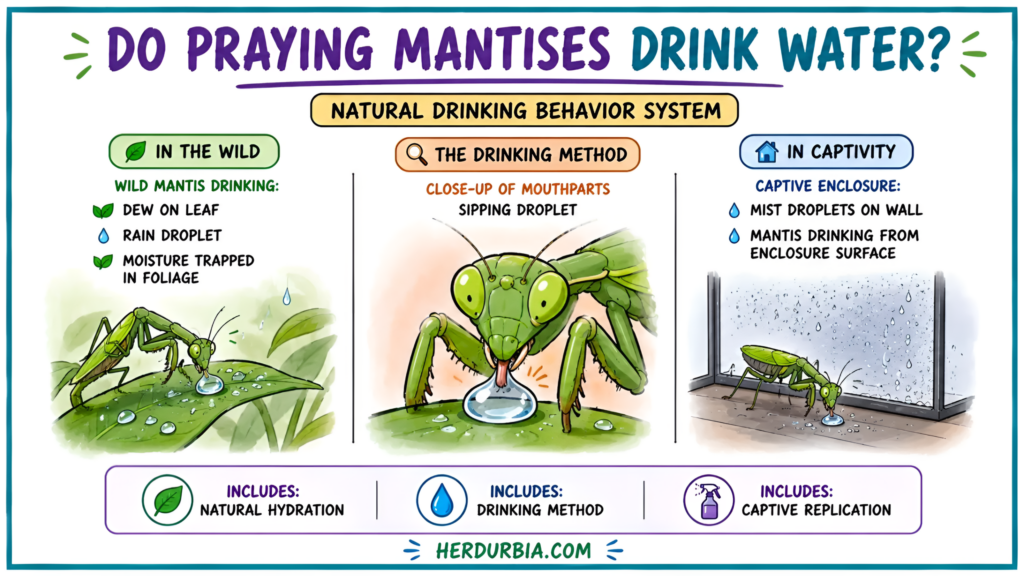
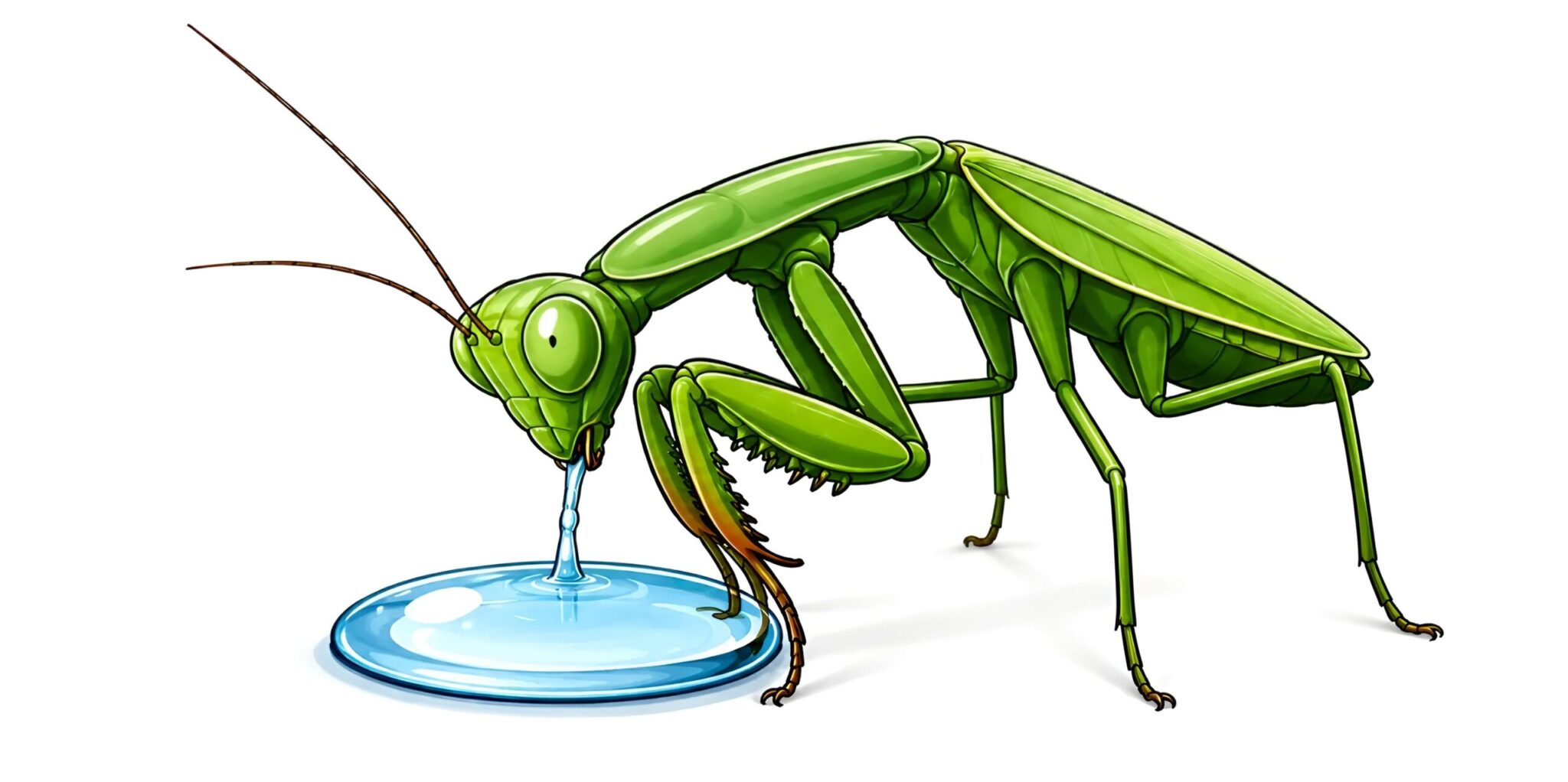
Praying mantises absolutely need water and they drink it regularly — more so than most people assume. In the wild, mantis drink water droplets from plant leaves — dew that forms overnight, rain droplets left on foliage, and occasionally moisture trapped in the folds or bases of leaves. They use their specialized mouthparts to lap up individual droplets rather than gulping large volumes of water the way a dog or lizard might. It’s a delicate, precise process — tiny sips from tiny droplets.
In captivity, your job is to replicate that experience consistently. And the best way to do that is with a fine mist spray bottle.
How To Give Your Praying Mantis Water
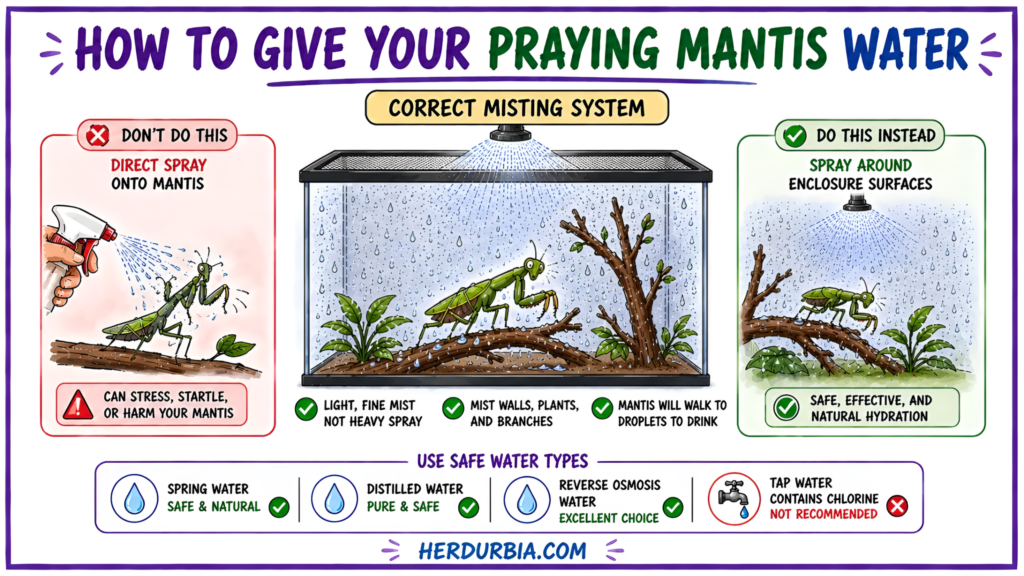
The right way to water your mantis is to lightly mist the inside of the enclosure — the walls, any plants or décor, and any twigs or branches — with a fine spray of clean water. Your mantis will then walk over and drink from those droplets directly. Many keepers observe their mantis pausing to sip from the enclosure walls shortly after misting, sometimes tilting their head delicately as they drink.
One important thing to note — always spray around your mantis rather than directly at it. Most mantis don’t enjoy being sprayed directly and it can stress them. If a little mist lands on them by accident, it’s not the end of the world, but try to aim for the walls and décor rather than the mantis itself.
When it comes to water quality, always use spring water, distilled water, or reverse osmosis filtered water. Tap water contains chlorine and other chemicals that can be harmful to mantis over time. It’s a small thing but it genuinely matters for your mantis’s long-term health.
How Often Should You Mist The Enclosure?
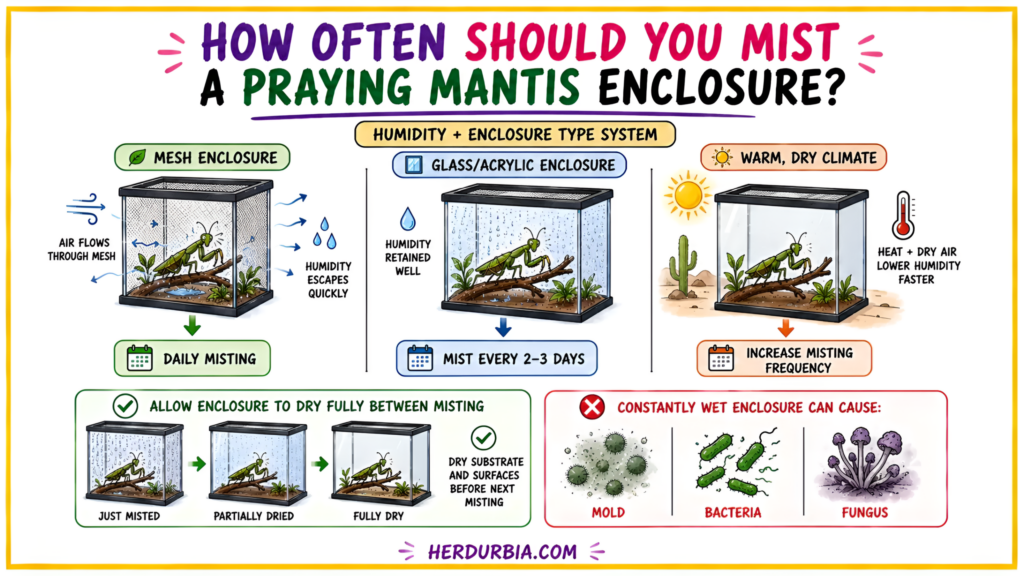
This depends on what type of enclosure you’re using and what species of mantis you keep. Mantis kept in mesh or screen enclosures lose humidity much faster than glass or acrylic ones, so they generally need misting once a day — and potentially twice a day during warmer months when the room temperature is higher. Mantis kept in glass or acrylic enclosures do well with misting every two to three days since the lower ventilation helps the moisture linger longer.
As a general rule of thumb that works well for most species and setups, aim to mist the enclosure once or twice a week at minimum, and up to daily if your mantis is in a well-ventilated mesh enclosure or if you live somewhere warm and dry. The goal is never to soak the enclosure — a light, fine mist that leaves small droplets on the surfaces is all you need. Between mistings, you always want the enclosure to dry out fully before misting again. A constantly wet enclosure is a breeding ground for mold, bacteria, and fungal infections, which can be deadly for your mantis.
Good ventilation is just as important as the misting itself. Praying mantis do very poorly in stale, damp conditions, so always make sure your enclosure has adequate airflow working alongside whatever humidity you’re providing.
Why Water Is Especially Important During Molting
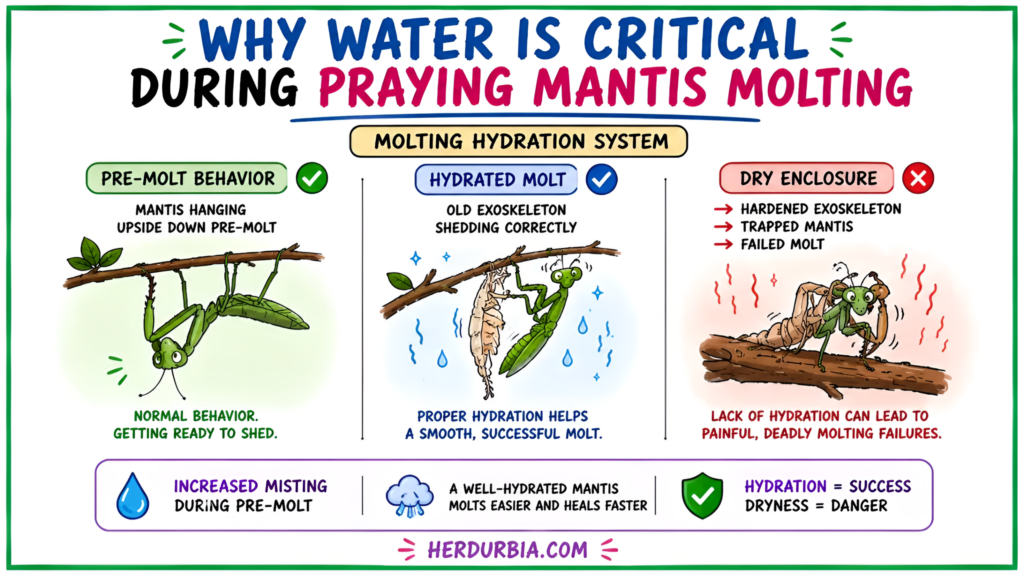
Here’s something every mantis owner needs to understand. Water and humidity become critically important when your mantis is approaching a molt. When a mantis sheds its exoskeleton, it needs to be properly hydrated for the process to go smoothly. Insufficient humidity during molting can cause the old exoskeleton to harden too quickly, which traps the mantis inside and can result in a failed molt — something that can be fatal. So if you notice your mantis is off its food and hanging upside down more than usual — the classic signs that a molt is coming — make sure you’re on top of your misting routine. This is not the time to skip a day.
Egg laying is another time when water becomes especially important. Female mantis produce the foamy outer casing of their ootheca as a liquid that they whip into a froth. Producing enough of this foam requires the female to be well hydrated. If you have a gravid female approaching egg laying, keep your misting consistent and generous.
Can Baby Praying Mantis Drown?
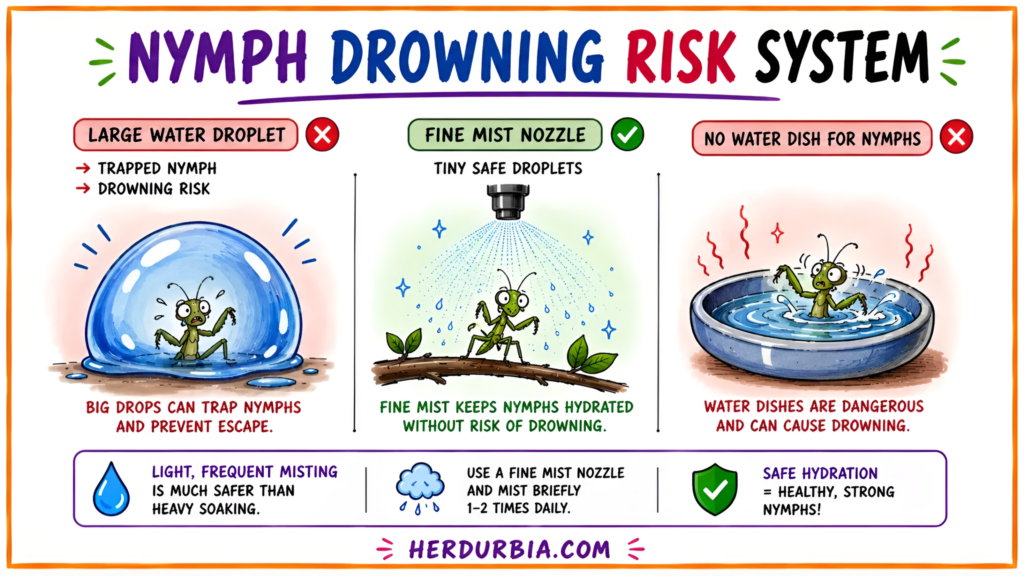
Yes, and this is something that catches a lot of new owners off guard. Baby mantis nymphs are tiny and extremely fragile. A water droplet that’s perfectly safe for an adult mantis can actually trap a nymph and cause it to drown. For baby mantis, mist very lightly and very frequently rather than giving heavy mistings less often. Small, light droplets distributed regularly are far safer than occasional heavy soakings. Never use a water dish with nymphs — the drowning risk is simply too high.
As your mantis grows through its instars it becomes progressively less vulnerable to this, but always keep the droplet size in mind when misting younger nymphs. A fine mist nozzle on your spray bottle makes a genuine difference here.
Do Praying Mantises Get Water From Their Food?
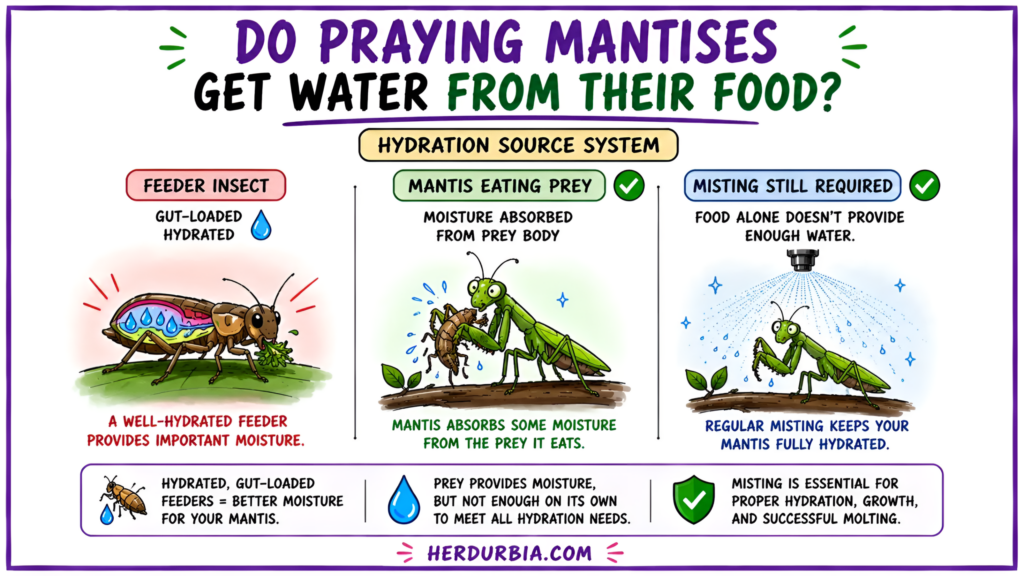
Yes, to some extent. Praying mantis do absorb some moisture from the prey they eat, particularly from the soft inner body of insects. This is one of the reasons why gut-loading your feeder insects properly matters — well-fed, well-hydrated feeders pass that moisture on to your mantis. But food moisture alone is never enough to fully meet your mantis’s hydration needs in captivity. Regular misting is still essential regardless of how well you’re feeding. You can read more about feeding on our what do praying mantises eat page.
What Are The Signs Of A Dehydrated Praying Mantis?
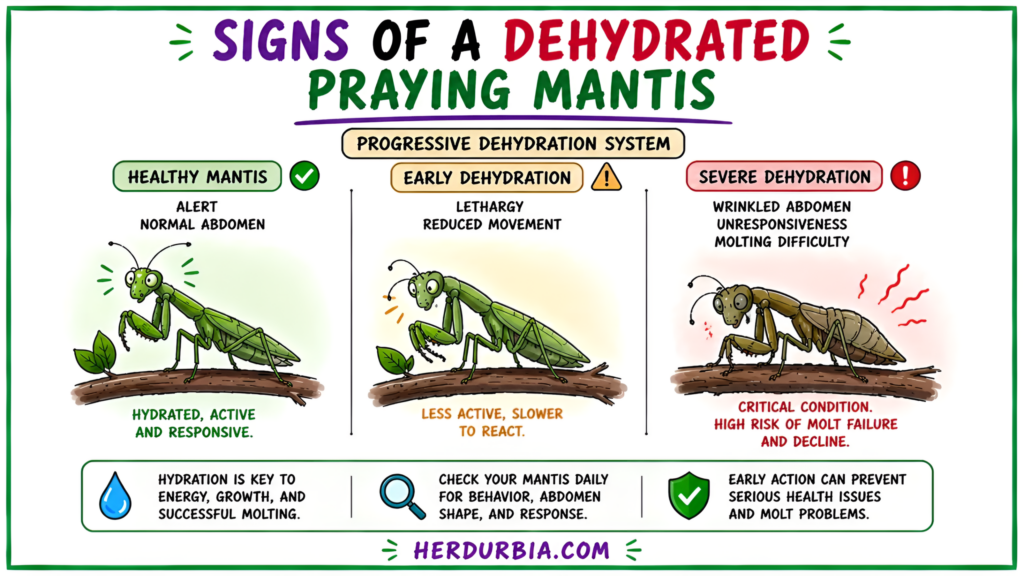
This is unfortunately tricky, because there are very few obvious early warning signs. Unlike some other invertebrates, a dehydrated mantis doesn’t give you clear visual cues until things have already gotten quite bad. Signs that your mantis may be dehydrated include lethargy, a visibly shrunken or wrinkled abdomen, unresponsiveness, and difficulty moving around the enclosure. Trouble molting is another serious sign — if your mantis is struggling to shed its skin, inadequate humidity is one of the first things to investigate.
The honest truth is that by the time you see clear dehydration symptoms in a mantis, things are already at a serious stage. This is exactly why prevention through consistent misting is so much more important than trying to respond after the fact. You can read more about the molting process and what can go wrong on our do praying mantises shed their skin page.
Conclusion
So yes — praying mantises absolutely need water and it’s your responsibility as an owner to provide it consistently. Mist the enclosure lightly every one to three days depending on the enclosure type and your local conditions, always let it dry between mistings, use clean filtered water, never spray directly at the mantis, and be extra diligent about humidity around molt time. Do all of that and dehydration is never going to be something you need to worry about. It takes maybe thirty seconds to mist an enclosure — make it part of your routine and your mantis will be all the better for it. Remember to also check our Best Praying Mantis Products for everything you need to care for your little buddy.