
If you’ve ever come across a praying mantis and found yourself wondering whether those powerful, spike-lined arms and that intimidating stare come with a venomous punch, then you’re not alone. A lot of people assume that because praying mantises are such fierce and effective predators, they must have some kind of venom helping them get the job done. But the truth might actually surprise you. Read on to find out more.
Do Praying Mantises Have Venom?
The short answer is no. Praying mantises don’t carry venom or pose any health risks to people. This applies to every single species. Not one praying mantis discovered to date has the ability to inject venom into its prey or into you, and according to the University of Florida’s Department of Entomology and Nematology, they are considered completely harmless to humans. So if you’ve been keeping your distance from these insects because you thought they were venomous, you can breathe a little easier now.
What makes this even more fascinating is that despite having zero venom to work with, praying mantises are still some of the most ruthless and effective hunters in the entire insect world. So how exactly do they pull it off without any chemical assistance at all? It all comes down to their incredible anatomy and their very unique hunting strategy.
How Do Praying Mantises Actually Kill Their Prey?
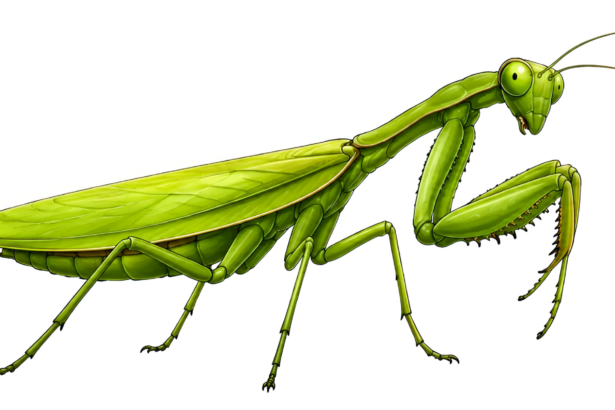
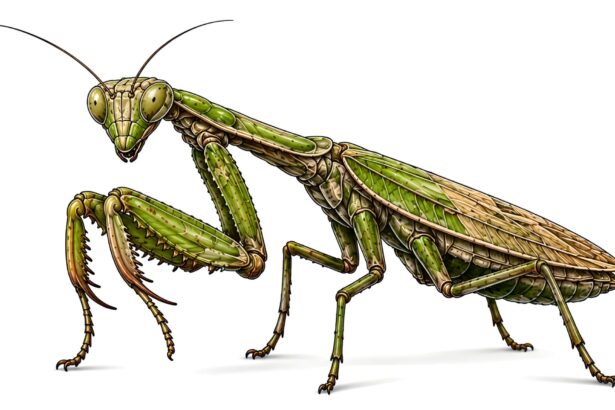
This is where things get really interesting, and admittedly a little unsettling too. Since praying mantises have no venom, they simply reach out with their spiky forelegs, catching prey in their spines so it can’t get free. They dig in without killing the creature first, holding onto it tightly so it doesn’t get away. Yes, you read that right. The prey is eaten completely alive.
According to National Geographic, mantids stalk or ambush prey, waiting silently then launching a sudden attack that takes only milliseconds. Springing forward, they grasp their victim with their raptorial legs, which have interlocking spines like a claw clip, making escape impossible.
Once the prey is locked in those forelegs, the mandibles do the rest of the work. The mandibles are strong, curved, and sharp, designed to grasp and slice through the bodies of their prey. Functionally they operate like a pair of scissors, bringing the two halves together to exert significant biting force. You can find out a lot more about the kinds of creatures they take down in our guide on what praying mantises eat.
Are Praying Mantises Dangerous To Humans?
Not really. Praying mantises are not venomous or poisonous, and their bites are harmless to humans, causing at most minor irritation. They also have three-dimensional vision, which means it’s unlikely they would ever mistake a human for prey.
That said, they can bite if they feel genuinely threatened. According to Healthline, praying mantises are nonvenomous, which means their bite is not poisonous. If you do get bitten, all you have to do is wash the area with soap and water. So even in the rare case a praying mantis does bite you, it’s more of an unpleasant surprise than anything truly dangerous. We go into a lot more detail on this in our dedicated article on do praying mantises bite.
Can You Hold A Praying Mantis Safely?
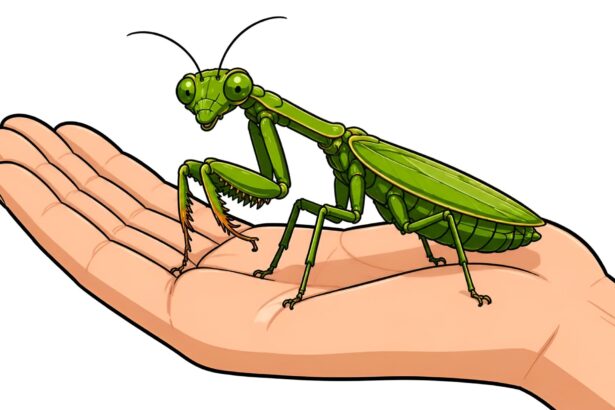
Yes, and most of the time it’s completely fine to do so. The key is in how you approach them. Roughly grabbing a praying mantis is the most likely way to trigger a bite. But if you let one walk calmly onto a flat, open hand, the experience is usually completely safe and honestly quite amazing. We cover everything you need to know in our guide on can you hold a praying mantis.
Between the head and the thorax there is a flexible joint that allows mantises to swivel their heads around 180 degrees, the only insect that can do so. They’re also the only invertebrate that can see in 3D. That incredible vision means they can quickly figure out that you are far too large to be considered food, so their only real reason to bite is if they feel genuinely trapped and cornered.
What Happens When A Praying Mantis Feels Threatened?
Before they ever consider biting, praying mantises have another trick up their sleeve. According to researchers published in Behavioral Ecology and Sociobiology, dynamic defensive displays in praying mantises have been described as deimatic or “startle” displays, and since mantises are not chemically defended, they rely heavily on these visual signals to deter predators.
In practice, when threatened, mantises transform from stealthy hunters to intimidating defenders through an elaborate threat display. They suddenly spread their wings, raise their forelegs, and rock side-to-side while revealing hidden bright colors or eyespots on their bodies. Many species flash vivid wing patterns that startlingly resemble the eyes of much larger animals.
It looks incredibly dramatic and fearsome, but it’s essentially all bluff. The mantis has no chemical protection whatsoever. If attacked, it can fight back with its forelegs and mandibles but not venom or bitter-tasting chemicals. All that wing-spreading and swaying is simply a way of trying to look as intimidating as possible without any chemical backup to rely on. If you want to see some of the most dramatic-looking species that pull off this display, take a look at our article on the devil’s flower mantis — it’s one of the most jaw-dropping examples of this behavior in the entire mantis world.
Are Praying Mantises Dangerous To Other Animals?
To other insects and small creatures, absolutely yes. But to your pets, not so much. Praying mantises are among the most ambitious predatory insects, occasionally capturing and devouring relatively large prey such as frogs, mice, and lizards. You can read more about some of the more surprising prey they go after in our articles on can praying mantises eat birds and can praying mantises eat spiders.
When it comes to dogs or cats though, a praying mantis is far more likely to stay completely still and rely on its camouflage to avoid being noticed altogether. And if it does feel cornered, that dramatic threat display we mentioned above is usually enough to send most animals backing off quickly.
It’s also worth noting that praying mantis cannibalism is a very real thing within their own species, particularly during mating. According to A-Z Animals, while a praying mantis bite is not really of concern to a human, it is a very big concern for many small insects. That puts their hunting ability into full perspective — completely venomless, yet still one of the most feared predators in the insect world.
Conclusion
Praying mantises are not venomous. Not even close. Everything they do as predators — and they do a lot — is powered entirely by speed, strength, and some of the sharpest reflexes in the animal kingdom. They are adept hunters, using their agility and speed to capture prey rather than relying on venom. What makes them so extraordinary is that they achieve all of this without a single drop of chemical assistance, which honestly makes them even more impressive. If you want to continue learning about these incredible insects, our guides on the praying mantis lifespan and are praying mantises good pets are great places to keep going.