
Hedgehogs need to leave the house more often than most owners initially expect. Vet visits happen at least annually, and more frequently for older or unwell hedgehogs. Emergency situations arise without warning. And for owners who want to bond with a hedgehog that isn’t yet comfortable being held, having the right carrying option makes the difference between a stressful experience for both of you and a calm, productive one. The carrier you choose depends entirely on what you’re using it for — and the wrong carrier for the situation is worse than useless.
The most important distinction to understand before buying anything is this: soft-sided fabric carriers and bonding pouches are appropriate for short trips, walks, and home bonding sessions. For car travel, a hard-sided carrier is the only truly safe option. In a vehicle collision, a soft bag provides no structural protection whatsoever, and a hedgehog inside one is at serious risk of injury from the impact itself or from being thrown. If you transport your hedgehog by car regularly, a hard-sided carrier belongs in your setup regardless of what else you buy.
What Every Hedgehog Carrier Needs
Ventilation is the first requirement. Hedgehogs overheat quickly, and a carrier with inadequate airflow becomes dangerously warm within minutes, particularly in a car or warm room. Mesh panels or ventilation holes on multiple sides are what you need, not just a single small window. Check that air can circulate freely through the interior rather than just entering from one direction.
Security matters more than it might seem with hedgehogs specifically. They are surprisingly strong for their size and can push against zipper closures or door seams with enough force to work them open if determined. Double zipper designs, locking clasps, and carriers with no gaps at the corners significantly reduce escape risk. Check reviews for any carrier you’re considering with the specific word “escape” to see whether other small animal owners have had problems.
Temperature management is often overlooked. Hedgehogs are highly sensitive to cold, and a car journey in winter can drop the carrier interior temperature quickly enough to be dangerous. A SnuggleSafe microwave heating disc — covered in our best hedgehog heating pad guide — tucked alongside your hedgehog inside the carrier provides several hours of gentle warmth with no electricity required. Always travel with one in cold weather.
The interior should have a soft, washable surface. Hedgehogs will inevitably soil the carrier at some point, and a liner or base that can be removed and washed makes the carrier a practical long-term tool rather than something you stop using after a single unpleasant clean-up.
Finally, size. The carrier needs to be large enough for your hedgehog to turn around and curl up comfortably, but not so large that they slide around during transport. A minimum of 12 inches long by 8 inches wide is the practical minimum for most adult hedgehogs, with a little additional length and width being better.
What to Avoid
Carriers with loose internal fabric loops, dangling decorations, or poorly finished seams are hazardous. A hedgehog’s toes can catch in any loop or gap, and a caught toe during transport is both an injury risk and an extremely stressful experience. Run your hand around the entire interior before use and check every seam. Any roughness, gap, or loop that a toe could slip into needs to be addressed before your hedgehog goes inside.
Carriers made from crinkle material that collapses flat when not held are inappropriate for hedgehogs, whose quills can catch in the folds and cause distress. A carrier needs enough structural rigidity to maintain its shape during transport.
Very small backpack-style carriers designed for mice or hamsters are too cramped for most adult hedgehogs. Always check the stated internal dimensions, not the external size.
Our Top Hedgehog Carrier Picks
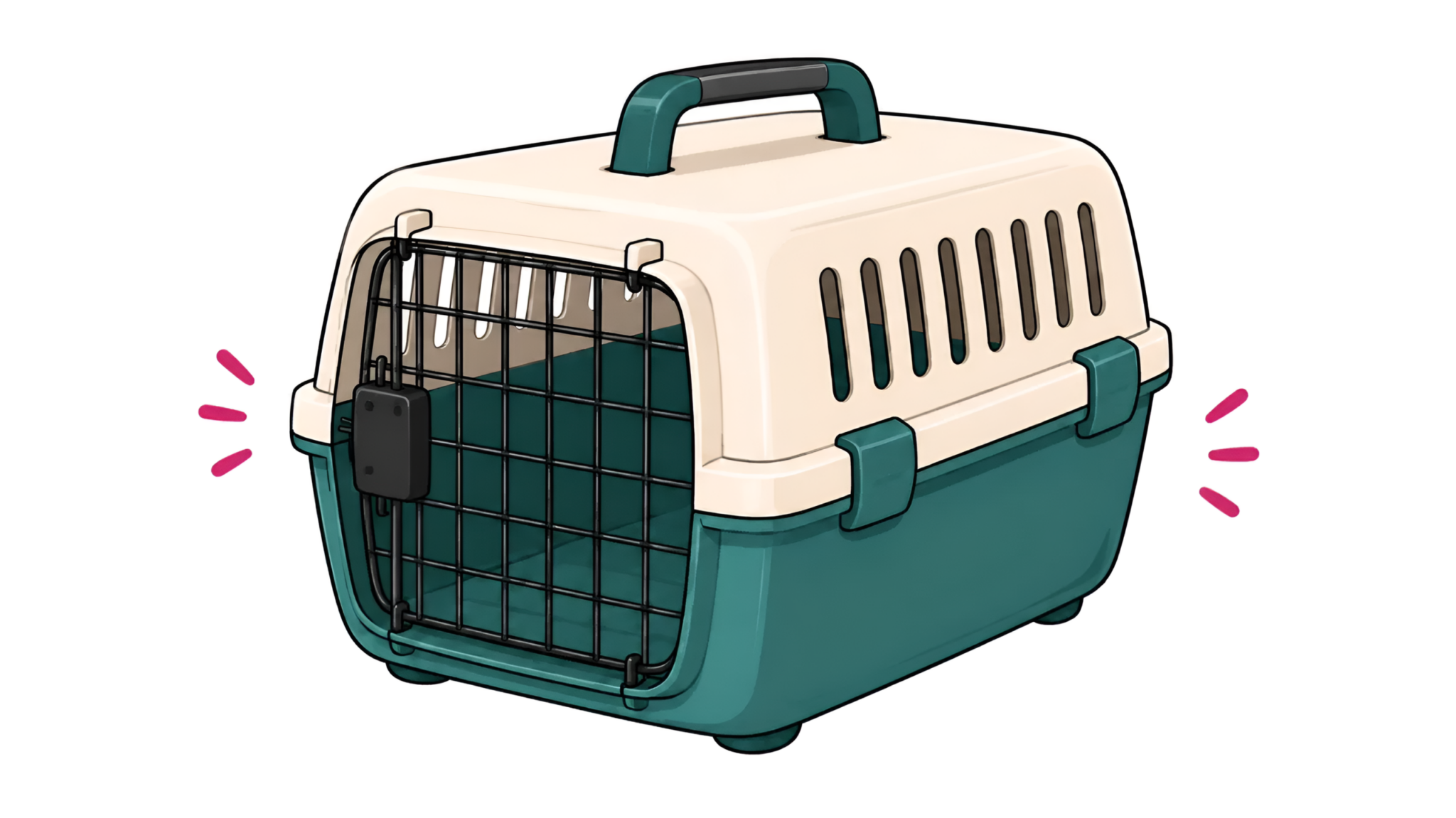
Best for Car Travel and Vet Visits: Petsfit Hard-Sided Small Animal Carrier (16 x 9 x 9 Inches)
The Petsfit hard-sided small animal carrier is specifically listed on Amazon as suitable for hedgehogs alongside rabbits, guinea pigs, and chinchillas, and its construction reflects the requirements car travel demands. Sixteen large ventilation holes on the front and back panels plus mesh windows on both sides ensure consistent airflow from multiple directions regardless of how the carrier is oriented in the car. The rigid plastic shell provides structural protection that no soft-sided bag can replicate in a collision, and the top-loading door gives easy access without tipping the carrier or disturbing your hedgehog unnecessarily. The interior safety leash prevents escape during entry and exit, and the soft washable mat on the floor is removable for cleaning.
At 16 by 9 by 9 inches it provides enough interior space for most adult hedgehogs to turn around and settle without feeling cramped, while remaining compact enough to fit comfortably on a car seat secured by a seatbelt looped through the handle. Line the base with a small piece of fleece cut to size for additional comfort and warmth, and tuck a SnuggleSafe disc underneath the fleece in cold weather.
Best Soft-Sided Carrier: Kaytee Come Along Small Animal Carrier (Medium)
The Kaytee Come Along carrier is the soft-sided option that comes up most consistently for small animal transport, and the medium size fits hedgehogs well without giving them so much room that they slide around. Fresh air vents on the flow-through window panel provide filtered airflow and soft filtered light that keeps the interior calm and dim — hedgehogs travel better in low light, as bright or flashing light during a car journey compounds stress significantly. The double zipper design closes securely at both ends, the e-z carry handle is comfortable for hand carrying, and a small external storage pocket holds treats, a folded fleece, and the SnuggleSafe disc when needed.
The interior is fabric-lined and washable, though the carrier itself shouldn’t go into a washing machine — spot clean with a vinegar solution and allow to air dry fully between uses. This carrier is the practical choice for vet visits where you’re carrying your hedgehog from the car to the waiting room and back, or for any situation where a hard-sided carrier would be cumbersome and car safety isn’t the primary concern.
Best Bonding Pouch: Hedgehog Bonding Bag (Small Fleece Pouch with Mesh Window)
A bonding pouch is a different product from a travel carrier, and it serves a different purpose. It’s designed for wearing against your body — tucked into a hoodie pocket or clipped to clothing — so your hedgehog can spend time close to you during the day while you move around the house. The warmth and heartbeat of being held against a person is one of the most effective bonding tools available, particularly for new hedgehogs that are still adjusting to their owner’s scent. The mesh window allows your hedgehog to look out and scent the environment while remaining enclosed and secure.
The specific bonding pouch most consistently recommended in the hedgehog community is made from tightly woven fleece with no loose threads, a mesh panel large enough for ventilation without being so open that your hedgehog feels exposed, and a closure that can’t work itself open while your hedgehog shifts around inside. Millermeade Farm’s Critter Connection recommends bonding pouches specifically for new hedgehog owners as one of the most effective tools for building a comfortable relationship. The Exotic Nutrition Hedgehog Bonding Bag available on Amazon is the version most widely available and most reviewed by hedgehog owners specifically.
Best Travel Companion Item: SnuggleSafe Microwave Heating Pad
Every carrier setup needs a heat solution for cold weather travel, and the SnuggleSafe is the only one that works without electricity. Microwave it for the appropriate time for your microwave’s wattage, wrap it in a thin fleece, and place it in the carrier underneath or alongside your hedgehog. It stays warm for up to 10 hours and has no cords, no batteries, and nothing that can malfunction during a journey. It’s the same product covered in our best hedgehog heating pad guide, and it belongs in your carrier kit as a permanent item kept ready for use rather than something you think about when you need it.
Never place the SnuggleSafe directly against your hedgehog without wrapping it first, and always allow it to cool completely before reheating. The surface temperature immediately after microwaving can be warm enough to cause discomfort at direct contact.
A Note on Temperature During Car Travel
Even with a SnuggleSafe, the car interior temperature during winter travel deserves active attention. Hedgehogs can begin to show signs of hibernation attempts when ambient temperature drops below 65°F, which a cold car reaches quickly in winter before the heating system catches up. Warm the car before placing your hedgehog inside, keep the carrier away from air conditioning vents in summer, and place it on the seat rather than in the footwell where floor-level temperatures are consistently lower. Keep the journey as short as practical and check on your hedgehog at every stop.
Conclusion
The right carrier for a hedgehog depends on what you’re asking it to do. Hard-sided for the car, soft-sided for short trips and vet waiting rooms, bonding pouch for at-home carrying and socialisation, and a SnuggleSafe disc in the kit for every cold-weather journey. None of these are expensive individually, and together they cover every transport situation a hedgehog owner will encounter.
For everything else your hedgehog needs at home and on the go, our best hedgehog products page has it all in one place.