



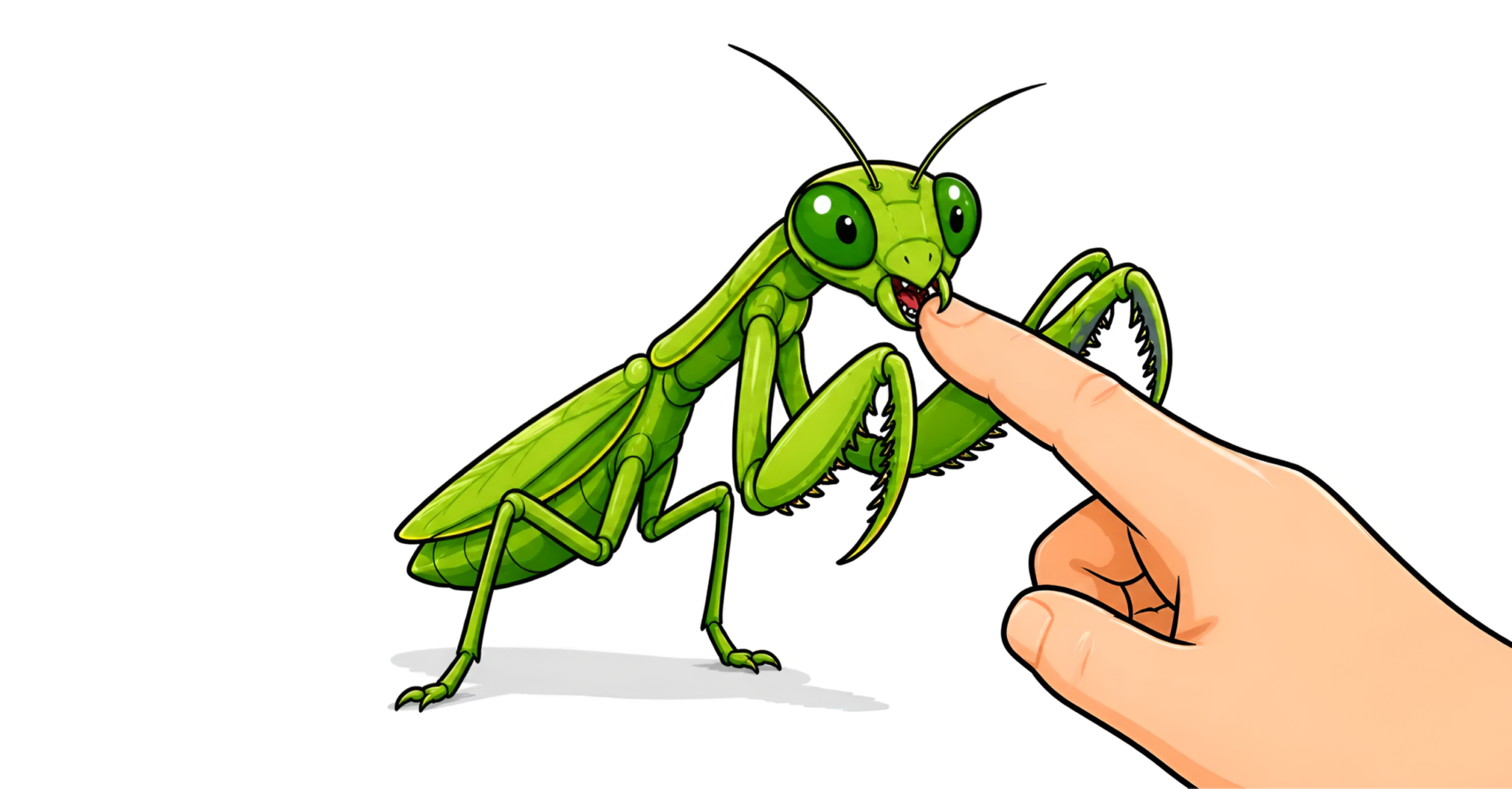
A lot of people spot a praying mantis for the first time, watch it slowly turn its alien-like head to stare directly at them, and immediately wonder whether those powerful jaws are something to worry about. It’s a fair thing to think about. These insects are ruthless predators capable of taking down prey much larger than themselves, so the question of whether they’d bite a human is a completely reasonable one. Read on to find out more.
Can A Praying Mantis Bite You?
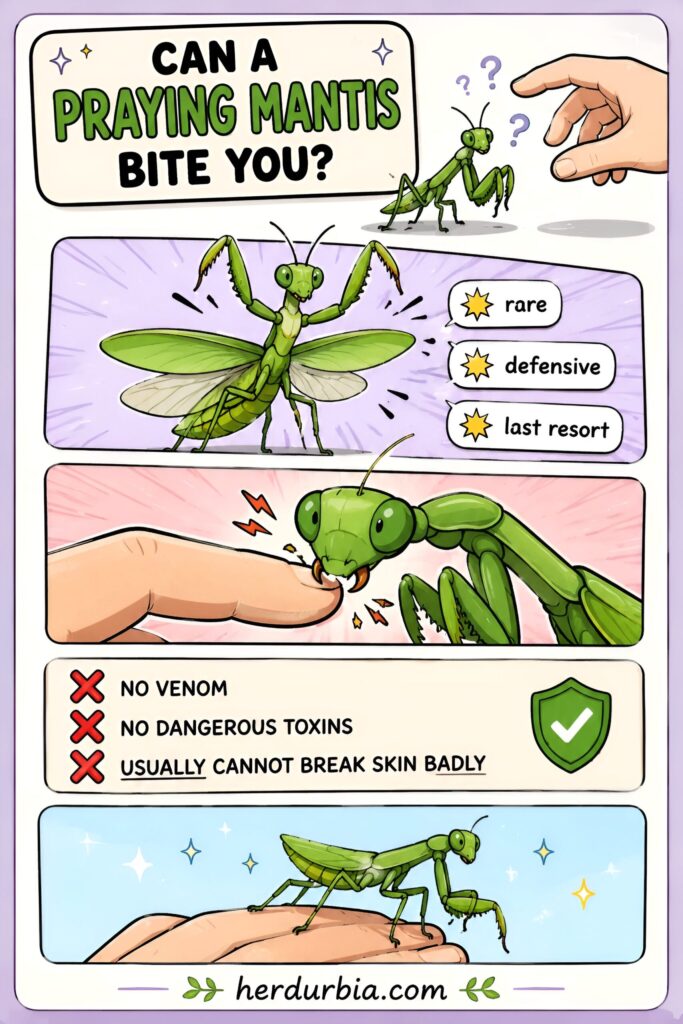
Yes, a praying mantis can bite — but it’s genuinely rare, and almost always the result of the insect feeling cornered or threatened. Praying mantises do bite humans, but it is very rare. If a praying mantis feels threatened by a human, the insect would likely take its defensive pose as opposed to trying to bite.
Biting is very much a last resort for these insects. Before they ever get to that point they’ll put on a full defensive display first — standing tall, spreading their wings wide, and raising their spiked forelegs in the air. We cover that behavior in detail in our article on are praying mantises venomous. Only when everything else fails and they feel genuinely trapped will a mantis resort to biting. Even then, their bites are not harmful to humans. They don’t have venom, and their jaws are not strong enough to break human skin.
What Does A Praying Mantis Bite Feel Like?
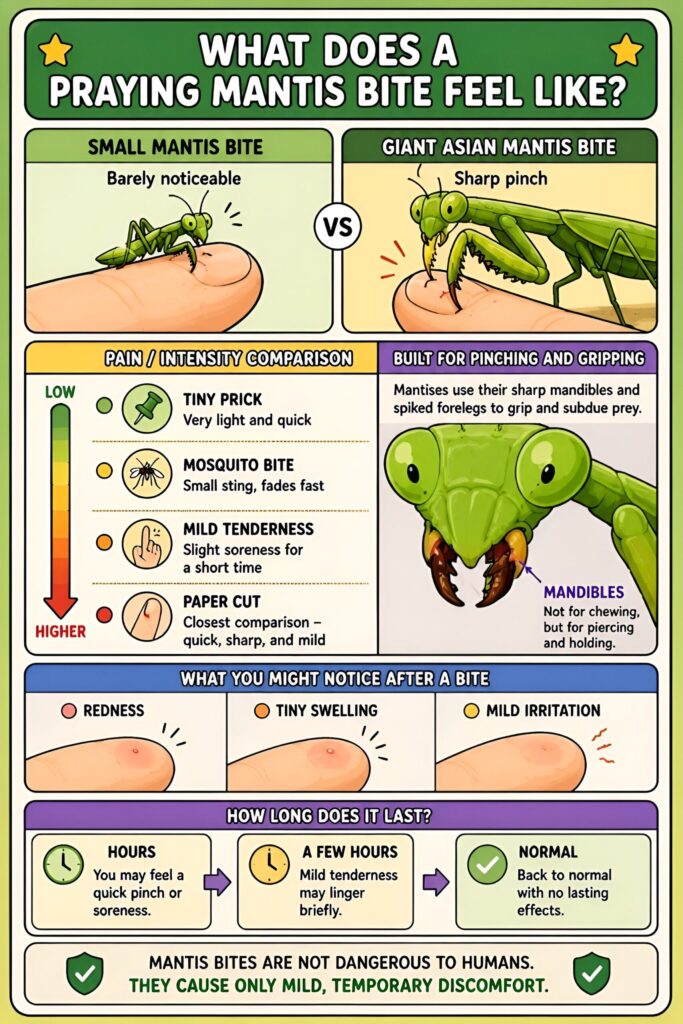
The experience is uncomfortable rather than truly painful. The bite itself typically feels like a sharp pinch or prick, and while it may break the skin, serious injury is rare. Unlike some insects, praying mantises don’t inject venom or carry diseases that can be transmitted through their bite.
Size makes a noticeable difference too. When praying mantises measuring three inches or less bite a human, the bite might not even be perceived. However, a bite from a larger mantis — they can grow up to nearly eight inches long — might cause a bit of discomfort, not unlike a mosquito bite. So a larger species like the giant Asian praying mantis is going to make its presence felt a lot more than a smaller one would. The initial discomfort typically subsides within a few hours, though mild tenderness might persist for a day or two.
What Should You Do If A Praying Mantis Bites You?
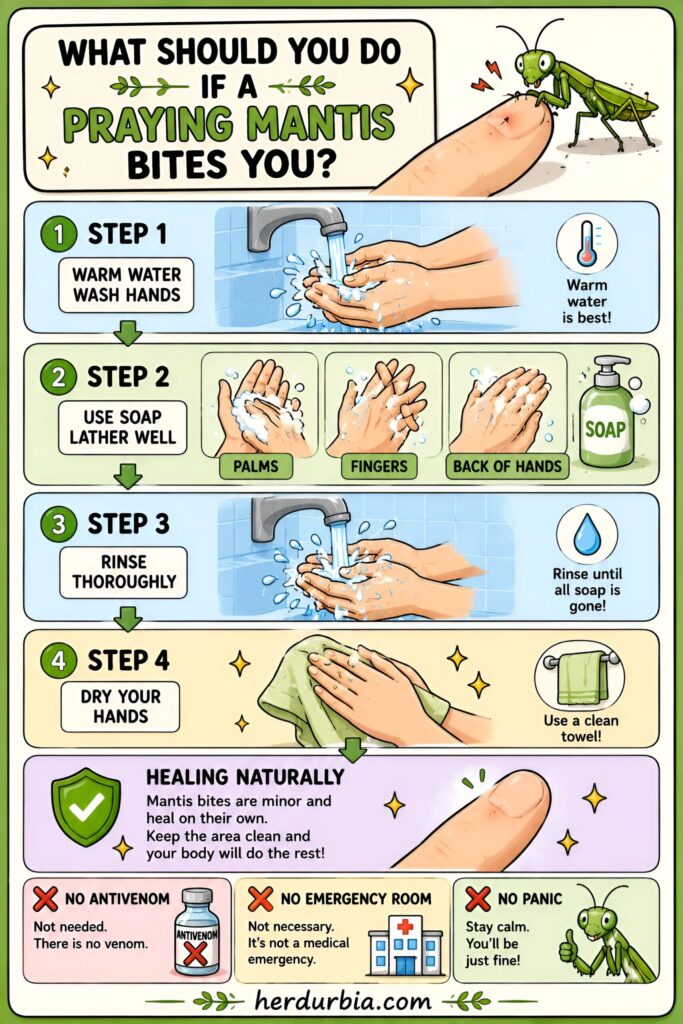
The treatment couldn’t be simpler. Healthline recommends that if you do get bitten, all you have to do is wash your hands well — wet your hands with warm water, apply soap, lather well for at least 20 seconds making sure to cover the back of your hands and between your fingers, rinse thoroughly, and dry your hands completely.
That’s genuinely all there is to it. No antivenom, no emergency room, no panic. Most praying mantis bites heal on their own without medical intervention. A quick wash with soap and water and you can carry on with your day as normal.
Why Would A Praying Mantis Bite A Human?
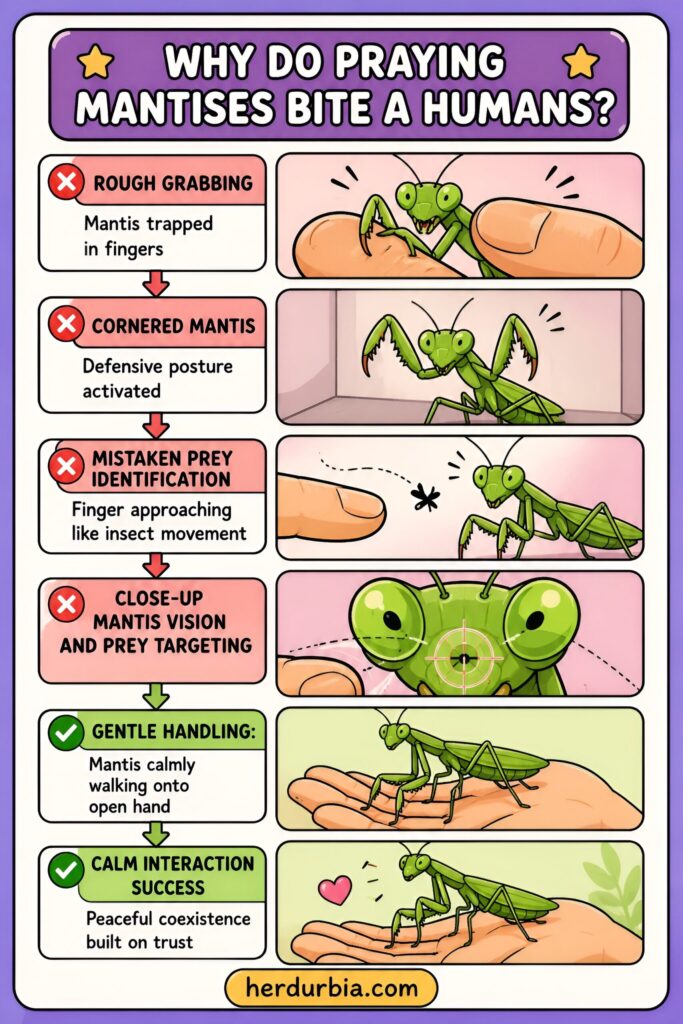
There are really only two scenarios where this happens. The first is being grabbed roughly — a mantis that can’t escape will defend itself. The second is a simple case of mistaken identity. They could bite by accident if they see your finger as prey, but like most animals, they know how to correctly identify their food. With their excellent eyesight, they’re likely to be able to identify you as something bigger than their usual prey.
This is exactly why how you handle a mantis matters so much. If you are gentle and careful in your approach, you can often pick them up and let them crawl on your hand. Many people even keep them as pets as their life cycle can be quite interesting to watch. Our full guide on can you hold a praying mantis covers exactly how to do this safely and confidently every time.
Can A Praying Mantis Bite Draw Blood?
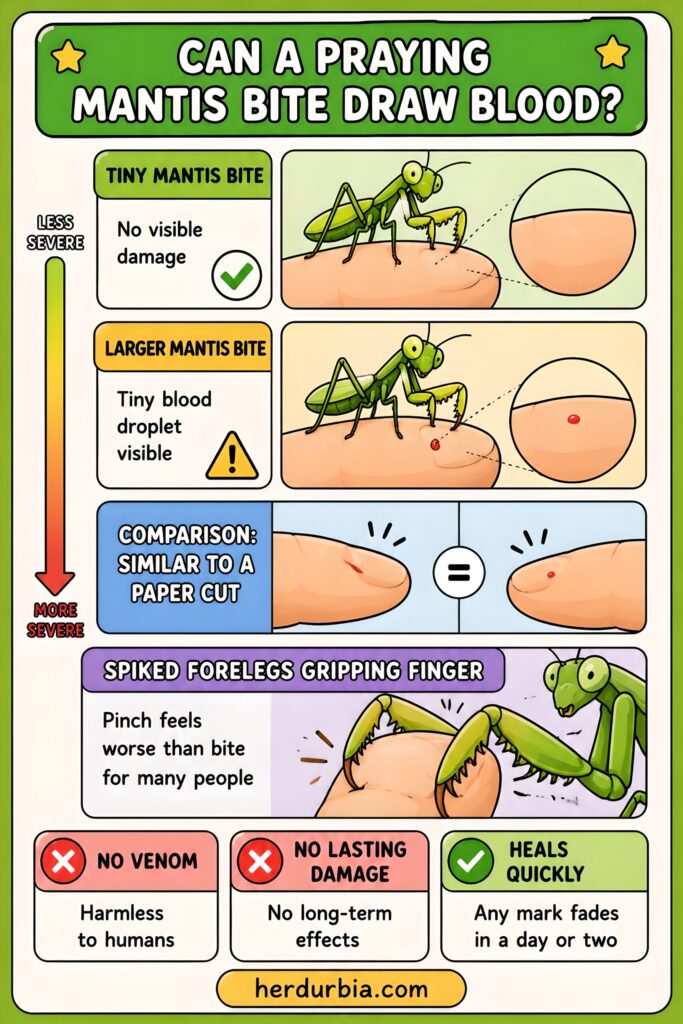
It can, but it’s far from guaranteed. Though a mantis may bite a human, they have no venom and won’t leave any lasting damage — bites may draw a couple of drops of blood, but that’s unlikely. Wildlife Informer compares it to nothing more serious than a paper cut — uncomfortable for a moment and completely forgotten shortly after.
It’s also worth knowing that the bite isn’t the only way a mantis can make its feelings known. Those spiked raptorial forelegs can deliver a sharp pinch if the mantis grabs your finger, which many people find more startling than the bite itself. This is the exact same mechanism the mantis uses to catch and hold live prey while it feeds, so it’s nothing personal — just instinct.
How Can You Avoid Getting Bitten?
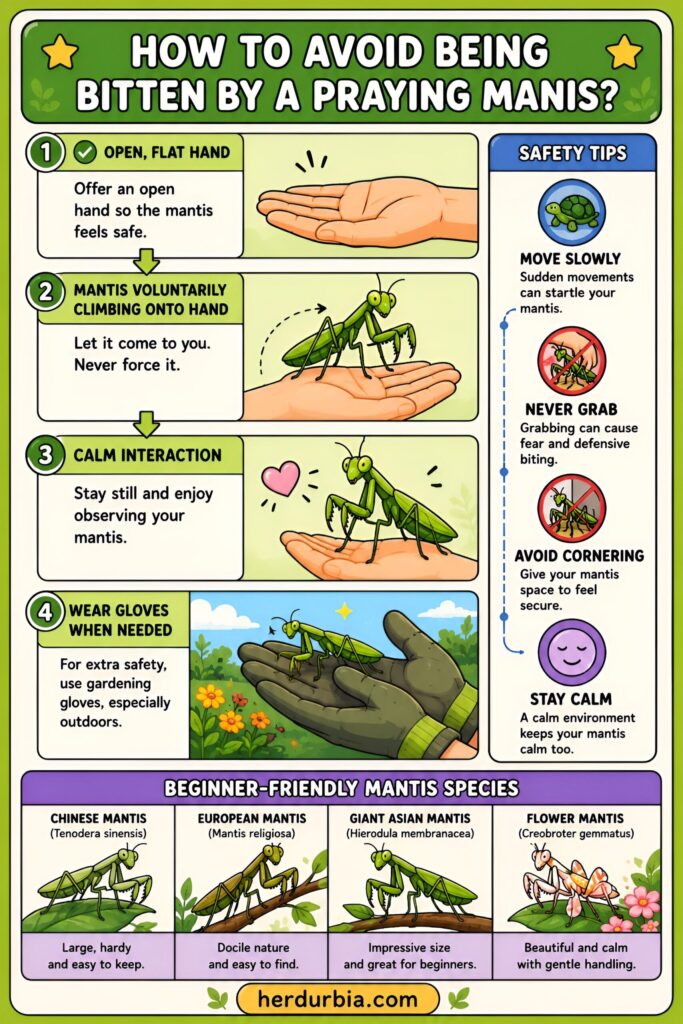
Never grab a mantis roughly or back it into a corner. Let it walk onto an open flat hand at its own pace and you’ll almost certainly never experience a bite. The insect is only likely to bite you if it feels threatened. Otherwise, praying mantises are generally gentle insects, especially if approached gently.
Wearing gloves while gardening in areas where mantises are active removes the risk entirely. And if you’re thinking about keeping one as a pet, choosing a species that’s known to be calm and handleable from the start makes a huge difference — our guide on the best praying mantis species for beginners is a great place to figure out which one suits you best.
Do Praying Mantises Bite Other Animals?
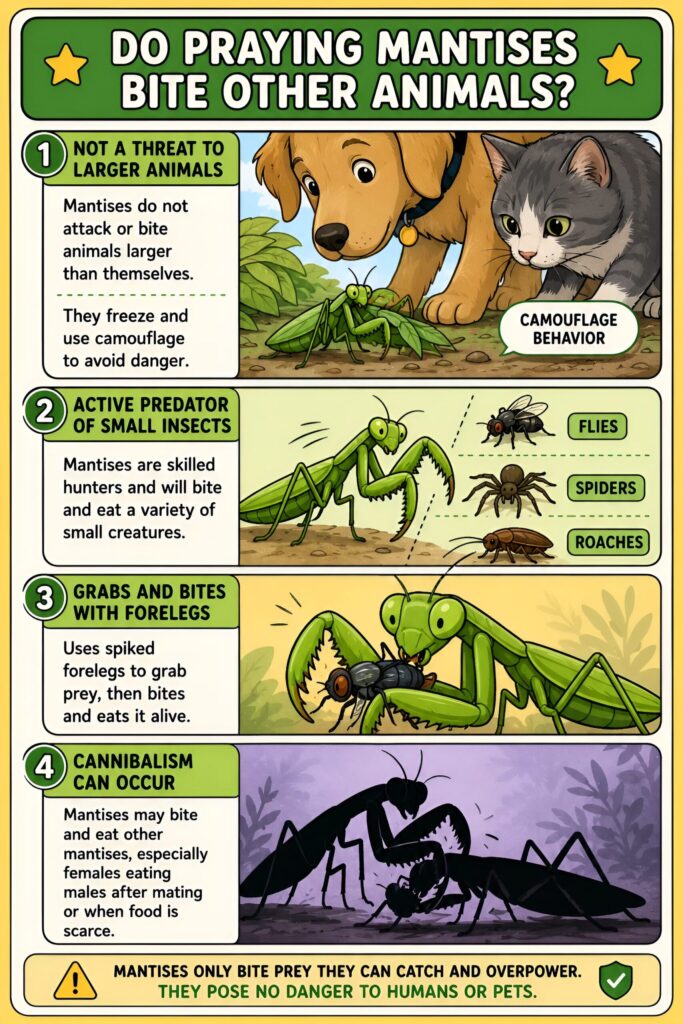
As far as your pets go, the risk is just as low as it is for you. A mantis is far more likely to freeze completely and rely on its camouflage than to engage with a curious dog or cat. Though a praying mantis bite is not really of concern to a human, it is a very big concern for many small insects. For the creatures that form their natural diet, those mandibles are an entirely different story. You can see just how ferocious that predatory behavior gets in our articles on can praying mantises eat spiders and praying mantis cannibalism.
Conclusion
Praying mantises can bite, but they almost never do — and when they do, it amounts to little more than a sharp pinch and a quick wash with soap and water. No venom, no lasting damage, no reason to panic. These insects are genuinely fascinating to observe and keep, and a little understanding of their behavior goes a very long way toward making every encounter with them a good one. Treat them with respect, handle them gently, and the chances of ever being bitten are extremely slim.
Keeping your praying mantis happy and healthy starts with knowing exactly what it needs — and that goes well beyond just avoiding bites. Whether you need the right enclosure, the right feeder insects, or the right care accessories to give your mantis the best possible life, it’s all waiting for you at Best Praying Mantis Products, where great mantis keeping is always within reach.