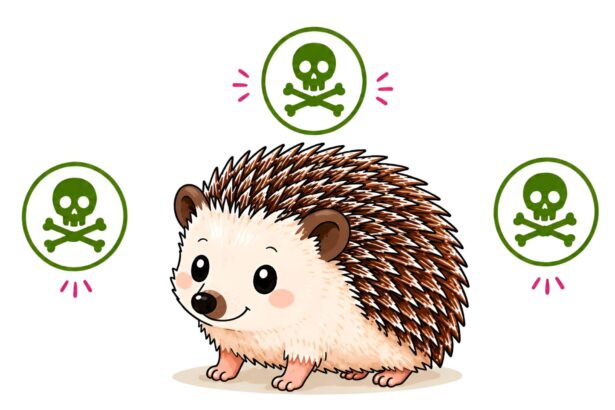

Are hedgehogs warm or cold blooded? It seems like a simple biology question, but for hedgehog keepers it is one of the most practically important pieces of knowledge you can have — because the answer has real, daily consequences for how you house, heat, and care for your hedgehog. The short answer is that hedgehogs are warm-blooded (endothermic) mammals. But the nuance that makes this question so interesting and so relevant to hedgehog care is that hedgehogs occupy an unusual physiological position among endotherms: they can, under certain conditions, partially or fully abandon their normal endothermic temperature regulation and enter a state of torpor or hibernation that resembles the cold-blooded behaviour of ectotherms like reptiles. Understanding this fully transforms how you think about hedgehog temperature management.
What Does Warm-Blooded and Cold-Blooded Actually Mean?
Before answering the hedgehog question specifically, it helps to establish what these terms actually mean biologically.
Warm-blooded (endothermic) animals generate their own body heat through internal metabolic processes — primarily through cellular respiration in muscle and organ tissue. They maintain a stable internal body temperature regardless of the external environmental temperature. Mammals and birds are endothermic. The advantage of endothermy is that it allows consistent physiological performance across a wide range of environmental temperatures — a warm-blooded animal can be active in cold conditions that would incapacitate a cold-blooded animal of similar size.
Cold-blooded (ectothermic) animals do not generate significant internal metabolic heat and rely on external heat sources — the sun, warm surfaces, ambient air temperature — to maintain their body temperature. Reptiles, amphibians, fish, and most invertebrates are ectothermic. Their body temperature and metabolic rate fluctuate with the environmental temperature, and they become lethargic or inactive when temperatures drop.
As noted in Mammalian Biology — a peer-reviewed journal focused on mammalian physiology — the distinction between endothermy and ectothermy is not always a clean binary in practice. Some mammals have evolved the ability to partially suppress their endothermic temperature regulation under specific conditions, entering states of reduced metabolic activity that save energy when food is scarce or temperatures are too cold for normal function. Hedgehogs are among the most notable examples of this physiological flexibility in the mammalian world.
Hedgehogs Are Warm-Blooded — But With a Significant Caveat
Hedgehogs are definitively warm-blooded mammals. Under normal conditions — appropriate environmental temperatures and adequate nutrition — a hedgehog maintains a stable internal body temperature of approximately 35–36°C (95–97°F), generated by the animal’s own metabolic processes. This is characteristic endothermy: the hedgehog’s body heat is internally produced and regulated independently of the environment.
This is what allows hedgehogs to be active at night in temperatures that would incapacitate reptiles — they can run several kilometres searching for food in conditions that a cold-blooded animal of similar size would find paralyzing. It is what allows hedgehogs to run at sustained speeds of 6–7 km/h regardless of the evening air temperature. Their endothermy is what makes hedgehogs the capable, active, ecologically successful animals they are.
The caveat is that hedgehog endothermy is conditional in a way that most other mammals’ endothermy is not. When environmental temperatures drop below a threshold — approximately 18°C (65°F) for the African pygmy hedgehog (Atelerix albiventris) that is most commonly kept as a pet — hedgehogs can begin to suppress their normal temperature regulation. Metabolic rate decreases, body temperature begins to fall, and the hedgehog enters a state of reduced activity. If the temperature drop continues, this can progress to full torpor — a state where the hedgehog appears cold, limp, and almost unresponsive, with dramatically slowed heart rate and breathing. Without intervention, torpor in an African pygmy hedgehog can be fatal.
Hibernation vs Torpor — An Important Distinction
The ability to enter reduced metabolic states when temperatures fall is linked to hibernation in wild European hedgehogs but is somewhat different in pet African pygmy hedgehogs. This distinction matters for hedgehog keepers.
European hedgehogs (Erinaceus europaeus) are true hibernators. They evolved in temperate European climates where winters are reliably cold and long, and they have a well-regulated physiological hibernation programme — entering a prepared metabolic slow-down in autumn after accumulating fat reserves, maintaining stable but low body temperature throughout the winter, and emerging in spring. As documented in research published in Journal of Animal Ecology, European hedgehog hibernation is an evolved adaptation to seasonal cold, and these hedgehogs are physiologically prepared for the transition. They build nest structures specifically for hibernation and emerge in reasonable condition when spring temperatures rise.
African pygmy hedgehogs (Atelerix albiventris) — the pet species — evolved in the tropical and subtropical grasslands of sub-Saharan Africa, where cold winters are not part of the natural climate. They did not evolve a regulated hibernation programme. Instead, when they encounter unexpected cold temperatures, they can enter an unregulated torpor — a physiological emergency response that is not the same as true hibernation. Unlike the European hedgehog’s prepared, controlled hibernation, African pygmy hedgehog torpor is uncontrolled and dangerous. The animal does not have stored fat reserves calibrated for winter survival; it has not prepared its physiology for a sustained period of cold; and it cannot reliably emerge from torpor without external warming assistance.
This is why the statement “hedgehogs hibernate” requires qualification for pet keepers. Wild European hedgehogs hibernate safely. Pet African pygmy hedgehogs enter potentially life-threatening torpor when exposed to cold — which is why the British Hedgehog Preservation Society and exotic animal veterinarians consistently emphasise that pet African pygmy hedgehogs must never be allowed to enter torpor. For a much more detailed treatment of this topic, our article on whether hedgehogs hibernate covers both species and the difference between planned hibernation and emergency torpor.
Why This Matters for Hedgehog Care
The warm-blooded-but-temperature-sensitive nature of hedgehogs — particularly African pygmy hedgehogs — has direct, daily consequences for responsible pet care.
Temperature maintenance is non-negotiable. The enclosure must maintain a consistent temperature of 22–27°C (72–80°F) at all times. This is above the threshold at which torpor risk begins, providing a meaningful safety margin. Temperatures below 18°C (65°F) put a pet hedgehog’s life in genuine danger. This cannot be achieved reliably in most temperate-climate homes without active heating in the hedgehog’s enclosure — room temperature in a typical house drops at night and during winter to levels that are dangerous for African pygmy hedgehogs.
A quality hedgehog heat lamp or hedgehog heating pad — or a combination of both — is essential equipment for any African pygmy hedgehog enclosure in a climate where temperatures can drop below 22°C. A hedgehog thermostat that regulates heating equipment automatically to maintain the target temperature range removes the need for manual monitoring and provides the most reliable temperature management. A hedgehog thermometer placed inside the enclosure (not outside it, where room temperature may read differently from cage temperature) lets you verify actual conditions at all times. Our guide on whether hedgehogs need heat lamps covers this question specifically.
Recognising torpor and responding correctly. Even with good temperature management, there may be power cuts, equipment failures, or unexpected cold events that cause a hedgehog’s enclosure temperature to drop. Knowing how to recognise torpor and respond is therefore essential knowledge:
A hedgehog entering torpor will appear increasingly lethargic, slow to respond, and cool to the touch. Its body temperature will feel noticeably colder than a normally active warm animal. In full torpor, the hedgehog will be limp, unresponsive to gentle touch, breathing very slowly, and may feel cold throughout its body.
The correct response is gradual warming — not rapid external heat application, which can cause cardiac stress. Hold the hedgehog against your body, inside your clothing if needed, to provide body warmth. An emergency heat source can be used to warm the environment around the hedgehog gently. As the animal warms, it should gradually become more responsive over 30–60 minutes. If it does not respond to warming within 30–60 minutes or shows any signs of severe distress, seek veterinary care immediately.
Seasonal and climate awareness. Hedgehog keepers in cold climates — including the UK, northern Europe, Canada, and northern US states — need to be particularly vigilant during winter months when ambient temperatures drop most significantly. Travel situations — car journeys, vet visits, moves — also create temperature risk, particularly if the hedgehog is transported in cold conditions. Our guide on how to travel by car with a hedgehog covers temperature management during transport specifically.
Diet supports thermoregulation. Because hedgehog body heat is generated metabolically, adequate nutrition directly supports the hedgehog’s ability to maintain its body temperature. A hedgehog that is not eating adequately — due to illness, stress, or incorrect diet — has reduced metabolic heat generation and is more vulnerable to temperature drops. Ensuring your hedgehog eats a complete, appropriate diet as covered in our best hedgehog food guide is directly relevant to thermoregulatory health.
The Wild Context — Where Different Species Live
The temperature sensitivity of pet African pygmy hedgehogs makes more sense when you consider where hedgehogs live in the wild. African pygmy hedgehogs originate from the warm grasslands, savannahs, and semi-arid scrublands of sub-Saharan Africa — Kenya, Tanzania, Uganda, Ethiopia, and surrounding countries — where temperature rarely drops below 15–18°C (59–65°F) even at night. Their thermoregulatory physiology evolved in this warm environment and has not adapted to northern-hemisphere cold winters.
European hedgehogs by contrast inhabit temperate Europe where winter temperatures regularly fall well below freezing, and their physiology reflects this — they are genuinely prepared for cold, with regulated hibernation as a survival strategy. The physiology of a wild European hedgehog found in January, when its body temperature has dropped to 4–5°C (39–41°F) in hibernation, is doing exactly what it evolved to do. A pet African pygmy hedgehog at the same temperature is in a life-threatening emergency.
Frequently Asked Questions
Are hedgehogs warm-blooded? Yes — hedgehogs are warm-blooded (endothermic) mammals that maintain a stable internal body temperature through metabolic heat generation. However, they can enter torpor when temperatures drop too low, which makes temperature management critical for pet hedgehogs.
Can hedgehogs survive in cold temperatures? Wild European hedgehogs can survive cold winters through true hibernation. African pygmy hedgehogs kept as pets cannot — cold temperatures trigger dangerous, unregulated torpor rather than controlled hibernation. Pet African pygmy hedgehogs must be kept at 22–27°C (72–80°F) consistently.
What temperature is too cold for a pet hedgehog? Anything below approximately 18°C (65°F) begins to create torpor risk for African pygmy hedgehogs. Aim to maintain enclosure temperature consistently between 22–27°C (72–80°F) using reliable heating equipment.
What should I do if my hedgehog goes into torpor? Warm it gradually by holding it against your body. Do not use hot water, hot pads placed directly on the skin, or rapid external heat sources. If the hedgehog does not respond to gradual warming within 30–60 minutes, seek veterinary care.
Do pet hedgehogs hibernate? Not safely. Wild European hedgehogs hibernate as a planned physiological process. African pygmy hedgehogs — the common pet species — enter an unregulated torpor when cold that is dangerous rather than protective. Pet African pygmy hedgehogs should never be allowed to enter torpor.
Temperature Is Everything — Get It Right
Of all the things hedgehog keepers need to manage correctly, temperature is the most immediately life-or-death relevant. A hedgehog in a too-cold enclosure can deteriorate into life-threatening torpor within hours. A hedgehog in a consistently warm, correctly managed environment lives a comfortable, healthy life with none of this risk. The investment in proper heating equipment and a reliable thermostat is one of the most important you will make as a hedgehog keeper. For keeper-tested recommendations on every product that supports excellent hedgehog care — from heating and enclosure setup to nutrition, grooming, and enrichment — Best Hedgehog Products is your comprehensive guide to the best gear in every category of hedgehog keeping.