
The axolotl lifespan is one of the first things prospective owners should understand before bringing one home — because this is not a short-term commitment. Axolotls are long-lived animals by aquarium standards, and the decisions you make about their care from day one have a direct and measurable effect on how long they live. This article covers everything you need to know about axolotl lifespan: typical ranges in captivity versus the wild, what shortens it, what extends it, and what signs of aging look like so you can care for your axolotl appropriately at every stage of its life.
Image suggestion: A healthy adult axolotl with full feathery gills resting in a clean, well-maintained tank. Alt text: “axolotl lifespan — healthy adult axolotl with full gills in well-maintained tank”
How Long Do Axolotls Live?
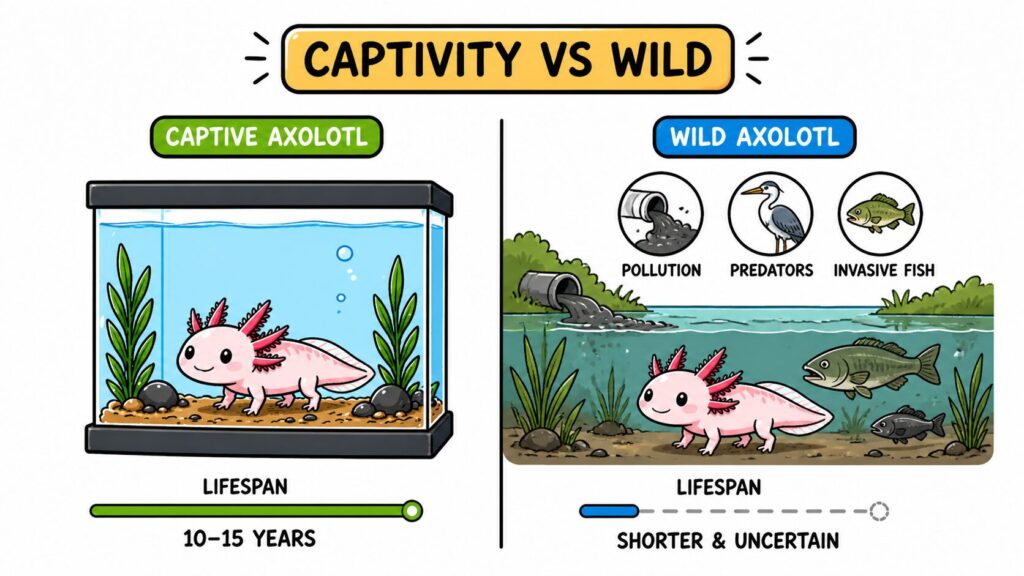
In captivity, axolotls typically live between 10 and 15 years with proper care. This is the range most consistently reported by experienced keepers and supported by research from institutions that maintain large captive populations. The Ambystoma Genetic Stock Center at the University of Kentucky — one of the world’s most important axolotl research facilities — has maintained axolotl colonies for decades and documents lifespans consistent with this range under optimal husbandry conditions.
There are well-documented accounts of captive axolotls living beyond 15 years, and some keepers report animals reaching 17 or even 20 years, though these represent exceptional individuals kept under excellent conditions rather than the expected average. Just as with any animal, individual variation plays a role — some axolotls are simply more constitutionally robust than others, all else being equal.
In the wild, axolotl lifespan is considerably harder to measure, but the wild population is now so critically diminished that data is limited. The IUCN Red List classifies the axolotl as Critically Endangered, with fewer than 1,000 individuals estimated to remain in Lake Xochimilco. Wild axolotls face predation, habitat degradation, pollution, and competition from invasive species — all of which reduce effective lifespan compared to the protected conditions of a well-run captive tank. You can read more about the conservation situation in our article on whether axolotls are endangered.
What Affects Axolotl Lifespan Most?
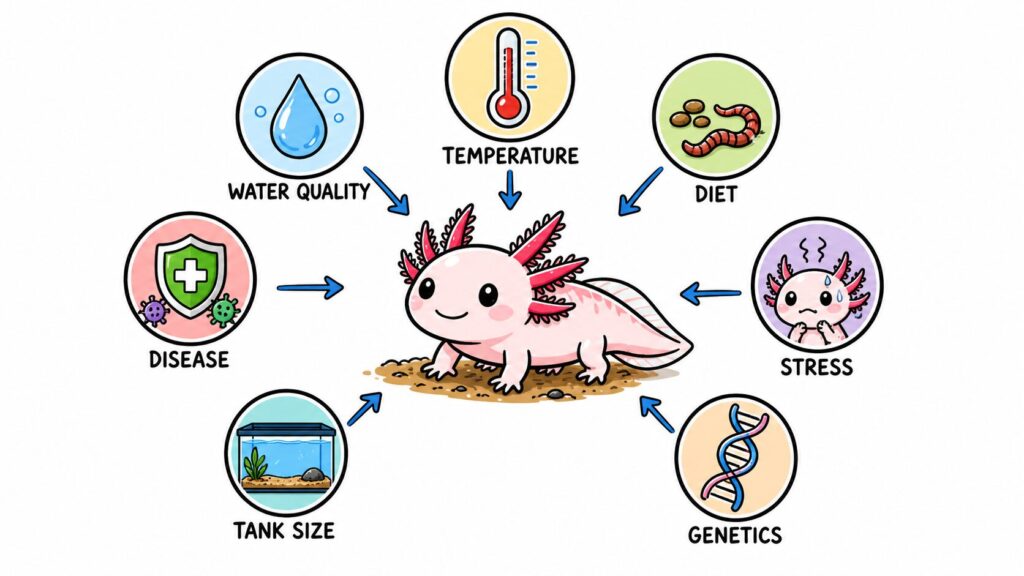
The axolotl lifespan in captivity is not simply a fixed biological clock that runs out at a predetermined time — it is profoundly shaped by husbandry quality. The difference between an axolotl that lives 5 years and one that lives 15 years is almost always a difference in how it was cared for. Understanding the factors that most influence lifespan gives you direct control over your animal’s longevity.
Water Temperature
Temperature is the single most powerful environmental variable affecting axolotl lifespan, and chronic exposure to warm water is probably the leading cause of premature death in captive axolotls. Axolotls are cold-water animals that thrive between 60–68°F (16–20°C). Above 72°F, they experience significant physiological stress. Above 75°F, organ function begins to fail. The cumulative damage of even mild chronic overheating — running a tank at 70–72°F consistently rather than 64–66°F — compounds over months and years, shortening lifespan measurably even if no acute crisis occurs.
An axolotl kept at the correct temperature maintains a properly functioning immune system, normal metabolic rate, healthy gill function, and efficient digestion — all of which contribute to longevity. Our article on what temperature axolotls need covers this in complete detail. For owners in warm climates, a water chiller is not an optional upgrade — it is fundamental infrastructure for a long-lived axolotl. A reliable tank thermometer is equally essential for knowing exactly where your tank sits at all times.
Water Quality
Water quality is inseparable from temperature when it comes to axolotl lifespan. Ammonia, nitrite, and elevated nitrate are chronically toxic to axolotls even at sub-lethal levels. An axolotl living in water with consistently elevated ammonia — perhaps 0.25 ppm rather than the ideal 0 ppm — may not show obvious acute symptoms, but the gill and organ damage accumulates silently over time, shortening the axolotl lifespan significantly.
Maintaining zero ammonia and zero nitrite, with nitrate below 20 ppm, through proper filtration and regular water changes is the foundation of good water quality management. A quality water test kit should be used at least weekly in a functioning tank. All tap water added must be treated with a water conditioner to remove chlorine and chloramine. Our guide on how to clean an axolotl tank covers the full maintenance routine, and our article on ammonia burn in axolotls explains what happens when water quality goes wrong and how to address it.
A powerful, appropriately sized axolotl filter running continuously is the mechanical backbone of water quality management. No amount of water change frequency can fully compensate for a filter that is undersized for the tank’s bioload.
Diet and Feeding
Nutrition has a significant impact on axolotl lifespan, both through what is fed and how much. Axolotls are carnivores that need a high-protein diet to maintain tissue health, immune function, and the extraordinary regenerative capacity that makes them biologically remarkable. Nutritionally poor food — low-quality pellets with excessive filler ingredients, or a diet limited to bloodworms without more complete protein sources — fails to provide the full nutritional profile an axolotl needs over a decade or more of life.
The best foundation for a long axolotl lifespan is a diet primarily based on quality nightcrawlers, supplemented with high-quality pellets and occasional bloodworms. This combination provides complete protein, essential fatty acids, and the micronutrients axolotls evolved to obtain from whole-animal prey.
Overfeeding is as damaging as underfeeding in the long run. Chronically overfed axolotls develop liver stress, poor water quality from excess waste, and the physiological strain of obesity. Our article on whether axolotls can get fat covers how to read body condition accurately and feed appropriately for your axolotl’s age and size.
Image suggestion: An axolotl being fed a nightcrawler with feeding tongs in a well-maintained tank. Alt text: “axolotl lifespan and diet — feeding nightcrawler to axolotl with tongs”
Stress Levels
Chronic stress is a well-documented mechanism of shortened lifespan in virtually all animals, and axolotls are no exception. According to research published through the National Institutes of Health on amphibian stress physiology, sustained elevation of cortisol — the primary stress hormone — suppresses immune function, impairs digestion, reduces reproductive fitness, and accelerates cellular aging.
Sources of chronic stress in captive axolotls include incorrect temperature, poor water quality, inadequate hiding spots, excessive handling, inappropriate tank mates, bright constant lighting, and tank vibration from noise sources. Addressing each of these is not just about immediate comfort — it is about protecting the axolotl lifespan over the years that follow.
Providing caves and hides where axolotls can retreat and feel secure, maintaining a consistent light-dark cycle with an appropriate tank light, and placing the tank in a stable, low-vibration location all contribute to a lower-stress environment and a longer axolotl lifespan.
Disease and Health Management
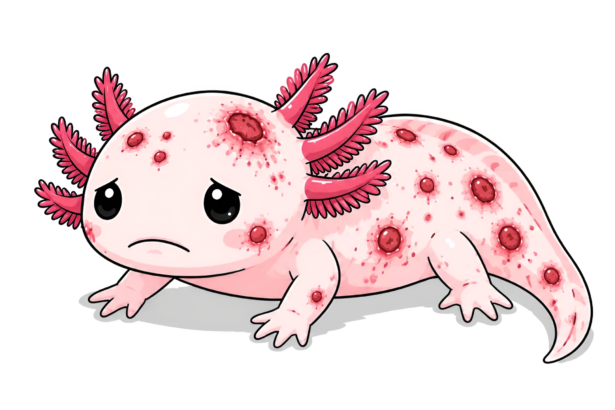
Axolotls that experience repeated illness, untreated infections, or chronic health issues live shorter lives. Early identification and appropriate treatment of health problems — fungal infections, bacterial infections, parasitic infestations — matters enormously for long-term outcomes. Axolotls that receive prompt care when problems arise, in a tank that is already well-maintained, recover well from many conditions. Axolotls in chronically poor conditions that develop repeated infections face a compounding decline that reduces their effective lifespan.
Our article on whether axolotls carry diseases covers the health risks axolotls face and what to watch for. Having aquarium salt, methylene blue, and a quarantine tub on hand means you can respond immediately when something looks wrong, rather than waiting while the problem worsens.
Establishing a relationship with a veterinarian experienced with aquatic animals or amphibians is worth doing before you have an emergency. The Association of Reptilian and Amphibian Veterinarians maintains a directory of qualified vets and is a good starting point for finding appropriate professional support.
Tank Size and Environment
The size and quality of the tank environment affects axolotl lifespan in ways that are easy to underestimate. A tank that is too small — commonly a 10-gallon setup for an adult axolotl — makes stable water quality significantly harder to maintain, as smaller water volumes are more vulnerable to rapid parameter swings. It also restricts the axolotl’s ability to move normally, which can contribute to physical and psychological stress over time.
The minimum for a single adult axolotl is 20 gallons, with 40 gallons being considerably more conducive to stable water quality and normal behavior. Our guide to the best axolotl tanks covers the most suitable options across different budgets. A larger tank is one of the most straightforward investments in axolotl lifespan available to any owner.
Tank plants and décor that create a stimulating, naturalistic environment also contribute to behavioral wellbeing, which is increasingly recognized as a component of animal longevity. An axolotl with places to explore, hide, and rest feels more secure and expresses a wider range of natural behaviors — all of which are associated with healthier, longer lives.
Genetics and Morph
Genetics plays a role in axolotl lifespan, though it is harder to control than environmental factors. Some axolotl morphs carry higher rates of certain genetic issues — for instance, some heavily inbred lines may have reduced immune competence or developmental abnormalities. Sourcing your axolotl from a reputable breeder who maintains genetic diversity and practices responsible breeding gives your animal a better genetic starting point than animals from poorly managed breeding operations.
No morph is inherently dramatically shorter-lived than another under good care conditions, but the quality of the lineage behind the individual animal matters. Our axolotl morphs guide covers the full range of color types available in the hobby, and asking breeders about their breeding practices is a reasonable part of selecting a healthy animal.
What Does Axolotl Aging Look Like?
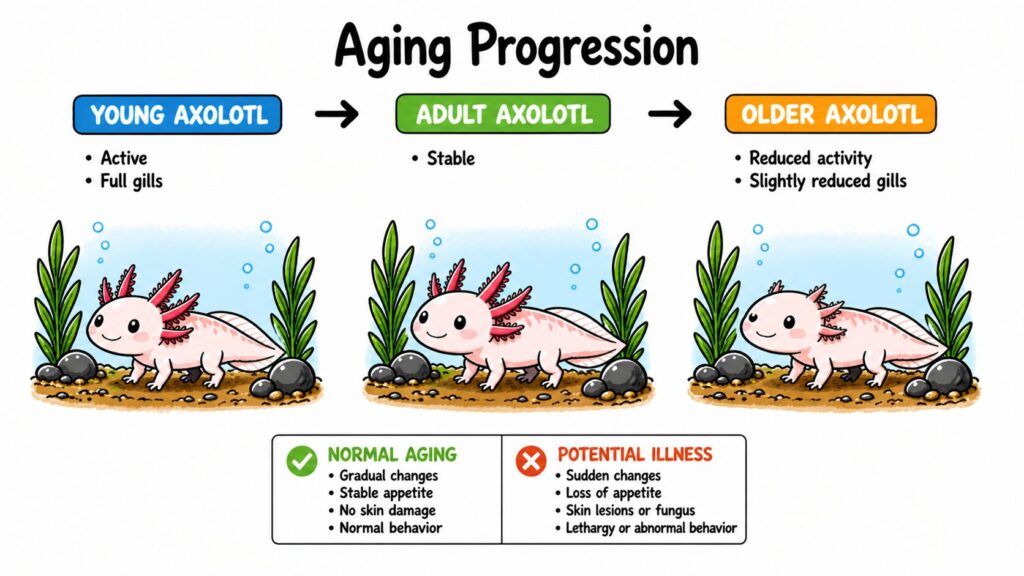
Recognizing age-related changes in your axolotl helps you distinguish normal aging from health problems, and adjust care accordingly.
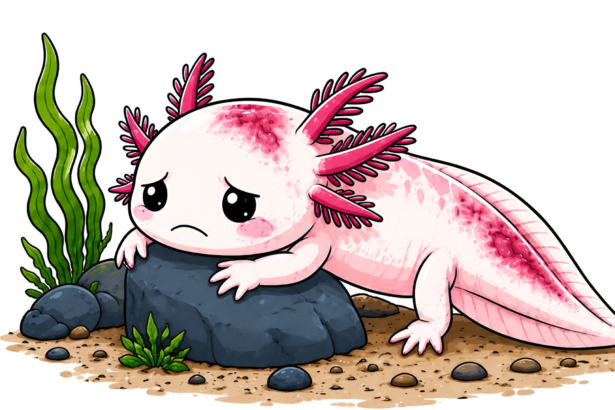
Reduced activity is one of the first age-related changes many owners notice. A young axolotl may be visibly active during its evening window and quick to respond to stimuli. An older axolotl spends more time resting, is slower to respond to feeding cues, and moves around the tank less overall. This is normal and should not be confused with illness-related lethargy — the key differentiator is that an aging axolotl still responds to food, has normal gill color and texture, and is in a well-maintained tank with good parameters.
Reduced appetite is common in older axolotls. An animal that previously ate enthusiastically every two to three days may become less interested in food or may eat smaller amounts. As long as body condition remains healthy — a gently rounded belly without severe weight loss — reduced appetite in an old axolotl is not automatically a cause for alarm. Our article on whether axolotls sleep also touches on how rest and activity patterns change with age.
Gill changes can occur with age. In some older axolotls, gill volume reduces slightly compared to the lush, full gills of young adults. As long as the gills remain functional, uninfected, and the axolotl is not showing respiratory distress — gasping, labored breathing, constant surface gulping — this is an age-related cosmetic change rather than a medical emergency.
Physical recovery from minor injuries may slow with age. Axolotls are famous for their regenerative abilities, documented extensively in research published through institutions like the Max Planck Institute for Developmental Biology, but regeneration rates do slow with age. An old axolotl that nips a gill tip will likely still regenerate it, but more slowly than it would have at two years old.
Image suggestion: An older axolotl resting calmly in its tank with relaxed gills, showing natural aging. Alt text: “aging axolotl lifespan — older axolotl resting calmly with relaxed gills”
How to Maximize Axolotl Lifespan
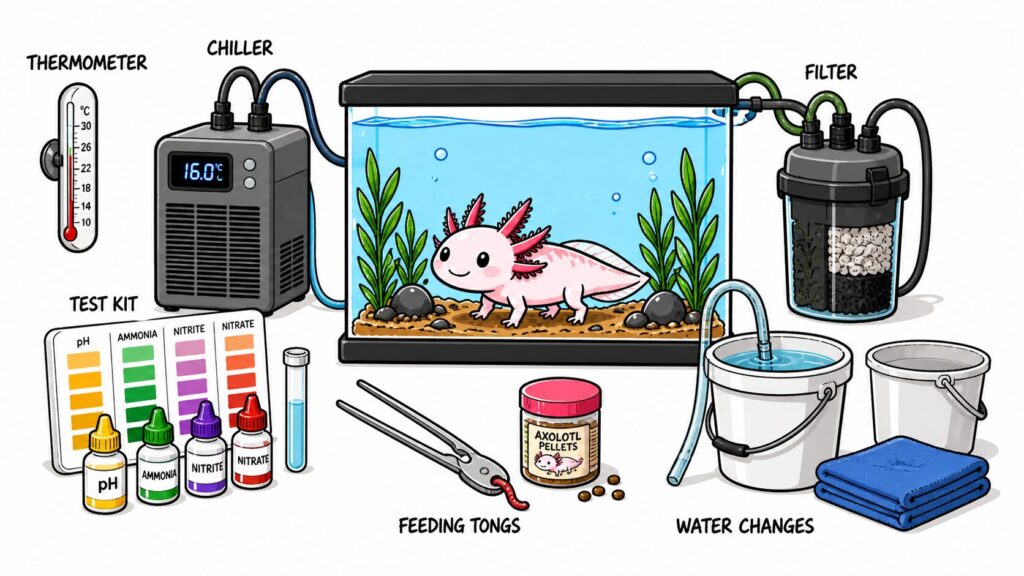
Pulling together everything above, the practical steps that most reliably extend axolotl lifespan are consistent and achievable for any committed owner.
Keep the temperature between 60–68°F at all times, using a water chiller or cooling fan during warm months and monitoring with an accurate thermometer daily. Test water parameters at least weekly with a quality test kit and perform partial water changes consistently. Feed a nutritionally complete diet of primarily nightcrawlers and quality pellets on a regular schedule, removing uneaten food promptly with a turkey baster. Provide adequate hides and a secure, low-stress tank environment. Address health problems early and do not leave developing symptoms unattended.
These are not complicated interventions — they are consistent, attentive husbandry applied over years. The axolotls that reach 15 years old are almost universally the ones that received exactly this kind of care from day one.
Axolotl Lifespan Compared to Other Aquarium Animals
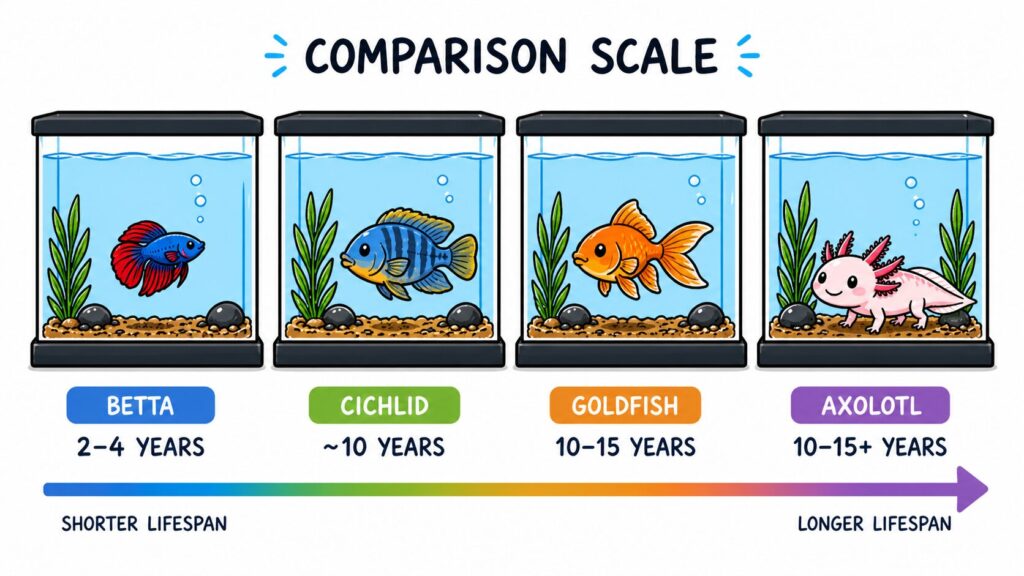
For context, the axolotl lifespan compares very favorably to most aquarium fish. Common aquarium fish like bettas live two to four years. Goldfish can live 10–15 years under excellent conditions, but most do not. Larger cichlids might reach 10 years. In this context, axolotls are among the longest-lived aquarium animals available to hobbyists — which is part of what makes them such a rewarding choice for committed keepers and such a poor choice for anyone looking for a low-commitment pet.
Before committing to an axolotl, check that ownership is legal in your area. Our articles on why axolotls are illegal in some places and whether it is legal to own an axolotl are important reading before you buy. You should also consider the full axolotl care guide to understand the complete commitment involved.
Frequently Asked Questions
What is the average axolotl lifespan in captivity? Between 10 and 15 years with good care. Some individuals live longer, and axolotls in suboptimal conditions may live considerably less.
What kills axolotls most often? Water quality problems — particularly ammonia toxicity — and temperature stress are the most common causes of premature death in captive axolotls. Both are preventable with proper equipment and consistent maintenance.
Do axolotls die suddenly or show signs of decline? Both happen. Acute water quality crises or temperature spikes can kill axolotls relatively quickly. Chronic issues tend to produce a gradual decline — reduced appetite, weight loss, gill degradation, increasing lethargy — that unfolds over weeks or months before the animal dies. Monitoring your axolotl regularly and knowing what healthy looks like makes it much easier to catch gradual decline early.
Does the morph affect how long an axolotl lives? Not significantly under equivalent care conditions. All morphs are the same species and have comparable baseline biology. Genetic quality from responsible breeding matters more than morph.
Can axolotls die from old age rather than illness? Yes. An axolotl that has been well-cared for throughout its life will eventually reach a point of natural senescence — reduced appetite, decreased activity, slowed regeneration — and die peacefully of old age rather than from any specific disease. This is the outcome every committed keeper works toward.
Final Thoughts on Axolotl Lifespan
Axolotl lifespan is not a fixed number — it is an outcome, shaped daily by the quality of care an axolotl receives. The difference between five years and fifteen comes down almost entirely to temperature, water quality, nutrition, and stress management applied consistently over the long term. That is both a responsibility and an opportunity: the care you provide truly matters, and every good decision you make contributes to more years with an animal that is genuinely unlike any other.
An axolotl that lives long lives well — and living well starts with the right gear. From chillers and filters to food, test kits, and everything in between, find the complete collection of carefully chosen axolotl essentials at the Herdurbia Best Axolotl Products hub — because every year of your axolotl’s life is worth protecting.