
Origin And Natural Habitat
The Amazonian lowland tropical forests of Bolivia are the primary home of Acanthoscurria insubtilis, with some records extending into adjacent parts of Brazil. The species has been documented in Carrasco National Park in the Cochabamba Department of Bolivia — a protected area spanning the transition zone between the Andean foothills and the Amazonian lowlands, characterised by lush vegetation, high rainfall averaging around 2,500mm annually, and mean temperatures of approximately 24°C. The park’s extraordinary altitudinal range, from around 280 metres up to over 4,700 metres above sea level, reflects the dramatic vertical geography of this region, though A. insubtilis occupies the lower, warmer, more humid forest zones rather than the cold highland extremes.
In the wild, this species constructs silk-lined burrows in concealed locations — rock crevices, the spaces beneath fallen logs, cavities inside living trees, and along ground ravines. This variety of microhabitat use reflects a degree of opportunism in its burrowing behaviour rather than strict dependence on a single retreat type. The consistently warm, humid Amazonian forest climate with its high annual rainfall is the environmental template that captive care needs to approximate.
Scientific Classification
First described by the prolific French arachnologist Eugène Simon in 1892, Acanthoscurria insubtilis was originally placed in the genus Crypsidromus as C. bolivianus before being synonymised under Acanthoscurria. A 2014 redescription provided the first detailed morphological characterisation of both male and female specimens, establishing diagnostic features including the pyriform male palpal bulb with developed prolateral and apical keels and a subapical granular area. The species closely resembles Acanthoscurria theraphosoides in sexual organ structure but is distinguished by a distinctive dark patch on the opisthosoma. Full classification: Kingdom Animalia, Phylum Arthropoda, Class Arachnida, Order Araneae, Infraorder Mygalomorphae, Family Theraphosidae, Subfamily Theraphosinae, Genus Acanthoscurria, Species A. insubtilis Simon, 1892.
Species Overview
Within the Acanthoscurria genus, A. insubtilis occupies an interesting position as the quieter, more understated sibling to the boldly patterned Brazilian White Knee and the vivid Bolivian Red Rump. Where those species announce themselves through high-contrast colouration, the Bolivian Black Velvet offers a subtler appeal — a large, heavily built spider whose dark, velvety appearance and docile temperament make it a rewarding keeper species for those who appreciate understated elegance over spectacle. It is less commonly encountered in the hobby than its better-known genus relatives, which adds to its appeal for collectors looking beyond the standard catalogue. Beginner to intermediate is the honest experience recommendation, with the adult size and urticating hair capability the primary factors to consider.
Appearance And Size
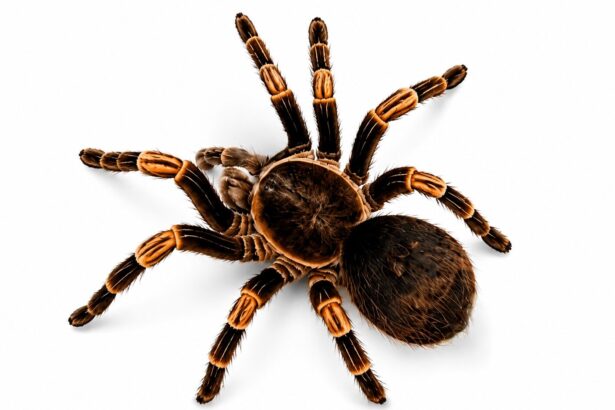
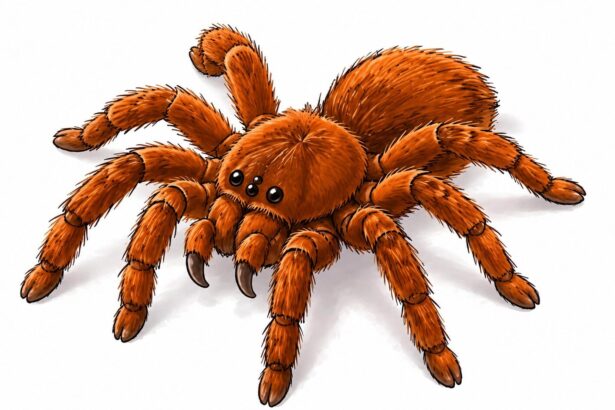
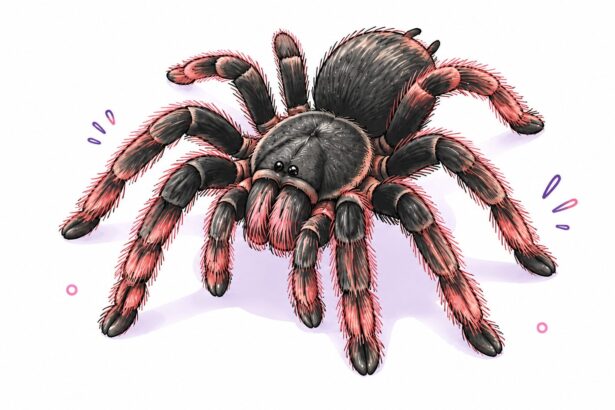
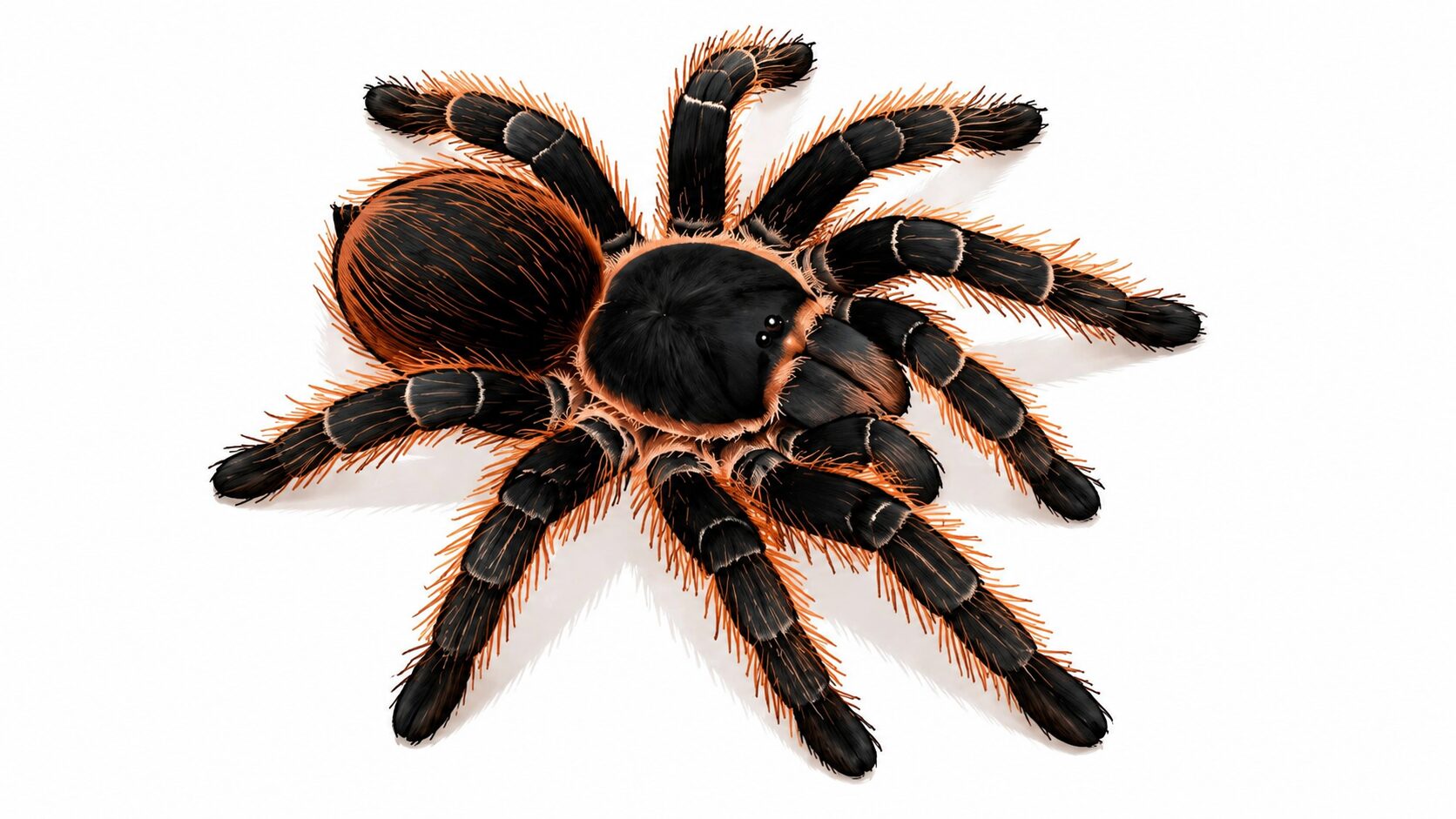
The common name does the descriptive work accurately. Males display a dark brown to near-black overall colouration with pinkish setae on the opisthosoma, carapace, and legs. Females share this colouration but with a somewhat lighter carapace and opisthosoma, and a cream to pale border around the carapace that becomes more visible in good light. The dark patch on the opisthosoma is the taxonomic distinguishing mark from the closely related A. theraphosoides. The dense setae covering the body give the spider the velvety, tactile-looking surface quality the common name references — in good lighting, the dark colouration has a depth to it that photographs rarely capture fully. Some sources note a chocolate-brown rather than truly black body tone, which is accurate for the female carapace and abdomen in particular; the males tend darker overall.
Adults reach a diagonal legspan of 6 to 8 inches, with females larger and bulkier than males as typical for the genus. Growth rate is described as fast — some keepers report slings reaching 4 inches within a year under optimal feeding and temperatures — making it a species that rewards consistent feeding with visible progress.
Housing
Floor space is the primary enclosure priority for this large terrestrial species. A footprint of at least 30 by 30 centimetres provides appropriate room for an adult female, with height kept modest — twice the spider’s legspan at most — to reduce fall risk for a heavy adult. The enclosure lid must close and latch properly; a heavy-bodied Acanthoscurria in good condition is strong enough to push an unsecured lid. Front-opening access is preferred for maintenance, reducing disturbance at the top of the enclosure where the spider may have webbing near the lid. Slings can be started in small deli cup-style containers, transitioning through progressively larger enclosures as growth warrants. Our best tarantula enclosure guide covers terrestrial formats with appropriate floor space, substrate depth, and security for large active South American species.
Enclosure’s Decorations
A piece of cork bark at substrate level provides the primary retreat option and a webbing anchor. Given this species’ documented use of rock crevices and tree hollows in the wild, a curved cork tube or a flat piece positioned to create a sheltered cavity replicates the natural retreat character well. A shallow water dish at the opposite end of the enclosure from the hide is essential. Fake plants and additional cork bark pieces add surface interest and give the spider further options for webbing attachment. The species will modify its space through silk construction around its chosen retreat, which becomes part of the enclosure’s character over time. Our best tarantula cork bark and best tarantula fake plants guides cover appropriate pieces for large terrestrial setups.
Substrate
Four to six inches minimum for adults, using a moisture-retaining blend that holds moderate dampness and supports the opportunistic burrowing this species engages in around its chosen retreat. Coconut coir and peat moss in equal parts is reliable, with optional topsoil for structural firmness. The Amazonian lowland forest habitat — 2,500mm of annual rainfall, consistently warm — indicates this species expects genuinely damp conditions rather than the semi-arid tolerance of the Bolivian Red Rump from the Gran Chaco. Keep the substrate consistently lightly damp throughout, with adequate enclosure ventilation to prevent stagnant conditions and mould. Our best tarantula substrate guide covers moisture-retaining blends appropriate for humid Amazonian forest species.
Water And Humidity
A shallow water dish should be present at all times and refreshed every two to three days. Target ambient humidity of 65 to 75 percent, maintained through consistently damp substrate and water dish evaporation. Unlike more arid-adapted species in the genus, A. insubtilis comes from one of the wetter environments in the Acanthoscurria range, so the substrate should not be allowed to dry fully between moisture additions. Light periodic misting of the enclosure walls supplements the substrate moisture without saturating it. A hygrometer inside the enclosure confirms conditions are staying in the appropriate range, and a fine-mist misting bottle handles targeted top-ups cleanly.
Heating And Temperature
The Amazonian lowland forests of Bolivia maintain consistently warm temperatures around 24°C year-round, with relatively little seasonal variation at the low elevations this species occupies. A captive range of 70 to 82°F is appropriate, with most keepers maintaining this species at normal household temperature without supplemental heat for most of the year. When ambient temperatures drop consistently below 68°F, a side-mounted heat mat controlled by a thermostat provides gentle background warmth. A thermometer at substrate level — not just room temperature — gives accurate data on actual conditions inside the enclosure.
Diet And Nutrition
A reliable and enthusiastic feeder consistent with the genus character. Adults take crickets, dubia roaches, and other appropriately sized invertebrates every seven to fourteen days. Juveniles can be fed every five to seven days, with the fast growth rate of this species meaning consistent feeding pays off visually across moults. Prey should be sized to the spider’s abdomen or slightly smaller. Remove uneaten prey within 24 hours regardless of life stage. The species is described as food-motivated but not the frantic, charge-everything feeder that some Acanthoscurria species are; it hunts deliberately and purposefully rather than with the immediate explosive strike of A. geniculata. Our best tarantula food guide covers feeder insect options and gut loading relevant to a large, fast-growing humid-forest terrestrial.
Compatibility
Solitary only. For breeding, the female must be well-fed and in good condition, and introductions should be supervised. The 2014 redescription that confirmed male morphology has helped breeders work with confirmed mature males, though the species remains relatively rarely bred in captivity compared to more established genus members.
Behavior And Temperament
Docile relative to many of its Acanthoscurria relatives is the consistent keeper report. The Bolivian Black Velvet is described as shy and non-aggressive rather than the bold, food-reactive personality of the Brazilian White Knee, tending toward retreating to its hide when disturbed rather than threat-displaying or hair-kicking aggressively. Urticating hairs are present and will be deployed under sufficient provocation, but the threshold is notably higher than for hair-trigger genus members. This relatively calm disposition, combined with the species’ willingness to be out of its hide once settled and comfortable in its enclosure, makes it a genuinely rewarding display animal. Its nocturnal activity pattern means evening observation is often more productive than daytime viewing. Our article on are tarantulas nocturnal covers the circadian rhythms behind this behaviour in detail.
Handling
Possible with appropriate care given the species’ docile disposition, though not recommended as a routine practice given adult size and the urticating hair capability. Venom is considered medically insignificant to healthy humans and comparable in effect to a bee sting. Keepers who handle do so at floor level with slow, deliberate movements. The shy temperament means startling the spider during handling is the primary risk; unhurried handling sessions initiated when the spider is already calm and visible are the safest approach. Our guide on how to determine a tarantula’s age provides useful context for understanding where a given specimen sits in its development when planning handling interactions.
Health And Lifespan
Females live 15 or more years in captivity under good conditions. Males survive 4 to 5 years after sexual maturity. The species is considered hardy and straightforward to maintain once the humidity requirements of its Amazonian forest origins are respected. The primary health risk is chronically dry conditions — a species from 2,500mm annual rainfall cannot be treated like a desert tarantula. The secondary risk is the standard combination of excess moisture with poor ventilation leading to mould. Both are managed by keeping the substrate consistently lightly damp while maintaining adequate enclosure airflow. Our tarantula dehydration article covers identification and recovery for dehydration-related concerns.
Price
Less commonly available than better-established genus relatives, which drives pricing somewhat above where a species of this care level might otherwise sit. Slings typically sell for $25 to $55 USD from captive breeders when available. Juveniles range from $50 to $90. Confirmed adult females are less frequently available and typically command $90 to $160 depending on size and source. The species is more consistently available in European markets where Acanthoscurria breeding programmes are more developed than in the US hobby. Always source captive-bred specimens. Everything needed to set this species up correctly is covered on our best tarantula products page.