
Origin And Natural Habitat
Three Caribbean islands — St. Lucia, Dominica, and Martinique — make up the entire known range of Acanthoscurria maga. This limited distribution is among the most geographically constrained of any tarantula in the Acanthoscurria genus, and it gives the species a character distinct from its wide-ranging South American relatives. The Lesser Antilles are volcanic islands with dense tropical forest, high annual rainfall concentrated during the rainy season running from June through October, warm temperatures sustained year-round by their equatorial latitude, and the particular humidity profile of oceanic Caribbean islands where moisture arrives from both rainfall and prevailing trade winds that keep the forest perpetually damp.
On these islands, A. maga is a ground-dwelling burrower, excavating retreats in the forest floor soil and leaf litter, beneath rocks and fallen logs, and occasionally exploiting the natural cavities available in the island terrain. The holotype female, described by Eugène Simon in 1892, was documented with olive-brown setae and pale markings on the carapace, with indistinct leg banding — a description that has been refined by subsequent examination but confirms the species’ understated colouration compared to most genus relatives. The consistent warmth and humidity of the Lesser Antilles, with minimal seasonal temperature variation and year-round moisture, is the environmental reference for all captive care decisions.
Scientific Classification
Described by Eugène Simon in 1892, Acanthoscurria maga was accompanied by a later description of Acanthoscurria antillensis by Pocock in 1903 that led to decades of taxonomic uncertainty, with both names circulating in the hobby under the shared common name “Antilles Pink Patch.” A 2020 revision of eleven Acanthoscurria species formally declared A. antillensis a junior synonym of the earlier A. maga, establishing the latter as the correct current name. Keepers searching for care information may still encounter the species listed under A. antillensis in older sources and dealer listings, but both names refer to the same animal. Full classification: Kingdom Animalia, Phylum Arthropoda, Class Arachnida, Order Araneae, Infraorder Mygalomorphae, Family Theraphosidae, Subfamily Theraphosinae, Genus Acanthoscurria, Species A. maga Simon, 1892.
Species Overview
Sharing Caribbean real estate with the Antilles Pinktoe (Caribena versicolor) and found on the same Martinique that hosts that arboreal species, A. maga offers a completely different keeper experience — terrestrial, fossorial, slower growing, and considerably rarer in the hobby than its island neighbour. It is the only Acanthoscurria species native to the Caribbean islands rather than the South American mainland, which makes it both biogeographically unusual within the genus and a genuine rarity for collectors who value the novelty of a Caribbean ground spider with the characteristic Acanthoscurria robustness. Intermediate experience is appropriate; the care is not complex, but the slow growth, limited availability, and specific Caribbean humidity requirements mean it is not an ideal first tarantula.
Appearance And Size
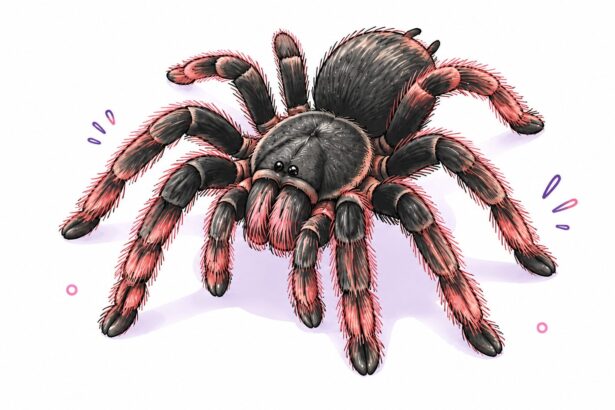
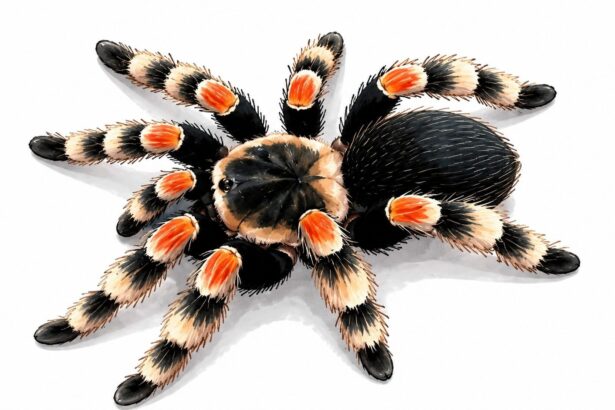
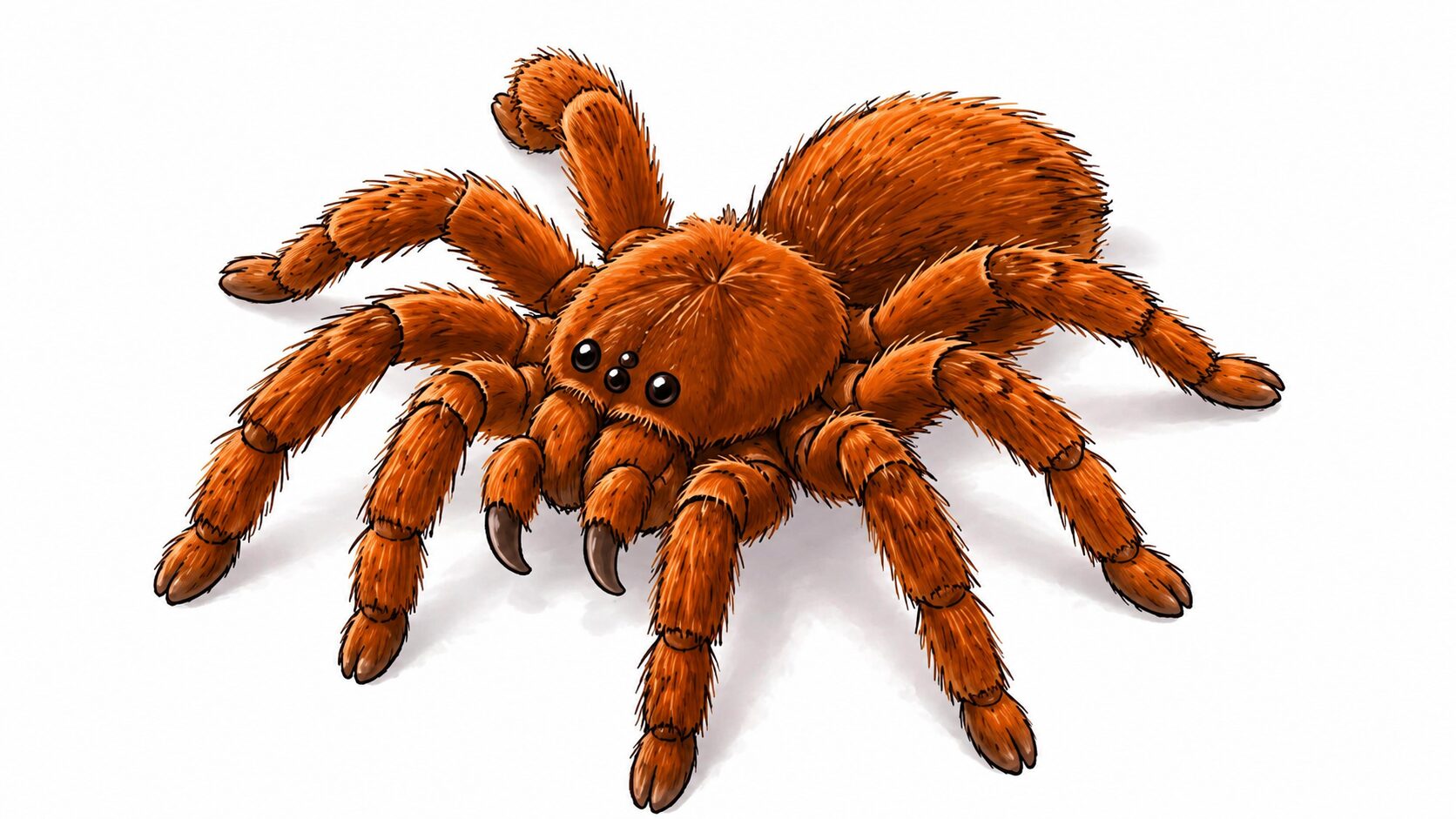
The pink patches that give the species its common name appear on the abdomen and legs — specifically noted as pink spots on the lower abdomen and legs that serve as the primary identifying feature separating this species from otherwise similar-looking terrestrial tarantulas. The body colour ranges from medium to light brown overall, with males consistently appearing lighter in tone than females. The abdominal setae have a velvety quality rather than the long, shaggy setae of some larger genus relatives. Pink colouration is most vivid on freshly moulted specimens; as with most tarantulas, the saturation of distinctive markings fades somewhat between moults as setae age and accumulate debris.
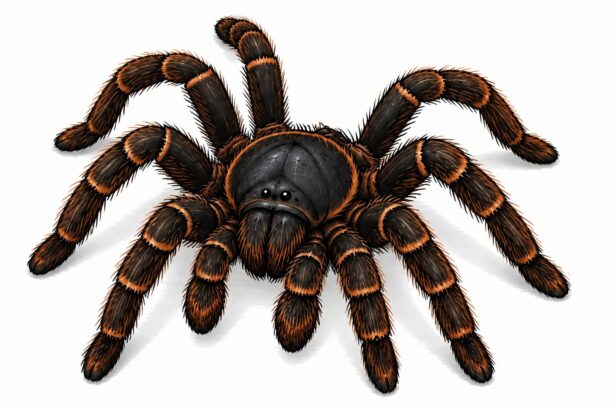
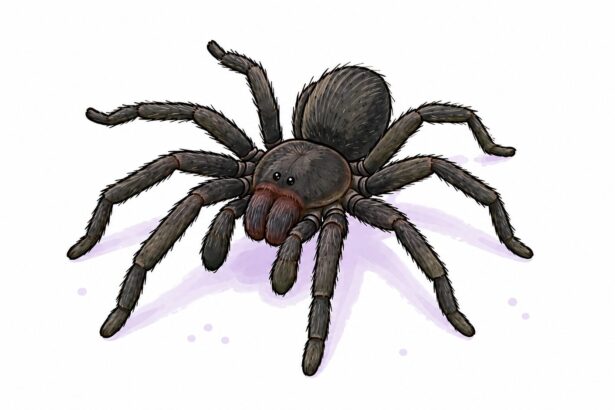
The holotype description mentions olive-brown setae with pale longitudinal stripes on the legs and indistinct banding, along with likely pink markings on the carapace when freshly moulted. Adult females reach a diagonal legspan of 6 to 7 inches, making this a mid-sized to moderately large tarantula — somewhat smaller than the giant mainland Acanthoscurria species, which is in part what one vendor describes as “unlike its giant cousins” in referencing the species’ more moderate adult dimensions. Males are lighter-coloured and smaller, with a lifespan of 5 to 6 years, while females are documented at 10 to 12 years.
Housing
A terrestrial enclosure with good floor space and adequate substrate depth. A footprint of at least 25 by 25 centimetres for adults, with six or more inches of substrate below a modest surface space and a secure, latching lid. The slow growth rate of this species means a sling will spend a long time in smaller containers before requiring an adult enclosure, and sizing up gradually as the spider grows is appropriate. Front-opening access minimises disturbance. The smaller adult size compared to mainland Acanthoscurria relatives means the enclosure footprint can be slightly smaller than for a species like A. geniculata, but adequate floor space for a terrestrial burrower should not be compromised. Our best tarantula enclosure guide covers terrestrial formats with appropriate depth capacity and security.
Enclosure’s Decorations
Cork bark at substrate level provides a retreat anchor and starting point for any above-ground webbing. Given the species’ fossorial nature, a pre-formed starter burrow pressed beneath or alongside the cork bark encourages prompt settlement after a rehouse. A shallow water dish at substrate level is essential. The Lesser Antilles tropical forest floor aesthetic — leaf litter, wood, dense damp substrate — can be approximated with cork bark, dried leaf litter layered on the substrate surface, and a couple of pieces of additional wood structure if desired. Our best tarantula hide guide covers cork bark shapes suited to ground-level fossorial setups.
Substrate
Six inches minimum for adults, using a moisture-retaining blend that maintains the consistent dampness of the Caribbean forest floor. Coconut coir and peat moss in equal parts, with optional topsoil for structural firmness, is appropriate. The substrate should be maintained consistently lightly damp throughout — not waterlogged, but never allowed to dry fully. The Lesser Antilles receive consistent rainfall year-round amplified by the rainy season, and A. maga has not evolved to expect arid conditions. Adequate enclosure ventilation prevents the stagnant humidity that causes mould despite the moisture requirement. Our best tarantula substrate guide covers moisture-retaining blends appropriate for humid Caribbean forest conditions.
Water And Humidity
A shallow water dish at all times, refreshed every two to three days. Target ambient humidity of 65 to 75 percent, maintained through the consistently damp substrate and water dish evaporation. The Caribbean island humidity profile is persistently high and stable rather than strongly seasonal, which means maintaining consistent moisture rather than cycling wet and dry periods is the right approach for this species. A hygrometer inside the enclosure confirms actual ambient conditions, and a fine-mist misting bottle provides targeted top-ups when needed. Good enclosure airflow prevents stagnant conditions without lowering humidity below the required range.
Heating And Temperature
The Lesser Antilles maintain consistently warm temperatures year-round, with average daily temperatures of approximately 80 to 82°F and little seasonal variation. A captive range of 76 to 85°F suits A. maga well, and most keepers in temperate climates maintain this species at normal household temperature without supplemental heat for most of the year. A side-mounted heat mat controlled by a thermostat provides background warmth when ambient temperatures drop below 72°F. A thermometer at substrate level confirms actual conditions inside the enclosure.
Diet And Nutrition
Consistent with the genus character in appetite, though the slower growth rate of this species relative to mainland Acanthoscurria means feeding frequency can be slightly lower than for faster-growing relatives. Adults take crickets, dubia roaches, and other appropriately sized invertebrates every seven to fourteen days. Juveniles can be fed every seven to ten days given the species’ naturally slower pace of development. Prey sized to the spider’s abdomen or slightly smaller is appropriate. Remove uneaten prey within 24 hours, and allow a resting period after moult before reintroducing food. A spider that retreats into its burrow and stops feeding is approaching a moult and should be left undisturbed. Our best tarantula food guide covers feeder insect options relevant to a moderately sized Caribbean terrestrial species.
Compatibility
Solitary only. For breeding, a well-fed female in good condition and supervised introduction are the standard requirements. The rarity of captive-bred stock and the species’ slow growth make successful captive breeding genuinely valuable to the hobby’s population of this species.
Behavior And Temperament
Less aggressive than most mainland Acanthoscurria species in the overall keeper consensus, with the typical New World tarantula disposition of preferring urticating hair deployment to biting when defensive, and generally not being a hair-trigger specimen. The burrowing tendency is consistent and reliable — this species will use substrate depth when available and may spend significant time underground, particularly as juveniles. Adults often become more visible and willing to be observed near the burrow entrance as they mature. The relative docility compared to some genus members makes it an accessible species for keepers at the intermediate level who want a Caribbean island tarantula experience in a terrestrial format rather than an arboreal one. Our article on how do tarantulas protect themselves covers urticating hair types and deployment behaviour in detail.
Handling
Possible with appropriate care given the species’ comparatively docile disposition among Acanthoscurria, though not recommended as routine practice. The urticating hair capability is present, and the adult size warrants the standard precautions. Venom is considered medically insignificant to healthy humans. Keepers who handle do so at floor level with slow, deliberate movements. The rarity of this species is itself a reason for additional care during handling interactions — a spider that cannot easily be replaced warrants more cautious handling protocols regardless of its temperament.
Health And Lifespan
Females live 10 to 12 years in captivity. Males survive 5 to 6 years — notably longer than some South American Acanthoscurria males, which may reflect the slower developmental pace of this island species. The slow growth rate that distinguishes this species from faster-growing genus relatives also means health problems take longer to manifest visibly, making consistent monitoring of the abdomen size and moulting interval the most reliable indicators of condition. The primary health risks are the standard ones for humid-forest terrestrial tarantulas: chronic dryness causing dehydration and mould from excess moisture with poor ventilation. Our tarantula dehydration article covers identification and recovery for dehydration concerns.
Price
One of the rarer Acanthoscurria species in the hobby given its geographically constrained island origin and limited captive breeding history. Slings, when available, typically sell for $40 to $80 USD. Juveniles range from $70 to $130. Adult females are uncommon and command $120 to $200 or more depending on size and source. Source captive-bred specimens only — the Lesser Antilles have their own wildlife protection frameworks, and wild collection from island populations with naturally limited ranges poses real conservation risk. Everything needed to set this species up correctly from day one is on our best tarantula products page.