
Origin And Natural Habitat
The mountain slopes of Tanzania — specifically near the mountains of Arusha and Usambara in northeastern Tanzania — are the exclusive home of Encyocratella olivacea, making it one of the most geographically specific African tarantulas in the hobby. The Arusha region encompasses the slopes of Mount Meru, documented as the specific habitat of this species at approximately 2,200 metres above sea level — genuinely high-elevation mountain terrain where the climate is dramatically different from the lowland savanna that most people associate with Tanzanian wildlife. Temperatures at this elevation fall as low as 4°C at night, with the highland climate described as cool by Tanzanian standards — temperatures ranging between 10 and 20°C during the cold and hot seasons respectively in the highlands — producing a cool, misty mountain environment that is one of the most distinctive habitat contexts of any African theraphosid.
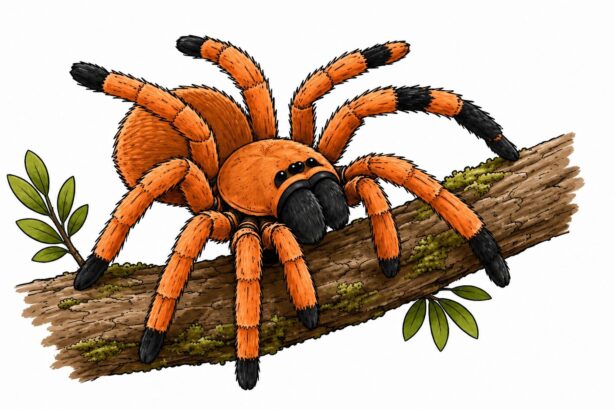
The species is an arboreal bird spider that often combines arboreal and burrowing characteristics — living in the shrubs and trees of the Tanzanian mountain slopes where the camouflage colouration of gold, green, and black helps it blend into the vegetation, while also sometimes using ground-level webbing positions in the manner of a semi-fossorial species. It is often mistakenly kept as a burrowing species, when the correct characterisation is a semi-arboreal to arboreal species that sometimes webs at the ground-wall interface — a distinction that matters significantly for enclosure design.
Scientific Classification
Described by Embrik Strand in 1907, E. olivacea is a monotypic genus — the sole species in Encyocratella, making it taxonomically isolated in a way that adds biological significance to its already remarkable natural history. The species has accumulated synonyms — Chaetopelma strandi Schmidt, 1991 and Xenodendrophila gabrieli Gallon, 2003 were both subsequently synonymised under the Strand name. Despite being called a baboon spider, E. olivacea belongs to the subfamily Stromatopelminae rather than the Harpactirinae — placing it in the same subfamily as Stromatopelma calceatum (the Feather Leg Baboon) rather than with the true baboon spiders of the Pterinochilus and Ceratogyrus genera. The World Spider Catalog and iNaturalist confirm E. olivacea Strand, 1907 as the current valid name.
Species Overview
Encyocratella olivacea carries one of the most extraordinary biological distinctions of any tarantula in the hobby. It is one of only two theraphosids in the world whose females do not possess a spermatheca — the sperm storage organ present in virtually all other female tarantulas. Instead, after successful mating, the male’s sperm is stored in the oviducts and uterus externus — a reproductive biology shared only with the Brazilian Sickius longibulbi and found nowhere else in the entire Theraphosidae family. This makes E. olivacea not just a visually distinctive and behaviourally interesting species but a biologically remarkable animal whose reproductive strategy is genuinely unique within the tarantula world.
Beyond this biological distinction, it is a compact, subtly colourful Old World arboreal that is a favourite among keepers who appreciate understated sophistication over dramatic colour — and the cool highland temperature requirement that distinguishes it from most African species makes it a genuinely unusual care profile within the Old World arboreal group. Advanced keeper experience is appropriate given the Old World status and the specific cool-temperature care requirement.
Appearance And Size
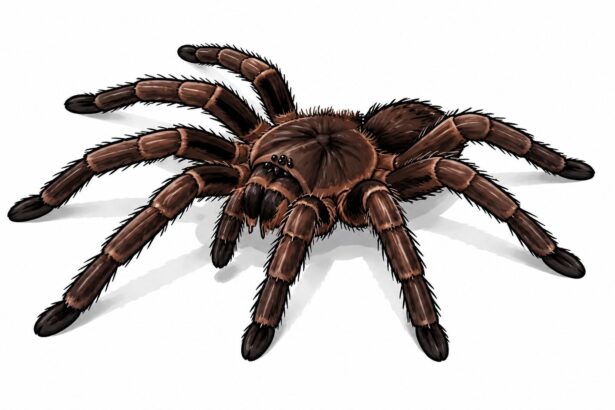
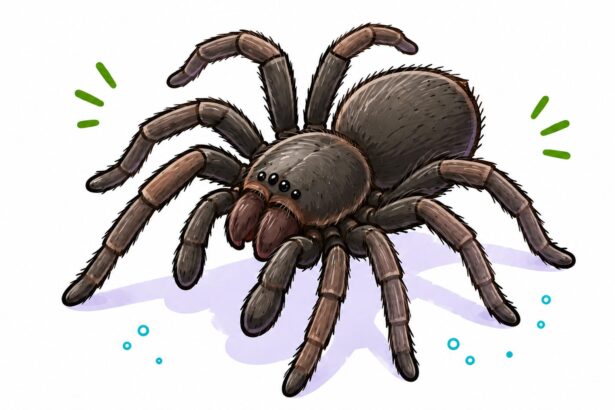
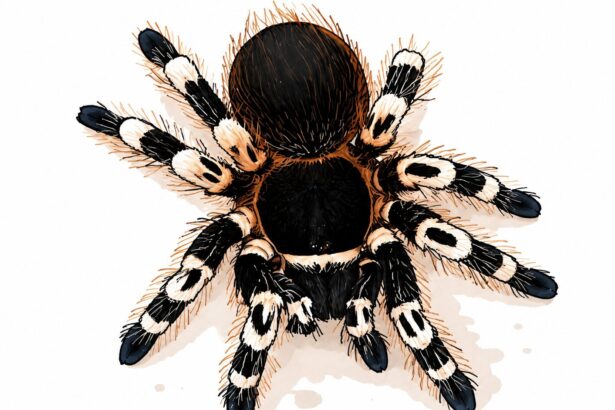
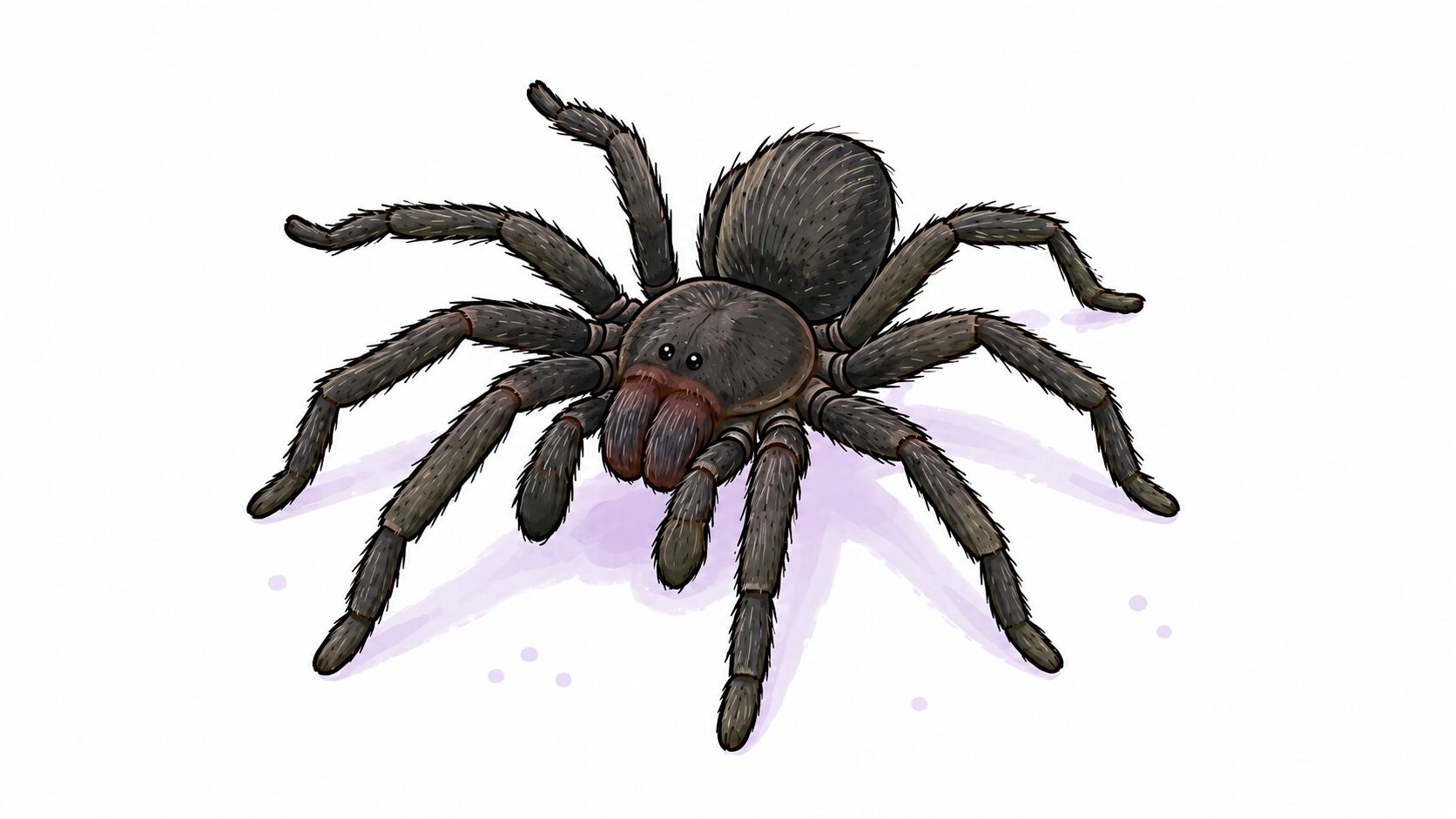
The colouration is the defining visual characteristic — and understated sophistication is the right frame for appreciating it. Gold, green, and black work together to provide camouflage in the shrubs and trees of the Tanzanian mountain slopes — a naturalistic palette that rewards close observation rather than delivering visual impact from a distance. The black provides the base contrast, the olive-green gives the species its name and its naturalistic character, and the golden tones add warmth to a palette that is genuinely attractive in a way that the more dramatically colourful Old World species sometimes overshadow. The coloration is distinct and striking — the appreciation for it grows with time rather than landing immediately.
Adult body length reaches up to 6 centimetres with a legspan of 12 to 13 centimetres — approximately 4.5 to 5 inches — making it a medium-sized adult by African arboreal standards. Female lifespan reaches 5 to 15 years depending on conditions. Growth rate is fast.
Housing
A tall arboreal or semi-arboreal enclosure with meaningful substrate depth — because this species combines arboreal and burrowing characteristics, a thick layer of humid substrate and an arboreal setup is required. A 12 by 12 by 18 inch enclosure suits adults, with 3 to 4 inches of substrate at the base and vertical cork bark and branches in the upper portion giving the species its full range of retreat options — webbing at the ground-wall interface for younger specimens and higher cork bark or branch positions for more established adults. A front-opening enclosure with cross-ventilation and a latching lid is appropriate given Old World speed. Young specimens tend to web at the ground-wall interface, so providing structure at both levels — substrate and elevated — accommodates the developmental shift from ground-level to higher arboreal positioning. Our best tarantula enclosure guide covers semi-arboreal formats appropriate for East African mountain highland species.
Enclosure’s Decorations
Vertical cork bark in the upper portion of the enclosure provides the primary arboreal retreat anchor. Cork bark or branches positioned at the substrate-wall interface — the specific webbing zone documented for young specimens — give the lower-level retreat option that juveniles prefer. Additional branches give climbing structure and webbing anchor points throughout the enclosure. A shallow water dish at substrate level provides hydration. The mountain shrub vegetation of the Arusha slopes can be approximated with fake plants at various heights. Our best tarantula cork bark and best tarantula fake plants guides cover appropriate structures for East African semi-arboreal Old World species.
Substrate
Three to four inches of lightly moist substrate at the base of the enclosure — reflecting the cool, misty mountain slope habitat of the Arusha and Usambara highlands where consistent cloud moisture maintains more humid soil conditions than the lowland savanna below. Coconut coir with some peat moss or sphagnum gives the moisture retention appropriate for a highland mountain species. Spiderlings do well on slightly dampened substrate — the moisture gradient approach of lightly damp at depth and drier at the surface reflects the mountain slope conditions accurately. Our best tarantula substrate guide covers moisture-retaining blends appropriate for East African highland mountain arboreal species.
Water And Humidity
A shallow water dish at substrate level, refreshed every two to three days. Moderate to moderately high humidity consistent with the cool, misty highland slopes of the Arusha mountains — 65 to 75 percent ambient is appropriate. The native habitat is cool highland with misty mornings, giving the humidity a different character from the hot, humid lowland savanna species — moist but cool rather than warm-tropical humid. A hygrometer confirms actual conditions, and a misting bottle handles targeted wall and substrate moisture additions reflecting the morning mist character of the highland habitat.
Heating And Temperature
The cool highland climate of the Arusha mountain slopes is the most critical and most unusual care consideration for this species. Room temperature of 68 to 72°F is described as perfect, with 74 to 82°F also tolerated — but the cool end of this range is genuinely preferred given documented temperatures as low as 4°C at the mountain slope habitats at 2,200 metres. This is one of the few African Old World species that does not require supplemental heat in most temperate indoor environments — higher temperatures to 80°F are tolerated but should be avoided given the cool native highland climate. The enclosure should be positioned in the coolest available room location rather than near heat sources. A thermometer at enclosure level confirms actual conditions and prevents accidental overheating.
Diet And Nutrition
Crickets, dubia roaches, and other appropriately sized invertebrates weekly — a good eater with a fast growth rate. Prey offered near the retreat position — at the ground-wall interface for juveniles and at cork bark height for more arboreal adults — in the evening. Feeding tongs are essential for every feeding interaction with this Old World species whose Stromatopelminae subfamily membership places it in the same defensive-intensity subfamily as the notoriously reactive Feather Leg Baboon. Remove uneaten prey within 24 hours. Our best tarantula food guide covers feeder options and sizing for medium-sized cool-adapted East African arboreal species.
Compatibility
Solitary only. The unique reproductive biology of this species — females lacking a spermatheca entirely — makes captive breeding both scientifically interesting and practically complex, as the sperm storage in oviducts rather than a spermatheca may affect fertilisation timing and breeding management relative to species with standard theraphosid reproductive anatomy.
Behavior And Temperament
The spider will try to flee at first — persistent provocation can result in a threat pose and bite. The Stromatopelminae subfamily character — fast, defensive, no urticating hairs — applies fully. It is not for beginners, being fast and aggressive, but the flee-first defensive preference distinguishes it from the most aggressively confrontational African species and gives keepers a slightly more predictable defensive response sequence to work with. All enclosure work must be deliberate, planned, and executed with long tools.
Handling
Not recommended. No hands or fingers near them is the consistent keeper position for this Old World Stromatopelminae species without urticating hairs. The olive, gold, and black colouration is best appreciated through the enclosure glass during observation periods.
Health And Lifespan
Females live 5 to 15 years in captivity. The cool temperature requirement is the most critical health consideration — maintaining this species at the warm temperatures appropriate for lowland African species is the primary care mistake that causes decline. The cool, moist highland mountain conditions of the Arusha slopes must be replicated in terms of temperature character even when humidity and substrate are correctly managed. Our tarantula dehydration article covers dehydration concerns for highland African arboreal species.
Price
Available from specialist Old World vendors with moderate regularity. Underground Reptiles, ArachnoEden, and Feared to Fascinated all stock this species periodically. Slings typically sell for $50 to $100 USD reflecting the genuine rarity and the biological significance of a monotypic genus Tanzanian endemic. Confirmed adult females command $150 to $250 or more. Source captive-bred specimens only — Tanzania has wildlife protection legislation and the high-elevation mountain slope habitats of the Arusha region are ecologically sensitive. Everything needed to provide appropriate Tanzanian highland mountain conditions for this biologically remarkable species is on our best tarantula products page.