
Origin And Natural Habitat
Southeastern and central Brazil defines the range of Acanthoscurria paulensis, with confirmed records spanning the states of São Paulo, Mato Grosso, Mato Grosso do Sul, Goiás, Minas Gerais, Paraná, and Rio Grande do Sul — a distribution that extends further south than most Acanthoscurria species and places it across multiple Brazilian biomes. The Cerrado, Brazil’s vast central savanna, forms the core of its range: a seasonally dry biome of open woodlands, grasslands, and gallery forest with a pronounced wet season from October through March and a genuinely dry winter period. The southernmost records in Paraná and Rio Grande do Sul bring the species into subtropical territory, where winter temperatures can be meaningfully cooler than in the tropical north.
This breadth of biome coverage reflects the adaptability of the species, which has been collected from the Cerrado’s open savanna character through the transition zones toward Atlantic Forest in the southeast. In the wild, A. paulensis is a terrestrial burrower, excavating tubular retreats in soil and taking shelter beneath rocks, logs, and in natural ground cavities. It is active primarily at night, hunting invertebrates and opportunistic small vertebrate prey from or near the burrow entrance. The seasonal dry period of the Cerrado, during which the savanna grasses brown and water becomes scarce, is the ecological context for the moderately variable humidity approach in captive care rather than the permanently saturated conditions of some tropical forest species.
Scientific Classification
First described by Cândido Firmino de Mello-Leitão in 1923, A. paulensis had its taxonomy complicated by subsequent independent descriptions of specimens from different localities that were eventually recognised as the same species. A redescription published in Zoologia by Lucas, Gonzalez Filho, Paula, Gabriel, and Brescovit — the same research group behind the A. natalensis revision — formally synonymised A. atrox Vellard, 1924, from Campo Grande in Mato Grosso do Sul, and A. guaxupe Piza, 1972, under A. paulensis, and described the female for the first time, the original description having been based on a male holotype from Pirassununga in São Paulo state. The species is morphologically similar to A. chacoana, A. juruenicola, and A. geniculata in large size and palpal bulb structure, distinguished from these by specific keel development and embolus morphology. Full classification: Kingdom Animalia, Phylum Arthropoda, Class Arachnida, Order Araneae, Infraorder Mygalomorphae, Family Theraphosidae, Subfamily Theraphosinae, Genus Acanthoscurria, Species A. paulensis Mello-Leitão, 1923.
Species Overview
The Brazilian Giant Black sits in the Acanthoscurria genus as its darkest-coloured representative — a uniformly dark spider without the distinctive leg markings of A. geniculata, the reddish abdominal setae of A. chacoana, or the orange banding of A. juruenicola. It is less commonly kept than those species in the international hobby, occupying the niche of a large, dark, no-nonsense ground spider with the characteristic genus appetite and a more southerly Brazilian range that gives it slightly better tolerance for cool conditions than its Amazonian relatives. Keeper accounts, while limited, consistently note the predatory enthusiasm toward prey alongside a moderately defensive disposition that is typical of the genus. Beginner to intermediate experience is appropriate.
Appearance And Size
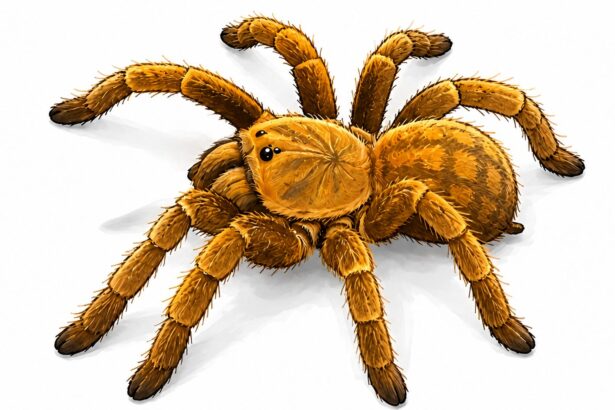
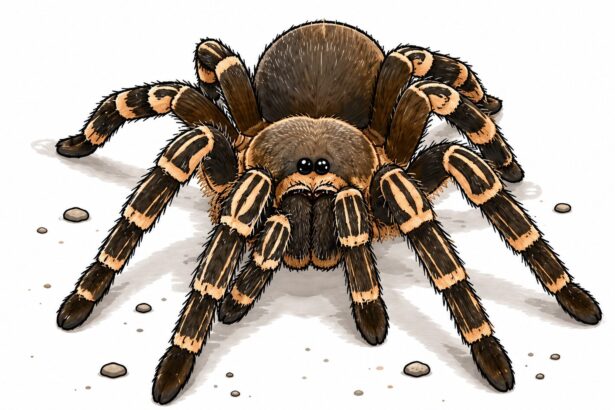
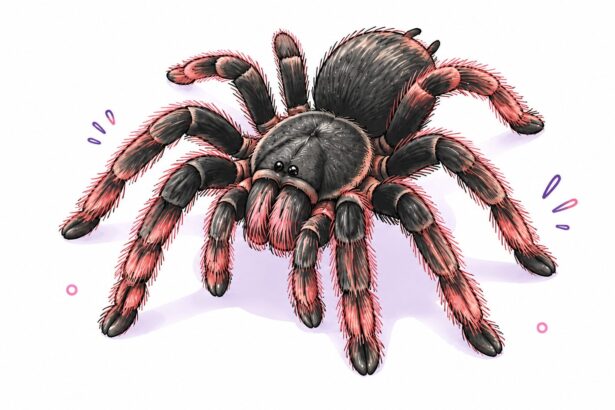
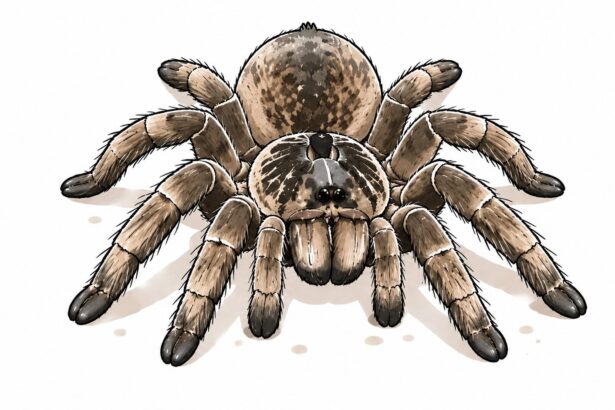
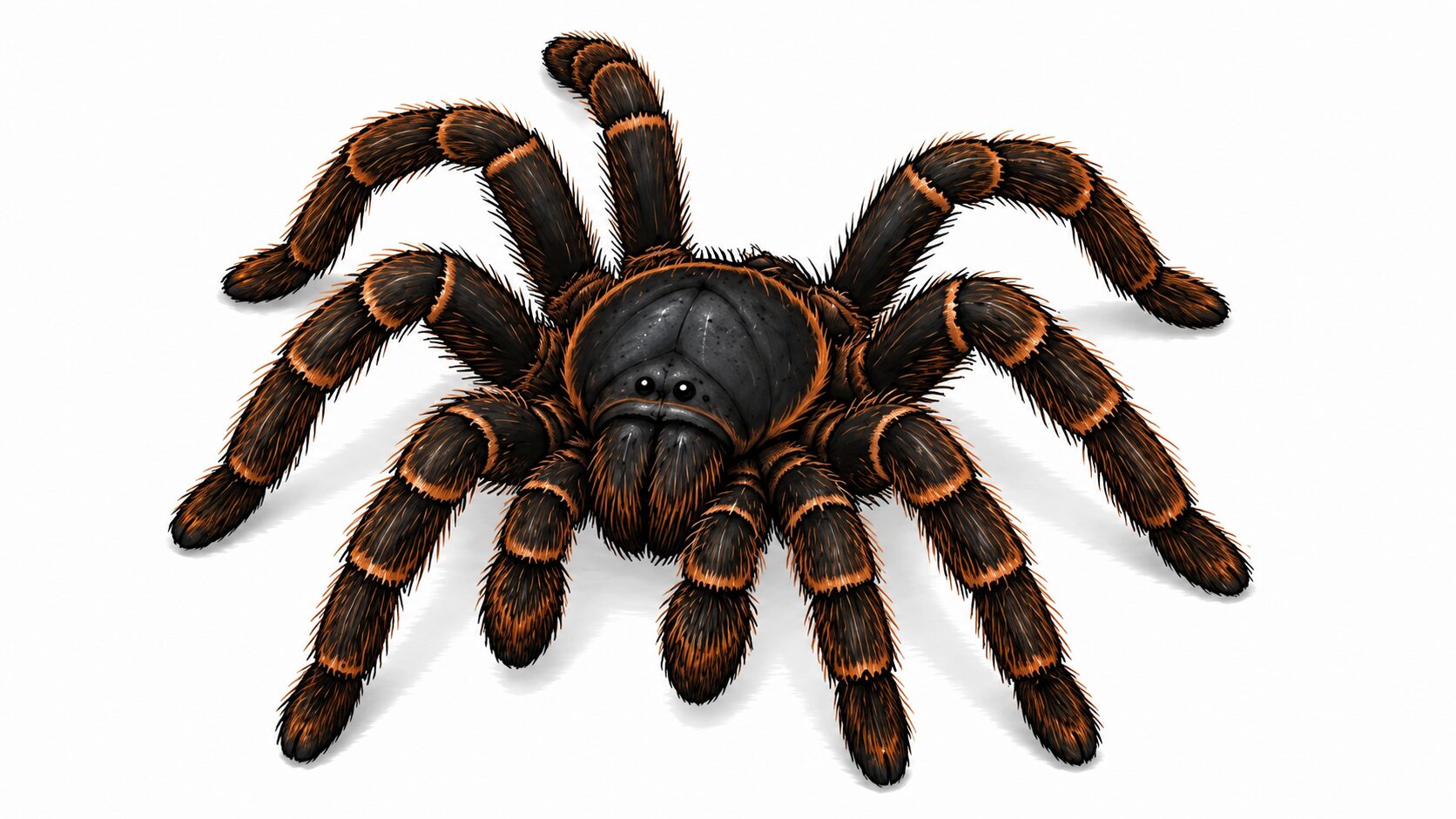
Uniformly dark is the honest description. The body is dark brown to near-black across both the carapace and abdomen, with the dense setae giving the spider the velvety texture the “giant black” name implies. Unlike the Brazilian Black and White (Nhandu coloratovillosus), which offers pale banding contrast against a dark body, A. paulensis presents a monochrome dark appearance with no significant contrasting markings — the appeal is in the quality and depth of the colouration, in the robust build characteristic of the genus, and in the presence of a large, healthy spider that wears its darkness as a kind of understated authority. Adult size of 5 to 6 inches diagonal legspan is confirmed in the published literature, placing it as a moderately large species within the genus rather than among the giants like A. geniculata. Females grow faster than males, which is consistent with the genus pattern of females outpacing males in growth rate and outliving them substantially.
Housing
A terrestrial enclosure with adequate floor space and substrate depth. A footprint of 25 by 25 centimetres for adults is appropriate given the 5 to 6 inch adult size, with four or more inches of substrate below and modest height above. A secure, latching lid is required — the genus has strong-bodied individuals that will push an unsecured lid — and front-opening access is preferred for routine maintenance. The species is noted as a committed burrower, so providing adequate substrate depth is more important here than for some surface-active genus relatives. Our best tarantula enclosure guide covers terrestrial formats with the floor space, depth, and security appropriate for large burrowing South American species.
Enclosure’s Decorations
Cork bark at substrate level positioned to create an enclosed retreat cavity, with a pre-formed starter burrow adjacent or beneath, gives the spider immediate shelter and a burrowing anchor point. A shallow water dish at the opposite end of the enclosure from the hide ensures hydration access. Fake plants and additional cork bark provide surface interest and further webbing anchor points for the silk the species lays around its retreat. Our best tarantula cork bark and best tarantula fake plants guides cover appropriate pieces for large terrestrial fossorial setups.
Substrate
Four to six inches of substrate minimum, using a moisture-retaining blend that holds burrow structure and maintains moderate dampness in the lower portion while allowing the surface to dry between moisture additions. Coconut coir and peat moss in equal parts, with optional topsoil for firmness, is the standard choice. The Cerrado’s seasonal character — wet summer, dry winter — supports a moderate moisture gradient approach rather than either constant saturation or predominantly dry conditions. The substrate should feel like damp soil at depth and dry to mildly damp at the surface. Our best tarantula substrate guide covers moisture-retaining blends appropriate for Cerrado and southeastern Brazilian terrestrial species.
Water And Humidity
A shallow water dish at all times, refreshed every two to three days. Target ambient humidity of 65 to 75 percent, maintained through the moderate substrate moisture gradient and water dish evaporation. The seasonal dry periods of the Cerrado give this species more tolerance for humidity variation than strictly tropical rainforest species, but consistent water access through the dish is non-negotiable. A hygrometer inside the enclosure confirms actual conditions, and a misting bottle provides targeted moisture additions when needed.
Heating And Temperature
The subtropical extension of the range into Paraná and Rio Grande do Sul gives A. paulensis more cold tolerance than most Acanthoscurria species. A captive range of 72 to 82°F suits the species well, and keepers in temperate climates typically maintain this species at room temperature without supplemental heat for most of the year, with a side-mounted heat mat controlled by a thermostat only when ambient temperatures drop consistently below 65°F. A thermometer at substrate level confirms actual enclosure conditions.
Diet And Nutrition
Aggressive toward prey is the consistent description — the genus character fully present. Adults take crickets, roaches, and other appropriately sized invertebrates every seven to fourteen days. Females grow faster than males and can sustain a slightly more frequent feeding schedule during growth periods. Juveniles every five to seven days. Remove uneaten prey within 24 hours. The committed burrowing tendency means food should be offered near or at the burrow entrance in the evening when the spider is naturally most active, rather than dropped into the enclosure hoping the spider will investigate from underground. Our best tarantula food guide covers feeder insect options and gut loading relevant to a moderately large terrestrial South American species.
Compatibility
Solitary only. For breeding, a well-fed female and supervised introduction are the standard requirements. The female of this species was only formally described in the published literature when the redescription revision was completed, reflecting how few specimens had been scientifically examined — captive breeding experience is correspondingly limited.
Behavior And Temperament
Moderately defensive in the standard New World Acanthoscurria fashion — urticating hair deployment at disturbance, non-aggressive in the bite-initiating sense, and variable in visibility depending on individual and enclosure setup. The burrowing tendency is more pronounced in this species than in some genus relatives, which means juveniles particularly may be rarely visible during daylight hours. Adults that have settled into a well-configured enclosure often spend more time near the burrow entrance and are more visible in the evening. The dark colouration, while less visually dramatic than patterned genus relatives, makes a large well-settled adult at the burrow entrance a genuinely striking display. Our article on are tarantulas nocturnal covers the activity pattern biology behind the evening visibility of species with this strong nocturnal tendency.
Handling
Possible with appropriate care, not recommended as routine practice. Urticating hair capability is present and deployed at moderate disturbance; the species is not noted as a particularly hair-trigger kicker but the genus character applies. Venom is considered medically insignificant to healthy humans. Keepers who handle do so at floor level with slow, deliberate movements. The strong burrowing tendency means disturbing the spider to handle it creates meaningful stress, which is itself an argument for observation over interaction.
Health And Lifespan
Females live 15 or more years in captivity based on genus norms and the slower growth pace of this species relative to A. geniculata. Males live considerably shorter lives. The broader biome tolerance of this species — covering subtropical as well as tropical territory — gives it more robustness to temperature variation than some rainforest-restricted relatives. Primary health concerns are the standard combination of chronic dryness and excess moisture with poor ventilation, both managed by the moderate moisture gradient and consistent water dish described above. Our tarantula dehydration article covers identification and recovery for dehydration-related concerns.
Price
Uncommon in the international hobby outside of Brazil and specialist collectors, though not as rare as some of the more obscure genus members. When available from captive breeders, slings typically sell for $25 to $55 USD. Juveniles range from $50 to $90. Confirmed adult females are less commonly listed and command $80 to $150 depending on size and source. Brazilian-based breeders and European tarantula markets are the most consistent sources. Source captive-bred specimens only. Everything needed to set this species up correctly from day one is on our best tarantula products page.