
Origin And Natural Habitat
Guangxi Province in southern China and neighbouring northern Vietnam define the confirmed range of Cyriopagopus schmidti — a distribution across the subtropical mountain terrain of the Chinese-Vietnamese border zone that gives the species a habitat profile quite different from the lowland tropical forest settings of most Southeast Asian earth tigers. The species inhabits south-facing mountain slopes at steep inclines of 60 to 85 degrees — genuinely dramatic topography that shapes the soil structure, drainage characteristics, and microclimate conditions of the burrow sites this species selects. South-facing slopes in the northern subtropical zone receive maximum solar radiation, making them warmer and drier than the north-facing slopes of the same mountains — a habitat preference that produces a specific microclimate combination of warm, sun-exposed slope conditions with the moist, well-drained soils that steep gradients produce after monsoon rainfall.
The species constructs silk-lined burrows in these steep slopes, often with silk alarm lines radiating from the burrow mouth — the same sophisticated vibration-detection system documented for the related Chinese Black Earth Tiger (C. hainanus) — remaining in the burrow during daylight and emerging at night to ambush passing prey near the entrance. The broader region of Guangxi and northern Vietnam experiences a subtropical monsoon climate with hot, wet summers and cooler, drier winters — a seasonal pattern that produces meaningful temperature and moisture variation across the year and informs the care approach for a species that has adapted to genuine seasonality rather than the year-round tropical uniformity of lowland equatorial habitats.
The venom of this species carries significant scientific interest. Spiders under the schmidti name and its synonyms have been shown to produce toxins called huwentoxins — neurotoxic peptides that have been studied for their ability to block voltage-gated ion channels and that carry promising analgesic potential as pharmaceutical targets. This pharmacological research adds a scientific dimension to a species whose keeper reputation rests on size and appearance alone.
Scientific Classification
Originally described in 1991 by von Wirth as Haplopelma schmidti from a single female collected in Vietnam, the species accumulated synonyms as independent researchers working in different parts of the range described what they believed to be new species — most notably Selenocosmia huwena described by Wang, Peng, and Xie in 1993 from Guangxi specimens, subsequently moved through Ornithoctonus huwena and Haplopelma huwenum before being synonymised with H. schmidti in 2008. The 2015 revision of the Asian earth tiger group transferred the species to Cyriopagopus. The World Spider Catalog and iNaturalist confirm C. schmidti von Wirth, 1991 as the current valid name.
Species Overview
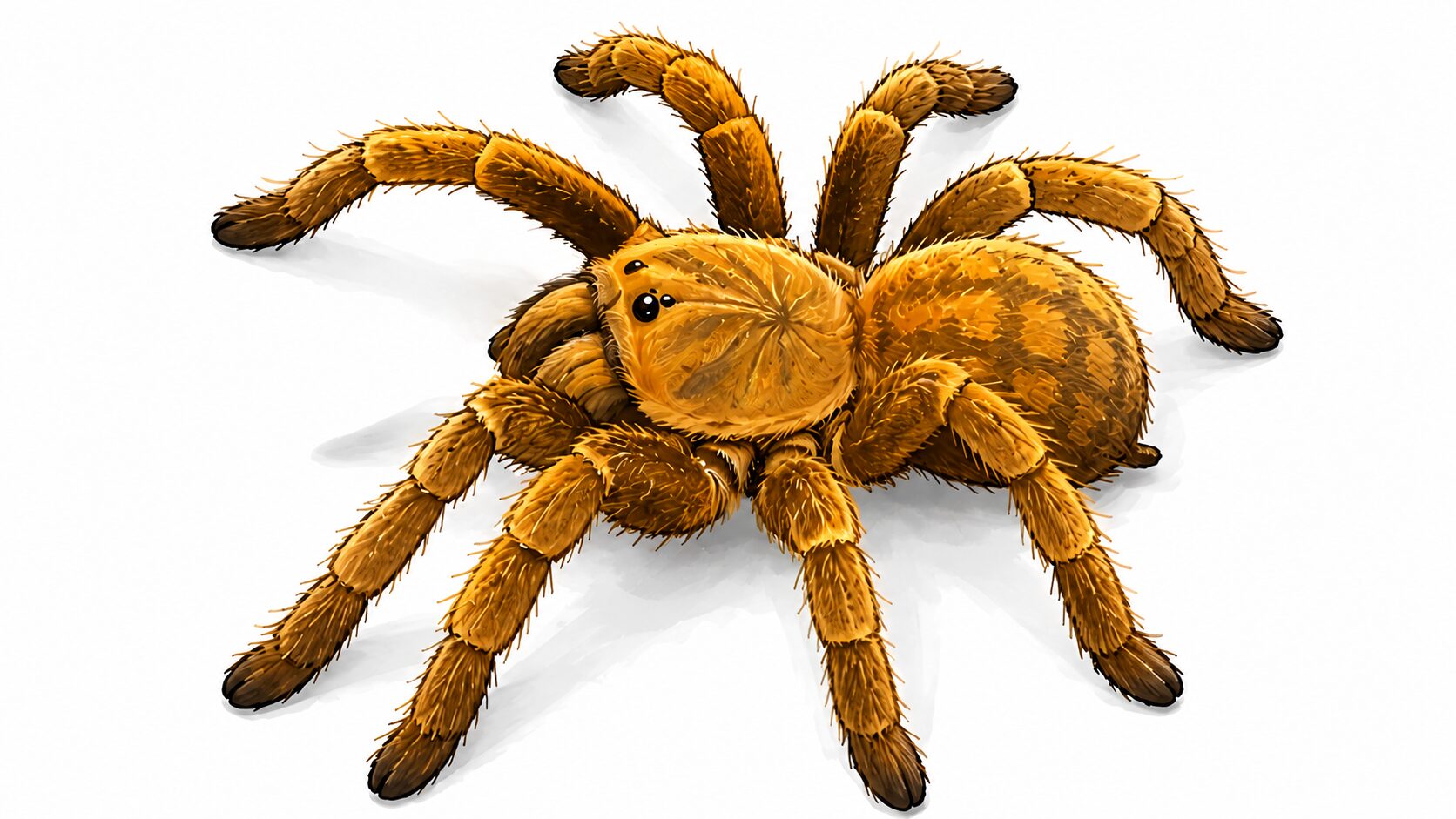
The Chinese Giant Gold is said to be one of the largest Asian tarantulas — a claim supported by the documented female body length of 53 to 85 mm and the adult legspan that reaches 6 to 8 inches in the largest individuals. It shares its Chinese bird spider common name with the Chinese Black Earth Tiger (C. hainanus), distinguishable primarily by body colouration — where C. hainanus is dark black-brown, C. schmidti carries a dark yellow-brown body that gives it the golden quality of its common name. For experienced keepers who want a large, imposing, pharmacologically significant Asian earth tiger with one of the longest potential female lifespans in the hobby, this is one of the most compelling Chinese fossorial species available.
Appearance And Size
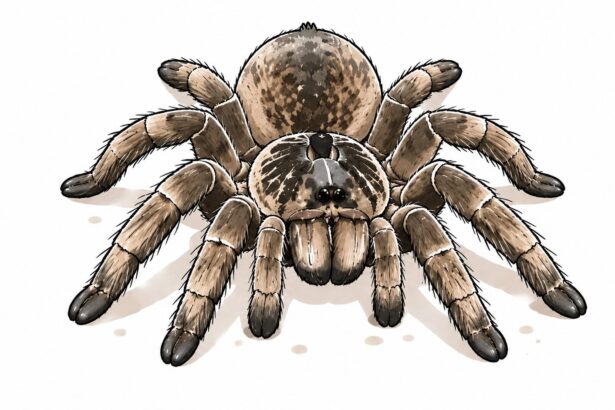
The colouration is the defining distinguishing feature from the black-dominant genus relatives. The carapace is dark yellow-brown — the warm golden tone that earns the Giant Gold common name — and the abdomen is similarly coloured with black stripes running across it and a black stripe down the centre of the upper surface, creating the earth tiger patterning characteristic of the Ornithoctoninae subfamily. The golden-yellow body contrasts beautifully with the dark abdomen striping in a way that makes this species visually distinctive within the genus even at the brief glimpse a fossorial keeper typically gets at the burrow entrance. The body is heavy-built and robust with the imposing physical presence that its exceptional adult size warrants.
Adults reach 6 to 8 inches in legspan — body length documented at 53 to 85 mm for females, making this one of the female has been described as one of the largest Asian spiders. Females can live up to 30 years — extraordinary longevity for an Old World fossorial species and comparable to the female lifespans of long-lived Brachypelma. Males are considerably smaller at 37 to 44mm body length.
Housing
A terrestrial enclosure with substrate depth as the absolute priority. An enclosure at least twice the tarantula’s legspan in width, depth, and height suits the care framework applicable to all large Cyriopagopus — for a species reaching 6 to 8 inches, a footprint of 30 by 30 centimetres or larger with 20 or more centimetres of substrate provides meaningful burrowing capacity. The steep south-facing slope habitat of the type locality suggests soil with good drainage despite moisture retention — a structurally firm, moderately moist substrate that holds vertical burrow walls. A close-fitting, latching lid is non-negotiable. Side-mounted rather than under-tank supplemental heating. Our best tarantula enclosure guide covers terrestrial fossorial formats appropriate for very large Chinese earth tiger species, and our best tarantula sling enclosure guide covers smaller juvenile formats.
Enclosure’s Decorations
A pre-formed starter burrow at one end of the substrate gives the spider an immediate starting point. Cork bark or other surface structures near the burrow entrance give webbing anchor points for the silk alarm lines and above-surface architecture documented for this species in the wild. A shallow water dish provides hydration. Minimal additional decoration is needed — the burrow entrance and its radiating silk lines are the primary enclosure features. Our best tarantula cork bark guide covers appropriate pieces for large Chinese fossorial earth tiger enclosures.
Substrate
20 or more centimetres of substrate for adults — the steep slope habitat suggests well-draining but moisture-retaining soil, maintained damp but not saturated, resembling the texture and colour of coffee grounds as a practical target. Organic coconut fibre or a coconut fibre and topsoil blend gives the moisture retention and structural firmness appropriate for the subtropical mountain forest floor conditions of Guangxi and northern Vietnam. The seasonal monsoon character of the region produces genuinely wet summers and drier winters — the substrate moisture should reflect this seasonal variation rather than maintaining constant saturation. Our best tarantula substrate guide covers moisture-retaining structural blends appropriate for subtropical Chinese mountain fossorial species.
Water And Humidity
A shallow water dish at all times, refreshed every two to three days. Humidity of 70 to 80 percent is appropriate — consistent with the subtropical monsoon mountain climate of Guangxi and northern Vietnam. Good ventilation alongside the humidity prevents stagnant air accumulation. A hygrometer confirms actual conditions, and a misting bottle handles targeted substrate moisture additions when upper layers dry between natural evaporation cycles.
Heating And Temperature
The subtropical mountain slopes of Guangxi and northern Vietnam experience warmer summers and cooler winters than the tropical lowlands — a meaningful seasonal temperature variation compared to the near-constant warmth of equatorial species. A captive range of 72 to 82°F suits this species well — warm but not extreme, reflecting the south-facing mountain slope character of the habitat rather than the constant heat of tropical lowland forest. Most temperate indoor environments provide appropriate conditions without supplemental heat during warmer months. A side-mounted heat mat controlled by a thermostat handles cooler periods. A thermometer at substrate level confirms actual enclosure conditions.
Diet And Nutrition
Crickets, dubia roaches, and other appropriately sized invertebrates weekly for adults — with the exceptional adult size allowing correspondingly larger prey than would suit smaller Cyriopagopus relatives. Prey offered near the burrow entrance in the evening. Feeding tongs are essential — defensive and very fast, prone to threat postures means no part of the keeper should be anywhere near the strike zone during feeding. Remove uneaten prey within 24 hours. Our best tarantula food guide covers feeder options and sizing for very large Chinese subtropical mountain fossorial species.
Compatibility
Solitary only. The 30-year potential female lifespan means any successful captive breeding pairing produces animals with an extraordinary long-term commitment ahead. A well-fed female and closely supervised introduction are essential.
Behavior And Temperament
Defensive and very fast, prone to threat postures but more inclined to retreating to its burrow rather than launching aggressive strikes — a characterisation that distinguishes C. schmidti from the more aggressively confrontational Thai Black (C. minax) while still firmly placing it in experienced keeper territory. The moisture-seeking behaviour that leads specimens to preferentially occupy and deepen burrows where humidity is stable applies broadly across the large fossorial Cyriopagopus and means keepers should expect this species to rearrange its enclosure substrate to optimise microclimate rather than simply occupying whatever burrow structure is provided.
Handling
Not recommended. The size, speed, defensive temperament, and huwentoxin venom — studied for its effects on voltage-gated ion channels with documented significant physiological activity — make this a strictly hands-off observation species regardless of the retreating-rather-than-charging defensive profile.
Health And Lifespan
Females can live up to 30 years — one of the longest documented lifespans for any Old World fossorial tarantula. Males are considerably shorter-lived. The species is robust within appropriate subtropical mountain conditions. The primary health considerations are the moderately moist substrate appropriate for steep mountain slope soils and the warm-but-not-extreme temperatures of the Guangxi subtropical zone. Our tarantula dehydration article covers identification and recovery for dehydration concerns in large moisture-requiring Chinese mountain fossorial species.
Price
Available from specialist Old World vendors with moderate regularity. Underground Reptiles has stocked captive-bred slings. Slings typically sell for $40 to $90 USD reflecting the exceptional adult size and relative rarity compared to more commonly bred Cyriopagopus. Juveniles range from $80 to $160. Confirmed large adult females, being genuinely rare given the slow path to adult size, command $200 or more. Source captive-bred specimens only — China and Vietnam both have wildlife protection legislation, and the documented pharmacological significance of the huwentoxins this species produces makes responsible sourcing particularly relevant from a conservation research perspective. Everything needed to set up an appropriate deep fossorial enclosure for this golden giant of the Chinese earth tigers is on our best tarantula products page.