
Origin And Natural Habitat
French Guiana, Guyana, and adjacent northern Brazil form the known range of Acanthoscurria simoensi, placing it in the Guiana Shield region of northeastern South America — one of the most ancient and biodiverse geological formations on the continent. French Guiana, where the type specimen was collected and described, is characterised by dense equatorial rainforest covering the vast majority of the territory, receiving over 3,000mm of annual rainfall in wetter areas with consistently warm temperatures and high humidity year-round. The Guiana Shield forests are biologically distinct from the Amazon basin proper, with high levels of endemism and species found nowhere else on Earth.
Within this rainforest environment, A. simoensi is a terrestrial fossorial species, burrowing into the forest floor and sheltering in the cover of dense lowland tropical forest. The consistently warm, humid, high-rainfall character of French Guiana and the Guiana rainforest defines the environmental baseline for captive care — this is not a species adapted to seasonal drought or arid conditions. The name “Para Mongo Zebra” circulated for years in the hobby under the erroneous scientific name Acanthoscurria fracta, which was itself later synonymised under A. natalensis in the 2011 Lucas et al. revision, creating considerable taxonomic confusion until the correct identification as A. simoensi was established among serious collectors.
Scientific Classification
Described by Fabian Vol in 2000 in the journal Arachnides, Acanthoscurria simoensi was established in a paper that also compared it with Acanthoscurria minor Ausserer, 1871, the other Acanthoscurria species from the Guiana basin. The description was based on specimens from French Guiana, and the species remained relatively obscure in both scientific and hobby circles for years, circulating under the incorrect name A. fracta before the proper identity was confirmed. A 2020 revision of Acanthoscurria by R. Gabriel in Arachnology provided additional taxonomic placement. The species name simoensi honours the Simons, likely a reference to a locality or collector associated with the type material. Full classification: Kingdom Animalia, Phylum Arthropoda, Class Arachnida, Order Araneae, Infraorder Mygalomorphae, Family Theraphosidae, Subfamily Theraphosinae, Genus Acanthoscurria, Species A. simoensi Vol, 2000.
Species Overview
The Para Mongo Zebra occupies a genuinely unusual position in the Acanthoscurria genus — a species with striking and distinctive sexual dimorphism in both colour and patterning that makes the female and mature male look almost like different animals, in a genus where most species show relatively subtle differences between sexes. The common names circulating in the hobby reflect this visual complexity: “Para Mongo Zebra” references the female’s dark body with light linear leg markings, while at least one vendor lists it as “Manaus Black and Gold” — names that point to the same animal described from different angles. Combined with its Guiana Shield origin, documented difficulty producing egg sacs in captivity, and genuine rarity in collections outside of a small number of dedicated breeders, it is a species that rewards the experienced keeper who can source it. Advanced intermediate experience is appropriate.
Appearance And Size
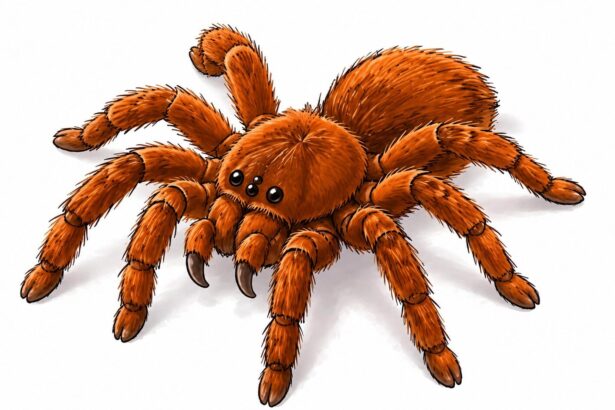
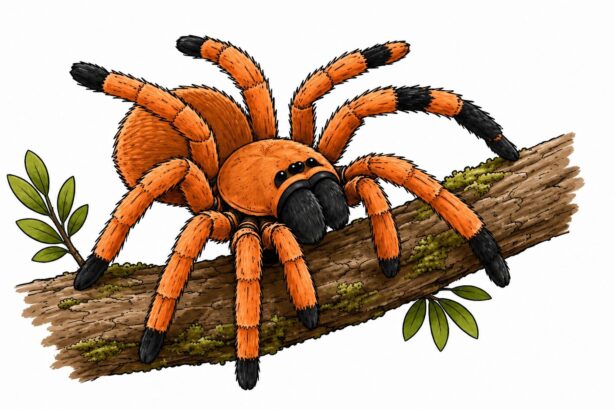
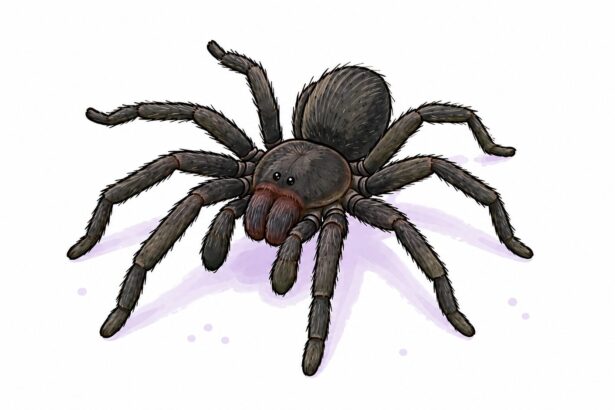
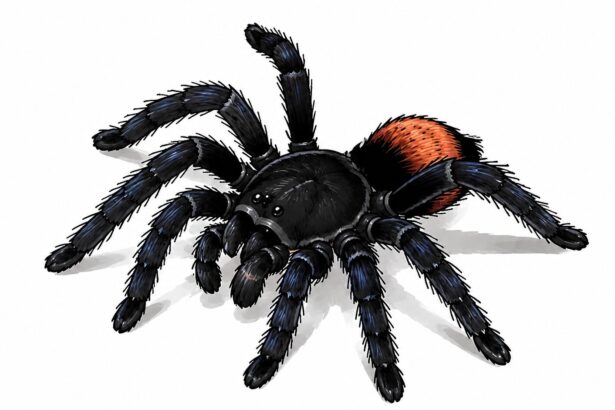
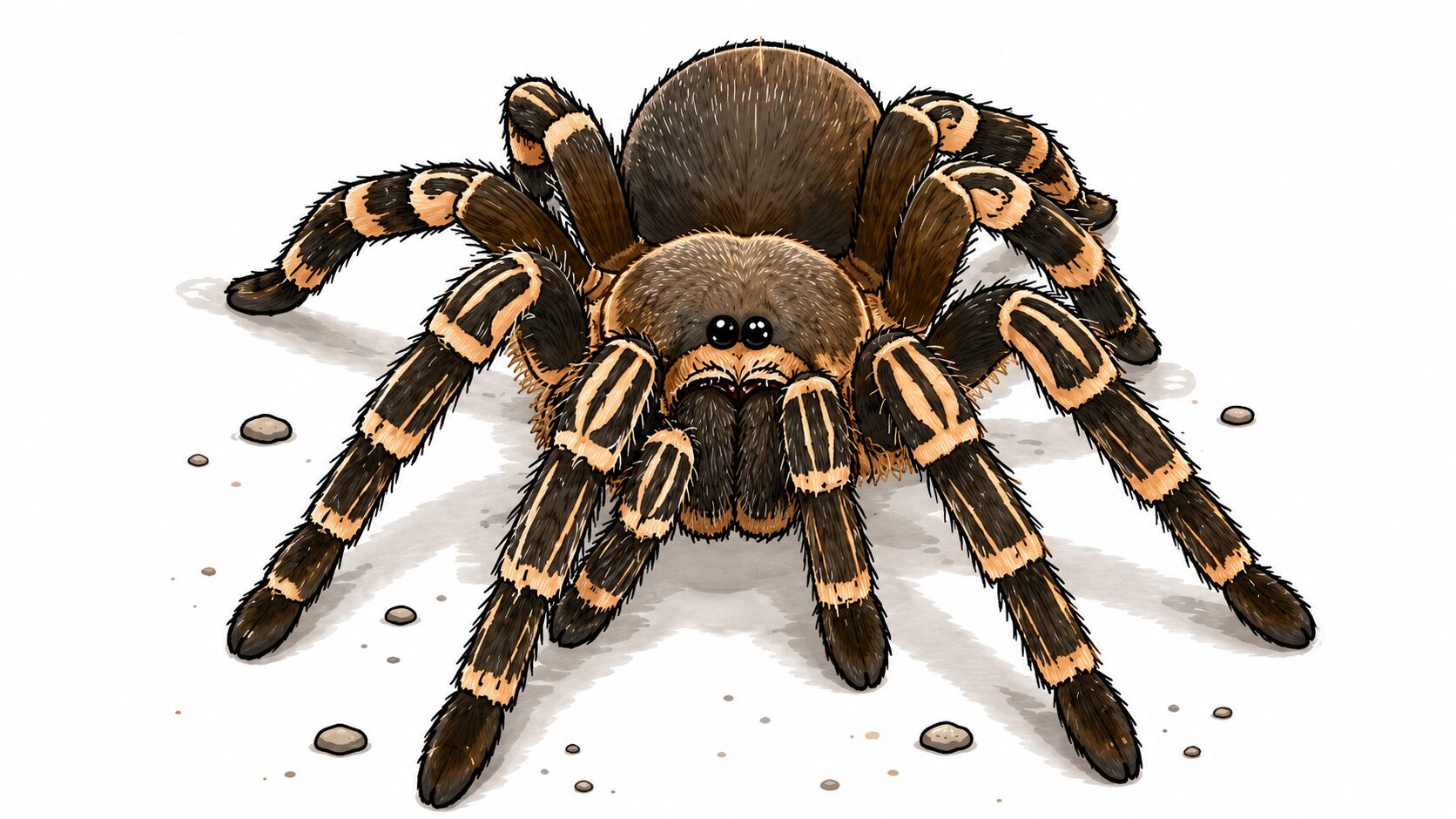
The sexual dimorphism is the defining visual characteristic and worth describing in full detail. Females display dark bodies — dark brown to near-black across the carapace and abdomen — with light-coloured linear markings running along the legs that create the zebra-striped effect the common name references. These pale leg markings against a dark body produce a stark, high-contrast pattern that is distinctive among large South American terrestrials and catches the eye immediately on a well-lit, freshly moulted adult female.
Mature males present a strikingly different appearance, with a rusty, metallic colouration overall and comparatively weak or reduced linear leg markings. The rusty metallic quality of the mature male colouration gives it something of the appearance of a different genus entirely from the black-and-white female. This degree of sexual dimorphism in colour, present to some degree in other Acanthoscurria species at the ultimate male moult, is particularly pronounced here. Adults reach a diagonal legspan of 7 to 8 inches based on keeper reports, consistent with the larger end of the genus. Males live approximately 4 years, while females are estimated at 20 years under good captive conditions.
Housing
A wide, floor-focused terrestrial enclosure is the appropriate setup for this large species. A footprint of at least 30 by 30 centimetres for adults, with four or more inches of substrate below and a secure latching lid. Front-opening access is preferred for maintenance. The species is noted as a burrower, so adequate substrate depth matters, but Arachnoboards keeper accounts describe individuals that “will sit out and occasionally wander the enclosure” once settled — suggesting adults can be reasonably visible display animals when their environmental needs are met. Our best tarantula enclosure guide covers terrestrial formats with appropriate floor space and security for large active Guiana rainforest species.
Enclosure’s Decorations
Cork bark at substrate level provides a retreat anchor and webbing foundation. A pre-formed starter burrow beneath or alongside the cork bark encourages prompt settlement after a rehouse. A shallow water dish at the opposite end of the enclosure ensures hydration access. Additional cork bark pieces and fake plants contribute webbing anchor points and surface interest. Our best tarantula cork bark and best tarantula fake plants guides cover shapes appropriate for large terrestrial fossorial setups.
Substrate
Four to six inches minimum, using a moisture-retaining blend that maintains the consistently humid conditions of the Guiana rainforest floor. Coconut coir and peat moss in equal parts is the reliable standard, kept consistently lightly damp throughout rather than allowed to cycle between wet and dry in the manner appropriate for more seasonal species. The 3,000mm+ annual rainfall of French Guiana’s wetter areas means this species expects perpetually moist substrate rather than seasonal variation. Adequate enclosure ventilation prevents the stagnant moisture that causes mould despite the consistent dampness requirement. Our best tarantula substrate guide covers moisture-retaining blends appropriate for equatorial rainforest terrestrial species.
Water And Humidity
A shallow water dish at all times, refreshed every two to three days. Target ambient humidity of 70 to 80 percent, maintained through consistently damp substrate and water dish evaporation, with light periodic misting of the enclosure walls. The Guiana equatorial rainforest maintains high humidity year-round without a significant dry season, distinguishing this species from the more seasonally dry biome species like A. natalensis. A hygrometer inside the enclosure confirms actual ambient conditions, and a misting bottle handles targeted top-ups cleanly.
Heating And Temperature
French Guiana maintains consistently warm equatorial temperatures year-round, averaging 26 to 28°C with little seasonal variation. A captive range of 76 to 85°F suits this species well, and most keepers in temperate climates maintain it at room temperature without supplemental heat for most of the year. A side-mounted heat mat controlled by a thermostat provides background warmth when ambient temperatures drop below 72°F. A thermometer at substrate level confirms actual conditions inside the enclosure.
Diet And Nutrition
Consistent with the genus character: an aggressive, enthusiastic feeder that pounces on prey with commitment. Keeper accounts describe individuals as “reactive to food” with a strong feeding response on par with other large Acanthoscurria species. Adults take crickets, roaches, and other appropriately sized invertebrates every seven to fourteen days. Juveniles every five to seven days. Remove uneaten prey within 24 hours. The fast growth rate noted by vendors — described as similar to A. geniculata — means consistent feeding during the growth phase produces visible results across moults. Our best tarantula food guide covers feeder insect options relevant to a large, fast-growing equatorial rainforest terrestrial.
Compatibility
Solitary only. Breeding has been documented in captivity but described as difficult — one experienced keeper reported multiple successful pairings without the female producing an egg sac before finally achieving a sac with first instar spiderlings. The rarity of successful captive breeding outcomes makes those that do occur genuinely valuable to the hobby’s population of this species.
Behavior And Temperament
The keeper accounts available are consistent on two points: more prone to biting than to hair-kicking, and reactive rather than passive when disturbed. One MorphMarket listing from an experienced vendor describes the adult female as “ornery” and willing to bite without hesitation — a meaningful departure from the genus norm of preferring urticating hair deployment over direct biting. Keepers on Arachnoboards corroborate this, describing a species that is “more prone to biting than kicking hairs” while still feeding aggressively and spending time out of its burrow once settled. This bite-first defensive tendency is the primary reason advanced intermediate rather than beginner experience is the appropriate recommendation, and it makes enclosure maintenance a situation where long feeding tongs and deliberate, unhurried movement are essential. Venom is considered medically insignificant to healthy humans, but the fangs of a 7 to 8 inch tarantula are substantial and the puncture wounds themselves warrant care regardless of venom potency.
Handling
Not recommended. The documented willingness to bite rather than kick hairs makes this a species where the normal risk calculus for large New World tarantulas shifts meaningfully toward caution. An animal that is more likely to bite than to hair-kick is not a handling candidate regardless of its venom potency. Observe and appreciate this species through the enclosure rather than through direct contact.
Health And Lifespan
Females are estimated to live up to 20 years in captivity based on genus norms and the long-lived tendency of large tropical Acanthoscurria species. Males live approximately 4 years. The species is considered hardy within appropriately humid conditions. The primary health concern is substrate that is too dry for a rainforest species — chronic low humidity causes dehydration and moulting complications in an animal adapted to perpetually moist conditions. The secondary concern is the standard mould risk from excess moisture with poor ventilation. Our tarantula dehydration article covers identification and recovery for dehydration-related health concerns.
Price
Rare in the international hobby, with limited captive-bred stock and documented difficulty producing egg sacs making the species genuinely hard to source. Wild-caught adult females have sold for $350 USD — a price reflecting both the rarity and the decades of remaining potential lifespan. Captive-bred slings, when they appear, typically command $60 to $100 or more. Juveniles and sub-adults sell in the $100 to $200 range depending on size and confirmed sex. Source captive-bred specimens whenever possible, and support the small number of breeders working with this species. Everything needed to provide appropriate equatorial rainforest conditions is on our best tarantula products page.