
Origin And History
The Norwich Terrier’s story begins in East Anglia, England, in the late 1800s. The city of Norwich in Norfolk County gave this breed its name, and the region gave it its purpose which was hunting down rats and other vermin in the stables and farms of rural England. These early terriers needed to be small enough to pursue prey into tight spaces, tough enough to handle the job, and hardy enough to do it in all kinds of weather without complaint.
Before being formally recognized, these scrappy little dogs went by several names. They were called Cantab Terriers when Cambridge University students began keeping them in their rooms in the 1880s, and they were later known as Trumpington Terriers and Jones Terriers, the last name honoring Frank “Roughrider” Jones, who is widely credited with bringing the breed to prominence and introducing it to America in 1914.
The breed likely descends from a mix of small terrier types, including Irish Terriers, Cairn Terriers, and Border Terriers. One famous founding dog named Rags — who lived at a stable near Norwich — is often credited as the starting point from which horsemen selectively bred the Norwich Terrier as we know it today.
The American Kennel Club first recognized the breed in 1936, though for decades the Norwich and Norfolk Terrier were classified together. The only visible difference between the two is ear carriage — the Norwich has upright, prick ears while the Norfolk has drop ears. It wasn’t until 1979 that the AKC officially recognized them as two separate breeds.
Breed Overview
| Trait | Details |
|---|---|
| Breed Group | Terrier |
| Height | Around 10 inches |
| Weight | 11–12 pounds |
| Lifespan | 12–15 years |
| Coat | Double coat — hard, wiry outer coat with a soft undercoat |
| Colors | Red, wheaten, black and tan, grizzle |
| Temperament | Energetic, curious, affectionate, bold |
| AKC Recognition | 1979 (as a standalone breed) |
Appearance And Size
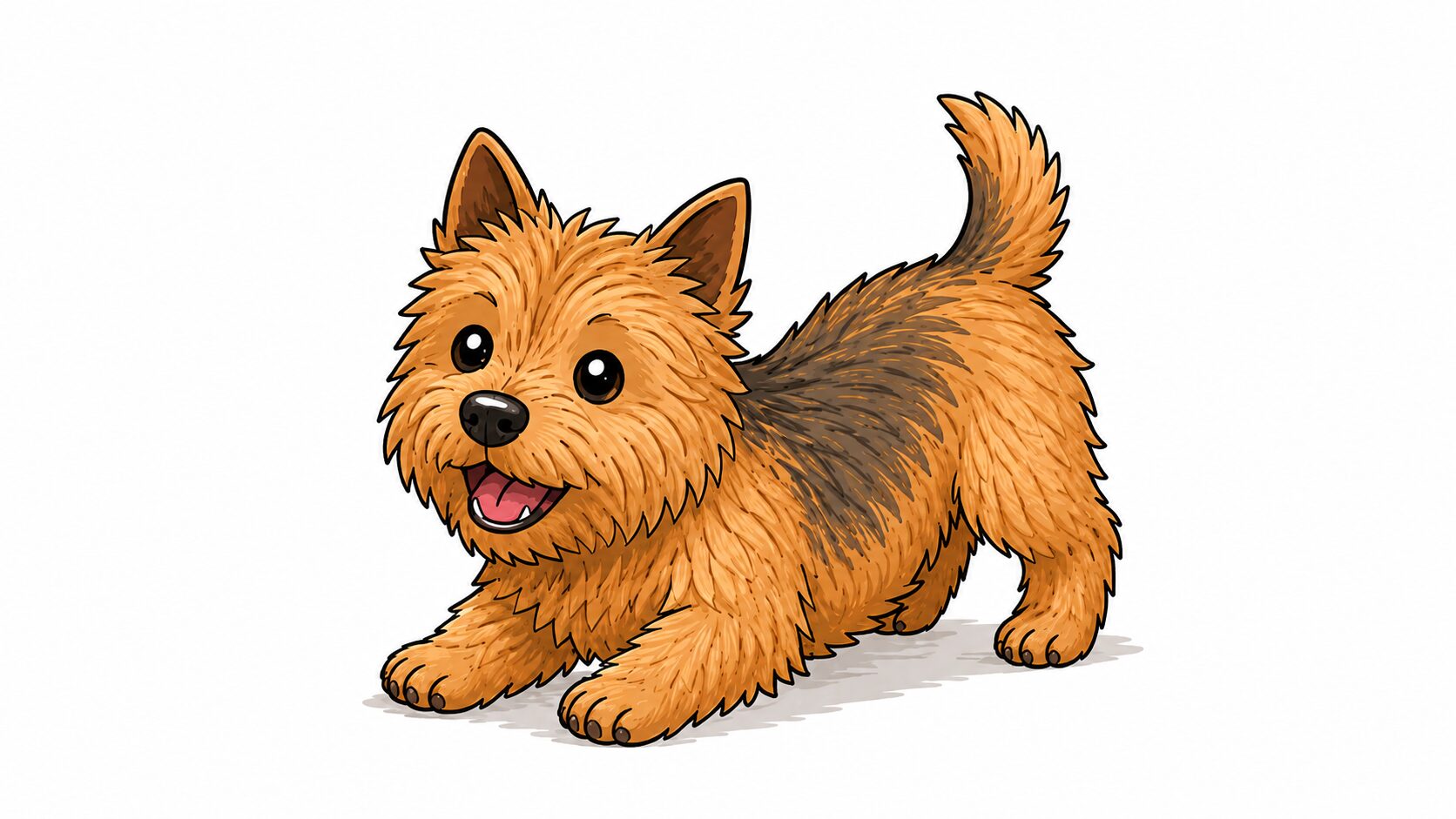
The Norwich Terrier is the smallest of the working terrier breeds, and yet everything about them looks built for purpose. They carry a sturdy, compact body on short but surprisingly powerful legs, and their round, slightly foxy face is topped with small, pointed ears that stand straight up — the most recognizable physical feature that sets them apart from the closely related Norfolk Terrier.
Their wiry, double coat sits close to the body and comes in a range of warm colors including red, wheaten, black and tan, and grizzle. The coat has a rough, almost bristly texture on the outside, which is exactly what it should feel like — that outer layer is designed to protect against the elements and the kind of rough terrain a working terrier would encounter. Despite their short stature of around 10 inches at the shoulder and a typical weight of 11 to 12 pounds, they look solid and well-proportioned, never fragile or delicate.
Their expression is one of the most charming things about them — bright, alert eyes full of intelligence and just a hint of mischief.
Housing And Living Requirements
One of the better surprises about the Norwich Terrier is just how adaptable they are when it comes to living arrangements. Due to their small size, Norwich Terriers do well in apartments as long as their exercise needs are being met daily. They are not the type of dog that requires a sprawling yard to be happy — but they absolutely do require stimulation, activity, and your company.
That said, a home with a securely fenced yard is the ideal setup. Norwich Terriers have a powerful prey drive baked into their DNA, and if something small and fast crosses their path, they will give chase without a second thought. A fenced yard gives them safe space to run and explore. An open yard or unsupervised outdoor time is a recipe for a missing dog.
Inside the home, they are not demanding about their sleeping arrangements. A good dog bed in a comfortable spot will suit them perfectly. They are companion dogs at heart and will follow you from room to room all day long, which means they are not suited to being left alone for long stretches. A Norwich who is bored and isolated will find ways to entertain themselves — usually in ways you won’t appreciate, like digging or excessive barking.
Exercise Requirements
Do not underestimate the energy levels packed into this small dog. Norwich Terriers were bred to work, and that drive hasn’t gone anywhere. At least 30 minutes of daily exercise is recommended, but more is always better for this breed. A couple of brisk walks per day combined with playtime in a secure area is a solid baseline.
The real key with Norwich Terriers is variety. They get bored easily, which means the same short stroll around the block every day won’t cut it for long. They thrive on activities that challenge both their body and their mind. Dog sports like agility, barn hunt, and earthdog trials are especially well-suited to this breed, and many Norwich Terriers genuinely excel in these environments.
If a Norwich isn’t getting enough exercise, they will let you know about it — through barking, digging, or generally destructive behavior. The good news is that the solution is simple: a well-exercised Norwich is a content, well-behaved Norwich. Invest in a set of dog puzzle toys on rainy days when outdoor activity is limited — these dogs genuinely appreciate the mental workout.
Grooming Requirements
The Norwich Terrier’s wiry double coat does a solid job of looking after itself, but it still needs regular attention to stay in good shape. Brushing at least twice a week is the baseline to remove loose hair and prevent any matting, particularly around the neck area where the coat tends to be thicker.
The most important part of Norwich Terrier coat maintenance is hand-stripping — a technique where dead hair is pulled from the root rather than cut. This preserves the natural wiry texture of the outer coat and encourages healthy new growth. It should be done a few times a year and can be done at home with practice, though many owners prefer to take their dog to a professional groomer who specializes in terrier coats. Clipping the coat instead of hand-stripping will soften the texture over time, which isn’t harmful but does change the characteristic look.
Bathing should be kept to roughly once every three months — too frequent bathing can dry out and irritate their skin. Beyond coat care, keep up with regular nail trims, ear cleaning, and dental hygiene. Dental health is particularly worth staying on top of with this breed, as small dogs in general tend to be more prone to dental issues. A good set of dog dental chews can help make that part of the routine a little easier.
Diet And Nutrition
Feeding a Norwich Terrier is straightforward, but portion control is something every owner needs to stay on top of. These dogs love food and are prone to weight gain if meals aren’t monitored. Obesity in dogs can shorten their lifespan and put unnecessary strain on their joints, so keeping your Norwich at a healthy weight is one of the most important things you can do for them long-term.
A high-quality commercial dog food formulated for small breeds is the right starting point. Look for a food that meets their life stage requirements — puppy, adult, or senior — and that lists a quality protein source as the first ingredient. Feeding two to three small meals per day rather than one large meal is ideal, as it helps prevent overeating and keeps energy levels stable throughout the day.
Around one cup of food per day is a general guideline for adults, but the exact amount should always be adjusted based on your dog’s activity level, age, and the specific food you’re using. Training treats are great for this breed since they respond so well to food rewards, but make sure to factor those calories into their daily total. Always check with your vet before making significant changes to your dog’s diet.
Compatibility
Norwich Terriers are genuinely social dogs that tend to get along well with most people and, when properly socialized, with other animals too. They bond closely with their families and do well in households with children, though it’s worth noting that they won’t tolerate rough handling. A child who respects the dog’s space will have a willing and enthusiastic playmate. One who pulls, prods, or plays too roughly may get a warning snap — not aggression, but a clear communication that boundaries matter.
With other dogs, Norwich Terriers typically coexist well, particularly when raised together or introduced properly. They can also live alongside cats, though their strong prey drive means introductions should be done carefully and small animals like rodents or birds should not be left unsupervised around them.
They are not well-suited to being left alone for long periods. The Norwich Terrier thrives on human company and will not do well in a household where everyone is away for most of the day. If you’re working long hours, a dog pen with enrichment items can help make solo time more manageable, but this breed genuinely needs to be part of your daily life to be happy.
Behavior And Temperament
If you had to describe the Norwich Terrier’s personality in one phrase, it would be “big dog in a small body.” These dogs are bold, curious, and completely fearless in a way that makes you forget they barely reach your knee. They were bred to bolt foxes from dens and take on vermin, and that courageous streak is still very much intact.
They are alert by nature and make good watchdogs — they will notice anything unusual and are not shy about announcing it. However, they are not aggressive dogs, and excessive barking is usually a sign that something is off, most often that the dog isn’t getting enough exercise or mental stimulation.
The Norwich is deeply affectionate and people-oriented. They want to be involved in whatever you’re doing, whether that’s going for a walk, sitting on the sofa, or watching television. They are known for being friendly toward strangers, which makes them a particularly approachable breed for social situations. Their happy, playful nature makes them a joy to be around, and their adaptability means they tend to settle well into most household dynamics — provided their need for activity and company is being met.
Training And Handling
Norwich Terriers are intelligent, quick learners who respond beautifully to positive reinforcement. Their eagerness to please combined with a love of food rewards makes training sessions productive and genuinely enjoyable. Basic obedience can be wrapped up in a matter of weeks with a consistent approach, and many go on to learn impressive tricks and compete in dog sports.
The challenge with this breed is their independent streak. Norwich Terriers are terriers, which means they were bred to make decisions on their own in the field. That self-sufficiency is a feature, not a flaw, but it does mean that training requires patience and consistency. If sessions drag on too long or become repetitive, they will tune out. Keep sessions short, upbeat, and varied, and always end on a positive note.
Early socialization is essential. Getting your Norwich comfortable with a wide range of people, environments, sounds, and other animals from puppyhood sets the foundation for a well-rounded adult dog. A set of dog talking buttons might even be worth exploring with this breed — they are sharp enough to pick up on patterns quickly and tend to thrive with interactive enrichment.
Harsh corrections have no place in training this dog. They respond to fairness, consistency, and rewards. Push too hard and they will simply shut down and lose interest.
Health And Lifespan
Norwich Terriers are generally robust, healthy little dogs with a lifespan of 12 to 15 years. Like all breeds, they do have some predispositions worth knowing about.
Luxating Patella — The kneecap can slip out of its normal position, which is a common issue in small breeds. Mild cases are often managed without surgery, but more severe cases may require intervention.
Upper Airway Syndrome — Norwich Terriers can be prone to respiratory issues including elongated soft palates and narrow tracheas. This is worth discussing with your vet, especially if you notice any labored breathing or exercise intolerance.
Eye Conditions — Cataracts and other hereditary eye conditions have been noted in the breed. Regular veterinary eye exams are a sensible precaution.
Hypothyroidism — An underactive thyroid can cause weight gain, lethargy, and skin issues. It is manageable with lifelong medication if diagnosed.
Dental Disease — Small breeds are inherently more vulnerable to dental problems. Regular brushing and professional dental cleanings are important parts of their care routine.
Choosing a puppy from a reputable breeder who performs health screening and genetic testing on their breeding dogs significantly reduces the risk of inherited conditions. Regular vet check-ups, a balanced diet, and consistent exercise are the best tools any owner has for keeping a Norwich Terrier healthy well into their senior years.
Price And Availability
The Norwich Terrier is considered a relatively rare breed, and that rarity is reflected in the price. From a reputable breeder, expect to pay between $1,500 and $4,000, with show-quality or champion-lineage puppies sitting at the higher end of that range. The average price sits around $3,500. Given that only a few hundred Norwich Terrier puppies are born in the United States each year, finding one may take time, and getting on a waiting list with a reputable breeder is common.
If adoption is an option you’re open to, rescue organizations are a worthwhile path. Adoption fees typically run between $300 and $600, and rescued dogs often arrive already vaccinated and spayed or neutered. The Norwich Terrier Club of America is a good starting point for finding both reputable breeders and breed-specific rescue resources.
Beyond the purchase price, first-year ownership costs — including supplies, veterinary care, food, training, and grooming — typically run around $5,970, with ongoing annual costs of approximately $1,000 to $1,200 after that.
A responsible breeder will be transparent about health testing, allow you to meet the puppy’s parents, and never sell to pet stores. If a price seems too good to be true for a purebred Norwich Terrier, it’s worth taking a much closer look before committing.
Conclusion
The Norwich Terrier is one of those breeds that tends to turn its owners into lifelong devotees. They are small enough to fit into almost any living situation, energetic enough to keep life interesting, and affectionate enough to make you feel genuinely loved every single day. They do require consistent exercise, proper socialization, and a household that can give them the company and stimulation they need — but for the right owner, every bit of that effort comes back tenfold.
If you’ve decided a Norwich Terrier is the right fit for your home, setting them up with quality gear from day one makes the whole experience smoother. Check out our Best Dog Products page for everything you’ll need to welcome your new Norwich into the family right.