

Origin And History
Some breeds are shaped by centuries of continental history and the movements of entire civilizations. The Alapaha Blue Blood Bulldog was shaped by one family, one river, and one region of the American South, and that intimacy of origin is part of what makes it one of the most genuinely distinctive bulldogs in existence.
The breed takes its name from the Alapaha River in southern Georgia, the stretch of rural landscape where its development began in the 1800s under a farmer named Papa Buck Lane from the small town of Rebecca, Georgia. Lane set about preserving and refining the working plantation bulldog that had been a fixture of southern farm life for generations, a type of dog descended from the old English bulldogs brought to America in the early 18th century and continuously bred for working utility rather than appearance. These dogs moved cattle, guarded property, caught hogs, and kept plantations functional in a part of the country where a capable working dog was not a luxury but a practical necessity.
The foundation stock drawn on in the breed’s development included Old Southern Whites, the predecessors of the modern American Bulldog, along with dogs resembling the Catahoula Leopard Dog and other southern working breeds. The Civil War and its aftermath nearly ended the breed entirely. The disruption of plantation life, the collapse of the agricultural economy that had sustained these dogs, and the general upheaval of the postwar South reduced the Alapaha to the verge of extinction. For a significant period, the breed was maintained by essentially one family in one part of Georgia, with the Lane lineage serving as the primary thread keeping the type alive.
By the early 1960s, the breed was believed by many to have disappeared completely. What saved it was the dedication of Lana Lou Lane, Buck Lane’s granddaughter, who in 1979 gathered a small group of southern enthusiasts committed to rescuing the old plantation bulldog of the South. They formally named it the Alapaha Blue Blood Bulldog, with “Blue Blood” referencing the noble devotion and loyal character these dogs had demonstrated across generations of southern farm life rather than any specific coloring. The foundation dog of the modern breed registry was named Otto, a name that became a recognized nickname for the entire breed. The Alapaha Blue-Blood Bulldog Association was established in 1986, giving the breed its first formal registry, and the Animal Research Foundation recognized it the same year. The AKC has not recognized the breed, and at the turn of the 21st century, the total population of genuine Alapaha Blue Blood Bulldogs was estimated at between 120 and 150 dogs, making it among the rarest breeds in North America.
Breed Overview
| Trait | Details |
|---|---|
| Breed Group | Guardian / Working |
| Height | Males 20–24 inches / Females 18–22 inches |
| Weight | Males 70–90 pounds / Females 55–75 pounds |
| Lifespan | 12–15 years |
| Coat | Short, dense, stiff |
| Colors | Blue merle, brown merle, red merle with white; white with black, blue, buff or brown patches |
| Temperament | Loyal, protective, trainable, confident, dutiful |
| Recognition | Alapaha Blue-Blood Bulldog Association (ABBA), American Rare Breed Association |
Appearance And Size
The Alapaha Blue Blood Bulldog is a well-developed, exaggerated bulldog that carries its size with the athletic capability of a genuine working dog rather than the lumbering heaviness of more physically exaggerated bulldog types. Males stand 20 to 24 inches at the shoulder and weigh between 70 and 90 pounds. Females are somewhat lighter and shorter but share the same fundamental build. The overall impression is one of muscular power in a frame that is clearly capable of sustained physical work.
The head is broad and large, proportional to the body, with a prominent, square muzzle covered by loose upper lips and prominent, wide-set eyes that carry an alert and watchful expression. The ears are natural drop ears that hang close to the head and are never trimmed or docked. The tail is also left natural and undocked, which is a consistent breed characteristic. The back is straight and as long as the dog is high at the shoulders, and the well-muscled hindquarters are slightly narrower than the chest, giving the dog its characteristic athletic silhouette.
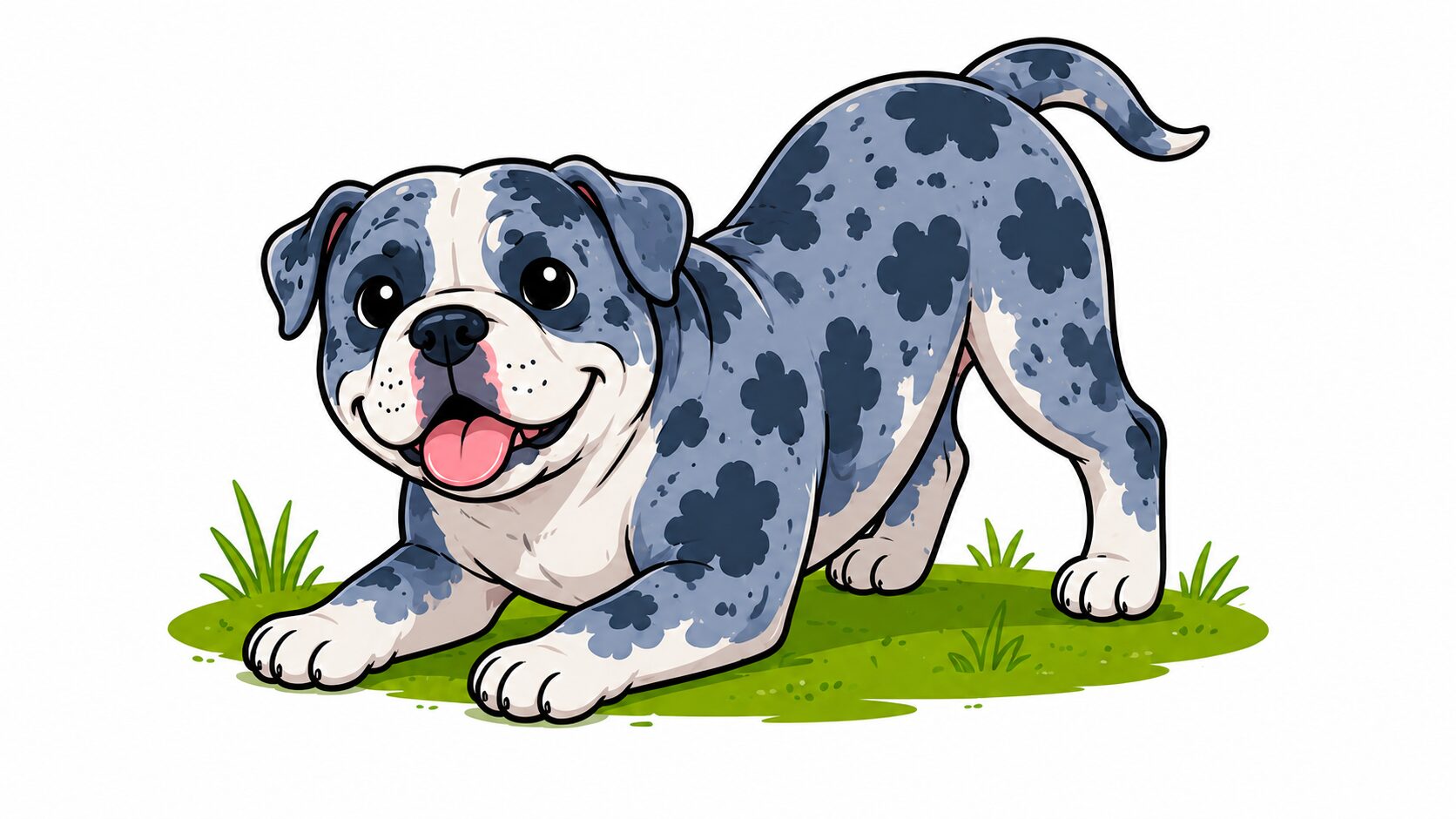
The coat is short, relatively stiff, and close-lying. The preferred and most recognized coloring in the breed is merle patterning, specifically blue merle, brown merle, and red merle, typically trimmed in white or combined with chocolate and white. Glass eyes, which are solid blue, and marble eyes, where blue and brown are mixed in a single eye, are both considered desirable characteristics in the breed standard. The dewclaws are never removed, and the feet are described as cat-like in their compactness. Unlike most other bulldog breeds, the Alapaha does not drool, which owners consistently cite as one of the breed’s more practical domestic qualities.
Housing And Living Requirements
The Alapaha Blue Blood Bulldog is an adaptable breed in terms of living space to a reasonable degree, but it has clear preferences and requirements that should be understood before committing. A home with an enclosed yard where the dog can move freely between structured exercise sessions is the appropriate setup. Rural and suburban properties suit the breed better than dense urban environments, though owners who are committed to meeting the exercise requirement consistently report that the breed can adapt to a range of living situations.
The yard and its fencing matter. The Alapaha has a strong territorial instinct and takes its guardian role seriously at the boundaries of its space. A fence that is properly constructed and maintained is a practical necessity for a breed that was developed specifically to guard and protect property. Off-leash access in any unfenced area carries real risk given the breed’s prey drive and territorial nature.
Inside the home, the Alapaha is notably calm and inactive, which surprises many new owners who expect a high-energy working breed to be restless indoors. It positions itself where it can observe activity and exits, rests effectively between exercise periods, and generally conducts itself with a composed, watchful presence that reflects its guardian purpose. A large, comfortable dog bed placed where the dog can see the household is both practical and appropriate for a breed that is always, at some level, on duty.
The Alapaha does not handle being left alone for extended periods well. It forms very deep bonds with its family and can develop separation anxiety when those bonds are disrupted by long absences. This is a people-oriented breed at its core, and consistent human connection is as important to its wellbeing as adequate physical exercise.
Exercise Requirements
Despite its calm and composed indoor behavior, the Alapaha Blue Blood Bulldog is an athletic working dog that needs consistent daily exercise to stay physically healthy and mentally settled. A minimum of one hour of genuine physical activity per day is the appropriate baseline, divided into two sessions of moderate walks and active play rather than one extended outing.
The breed was built for sustained working activity rather than explosive sprinting, and its exercise needs reflect that. Long walks at a steady pace, off-leash play in securely fenced spaces, and activities that engage both body and mind suit the Alapaha considerably better than brief, intense bursts followed by long periods of inactivity. Dog agility equipment can provide a productive physical and mental outlet for owners with the space, giving an athletic breed like the Alapaha a structured way to use its body and its intelligence simultaneously.
Mental stimulation is equally important for a breed that was developed to make independent guarding decisions and work through complex situations without waiting for instruction. Puzzle toys and scent-based activities engage the Alapaha’s intelligence and provide the kind of mental exercise that prevents the boredom-related behaviors that can emerge in an under-stimulated dog of this capability.
During puppyhood, exercise should be kept to low-impact activities. Bulldog-type breeds growing through rapid developmental phases are susceptible to joint strain from excessive high-impact exercise before growth plates close, and appropriate moderation during the first eighteen months protects long-term joint health.
Grooming Requirements
The Alapaha Blue Blood Bulldog’s short, dense coat is among the more manageable grooming commitments of any medium to large working breed. It sheds at a moderate rate throughout the year with slightly heavier seasonal shedding in spring and fall, and a weekly brush with a bristle brush or rubber grooming mitt removes loose hair, stimulates the skin, and keeps the coat looking clean and healthy. During heavier shedding periods, brushing two or three times a week keeps the volume manageable.
Bathing every two to four weeks is appropriate for most dogs under normal conditions. Bathing more frequently than necessary strips the coat of natural oils and can lead to dry, itchy skin, which is worth avoiding given the breed’s documented sensitivity to skin conditions. The short coat dries quickly, making the bathing process more straightforward than with longer-coated breeds.
The loose facial skin and lip folds that are characteristic of the breed require specific attention. Moisture and debris accumulate in these areas and can cause skin irritation or infection if left unchecked. A quick inspection and gentle cleaning of the facial folds as part of the regular grooming routine prevents these issues from developing into recurring problems.
Standard maintenance completes the routine. Ears should be checked and cleaned weekly using a soft damp cloth, as the drop ear set limits airflow and creates conditions where buildup can develop. Nails should be trimmed monthly. Dental care should be established as a consistent habit from puppyhood, since dental disease is among the most common preventable health problems in adult dogs of all breeds.
Diet And Nutrition
The Alapaha Blue Blood Bulldog is a muscular, active breed that requires a high-quality diet to support its build and energy output. A large-breed formula with a named protein source as the first ingredient provides the nutritional foundation this breed needs. Most adult Alapahas do well on two measured meals per day, which is both appropriate for their metabolism and a practical preventive measure against bloat, a genuine concern for any deep-chested breed.
Portion control is important throughout the dog’s life. The Alapaha’s notably calm indoor behavior means it is not burning significant calories between structured exercise sessions, and overfeeding a dog that is largely inactive indoors leads to weight gain that accelerates joint wear and strains the cardiovascular system. Monitoring body condition regularly and adjusting food quantities to match actual activity levels is more reliable than adhering rigidly to a fixed daily amount.
Bloat, the shorthand for gastric dilatation-volvulus, is a life-threatening emergency that requires immediate surgery. Feeding two smaller meals rather than one large daily serving, avoiding vigorous exercise for at least an hour before and after eating, and using a slow-feeder bowl to reduce eating speed are all practical preventive steps. Learn the warning signs, which include unproductive retching, a visibly swollen abdomen, and restlessness after eating, and treat any suspicion as a veterinary emergency.
Training treats work well as motivators but should always be counted into the daily calorie total rather than added on top of full meals.
Compatibility
The Alapaha Blue Blood Bulldog is one of the more family-devoted breeds a person can share a home with, and that devotion is not passive or performative. It is deeply loyal, genuinely protective, and acutely aware of everything happening within the boundaries of its household. Within its family, it is affectionate, calm, and notably patient, qualities that make it a reliable companion in the right hands.
With children the dog has been raised alongside, the Alapaha is reported consistently as gentle, patient, and protective. The breed has a long history of working closely with families on southern plantations, which shaped a temperament that tolerates and often actively guards the younger members of the household. Supervision is always appropriate given the dog’s size, and interactions with very young children should never be left unmonitored regardless of the dog’s history or temperament.
With strangers, the Alapaha is reserved and watchful. It does not warm to unfamiliar people quickly, and its territorial instinct means it takes any intrusion into its space or its family’s space seriously. Early and consistent socialization from puppyhood is the most effective way to ensure that wariness is calibrated appropriately rather than expressed as reactivity. A well-socialized Alapaha learns to distinguish strangers who pose no threat from those who do, which is exactly the judgment its guarding purpose requires.
With other dogs, the Alapaha can coexist well when properly socialized from a young age, but its dominant nature means introductions require care and patience. Same-sex pairings in the same household should be approached with particular caution. With other pets, early socialization and supervised introductions are essential.
A dog crate provides a valuable management tool during puppyhood and the settling-in period, giving the Alapaha a secure, defined space of its own while household boundaries and routines are being established.
Behavior And Temperament
The Alapaha Blue Blood Bulldog has a temperament that is considerably more nuanced than the typical bulldog reputation suggests, and owners who come to it with preconceived ideas about bulldogs as stubborn and difficult to manage are frequently surprised by what they find. This is an intelligent, perceptive, and deeply loyal breed that pays close attention to its family, responds to emotional states within the household, and applies genuine judgment to the guardian responsibilities it takes entirely seriously.
Within its family, the Alapaha is warm, composed, and notably affectionate in the understated way of a dog that expresses loyalty through proximity and vigilance rather than constant demands for attention. It is not a dog that fills a room with restless energy or noise. It settles, it watches, and it positions itself where it can most effectively monitor its territory while remaining available to its people.
The guardian instinct is always present and does not require provocation or perceived threat to activate. The Alapaha is simply always on some level paying attention, and that constant awareness is one of the qualities that makes it so effective in its historical working role and so compelling to live with in a domestic setting. It is vocal when warranted and quiet otherwise, which makes the moments it does react carry genuine weight.
One behavioral characteristic worth noting is the breed’s strong attachment to its family and its resulting vulnerability to separation anxiety when left alone for extended periods consistently. This is not a dog that does well as an outdoor-only dog or one that is frequently absent from meaningful human connection. Building that connection is what the breed was designed for, and denying it creates a dog that is fundamentally unsettled.
Training And Handling
The Alapaha Blue Blood Bulldog is one of the more trainable bulldog types, which represents a meaningful departure from the reputation that bulldog breeds have accumulated over generations. It is intelligent, responds well to consistent positive reinforcement, and forms strong enough bonds with its handler that it genuinely wants to understand and comply with what is being asked. That said, it has an independent streak, a confidence in its own judgment, and an occasional stubbornness that requires patience and consistency from its handler.
Positive reinforcement methods are both the most effective and the most appropriate approach for this breed. The Alapaha responds to respect and clear communication. It does not respond to harsh corrections, forceful handling, or any training approach that relies on intimidation. High-value training treats are effective motivators, particularly during the early stages of building the working relationship between dog and handler.
Early socialization is not optional and cannot be treated as a secondary concern. Exposing a young Alapaha to a wide range of people, animals, environments, and situations during the critical developmental window directly shapes how the adult dog manages unfamiliar circumstances. An Alapaha that does not receive adequate socialization becomes increasingly suspicious and reactive as it matures, and correcting those patterns in a dog of this size and confidence is significantly harder than preventing them from developing in the first place.
This is not a breed for first-time owners. Its combination of protective instincts, physical capability, independent intelligence, and deep loyalty requires an owner with the experience and patience to provide consistent leadership and appropriate boundaries from the beginning. For that owner, the Alapaha is one of the most rewarding working dogs the American South ever produced.
Health And Lifespan
The Alapaha Blue Blood Bulldog is generally healthier than many more commercially developed bulldog breeds, a quality that reflects its development through practical selection rather than appearance-driven breeding. It does not suffer from the respiratory issues that plague more exaggerated brachycephalic breeds, and it does not drool or snore in the manner of heavier-jowled bulldogs. The typical lifespan is 12 to 15 years, which is notably long for a dog of its size and type.
The primary health concern that every owner must be aware of is the breed’s small genetic pool. With an estimated total population in the low hundreds at the turn of the 21st century, the genetic diversity available to breeders is genuinely limited, and conditions that might be rare in larger populations can appear at higher rates in breeds this small.
Entropion This hereditary eye condition, in which the eyelid folds inward and causes the lashes to rub against the surface of the eye, is among the most commonly documented health issues in the breed. It causes irritation, discomfort, and potential corneal damage if left untreated. It is correctable surgically, and responsible breeders screen for it in their breeding stock.
Hip Dysplasia Abnormal development of the hip joint can cause pain, restricted movement, and progressive arthritis. Sourcing puppies from breeders who conduct OFA hip screening and maintaining a healthy weight throughout the dog’s life are both meaningful preventive measures. Joint supplements are worth discussing with your vet as the dog moves into middle age.
Congenital Deafness Deafness occurring at birth or developing in early life has been documented in the breed, particularly in dogs with significant white coloring and merle patterning. BAER testing, which evaluates hearing function, is worth requesting from breeders of white or heavily merle-patterned dogs.
Skin Conditions and Allergies The breed has a documented sensitivity to skin issues, including environmental allergies and skin fold irritation around the facial area. Regular inspection and appropriate dietary and environmental management reduce the frequency and severity of these problems.
Bloat (Gastric Dilatation-Volvulus) The Alapaha’s chest depth creates susceptibility to this life-threatening emergency. Practical feeding management is the most accessible preventive measure available to owners.
Routine preventive care throughout the dog’s life, including regular vet check-ups, up-to-date vaccinations, consistent dental care, and parasite prevention, provides the foundation for reaching the breed’s full lifespan potential. Pet insurance is worth serious consideration given the breed’s hereditary predispositions and the limited genetic diversity that can make certain conditions more likely to appear.
Price And Availability
The Alapaha Blue Blood Bulldog is one of the rarest dog breeds in the United States, and finding a genuinely well-bred specimen requires research, patience, and a willingness to wait for the right litter from the right breeder. The breed is not recognized by the AKC, and the total population of verified purebred dogs remains small. The Alapaha Blue-Blood Bulldog Association is the most authoritative starting point for locating reputable breeders who maintain proper registry documentation and health testing standards.
From a reputable breeder, expect to pay between $1,500 and $3,000 for a puppy, with some variation depending on the breeder’s reputation, the quality of the bloodlines, and the coloring and physical characteristics of the individual dog. Given the breed’s rarity and the small number of active breeders, waiting lists are common and should be expected as a normal part of the acquisition process.
Adoption is possible but considerably more difficult than with more established breeds. The Alapaha is rarely found in general rescue organizations given its small total population, and breed-specific rescue opportunities are limited. Connecting with the breed association and the enthusiast community directly is the most effective route to finding an adoptable dog.
Beyond the purchase price, annual ownership costs include food at $50 to $80 per month for a dog of this size, routine veterinary care, and pet insurance, which is strongly recommended given the breed’s hereditary health predispositions and the expense that conditions like entropion correction or hip dysplasia management can carry. Annual ongoing costs typically run from $1,500 to $2,500 or more depending on the individual dog’s health and your location.
Any breeder who cannot provide health testing documentation, refuses to allow you to meet the parents, or sells without transparency about the dog’s registry status and lineage should be avoided entirely.
Conclusion
The Alapaha Blue Blood Bulldog is a living piece of American southern history, pulled back from extinction by a handful of dedicated people who understood what would be lost if it disappeared. It is not a breed for everyone, and it makes that clear quickly to anyone who approaches it without the experience, patience, and commitment it genuinely requires. For the right owner who provides consistent training, early socialization, genuine daily exercise, and the deep human connection this breed was built for, the Alapaha is a loyal, capable, and entirely unique guardian that no other bulldog quite replicates. Set yourself up properly before bringing one home. Our Best Dog Products page has everything you need for protective, people-devoted working breeds that give everything they have to the families that earn their trust.