
Origin And History
The Bluetick Coonhound is a genuinely American breed with a genuinely French lineage, a medium to large scenthound developed in the southern United States whose most distinctive physical characteristic, the mottled blue-black ticked coat that gives it its name, traces directly to the Grand Bleu de Gascogne hounds that came to America from southwestern France in the hands of colonial-era sportsmen and founding fathers. It is a breed of deep American cultural roots, of the distinctive music of its baying voice on a night trail, of coonhunting traditions stretching back centuries, and of one of the most famous university mascots in American collegiate sports.
The Bluetick Coonhound’s history begins with the French hounds that George Washington received as gifts from General Lafayette. Lafayette sent Washington five French hounds believed to be Grand Bleu de Gascognes and Gascogne-Saintongeois, and Washington, who was himself a devoted houndsman and fox hunter, incorporated these dogs into his breeding program at Mount Vernon. Most American coonhound breeds are believed to descend in part from this foundational breeding, which combined the cold-nose tracking capability and the characteristic blue ticking of the French hounds with the speed and adaptability of the English Foxhound and the Black and Tan Virginia Foxhound to produce dogs suited to the rugged, varied terrain and game of the American frontier.
The Bluetick Coonhound specifically originated in Louisiana, where the French hound heritage was most directly preserved in a local population of blue-ticked dogs that retained the cold-nose tracking style of the Grand Bleu rather than the hot-nose speed of the English Foxhound strains. The breed was developed from the Grand Bleu de Gascogne hound, the English Foxhound, the cur dog, the American Foxhound, and the Black and Tan Virginia Foxhound. The cold nose, meaning the ability to follow a very old, faint trail rather than only fresh hot ones, was the quality most deliberately preserved in the Bluetick’s founding breeding.
For decades, Bluetick Coonhounds were registered with the United Kennel Club under the English Fox and Coonhound classification, lumped together with dogs of quite different type and working style. Breeders who valued the specific cold-nose capability and the French hound characteristics of their dogs lobbied for separation, and the UKC recognized the Bluetick Coonhound as a separate breed in 1946. The breed’s most famous cultural representative, Smokey, the live Bluetick Coonhound mascot of the University of Tennessee, has made the breed one of the most recognizable in American collegiate sports, present at every home football game and beloved by Volunteer fans since the first Smokey was introduced in 1953.
The AKC accepted the Bluetick Coonhound in April 2009, with the breed becoming eligible to compete in AKC conformation shows in December 2009, placing it in the Hound Group. Despite this relatively late AKC recognition, the breed had been established and respected within American hunting culture for well over a century before formal registry acknowledgment arrived.
Breed Overview
| Trait | Details |
|---|---|
| Breed Group | Hound |
| Height | Males 56–69 cm (22–27 inches) / Females 53–64 cm (21–25 inches) |
| Weight | Males 25–36 kg (55–80 pounds) / Females 20–29 kg (45–65 pounds) |
| Lifespan | 11–12 years |
| Coat | Short, moderately coarse, glossy |
| Colors | Dark blue mottled body; black spots on back, ears, sides; tan markings |
| Temperament | Friendly, loyal, active, vocal, determined on trail |
| UKC Recognition | 1946 |
| AKC Recognition | 2009 |
Appearance And Size
The Bluetick Coonhound is a medium to large, muscular, and athletically built scenthound that presents with the lean, purposeful appearance of a dog built for endurance and speed across rough terrain rather than pure sprint performance. Males stand 56 to 69 centimeters at the shoulder and weigh between 25 and 36 kilograms. Females are somewhat smaller and lighter. The overall impression is of a well-muscled, racy hound of good substance that carries itself with the head up and tail over the back without signs of fear or nervousness, exactly as the UKC breed standard specifies.
The head is broad between the ears, with a slightly domed skull, a prominent stop, and a square muzzle. The eyes are large, round, and dark brown, set wide apart, and carry the earnest, slightly imploring expression characteristic of working scent hound breeds. The ears are long, low-set, and thin, reaching at minimum to the tip of the nose when drawn forward, a functional feature that helps sweep scent particles from the ground toward the nose during tracking.
The body is well-muscled throughout, with a broad, deep chest providing the lung capacity for sustained trailing, a level back, and powerful hindquarters built for sustained endurance on long night hunts. The tail is set high and carried over the back with an upward curve, typically with a brush of coarser hair.
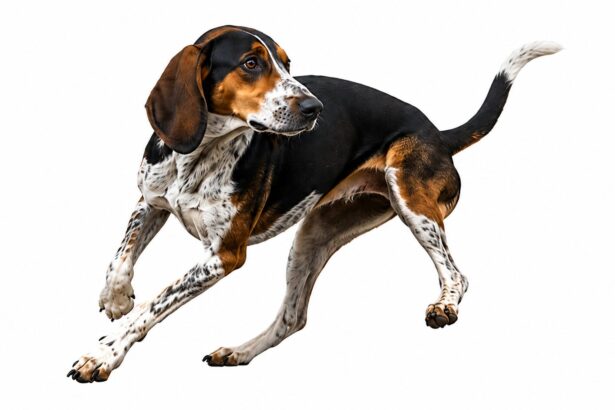
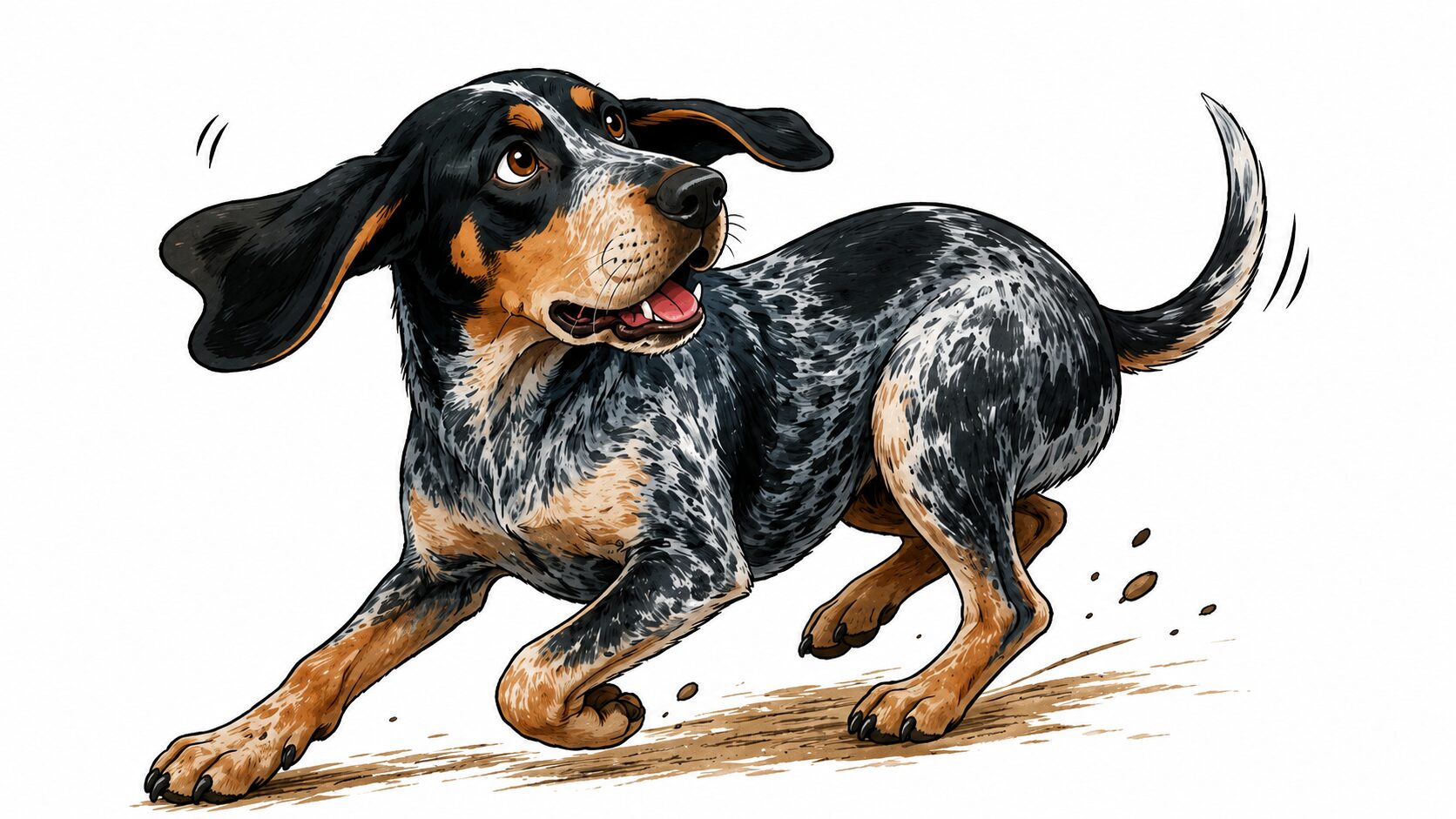
The coat is the breed’s most immediately distinctive feature. It is short, moderately coarse, and glossy, and it carries the signature mottled blue-black pattern from which the breed takes its name. The base color is a ticked pattern of dark blue on white, produced by intermixed black and white hairs, creating the overall blue-grey impression. Against this blue ticked ground, large black spots appear on the back, ears, and sides. Rich tan markings appear above the eyes, on the sides of the muzzle, on the chest, and on the lower legs. The total effect is one of the most visually striking and immediately recognizable color patterns in the American hound world.
Housing And Living Requirements
The Bluetick Coonhound is an extreme hunting dog developed for raccoon and small game hunting that is true to its hound character in every working and domestic context, and being direct about the housing requirements that character produces serves prospective owners considerably better than any softening of the reality.
A home with access to a securely fenced outdoor area of meaningful size is the minimum appropriate setting. The Bluetick has been known to roam, so a tall fence is a must. This statement from multiple veterinary breed guides understates the case slightly. The Bluetick’s combination of scent drive, endurance, and the bred-in determination to follow a trail wherever it leads means that inadequate containment is not merely an inconvenience but a genuine ongoing safety risk. The fence must be genuinely tall and solid, because a dog this motivated and this capable will assess and potentially defeat any weakness.
Rural and semi-rural environments that provide outdoor space and varied terrain are the most naturally suited to a breed developed for sustained hunting across the forests, swamps, and fields of the American South. Suburban settings work for genuinely active owners who take the fence requirement seriously. Urban apartment living is a genuinely poor match for a breed this energetic and this scent-driven.
Inside the home, a well-exercised Bluetick is one of the most pleasant large hound companions available: sweet, affectionate, calm, and genuinely warm with its family. The AKC describes it as a sweet and affectionate charmer who might enjoy snoozing in the shade, and that quality is real and consistent. A large orthopedic dog bed provides the joint support that benefits a large, active breed throughout its 11 to 12 year lifespan.
Exercise Requirements
The Bluetick Coonhound is an athletic, high-endurance working breed with genuine daily exercise needs that reflect its heritage as a night hunter capable of following a cold trail for miles across challenging terrain. At least one hour of vigorous daily exercise is appropriate for most adults, though active hunters or field dogs may require and genuinely thrive on considerably more.
The breed’s most naturally satisfying and genuinely enriching exercise combines physical output with the scenting instinct that defines the Bluetick’s working identity. Scent work and tracking activities engage the exceptional cold nose that distinguishes the Bluetick among American coonhound breeds, providing the combination of physical and cognitive engagement that keeps a working scent hound genuinely content and tired after a session. AKC coonhound events, field trials, and organized hunting activities are the most complete outlets for a breed this specifically bred for working performance.
Puzzle toys and enrichment activities provide meaningful cognitive engagement between outdoor sessions. A GPS tracker is an essential safety investment for any Bluetick Coonhound owner who exercises the breed in any open or partially fenced area, as a dog this motivated to follow a scent trail can cover remarkable distances before the owner has registered the departure.
Grooming Requirements
The Bluetick Coonhound’s short, moderately coarse, glossy coat is among the most practically low-maintenance grooming commitments of any large working breed. Weekly brushing with a rubber grooming mitt or firm bristle brush removes loose hair and keeps the distinctive ticked coat in healthy condition. The breed sheds moderately throughout the year without dramatic seasonal fluctuations.
Bathing every six to eight weeks is appropriate under normal conditions, with more frequent bathing for dogs that are actively hunting and returning from field work through mud and wet vegetation. The breed has the characteristic hound scent that is typical of the coonhound family, and regular bathing helps manage this in a domestic context.
The ears are the most critical grooming and health management consideration for this breed, and the most important routine commitment for any Bluetick owner. The long, low-set, thin ears that sweep the ground during trailing dramatically reduce airflow to the ear canal and accumulate moisture and debris at a rate that makes chronic ear infections one of the most consistently documented health concerns in the breed. Bluetick Coonhound owners should clean their dog’s ears continually and keep an eye out for scabs or pus. Weekly inspection and cleaning with a veterinarian-recommended ear cleaner, with particular attention after any field work or wet weather exposure, prevents the chronic infections that develop reliably when ear maintenance is inconsistent.
Dental care should be established as a consistent routine from puppyhood. Nails should be trimmed monthly, though working dogs may partially maintain nail length through terrain contact.
Diet And Nutrition
The Bluetick Coonhound is a medium to large, highly active working breed with significant daily caloric needs that should be matched to its actual size and activity level. A high-quality large breed formula with a named protein source as the first ingredient provides the nutritional foundation this athletic breed requires. Active and working breed formulas are appropriate for hunting or field-active dogs with high daily output.
Most adults do well on two measured meals per day. The two-meal approach is particularly important for this breed given the significant bloat risk documented for any deep-chested large hound. Using a slow-feeder bowl and strictly avoiding vigorous exercise for at least an hour before and after meals are practical preventive measures worth establishing as permanent household routines. Any suspicion of gastric dilatation-volvulus warrants immediate veterinary emergency treatment, as the condition can kill within hours.
Maintaining appropriate weight throughout the dog’s life is one of the most practically meaningful ongoing health investments an owner can make. Keeping a lean body condition reduces the strain on joints with documented predispositions to hip and elbow dysplasia. Discussing joint supplements with your vet as the dog reaches middle age is worthwhile.
Training treats are effective motivators given the breed’s food motivation and should be counted into the daily calorie total.
Compatibility
The Bluetick Coonhound is a warmly family-compatible breed that combines the melodious, loyal, affectionate character of the great American coonhound tradition with the working drive and scent determination that defines its field performance.
With its own family, the breed is demonstrably affectionate and genuinely warm. The Bluetick bonds closely with household members and expresses those bonds with the cheerful, tail-wagging enthusiasm of a breed that genuinely delights in its people. The sweet, calm domestic character that the AKC describes is consistent and genuine, reflecting a breed that knows how to relax between working sessions.
With children, the Bluetick is consistently patient, gentle, and playful. They do well with kids and are known for their friendly nature, making them suitable family dogs for active households. The breed’s moderate size and fundamentally good-natured character make it appropriate for households with children of various ages, though very young children benefit from supervision with any large, active breed.
With strangers, the Bluetick is typically friendly and approachable, reflecting the cooperative, sociable character of a pack hunting breed that worked alongside varied human hunting parties. It is not a natural guardian breed, though its deep, resonant bay provides an effective alarm function.
With other dogs, the breed’s pack hunting heritage makes it consistently sociable. With small animals including cats and wildlife, the scent drive and prey instinct are genuine and should not be assumed absent without direct experience with the individual dog.
A dog crate sized for a large breed is a useful management tool during puppyhood and the settling-in period.
Behavior And Temperament
The Bluetick Coonhound’s temperament is one of the most clearly dual-natured in American hound history: a sweet, affectionate charmer who might enjoy snoozing in the shade at home, and an off-the-charts prey drive machine in pursuit of quarry that is relentless, bold, and single-minded. Both characterizations are accurate, and understanding both is essential to appreciating what this breed is.
The sweetness is genuine and consistent. The Bluetick at home with its family is one of the most pleasant large hound companions available, warm and affectionate with the people it loves, happy to be near them, and bringing the laid-back, good-natured presence of a working hound between jobs. This domestic ease is one of the qualities that has made the coonhound breeds so consistently popular as family dogs in the American South alongside their working roles.
The voice is the behavioral characteristic that requires the most honest acknowledgment before acquiring this breed. The Bluetick Coonhound has one of the deepest, most resonant, most carrying bays in the American hound world. It uses this voice when it has found something interesting, when it is lonely or bored, when it wants attention, and on various other occasions that its own judgment identifies as appropriate. This voice travels considerable distances and penetrates residential soundproofing with ease. Managing it through appropriate exercise, enrichment, and early training is an important and ongoing ownership responsibility.
The scent drive, when activated, is total and consuming. A Bluetick on a trail is functionally unavailable for recall until the trail resolves, and this is the breed’s authentic working nature rather than a training failure.
Training And Handling
The Bluetick Coonhound is an intelligent breed that takes well to training when approached with the patience, consistency, and realistic understanding of its scent-driven independence that its working hound heritage produced.
Positive reinforcement methods are the approach that works most reliably. The Bluetick responds to reward, to genuine engagement, and to training that feels collaborative and purposeful. Its food motivation makes treat-based training highly productive, and training treats are particularly valuable for recall training, where maximum motivational input is needed to compete with active scent trails.
Recall training deserves the most sustained, consistent attention of any skill trained with this breed. Off-leash reliability in unfenced areas is not a realistic training outcome for most Bluetick Coonhounds when scent distractions are present, and this is not a reflection of training failure but the authentic expression of a breed whose working heritage selected precisely for the ability to maintain scent focus in the face of competing inputs. Consistent leash management in unfenced areas is the most reliable long-term management approach.
Early socialization from puppyhood is important, exposing the young dog to a wide range of people, other dogs, environments, and sounds during the critical developmental window. The breed’s friendly, cooperative character means it typically takes well to broad early socialization.
Health And Lifespan
The Bluetick Coonhound is a generally healthy breed with an average lifespan of 11 to 12 years. Its development through practical working selection for hunting performance has produced a constitution that is more robust than many breeds developed primarily for appearance, but there are specific documented health concerns that every owner needs to understand and manage proactively.
Bloat (Gastric Dilatation-Volvulus) The Bluetick Coonhound is a deep-chested dog, making it susceptible to bloating and GDV, a life-threatening emergency in which the stomach fills with gas and twists on itself, cutting off blood flow to organs. Signs include retching without productive vomiting, a distended abdomen, restlessness, and a prayer position with the front feet down and the rear up. Any of these signs require immediate emergency veterinary treatment. Preventive management includes two smaller meals rather than one large daily serving, slow-feeder bowls, and avoiding vigorous exercise for at least an hour before and after meals. Prophylactic gastropexy surgery, which tacks the stomach to prevent rotation, is worth discussing with your veterinarian particularly when the dog undergoes any procedure requiring general anesthesia.
Hip and Elbow Dysplasia Abnormal joint development causing pain, restricted movement, and progressive arthritis is the most consistently documented hereditary health concern in the breed. Sourcing puppies from breeders who conduct OFA hip and elbow screening on their breeding animals reduces inherited risk. Maintaining appropriate weight throughout the dog’s life and discussing joint supplements with your vet as the dog reaches middle age are meaningful protective measures.
Ear Infections The long, droopy ears that sweep the ground during trailing dramatically reduce airflow to the ear canal, creating ideal conditions for bacterial and yeast infections. Chronic ear disease is among the most consistently managed health concerns in the breed. Weekly inspection and cleaning is the minimum preventive maintenance, with particular attention after any field work or wet weather exposure.
Autoimmune Thyroiditis and Hypothyroidism The Bluetick Coonhound is prone to autoimmune thyroiditis, in which the immune system attacks the thyroid gland, which can lead to hypothyroidism, where the thyroid doesn’t produce sufficient hormones. Signs include lethargy, weight gain, hair loss, dry skin, and behavioral changes. Annual blood work beginning in middle age allows for early detection, and the condition is manageable with lifelong daily oral medication once diagnosed.
Cataracts Older Bluetick Coonhounds often develop cataracts, which give the eyes a cloudy appearance and progressively impair vision. Surgery is available and effective when vision loss significantly affects quality of life. Regular annual veterinary eye examinations allow for monitoring of developing cataracts.
Routine preventive care, including regular vet check-ups, consistent dental hygiene, up-to-date vaccinations, and parasite prevention appropriate for working dogs exposed to tick and heartworm country, provides the foundation for a healthy Bluetick Coonhound across its lifespan.
Price And Availability
The Bluetick Coonhound is a moderately available breed in the United States, particularly in the southern states where the breed has its deepest cultural roots and its largest working hunting population. From reputable breeders, expect to pay between $500 and $1,200 for a well-bred puppy from working or show bloodlines, with prices varying by the reputation of the breeding program and the specific lineage.
The American Bluetick Coonhound Association and the AKC Marketplace are reliable starting points for locating breeders who breed to the AKC standard and conduct appropriate health testing. Responsible breeders will conduct OFA hip and elbow evaluations on their breeding animals, screen for thyroid conditions, conduct eye certification, and be transparent about all health testing results. They will ask thorough questions about the prospective buyer’s lifestyle, fencing situation, and experience with independent scent hound breeds.
Adoption is a particularly meaningful option for this breed. Bluetick Coonhounds and Coonhound mixes are represented in shelter and rescue populations across the United States, particularly in southern states. Coonhound-specific rescue organizations and general hound rescue groups regularly have dogs of various ages available. The combination of the breed’s baying voice and off-the-charts prey drive leads some owners to surrender dogs they were not adequately prepared for, making rescue a realistic and meaningful source of well-adjusted adult dogs that simply need more appropriate homes.
Annual ongoing ownership costs include food at $50 to $80 per month for a breed this size, routine veterinary care including regular ear checks and cleaning supplies, dental products, and standard supplies. The short coat adds no professional grooming expense.
Conclusion
The Bluetick Coonhound is a breed that carries American history in its blood. The Grand Bleu de Gascogne hounds that came to George Washington from General Lafayette, the centuries of southern coonhunting tradition that shaped the cold-nose tracking style and the carrying bay that defines the breed’s working identity, the University of Tennessee’s beloved Smokey mascot that has made the Bluetick familiar to college football fans across the country, and the ongoing community of hunters and enthusiasts who work these dogs through the night forests of the American South are all part of what the Bluetick is. In the right hands, with an appropriate fence, consistent ear care, appropriate exercise, and the permanent leash management that responsible ownership of any serious hunting hound requires, the Bluetick Coonhound is a deeply rewarding companion that brings the full warmth, loyalty, and working capability of the American coonhound tradition into every household it joins. Get properly set up before bringing one home. Our Best Dog Products page has everything you need for big-voiced, cold-nosed, whole-heartedly devoted American scenthounds that carry the full working heritage of the southern United States and the legacy of Lafayette’s gift to Washington into every home they grace.