
Origin And History
The Dutch Shepherd is one of the most capable and most underappreciated working breeds in the world, a medium-large, brindle-coated, extraordinarily versatile herding and working dog from the Netherlands that shares a common ancestral origin with the German Shepherd and the Belgian Shepherd varieties, developed in parallel from the same continental shepherd dog tradition, and that has consistently outperformed both of its more famous relatives in sustained competitive working assessments without attracting anything like their international recognition or commercial following.
The breed’s origins are rooted in the agricultural landscape of the historic Netherlands, where the flat, unfenced meadows and sandy heather fields of 19th century Dutch farming created a specific set of demands for working dogs that neither the German nor Belgian shepherd types quite met. There were hardly any fenced meadows for sheep in the Netherlands of this era, and sheep were the primary grazing animal because they could survive on the sparse heather that grew on the sandy soils making up nearly a third of the country. Herding these sheep required a dog that was fundamentally different from a modern pet: the Dutch Shepherd was not a breed created to fit someone’s ideal. It just developed. One term for this is a landrace breed.
The Dutch Shepherd was discovered as a naturally occurring shepherd’s dog type living in the rural parts of the historic region of the Netherlands rather than developed through any systematic breeding program. Dutch farmers and shepherds needed a dog that made few demands, adapted to a harsh and meager existence, and could perform multiple working functions across a single farm with a single dog. The breed herded sheep across the unfenced heather fields, kept flocks from straying into crops, guarded the farmstead, pulled carts, served as a family companion, and controlled vermin. This comprehensively practical selection pressure produced a dog of remarkable versatility and robustness.
The Nederlandse Herdershonden Club (NHC) was formed in the late 19th century and officially founded in 1898, providing the institutional framework for the first formal breed standard. The initial standard allowed six coat varieties, which were subsequently narrowed to the three varieties that define the breed today: short-haired, long-haired, and rough-haired. All varieties share the characteristic brindle coloration that distinguishes the Dutch Shepherd from the German Shepherd and Belgian Shepherd varieties and that was deliberately selected specifically to set the Dutch breed apart from its neighbors.
By the early 20th century, sheep farming had largely disappeared from the Netherlands as agricultural modernization changed the landscape, and the Dutch Shepherd’s traditional working role diminished. The breed’s numbers fell significantly, and it might have followed the many other working breeds that declined into obscurity as their original function disappeared. Instead, it found new purpose in police work, military service, search and rescue, guide dog work, and the protection sports that would sustain and eventually increase international interest in the breed. The Dutch Shepherd was adopted by Dutch police forces, who valued its working intelligence, trainability, and physical capability, and this working dog community became the primary custodian of the breed’s quality and working character through the mid-20th century.
The FCI recognizes the Dutch Shepherd in Group 1 (Sheepdogs and Cattle Dogs). The UKC recognized the breed in its Herding Dog Group for considerably longer than the AKC, providing an accessible competitive outlet for American enthusiasts before full AKC recognition. The AKC recognized the Dutch Shepherd in 2012, placing it in the Herding Group. The Dutch Shepherd Dog Club of America (DSDCA) serves as the AKC parent club.
Breed Overview
| Trait | Details |
|---|---|
| Breed Group | Herding |
| Height | Males 57–62 cm (22.5–24.5 inches) / Females 55–60 cm (21.5–24 inches) |
| Weight | 23–32 kg (50–70 pounds) |
| Lifespan | 11–14 years |
| Coat Varieties | Short-haired; Long-haired; Rough-haired |
| Colors | Gold brindle or silver brindle only |
| Temperament | Intelligent, loyal, alert, hardworking, reliable |
| FCI Recognition | Yes |
| AKC Recognition | 2012 |
Appearance And Size
The Dutch Shepherd is a medium to medium-large, well-proportioned, and powerfully muscled herding dog that presents with the athletic, balanced appearance of a breed shaped by practical working selection for sustained performance rather than aesthetic criteria. Males stand 57 to 62 centimeters at the shoulder and weigh between 23 and 32 kilograms. Females stand 55 to 60 centimeters and are somewhat lighter. The overall impression is of a strong, capable, well-balanced working dog that carries its substance with the flowing, athletic movement of a breed built for a full day’s active work.
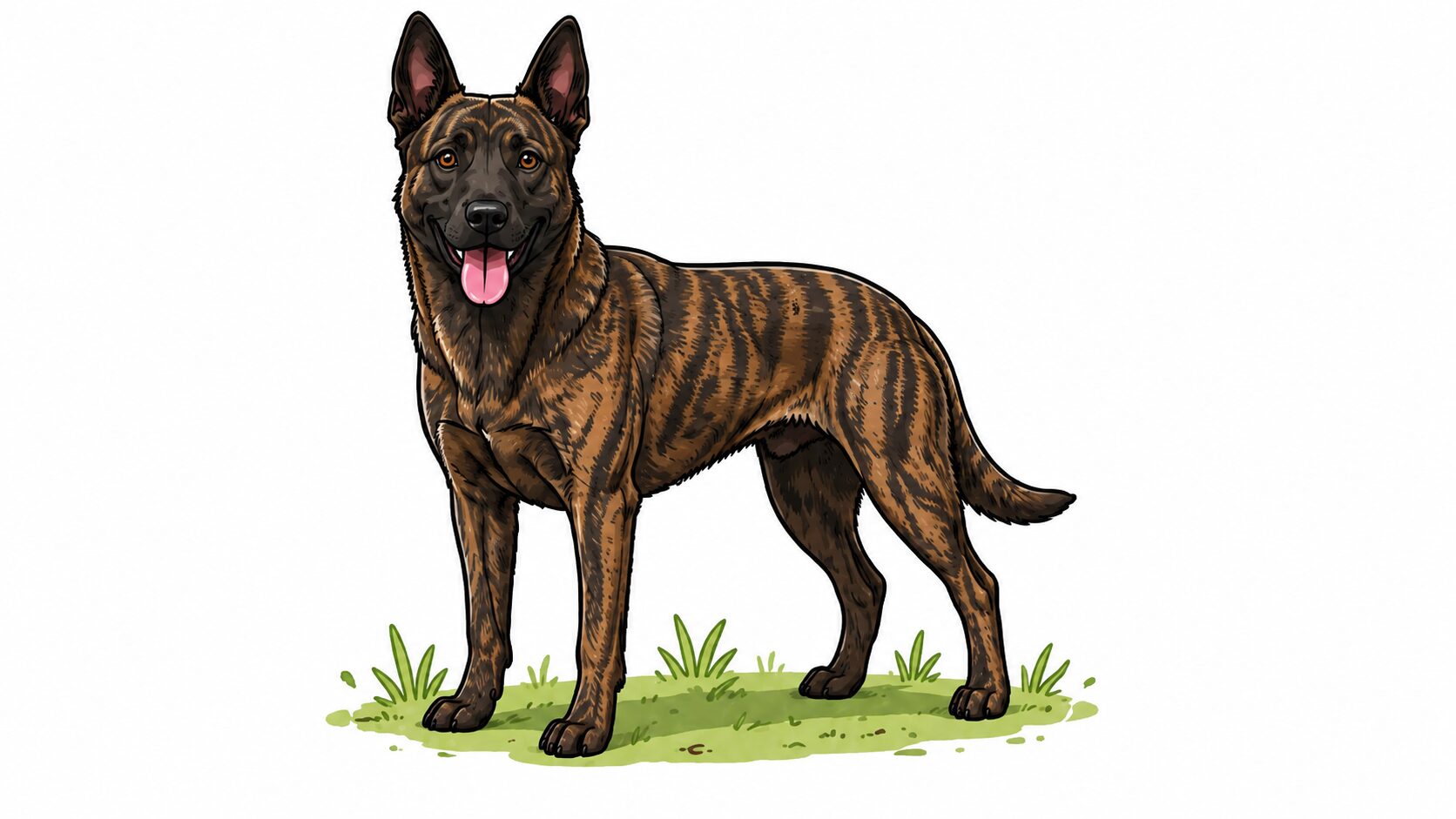
The brindle coat is the breed’s most immediately distinctive visual feature and the characteristic that most clearly distinguishes it from the German Shepherd and Belgian Shepherd varieties with which it is most often compared. The brindle pattern consists of a gold or silver base color with dark brindle striping throughout, producing a pattern that ranges from light golden brindle through rich chestnut brindle to deep silver brindle. No solid colors, sable patterns, or other color expressions are accepted in the breed standard, and this consistency of coloring is one of the most reliable visual identifiers.
The head is wedge-shaped and well-proportioned, with a flat skull, a moderate stop, and a muzzle of good length. The eyes are almond-shaped and dark, carrying the alert, intelligent, confident expression that characterizes the breed. The ears are moderately sized, triangular, firm, and erect, set high on the skull.
The three coat varieties differ significantly in appearance and grooming demands while sharing the same brindle coloration. The short-haired variety has a hard, close-lying outer coat with a dense undercoat, the most common coat type in working and police roles. The long-haired variety has a straight, flat, harsh outer coat of moderate length with feathering on the ears, chest, legs, and tail. The rough-haired variety has a tousled, medium-length harsh coat with a dense undercoat, producing a distinctive shaggy appearance that gives the rough-haired Dutch Shepherd one of the most characterful silhouettes in the herding group.
Housing And Living Requirements
The Dutch Shepherd’s housing requirements are shaped by the combination of its considerable daily exercise needs, its high working intelligence, its guardian character, and the practical realities of living with a breed this capable and this demanding in terms of daily engagement.
A home with meaningful outdoor access and a securely fenced garden is the appropriate baseline. The Dutch Shepherd is not suited to apartment living or inactive households, and being direct about this serves prospective owners considerably better than softening the reality. Rural and suburban environments with genuinely active owners are the most appropriate settings. The fence must be genuinely secure: a breed this intelligent and this athletically capable will assess any containment weakness and act on that assessment.
Inside the home, a well-exercised Dutch Shepherd is a calm, devoted, and deeply affectionate companion. The breed bonds intensely with its family and expresses that bond through the close, watchful, attentive presence of a dog that considers its household its primary responsibility. A large orthopedic dog bed provides the joint support that benefits an active breed this size across its lifespan.
The coat variety influences some housing considerations. The rough-haired variety’s tousled coat requires more active grooming maintenance but provides additional weather resistance. The short-haired variety’s minimal grooming needs make it the most practically convenient coat type for working and sport contexts.
Exercise Requirements
The Dutch Shepherd is a high-energy, highly capable working breed with daily exercise needs that are genuine, significant, and non-negotiable. At least one to two hours of vigorous daily activity is appropriate for most adults, and the most genuinely satisfying exercise combines physical output with the mental engagement that the breed’s exceptional working intelligence requires. Physical exercise alone is not sufficient for a breed this cognitively capable.
The Dutch Shepherd excels across a remarkable range of performance activities: dog agility, Schutzhund and IPO/IGP, tracking, herding trials, search and rescue, obedience, and protection sports are all disciplines at which the breed performs at an elite level. The breed’s versatility across these different working activities reflects the same comprehensively practical working character that Dutch farmers selected for across generations. A set of dog agility equipment at home provides structured physical and cognitive engagement.
Puzzle toys and enrichment activities are genuinely important between physical exercise sessions. A GPS tracker is a practical safety investment for outdoor exercise management.
Grooming Requirements
The three Dutch Shepherd coat varieties have meaningfully different grooming requirements, and prospective owners should understand which variety they are considering and what that coat demands.
The short-haired variety has by far the lowest grooming commitment. Weekly brushing with a rubber grooming mitt or firm bristle brush removes loose hair and keeps the short coat in healthy condition. The breed sheds moderately throughout the year with heavier seasonal shedding in spring and fall. Bathing every six to eight weeks is appropriate.
The long-haired variety requires brushing two to three times a week to prevent matting in the moderate-length outer coat and the feathering on the ears, legs, and tail. During seasonal shedding, daily brushing is necessary to manage undercoat release. Bathing every six to eight weeks, with thorough drying afterward, maintains coat health.
The rough-haired variety is the rarest of the three and has the most specialized grooming needs. The tousled, harsh coat should be hand-stripped rather than clipped to maintain the correct texture, typically twice yearly. Between stripping sessions, brushing two to three times weekly removes debris and prevents matting. The rough coat’s characteristic tousled appearance should be maintained rather than trimmed to smoothness.
For all varieties, ears should be checked and cleaned weekly. Dental care should be established as a consistent routine from puppyhood. Nails should be trimmed monthly.
Diet And Nutrition
The Dutch Shepherd is a medium to large, highly active working breed with significant daily caloric needs that should be calibrated to its actual size and activity level. A high-quality large breed formula with a named protein source as the first ingredient provides the nutritional foundation this athletic breed requires. Active and working breed formulas are appropriate given the Dutch Shepherd’s genuine daily energy output.
Growth management during puppyhood is particularly important for a breed predisposed to hip and elbow dysplasia. Large breed puppy formulas control growth rate and reduce developmental strain on joints during the most vulnerable phase. Overfeeding during puppyhood accelerates growth in ways that directly increase dysplasia risk.
Most adults do well on two measured meals per day. Maintaining lean body condition throughout the dog’s life is one of the most practically meaningful health investments an owner can make, as extra weight directly worsens joint conditions in a breed with documented orthopedic predispositions.
Training treats are highly effective motivators given the breed’s food motivation and should be counted into the daily calorie total. Discussing joint supplements with your veterinarian from the dog’s early adult years is worthwhile.
Compatibility
The Dutch Shepherd’s compatibility profile combines genuine family warmth and devotion with the working intensity and guardian character of a breed whose primary function for over a century has been police, military, and protection work alongside its herding heritage.
With its own family, the Dutch Shepherd is deeply and demonstrably affectionate. The breed bonds completely with its household members and expresses those bonds with the close, watchful, devoted presence of a dog that considers its family both its primary responsibility and its greatest pleasure. This warmth is genuine and consistently expressed across individuals of the breed.
With children in its household, the breed is generally patient and protective when raised alongside them and thoroughly socialized from puppyhood. Its size and energy mean that interactions with very young children benefit from supervision simply because of the physical dynamics of an active large dog in play mode. With older children who participate actively in outdoor activities and training, the Dutch Shepherd is an outstanding companion.
With strangers, the breed’s guardian character is consistent and genuine. The Dutch Shepherd takes its assessment of unfamiliar people seriously and does not extend trust casually. Early and consistent socialization from the earliest possible age is genuinely essential for a breed of this intelligence and protective capability.
With other dogs, early socialization produces manageable sociability, though the dominant, confident working character means introductions to unfamiliar dogs of similar size and assertiveness benefit from careful management. A dog crate sized for a large breed is an important management tool during puppyhood.
Behavior And Temperament
The Dutch Shepherd’s temperament is one of the most consistently described in the working herding community: intelligent, reliable, alert, hard-working, independent, and possessed of the comprehensive working capability that makes it exceptional at virtually any task it is given while also making it challenging for owners who cannot engage that capability appropriately.
The intelligence is genuine and deep. The Dutch Shepherd has retained its herding instinct for which it was originally developed while also demonstrating elite capability across protection, detection, search and rescue, and sport disciplines. This breadth of working ability reflects the comprehensively practical selection that Dutch farm life applied rather than the more specialized selection that shaped some single-purpose working breeds.
The independent nature that the AKC breed standard describes as occasionally making the dog slightly obstinate and having a mind of its own is the authentic expression of the same working self-direction that allowed Dutch Shepherds to manage sheep across unfenced heather fields without constant handler direction. This quality requires consistent, engaged training rather than passive expectation of automatic compliance.
The loyalty is total and fully expressed. A Dutch Shepherd that has accepted its family as its own gives that acceptance with the complete conviction of a breed that has always regarded its working partnership as a primary purpose.
Training And Handling
The Dutch Shepherd is among the most trainable breeds in the working dog world, a quality that reflects the depth of its intelligence, the consistency of its handler-focus when properly engaged, and the genuine eagerness to work in partnership that generations of farm and working selection produced. The breed is now used as a police dog, search and tracking dog, and guide dog, demonstrating the genuine versatility of its trainability across demanding professional working contexts.
Positive reinforcement methods are the most effective foundation, combined with clear, consistent, confident handling that the Dutch Shepherd can respect. The breed responds to reward and genuine engagement, but its intelligence and independent character mean that passive or inconsistent handling leads it to make its own decisions rather than deferring to handler direction. Training treats are highly effective motivators throughout the training process.
Early socialization beginning in puppyhood is the most important single investment a Dutch Shepherd owner can make. The breed’s intelligence, guardian character, and working drive make the quality and breadth of early socialization one of the most significant factors in its adult suitability across varied social environments. This socialization must be sustained throughout the dog’s life rather than treated as a completed puppyhood phase.
The Dutch Shepherd is not appropriate for first-time dog owners. Its intelligence, working intensity, guardian character, and physical capability require experienced, knowledgeable handling from an owner who understands large working herding breeds and who can provide the daily engagement the breed genuinely requires.
Health And Lifespan
The Dutch Shepherd is considered a relatively healthy breed with a lifespan of 11 to 14 years. Compared to their cousins the German and Belgian Shepherds, this breed has a lower chance of inheriting health conditions, and this accurate assessment reflects the constitutional robustness that practical working selection without intensive aesthetic inbreeding has produced. However, specific health conditions require proactive screening and management.
Hip and Elbow Dysplasia Abnormal joint development is the most consistently documented hereditary health concern in the breed. The incidence of hip dysplasia in Dutch Shepherds has risen to 8.9% per OFA statistics in recent years, reflecting the growth in the breed’s population and the broader gene pool now being tested. OFA hip and elbow evaluation is required by the DSDCA for breeding animals, and sourcing from breeders who provide this documentation is the most important preventive step for prospective buyers. Maintaining appropriate weight throughout the dog’s life and managing exercise during the growth phase are meaningful protective measures.
Degenerative Myelopathy A progressive neurological disease affecting the spinal cord causes hind limb weakness, loss of coordination, and eventually paralysis. DM is genetic, linked to a marker on the SOD1 gene, considered simple recessive, and DNA testing is available and highly recommended before any breeding. Signs include weakness and difficulty rising from the ground, progressing to wobbliness and stumbling. A key feature is that it is not a painful disease. Management is supportive, focusing on mobility aids and quality of life as the condition progresses. Sourcing from breeders who test both parents for the DM mutation is the most important preventive step.
Von Willebrand Disease Type I A mild hereditary clotting disorder causing reduced von Willebrand factor is documented in the breed, with the breed club noting that long-haired Dutch Shepherds are susceptible to this type. DNA testing identifies affected and carrier dogs, and informing any veterinarian about this potential before any surgical procedure is important for safe medical management.
Coat-Variety Specific Conditions The DSDCA recommends specific health testing tailored to each coat variety. Short-haired dogs benefit from spinal imaging for lumbosacral transitional vertebrae. Long-haired dogs benefit from thyroid testing. Rough-haired dogs benefit from goniodysplasia screening for eye drainage angle abnormalities. Asking breeders specifically about the coat-variety-appropriate testing for the puppy being considered is worthwhile.
Epilepsy Seizure disorders are reported in some breed lines. Responsible breeders are transparent about epilepsy history in their lines, and prospective buyers should ask directly about this condition’s occurrence in both parents’ extended families.
Pannus (Chronic Superficial Keratitis) An immune-mediated eye condition causing progressive corneal pigmentation and vision impairment is documented in the breed. Early diagnosis and management by a veterinary ophthalmologist maintains vision quality in affected dogs.
Anesthesia Sensitivity Dutch Shepherds may be more sensitive to certain anesthetic drugs, requiring careful veterinary management. Informing any veterinarian of this documented sensitivity before any procedure requiring sedation is important.
Routine preventive care, including regular vet check-ups, consistent dental hygiene, up-to-date vaccinations, and parasite prevention, provides the foundation for a healthy Dutch Shepherd across its lifespan. Pet insurance is worthwhile given the documented orthopedic and neurological conditions the breed carries.
Price And Availability
The Dutch Shepherd is a genuinely rare breed in the United States and worldwide, with estimates suggesting fewer than 2,000 active Dutch Shepherds globally as of recent years and approximately 10,000 short-haired, 1,400 long-haired, and only around 500 rough-haired individuals registered across all countries. From reputable breeders, expect to pay between $1,000 and $3,500 for a well-bred puppy from health-tested parents, with sport and working pedigree dogs from elite working lines commanding the higher end of that range.
The Dutch Shepherd Dog Club of America is the most authoritative starting point for locating breeders who breed to the AKC standard and conduct appropriate health testing. Responsible breeders will conduct OFA hip and elbow evaluations, DNA testing for degenerative myelopathy and von Willebrand disease, and coat-variety-appropriate additional screening, providing documentation of all results. They will ask thorough questions about the prospective buyer’s experience with large working herding breeds, lifestyle, housing, and genuine understanding of what daily Dutch Shepherd ownership requires.
Adoption is possible through Dutch Shepherd rescue organizations and general herding breed rescue groups on an occasional basis. The breed’s relative rarity means this is not a consistently available channel, but breed-specific rescue contacts through the DSDCA are worth pursuing for experienced owners open to an adult dog.
Conclusion
The Dutch Shepherd developed not from a deliberate breeding program but from the practical necessities of Dutch farm life, shaped across generations by the unfenced heather fields and multipurpose demands of the Netherlands into a dog that could herd sheep, guard the farmstead, pull a cart, keep vermin under control, and make a warm companion for the farmer’s family, all in a single animal that made few demands and adapted to whatever was required. When the sheep farming that had sustained it disappeared, the Dutch Shepherd found its way into Dutch police forces and military units, where its working capability earned it the respect that its herding work had always deserved without receiving from the international fancy. It arrived at AKC recognition in 2012 as one of the most capable and most underappreciated herding breeds in existence, still rare enough to require meaningful effort to acquire, still working-focused enough to require experienced, committed ownership, and still brindle enough to be unmistakable. For the right owner, it is simply one of the finest working breed companions in the world. Get properly set up before bringing one home. Our Best Dog Products page has everything you need for intelligent, brindle-coated, whole-heartedly devoted Dutch herding dogs that carry the full working heritage of the Netherlands’ heather fields into every home they grace.