
Origin And History
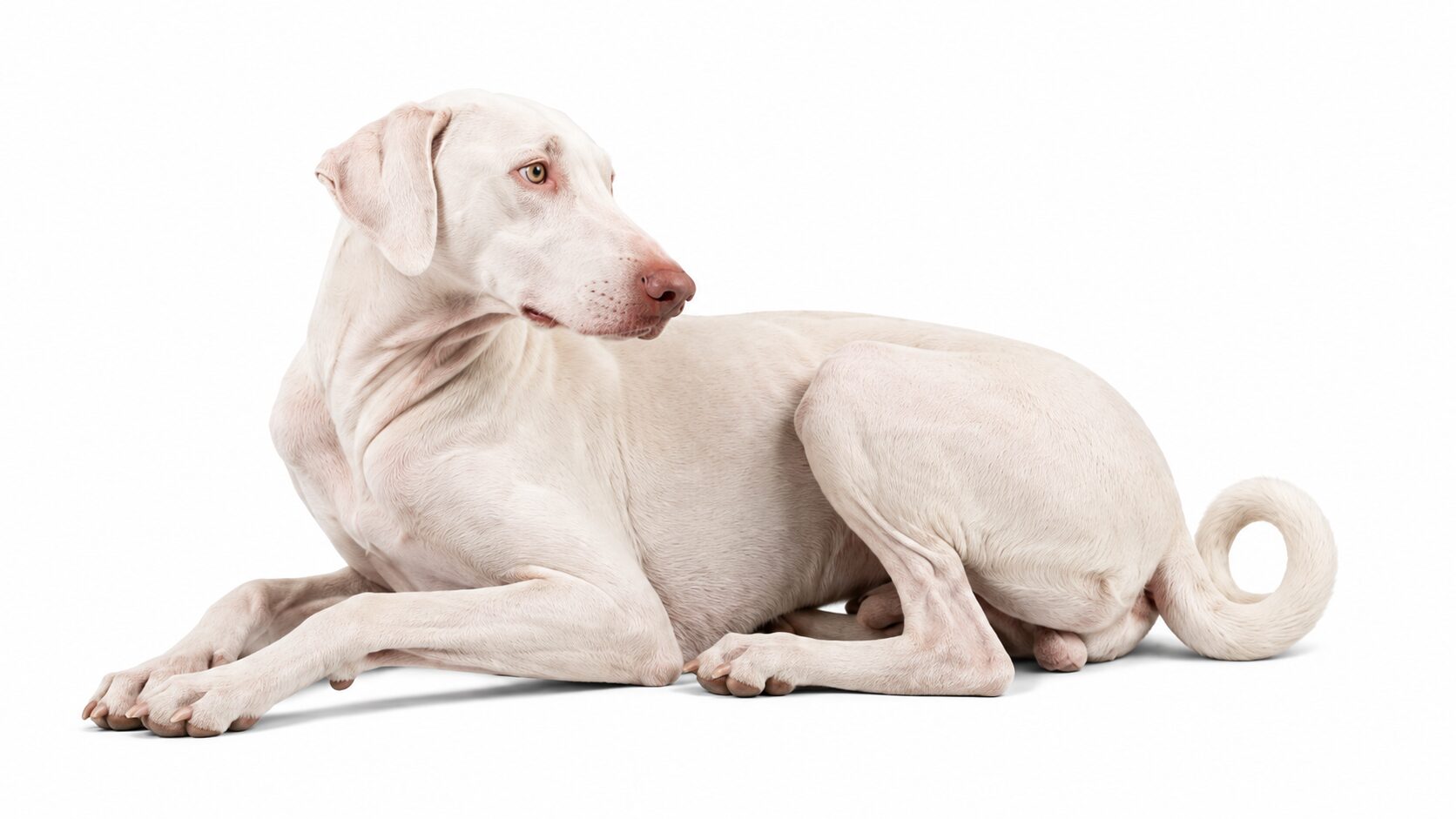
The Rajapalayam, also known as the Polygar Hound, the Shikkar Hound, and the Indian Ghost Hound — the last nickname a reflection of the breed’s dramatically and almost supernaturally white coat against the dark forests where it pursued its quarry — is a large, pure white, short-coated, pink-nosed Indian sighthound named after the town of Rajapalayam in the Virudhunagar district of Tamil Nadu in southern India, the breed that is sometimes called the Great Dane of India for the tall, heavy, powerful build that makes it specifically unusual among sighthound breeds whose conformation typically prioritizes lean refinement over muscle mass and bone density, and a breed whose royal origin, military history, postage stamp honor, and conservation rescue story combine to make it the most specifically culturally embedded and the most specifically historically documented of all the indigenous Indian dog breeds in this series.
The breed’s origin is most specifically and most consistently traced to the patronage of the Nayak dynasty — the ruling royal family of Tamil Nadu whose reign over the kingdoms of Thanjavur and Madurai extended from approximately 1529 to 1736 CE — and the Palayakarar (Polygar) chieftains who served as feudal lords under the Nayak rulers and maintained the breed in their estates as status symbols, hunting companions, and estate guardians. The breed’s name in Tamil carries specific royal significance: raja means king while palayam means fortified town, making the Rajapalayam literally the Royal Fortified Town Dog — a name that encodes the breed’s status as the companion of rulers and the guardian of the fortified estates that characterized feudal Tamil Nadu.
The breed’s ancestry traces to the indigenous Indian hounds of the Indian subcontinent — the ancient Pariah dogs of southern India that provided the foundational stock — with possible additional influence from Western sighthound types introduced through maritime trade contacts and colonial interactions. The specific pure white coat and pink nose that are the breed’s most immediately recognizable individual qualities were the result of deliberate selective breeding by the Nayakar and Palayakarar families who specifically valued and consistently selected for the milky white coat that became the breed’s most coveted and most celebrated individual characteristic. Some historians and breed enthusiasts have noted that some Rajapalayam dogs may have contributed to the development of the Dalmatian — a theory that reflects the striking visual similarity between the two breeds’ body types, though the evidence remains debated and unconfirmed.
The breed’s most specifically dramatic and the most personally documented individual working role outside of the hunting and estate-guarding functions was its military service during the 18th-century Carnatic Wars and the Polygar Wars against the British East India Company. The Polygar chieftains who used these dogs in battle deployed them specifically against the British cavalry — a working application that reflects the breed’s specific combination of speed, courage, and the horse-like gait that made it effective at disrupting mounted cavalry formations. This military history is the most specifically personal individual patriotic tradition associated with the breed in Tamil culture, and the legendary Rajapalayam named Veera Pandiyan who fought alongside its master against British forces became a celebrated individual symbol of the breed’s loyalty and courage.
The breed’s most significant 20th-century challenge was near-extinction. The decline of the traditional feudal estate system after Indian independence in 1947, the decline of hunting as a practiced sport among the Tamil Nadu aristocracy, the British introduction of their own breeds during colonial rule, and the interbreeding with native pariah dogs that occurred when the breed lost its controlled aristocratic breeding environment drove the Rajapalayam population to approximately 200 dogs by the 1980s. The Kennel Club of India, which had first recognized the breed in 1954, launched the Save the Rajapalayam Project in partnership with the Tamil Nadu state government’s Animal Husbandry Department, establishing a dog breeding unit at Saidapet in Chennai during 1980-81 specifically to rear native breeds including the Rajapalayam, the Combai, the Kanni, and the Chippiparai. The Indian Government honored the breed on January 9, 2005, when India Post issued four commemorative postage stamps celebrating indigenous Indian dog breeds, with the Rajapalayam carrying a face value of ₹15 — the highest of the four breeds honored — alongside the Himalayan Sheepdog, Rampur Hound, and Mudhol Hound.
There have also been reports that the Indian Army deployed Rajapalayam dogs in Kashmir as guard dogs — a military application consistent with the breed’s history of guarding fortified estates and its documented bravery in confrontational situations.
Breed Overview
| Trait | Details |
|---|---|
| Origin | Rajapalayam, Virudhunagar district, Tamil Nadu, southern India |
| Also Known As | Polygar Hound; Shikkar Hound; Indian Ghost Hound |
| Name Meaning | Raja (king) + palayam (fortified town) = Royal Fortified Town Dog |
| Historical Patrons | Nayak dynasty (1529–1736 CE); Palayakarar (Polygar) feudal chieftains |
| Kennel Club of India | Recognized 1954 |
| AKC / FCI | Not recognized |
| Military History | Used in Carnatic Wars and Polygar Wars against British cavalry (18th century) |
| Indian Army | Reports of use as guard dogs in Kashmir |
| India Post | Commemorative postage stamp issued January 9, 2005 (face value ₹15 — highest of four native breeds) |
| Conservation Project | Save the Rajapalayam Project (Kennel Club of India + Tamil Nadu government) |
| Breeding Unit | Established at Saidapet, Chennai (1980–81) |
| Near-Extinction | ~200 dogs by 1980s |
| Dalmatian Connection | Some historians suggest Rajapalayam contributed to Dalmatian development (debated) |
| Height | Males 65–75 cm (25–30 inches) / Females slightly smaller |
| Weight | 25–35 kg (55–77 pounds) |
| Lifespan | 10–12 years |
| Coat | Short, fine, smooth; minimal grooming requirement |
| Color | Pure white only (preferred); pink nose, pink skin, pink eyelids |
| Eyes | Golden or amber (most common); some have pale blue eyes |
| Nose | Pink (characteristic); occasional black nose |
| Ears | Triangular; dropped; fold forward and to sides |
| Tail | Long, whip-like; tapers to a point; may have pronounced curl |
| Gait | Horse-like; described as similar to a thoroughbred — not fastest but tireless over distance |
| Hunting Style | Both bay dog and catch dog simultaneously; hunts by sight and scent |
| Primary Quarry | Wild boar; deer; hare |
| Temperature Adaptation | Specifically suited to tropical climate; NOT suited to cold weather |
| Cultural Status | Tallest dog breed in India |
The Ghost Hound: Understanding the Nickname
Before discussing care, the Rajapalayam’s most evocative individual nickname — the Indian Ghost Hound — deserves acknowledgment, because it captures the most immediately and most personally striking visual quality of a breed that appears, in the dappled light of a Tamil Nadu forest, as a white presence moving through dense vegetation with an almost supernatural efficiency.
The pure milky white coat, the pink skin and nose, and the often pale or golden eyes against the vivid green backdrop of Tamil Nadu’s tropical forests create an appearance that observers consistently describe as spectral. This is the same white-coat phenomenon that earned related white breeds their haunting nicknames — the white Doberman, the white German Shepherd — but in the Rajapalayam’s case the effect is the most complete, because the breed’s purity requirement for the white coat is the most specifically absolute of any pure-white breed in this series: no color patches, no ticking, no shading — only the milky white that gave the Nayak nobility’s estates their most distinctive guardians and gave the forests of Tamil Nadu their ghost.
The Horse-Like Gait
The Rajapalayam’s most specifically unusual individual working quality is the gait described by observers and breed historians as specifically horse-like — a comparison that is not merely poetic but functionally precise. The breed is not the fastest sighthound over a short distance — it does not match the explosive sprint speed of a Greyhound or Saluki — but it possesses a tireless, steady ground-covering efficiency over long distances that the horse comparison specifically captures. This endurance-optimized gait was the most specifically appropriate individual working quality for hunting wild boar in the dense forests and varying terrain of Tamil Nadu, where the ability to maintain pursuit across complex terrain for extended periods was more valuable than any burst of initial speed.
Appearance And Size
The Rajapalayam is a large, powerfully built, and specifically muscular sighthound that presents with the most immediately striking individual combination of the pure white coat, the pink nose and skin, and the heavier bone density that distinguishes it from the more refined build of most other sighthound breeds in this series.
Males typically stand 65 to 75 centimeters and weigh 25 to 35 kilograms. The build is lean but substantially more muscular than typical sighthound conformation — the deeper chest, stronger neck, and more powerful jaws reflect the wild boar hunting application that required the breed to function as both a bay dog and a catch dog, physically confronting and restraining large dangerous prey rather than simply chasing down smaller game. The triangular ears fold forward and to the sides framing the face. The long, whip-like tail tapers to a point and may carry a pronounced curl at the tip. The golden or amber eyes are the breed’s most personally captivating individual facial quality.
Housing And Living Requirements
The Rajapalayam is among the most specifically climate-adapted breeds in this series — a breed developed in the hot, humid tropical climate of Tamil Nadu that is specifically well-suited for tropical environments worldwide and specifically NOT suited for cold climates where the short, fine coat provides minimal thermal insulation against temperatures significantly below those of its home region.
The breed requires substantial outdoor space — a large home with a securely fenced yard is the most appropriate housing context. Apartment living is specifically inappropriate for a breed of this athletic capability and this working drive. The breed’s territorial instinct is constitutionally genuine — these dogs were bred specifically to guard fortified estates, and the territorial patrolling behavior is deeply embedded.
An orthopedic dog bed provides appropriate joint support for a large active breed. A comfortable dog bed in a social area of the home suits the breed’s devoted family character.
Exercise Requirements
The Rajapalayam requires at least one to two hours of vigorous daily exercise reflecting its heritage as an active hunting dog that tracked wild boar across the forests and varied terrain of Tamil Nadu with the tireless efficiency of a horse-gaited breed specifically built for endurance pursuit rather than sprint speed. Extended running, hiking, and sustained vigorous activity are the most naturally appropriate and the most personally satisfying daily exercise contexts.
Scent work and tracking activities engage the breed’s exceptional tracking nose in purposeful organized sport — reflecting the breed’s dual sight-and-scent hunting capability that distinguishes it from pure sighthounds. Dog agility adapted for large breeds suits the breed’s athleticism in structured competitive sport. Lure coursing engages the sighthound coursing heritage in organized competitive format.
Puzzle toys and enrichment activities are genuinely important between outdoor sessions for a breed with genuine intelligence applied to its working context. A GPS tracker is an absolutely essential safety investment for outdoor exercise in any open or semi-open area — a breed bred for relentless pursuit of wild boar will follow any detected quarry with the specific constitutional commitment of a dog that historically did not give up until the prey was caught.
Grooming Requirements
The Rajapalayam’s short, fine, smooth coat is among the most practically low-maintenance grooming commitments of any large breed in this series, requiring minimal equipment and minimal time while presenting the genuinely distinctive visual quality that makes the breed so immediately and so personally memorable.
Brushing two to three times weekly removes loose hair and maintains coat health. The breed does not require frequent bathing given the short coat’s natural self-cleaning properties — excessive bathing can remove the natural oils that maintain coat condition in the tropical climate. The pink skin and pink eyelids require specific monitoring for sun damage in exposed outdoor settings — unlike coated breeds whose fur protects the underlying skin, the Rajapalayam’s pink skin is specifically vulnerable to solar radiation in prolonged direct sunlight.
The ears require weekly inspection and cleaning — the forward-folding triangular ear conformation reduces airflow to the ear canal and creates specific infection risk in the humid tropical conditions of the breed’s native climate. Dental care should be established as a consistent routine from puppyhood. Nails should be trimmed regularly. The breed’s skin sensitivity — particularly its noted sensitivity to being touched by strangers — means that grooming must be established as a positive, consistent routine from the earliest possible puppyhood age to prevent defensive responses to handling.
Diet And Nutrition
The Rajapalayam is a large, highly active hunting breed with significant daily caloric needs calibrated to its actual size and genuine working output. A high-quality large breed formula with a named protein source as the first ingredient provides the nutritional foundation. In its native Tamil Nadu, traditional diets included lean meats, rice, and local vegetables — a protein-rich diet appropriate to an active hunting breed in a tropical climate.
Most adults do well on two measured meals per day. Maintaining lean, athletic body condition appropriate to an active hunting sighthound supports both field performance and long-term health. Training treats are effective motivators in training sessions.
Compatibility
The Rajapalayam’s compatibility profile reflects its heritage as the loyal guard dog of Tamil Nadu’s royal estates and the fierce hunting companion of the Polygar chieftains: completely and specifically devoted to its own established family, deeply wary and potentially aggressive toward strangers, and specifically challenging in multi-pet households given the prey drive and territorial dominance that its working heritage embedded constitutionally.
The breed bonds deeply with its family and is known for the kind of absolute loyalty that its war stories — Veera Pandiyan fighting alongside its master against the British, the Rajapalayam camp dogs of the Carnatic Wars — specifically celebrate. With its own family, the breed is warmly affectionate and specifically attached. With older children within the established family, the breed is typically appropriate and playful. With young children, the breed’s touch sensitivity toward unfamiliar handling requires specific supervision and management.
With strangers, the breed is characteristically and specifically aggressive without proper socialization. The breed does not welcome handling by unfamiliar people, making early and consistent socialization the most critically important behavioral investment for any Rajapalayam owner who expects their dog to coexist in a residential environment with regular visitor contact. With other dogs, the breed is territorial. With small animals and wildlife, the prey drive is constitutionally genuine. A dog crate is a critical management tool during puppyhood.
Behavior And Temperament
The Rajapalayam is loyal, fierce, and fearless — a characterization that the breed’s complete working and cultural history specifically validates. These dogs can be relentless pursuers that are not intimidated by complex terrain or bodies of water — and in the domestic context, this relentless quality applies to the breed’s territorial guarding as much as to its hunting pursuit. A Rajapalayam has historically been described as one that will fight something larger and taller than itself without hesitation — the breed’s courage relative to its size is the most specifically personally impressive quality for experienced observers.
The breed is not a dog for passive households or novice owners. It requires specific and specifically confident leadership that the breed genuinely respects, consistent and early socialization that begins before the territorial and stranger-wary behaviors become established adult patterns, and the active outdoor engagement that the breed’s hunting heritage specifically and constitutionally requires.
Training And Handling
The Rajapalayam is intelligent and capable of learning consistently from patient, experienced handlers who understand the combination of sighthound independence and guard dog territorial instinct that the breed presents. Training should begin early and be maintained consistently.
Positive reinforcement methods combined with firm, consistent leadership are the most effective approach. Training treats are effective motivators. The breed’s intelligence makes it a capable training partner when the relationship between dog and handler is based on mutual respect. However, the breed can also be prone to getting distracted — particularly when scent or sight of prey is detected — making focus training in the presence of distractions the most specifically important individual training investment.
Health And Lifespan
The Rajapalayam has a lifespan of 10 to 12 years and is generally a robust breed given the natural selection pressures of working hunting dog breeding in Tamil Nadu’s demanding tropical environment. However, several specific health conditions require awareness.
Congenital Deafness Congenital deafness is the most significantly breed-specific documented health concern for the Rajapalayam — directly connected to the same genetic mechanism that produces the pure white coat and pink pigmentation. The BAER (Brainstem Auditory Evoked Response) test is the most reliable method for identifying hearing status in individual dogs. Responsible breeders test all breeding animals; deaf individuals should not be bred. Owners should be aware that some individuals may have unilateral deafness (one-sided) that can be difficult to detect through casual observation.
Mange Mange caused by mite infestation is specifically documented in the breed — the Wikipedia breed entry specifically notes that many Rajapalayam dogs suffer from mange, though this is fundamentally a mite infestation management issue rather than a hereditary disease. Regular parasite prevention manages this effectively.
Hip Dysplasia Hip dysplasia is possible in a large active breed of this size. OFA evaluation of breeding animals and lean body condition maintenance are the most practically meaningful protective measures.
Skin Sensitivity The pink skin is specifically vulnerable to solar radiation damage in prolonged direct sunlight exposure. Sun protection and shade availability during outdoor exercise in the hottest part of the day is warranted.
Routine preventive care including regular vet checks, BAER hearing testing for breeding animals, OFA hip evaluation, consistent dental hygiene, year-round mite and parasite prevention, up-to-date vaccinations, and skin monitoring provides the foundation for a healthy Rajapalayam.
Price And Availability
The Rajapalayam is primarily available in its native Tamil Nadu and other southern Indian states, particularly in Chennai, Bangalore, and the districts surrounding Rajapalayam town itself. Outside India, the breed is extremely rare. From reputable Indian breeders maintaining lines through the conservation program, prices range from approximately ₹8,000 to ₹15,000 for puppies in India.
Conclusion
The Rajapalayam was developed during the 17th and 18th centuries under the patronage of the Nayak dynasty and Palayakarar feudal chieftains of Tamil Nadu as a royal hunting companion and estate guardian, named after Rajapalayam town whose name encodes the royal fortified town identity that defines the breed’s origin, was deployed alongside Polygar chieftains during the Carnatic Wars and Polygar Wars against the British East India Company cavalry in the 18th century, was recognized by the Kennel Club of India in 1954, was reduced to approximately 200 individuals by the 1980s through colonial breed displacement, estate system decline, and interbreeding, was rescued by the Kennel Club of India’s Save the Rajapalayam Project and the Tamil Nadu government’s Saidapet breeding unit established in 1980-81, was honored by the Indian Government with a commemorative postage stamp of ₹15 face value on January 9, 2005, has been reported in use by the Indian Army as guard dogs in Kashmir, is the tallest dog breed in India, is pure white with a pink nose and either golden or pale blue eyes, has a horse-like gait that prioritizes endurance over sprint speed, functions as both bay dog and catch dog simultaneously combining sight hunting and scent tracking, is specifically bred for tropical climates and not suitable for cold weather, and stands today as the most specifically Nayak-dynasty-and-Polygar-chieftains-royal-patronage, the most specifically Carnatic-Wars-and-Polygar-Wars-British-cavalry-deployed, the most specifically Indian-Ghost-Hound-pure-white-pink-nose-golden-eyes, the most specifically tallest-dog-in-India-sometimes-called-Great-Dane-of-India, the most specifically postage-stamp-₹15-highest-face-value-of-four-native-breeds-honored, the most specifically Save-the-Rajapalayam-Project-200-dogs-rescued-from-near-extinction, and the most specifically bay-dog-and-catch-dog-simultaneously-sight-and-scent-both of all the Indian native hunting breed partnerships available. Get properly set up before bringing one home. Our Best Dog Products page has everything you need for short-white-fine-coated, pink-nosed, golden-eyed, horse-gaited, whole-heartedly devoted Tamil Nadu royal hunting dogs that carry the full heritage of the Nayak dynasty’s selective breeding for pure milky white coats, the Polygar chieftains’ cavalry-confronting war dogs, the 18th-century Carnatic Wars loyalty and bravery, the 1954 Kennel Club of India recognition, the 1980s near-extinction and Saidapet breeding unit rescue, the 2005 India Post commemorative stamp honor, and the specific loyal, fierce, fearless, relentless-pursuer, tireless-over-distance, ghost-white-in-the-forest intelligence of the breed that the royal families of Tamil Nadu valued enough to name a town after and that the Indian nation honored enough to put on a postage stamp.