
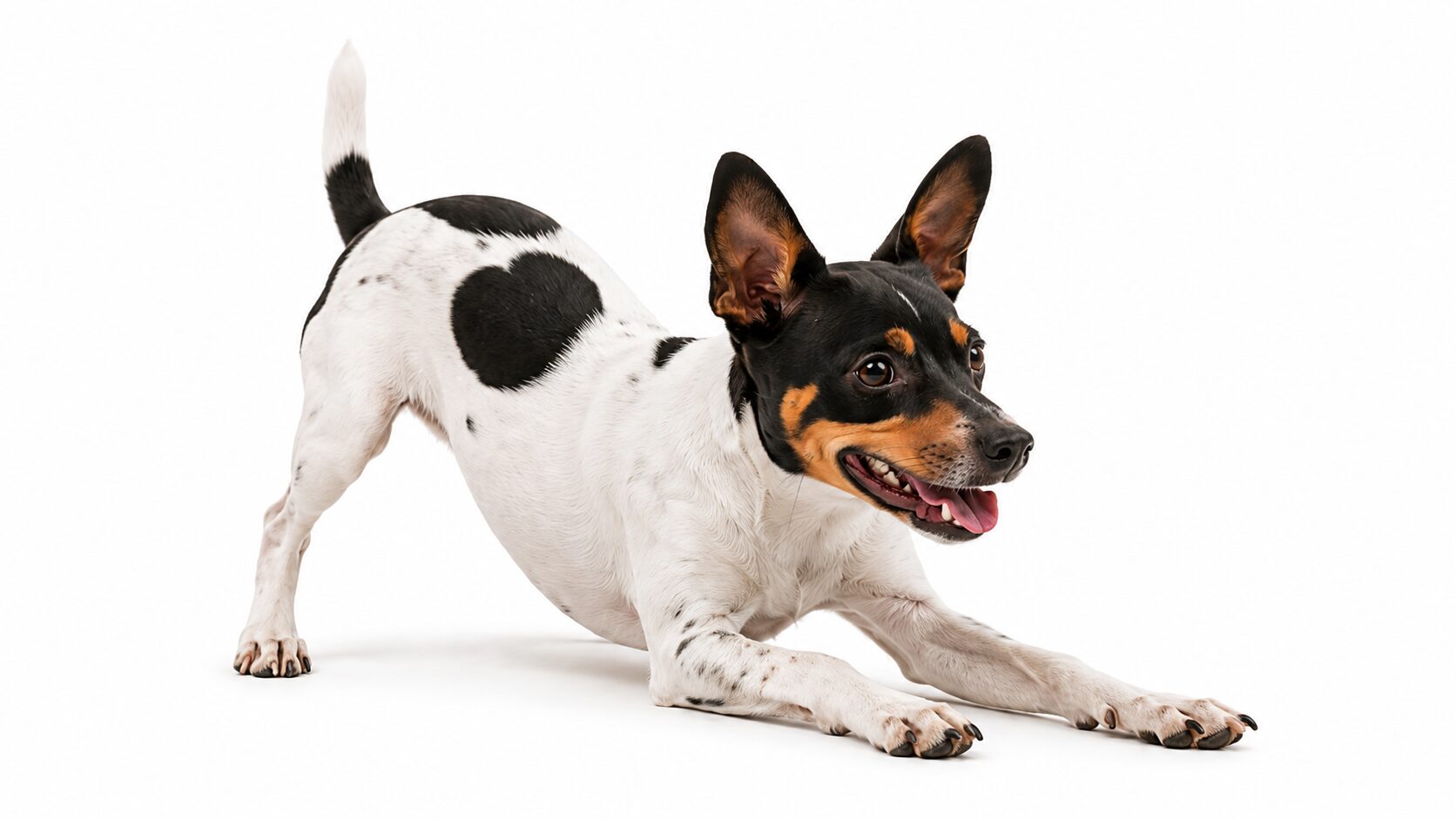
Origin And History
The Rat Terrier, whose very name is believed to have been coined by President Theodore Roosevelt — who kept these small, efficient dogs at the White House after his own Rat Terrier named Skip famously helped clear a rat infestation from the executive mansion, and who publicly declared the Rat Terrier the ultimate farm dog, giving the breed its most specifically presidential individual endorsement in American dog history — is a compact, tough, smooth-coated, versatile American working terrier that is simultaneously one of the most specifically all-American of any breed in this series — created entirely in the United States from immigrant working dogs that working-class British settlers brought with them as they established their farms — and the most compositionally complex individual recipe of any terrier breed, containing at minimum seven documented founding breeds that American farmers combined pragmatically according to whatever individual dog demonstrated the best vermin-catching and farm-utility capabilities regardless of pedigree, producing a breed recognized by the UKC in 1999 and admitted to the AKC Terrier Group in 2013, and one that experienced the most dramatically specific individual rise-and-fall-and-rise story of any American farm dog: ubiquitous on American family farms in the 1910s through 1930s, nearly extinct by the 1950s when agricultural poison replaced working terriers as the primary rodent control method, rescued by dedicated enthusiasts in the 1970s and 1980s, and now experiencing the resurgence that the breed’s genuine excellence as a companion and working terrier has always merited.
The breed’s founding history begins with the working-class British immigrants who brought their rat-catching and farm dogs to America in the 19th century, primarily Smooth Fox Terriers, Manchester Terriers, Bull Terriers, and the now-extinct Old English White Terrier — breeds that formed the genetic foundation of the ratting terrier tradition that had been refined over generations of working-class British sporting and utility culture. These immigrant farmers were not attempting to create a specific breed but to create the most effective working terrier possible for their specific American farming contexts, and their breeding decisions were driven entirely by performance observation rather than by aesthetic or pedigree criteria.
The specific additional outcrosses that most distinguish the American Rat Terrier from its British terrier ancestors reflect the specific challenges that American farming contexts presented that British terrier heritage had not prepared for. In the Midwest, where jackrabbits devastated crop fields with the specific relentlessness of a prey population without adequate natural predators, farmers bred their terriers to Whippets and Italian Greyhounds to produce a dog fast enough to pursue jackrabbits across open prairie — outcrosses that gave the modern Rat Terrier the elegant, somewhat refined leg structure and movement efficiency that distinguishes it from the more compact, heavier British terrier builds. Beagles were crossed in to give the Rat Terrier superior pack hunting ability and the scenting capability that pure sighthound-influenced terriers lacked. The full documented recipe of the Rat Terrier includes the Smooth Fox Terrier, the now-extinct Old English White Terrier, Manchester Terrier, Bull Terrier, Whippet, Italian Greyhound, and Beagle — seven breeds producing the most specifically complex individual genetic foundation of any recognized American terrier.
The breed’s most specifically legendary individual working achievement — and the one most cited in its breed advocacy literature — is the case of a single Rat Terrier that cleared a barn of 2,500 rats in just seven hours. This specific and specifically documented individual achievement became so famous that in 1996 a New York City resident wrote a letter to the editor of the New York Times specifically citing this legendary case as evidence that Rat Terriers should be deployed to address Brooklyn’s rat problem — making the breed’s most famous individual working achievement the subject of a newspaper letter-writing campaign more than half a century after the event.
The breed’s most dramatic cultural moment was its near-extinction. When the widespread adoption of agricultural poison in the late 1940s and 1950s eliminated the practical need for rat-catching dogs on American farms, the Rat Terrier’s population collapsed with a speed that reflected how entirely the breed had been maintained through working utility rather than aesthetic enthusiasm. By the time dedicated breeders in the late 1970s and 1980s began the recovery effort, the breed had been reduced to remnant populations. The recovery produced several distinct strains: the standard Rat Terrier (Type A); the Teddy Roosevelt Terrier (formerly Type B, the shorter-legged variant, now separately recognized); the Decker Rat Terrier developed by hunter Milton Decker to produce a larger, more robust individual with fixed ear set and water retrieval capability; and in 1972 the first hairless Rat Terrier born, which led to the development of the American Hairless Terrier — a separate recognized breed descended directly from this single hairless individual.
Breed Overview
| Trait | Details |
|---|---|
| Origin | United States (developed 19th–early 20th century on American family farms) |
| AKC Recognition | 2013 (Terrier Group) |
| UKC Recognition | 1999 |
| FCI | Recognized |
| Parent Club (USA) | Rat Terrier Club of America (RTCA) |
| Presidential Connection | President Theodore Roosevelt coined the breed name; declared it the ultimate farm dog |
| White House | Roosevelt’s Rat Terrier Skip helped clear the White House of rats |
| Farm Peak | 1910s–1940s: one of most common American farm dogs |
| Near-Extinction | 1950s: agricultural poison replaced working terriers; population collapsed |
| Revival | Late 1970s–1980s; dedicated breeders rebuilt breed |
| Famous Achievement | Single Rat Terrier cleared barn of 2,500 rats in 7 hours |
| 1996 NYC Letter | Letter to New York Times citing 2,500-rat achievement to suggest deploying breed for Brooklyn’s rat problem |
| Seven Founding Breeds | Smooth Fox Terrier; Old English White Terrier (extinct); Manchester Terrier; Bull Terrier; Whippet; Italian Greyhound; Beagle |
| Related Breeds | Teddy Roosevelt Terrier (Type B; shorter legs); Decker Rat Terrier (larger working strain); American Hairless Terrier (hairless 1972 mutation) |
| Two Size Varieties | Miniature: 10–13 inches / Standard: 13–18 inches |
| Weight | Miniature: 4.5–11 kg (10–25 pounds) / Standard: 5–11 kg (11–25 pounds) |
| Lifespan | 15–18 years (exceptionally long-lived) |
| Coat | Short, smooth, dense; “wash-and-wear” in owner description |
| Colors | White, or any color combination including white |
| Shedding | Seasonal; moderate |
| First AKC Title | Agility on January 14, 2006 (Harpur’s Giddy Upp “Gigi”) |
| Shirley Temple Film | Rat Terrier featured in “The Little Colonel” (1930s) |
| Documentary | Musician Laurie Anderson’s “Heart of a Dog” about her Rat Terrier Lolabelle |
The Most Presidential American Dog
Before discussing care, the Rat Terrier’s most specifically and the most personally documented individual Presidential connection deserves its own acknowledgment, because no other American breed has such a specifically documented connection to both the naming of the breed and its most celebrated practical working demonstration by a sitting President.
Theodore Roosevelt — the 26th President of the United States, the founder of the National Park Service tradition, and a man whose passion for American wildlife and American working animals was among the most personally and the most publicly documented of any President — was the specific individual who gave this breed its name and its most celebrated presidential endorsement. When Skip the Rat Terrier cleared the White House of a rat problem, Roosevelt’s response was to call these dogs the ultimate farm dog and to attach the specific working description Rat Terrier to the type, creating the name that has stuck for over a century. The breed’s most essentially American quality — created by immigrant farmers using imported working dogs, pragmatically refined through open breeding for performance, and endorsed by the most physically vigorous and the most outdoors-enthusiastic American President — makes it the most specifically All-American of any terrier breed in this series.
Appearance And Size
The Rat Terrier is a compact, muscular, well-proportioned dog that presents with the most immediately distinctive combination of its alert, upright ears, its bright and curious expression, and the smooth, short coat in the most varied individual color palette of any American terrier — white alone or any combination of color with white, producing a color range broader than virtually any other terrier breed.
The breed comes in two size varieties. The Miniature stands 10 to 13 inches at the withers; the Standard stands 13 to 18 inches. Both varieties share the same essential proportions — the slightly longer than tall body, the moderately deep chest, the level topline, and the long, clean neck that give the breed the slight elegance inherited from the Whippet and Italian Greyhound outcrosses that distinguishes it immediately from the more compact builds of the Fox Terrier and Manchester Terrier ancestors.
Housing And Living Requirements
The Rat Terrier is among the most broadly adaptable of any working terrier breed in terms of living environment — the combination of modest size, manageable exercise requirements, low grooming demand, and genuinely warm family character makes it appropriate for urban apartments, suburban houses, and rural farm properties with equal genuine success, provided several specific management considerations are consistently maintained.
The most critically important housing welfare considerations are secure fencing and consistent leash use in open areas. As an escape artist who can jump high and dig effectively — and who will do both in pursuit of any interesting scent or movement — the Rat Terrier requires a 5- to 6-foot fence and consistent monitoring in unsecured outdoor areas. The digging behavior is constitutionally genuine and deeply satisfying to this breed; providing one specific designated digging area in the yard is the most practically effective management approach.
A comfortable dog bed in a social, warm area of the home suits the breed’s warmly family-integrated domestic character. An orthopedic dog bed provides appropriate joint support given the patellar luxation documented in the breed.
Exercise Requirements
The Rat Terrier requires moderate daily exercise appropriate to its size — 30 to 60 minutes of vigorous daily activity is appropriate for most adults, with the breed’s instincts for running, digging, investigating, and pursuing moving targets providing the most naturally satisfying engagement. The breed can be content in smaller spaces when given adequate daily exercise, making it one of the more genuinely apartment-appropriate terrier breeds.
Dog agility is the most specifically and the most personally celebrated competitive sport for the Rat Terrier — the breed’s combination of speed, tight turning capability, intelligence, and handler-focus makes it a formidable agility competitor. Barn Hunt provides the most directly and the most authentically heritage-appropriate competitive outlet — the same instincts that cleared 2,500 rats from a barn are directly engaged in finding the rat hidden in a tube within hay bales. Earthdog trials engage the underground working heritage in organized competitive format. Scent work engages the Beagle-sourced scenting capability in organized sport.
Puzzle toys and enrichment activities are genuinely and specifically important — the same intelligence that made this breed the most effective farm vermin controller in American history applies itself to domestic problem-solving when outdoor engagement is insufficient. A GPS tracker is a practical safety investment for outdoor exercise given the prey drive that will launch this breed after any detected quarry at impressive speed.
Grooming Requirements
The Rat Terrier’s short, smooth, dense coat is the most practically low-maintenance of any American terrier — owners consistently describe it as wash-and-wear, the most specifically direct and the most personally honest grooming assessment of any breed in this series. The coat requires only occasional brushing, minimal bathing, and shed management during the seasonal shedding periods that the breed undergoes once or twice yearly.
Weekly brushing with a rubber grooming mitt or soft slicker brush removes minimal loose hair and maintains the coat’s characteristic short sheen. During seasonal shedding, a shedding tool or rubber brush manages the loose coat effectively. The breed is specifically noted for low doggy odor, making the minimal bathing requirement genuinely practical rather than aspirational.
Dental care is specifically important given the documented dental disease susceptibility in the breed. Nails should be trimmed regularly — the Rat Terrier’s strong, fast-growing nails on a breed that digs enthusiastically require consistent attention. Ears should be checked and cleaned weekly.
Diet And Nutrition
The Rat Terrier is a small to medium, moderately active breed with daily caloric needs calibrated to its actual size variety and genuine activity level. A high-quality small breed formula with a named protein source as the first ingredient provides the nutritional foundation.
Most adults do well on two measured meals per day. The breed’s exceptionally long lifespan of 15 to 18 years means that dietary management across the full lifespan — including appropriate transition to senior formulas and senior-oriented caloric management — represents a longer individual commitment than most breeds require. Training treats are highly effective motivators given the breed’s food engagement and its genuine desire to work cooperatively with its handler.
Compatibility
The Rat Terrier is one of the most broadly and the most specifically family-compatible of any small working terrier — the Beagle crosses that added pack hunting sociability and the Whippet and Italian Greyhound crosses that added gentle elegance produced a terrier specifically more friendly and more sociable than most purely terrier-ancestry breeds.
With its own established family, the breed is completely devoted — working close like a farm partner rather than ranging far from home, maintaining the high check-in tendency with their people that distinguishes the breed from more independent working terriers. With children, the breed is consistently appropriate and specifically playful; Shirley Temple’s Rat Terrier featured in The Little Colonel captures the specific child-and-Rat-Terrier compatibility that has made this breed an American family dog for generations. With strangers, the breed’s watchdog alert is genuine — shrill, specific, and prompt — while the aggression level is typically low. With other dogs, the breed is generally sociable given the pack-hunting background. With small animals, cats, and wildlife, the prey drive is constitutionally genuine and specifically intense. A dog crate is a useful management tool during puppyhood.
Behavior And Temperament
The Rat Terrier is happy-go-lucky, playful, and portable — the AKC’s most concise individual characterization capturing the essential behavioral truth of a breed that combines genuine working terrier capability with the specific good humor and family warmth that the Beagle and sighthound crosses contributed.
The digging behavior is the most constitutionally and the most practically embedded individual behavioral characteristic that any Rat Terrier owner must manage — Rat Terriers love to dig, and you may find your garden suddenly has lots of new holes. This is not a problem behavior but the authentic expression of a breed bred to pursue vermin underground, and it requires the pragmatic management approach of providing an acceptable designated digging zone rather than attempting to eliminate an instinct this deep.
The shrill barking is the most specifically documented individual noise management challenge — if you live in an apartment or a neighborhood with noise rules, be aware of their barking instinct. The bark is genuine, purposeful, and specifically alert-oriented rather than random, and bark management from puppyhood is the most critically important individual training investment for any Rat Terrier owner in a residential setting.
Training And Handling
The Rat Terrier is among the most trainable of any American terrier breed — the combination of genuine intelligence, food motivation, people-orientation, and the cooperative working partner instinct of a breed that historically worked close to its farmer owner produces a dog that responds to training with specific enthusiasm and genuine capability.
Positive reinforcement methods are the most effective approach. Training treats are highly effective motivators in varied, genuinely engaging sessions that honor the breed’s intelligence without drilling repetition that bores a breed this capable. The most specifically important early training investments are bark management, recall training, and consistent leash manners before the breed’s speed and prey drive are fully developed in adulthood.
Health And Lifespan
The Rat Terrier is one of the most specifically long-lived of any breed in this series — the documented lifespan of 15 to 18 years makes it among the longest-lived terriers and reflects the specific constitutional soundness that the complex multi-breed foundation and open breeding history produced. Due to regular outcrossings throughout the Rat Terrier’s history, overall it is a very hardy breed. However, with its growth in popularity, some issues are becoming more common.
The Canine Health Information Center (CHIC) recommends that Rat Terriers be tested for patellar luxation, cardiac abnormalities, pancreatic issues, hip dysplasia, and Legg–Calvé–Perthes syndrome — the most comprehensively documented individual CHIC screening list of any small terrier breed, reflecting the breed club’s specifically responsible approach to health documentation.
Patellar Luxation Patellar luxation causing intermittent hopping lameness is the most consistently documented individual orthopedic concern. OFA patellar evaluation is recommended for breeding animals.
Legg-Calvé-Perthes Disease LCP — spontaneous degeneration of the femoral head creating painful hip joint disease in small breeds — is documented. OFA hip evaluation screens for this condition in breeding animals.
Cardiac Conditions Cardiac abnormalities are documented. Annual cardiac evaluation provides monitoring.
Dental Disease Dental disease is specifically documented and specifically important given the breed’s exceptionally long lifespan — consistent daily dental care from puppyhood is the most practically important individual preventive health investment across the 15-to-18-year lifespan.
Allergies Some Rat Terriers are prone to skin allergies, often environmental or food-related.
Routine preventive care including regular vet checks, OFA patellar and hip evaluation for breeding animals, annual cardiac evaluation, consistent dental hygiene, up-to-date vaccinations, and parasite prevention provides the foundation for a healthy Rat Terrier.
Price And Availability
The Rat Terrier is moderately available in the United States through a community of breeders connected to the Rat Terrier Club of America and AKC breeder referral, as well as through active rescue organizations given the breed’s specific personality and energy level that occasionally leads to rehoming from unprepared owners. The breed is making a comeback and while considered rare by some registries, it is more available than many comparable working terrier breeds. From reputable breeders with CHIC health testing documentation, expect to pay between $600 and $1,500 for a well-bred puppy.
Conclusion
The Rat Terrier was created on American family farms in the 19th century by working-class British immigrants who combined their Smooth Fox Terriers, Manchester Terriers, Bull Terriers, and Old English White Terriers with Whippets and Italian Greyhounds for Midwest jackrabbit speed and Beagles for pack hunting scenting ability, was named by President Theodore Roosevelt after his own Rat Terrier Skip helped clear the White House of rats with Roosevelt publicly declaring it the ultimate farm dog, achieved its most famous individual working feat when a single dog cleared 2,500 rats from a barn in seven hours, was one of the most common American farm dogs in the 1910s and 1920s, was nearly extinct by the 1950s when agricultural poison replaced working terriers as rodent control, was revived by dedicated breeders in the late 1970s and 1980s, produced the American Hairless Terrier from a 1972 hairless mutation, generated the Decker Rat Terrier hunting strain from Milton Decker’s larger-type program, was separated from the shorter-legged Teddy Roosevelt Terrier variety in 1990, received UKC recognition in 1999 and AKC Terrier Group recognition in 2013, has a Shirley Temple film appearance and a Laurie Anderson documentary to its cultural credit, lives 15 to 18 years making it one of the longest-lived terriers, and stands today as the most specifically Teddy-Roosevelt-named-and-White-House-endorsed, the most specifically seven-founding-breeds-including-Whippet-and-Beagle, the most specifically 2500-rats-in-7-hours-legendary-barn-achievement, the most specifically 1950s-poison-replaced-working-terriers-near-extinction, the most specifically American-Hairless-Terrier-parent-from-1972-hairless-mutation, the most specifically wash-and-wear-coat-lowest-maintenance-American-terrier, and the most specifically 15-to-18-year-lifespan-longest-lived of all the American Terrier Group breed partnerships available. Get properly set up before bringing one home. Our Best Dog Products page has everything you need for short-smooth-any-color-combination-coated, upright-eared, bright-eyed, designated-digging-zone-needing, whole-heartedly devoted American farm terriers that carry the full heritage of the 19th-century immigrant British farm dog tradition, the Midwest jackrabbit-speed Whippet and Italian Greyhound crosses, the Beagle pack-hunting additions, the White House Roosevelt endorsement, the legendary 2,500-rat barn clearing, the 1910s-1920s American farm dog peak, the 1950s near-extinction and 1970s-1980s revival, the 1999 UKC and 2013 AKC recognition, the Shirley Temple and Laurie Anderson cultural moments, and the specific happy-go-lucky, playful, digging-enthusiast, shrill-alert-barker, barn-hunt-champion, 15-to-18-year-living-with-you spirit of the most specifically All-American terrier that President Roosevelt named and that American farmers built from the best bits of seven different breeds.