
Origin And History
The East Siberian Laika is the largest of the four Russian Laika breeds, a powerfully built, versatile hunting spitz from the vast taiga forests, mountain ranges, and river basins of eastern Siberia that is widely considered the most capable large game hunting dog developed on Russian soil. Its name comes from the Russian verb layat, meaning to bark, because the Laika’s working method involves using its voice to locate and hold game until the hunter arrives. The word Laika, therefore, means barker, and it describes not a single breed but a type of spitz hunting dog, with four distinct Russian breeds carrying the Laika designation. The East Siberian Laika, known in Russian as the Vostochno-Sibirskaya Laika, is the largest and most powerful of the four.
The breed’s origins are ancient and deeply rooted in the indigenous cultures of eastern Siberia. The East Siberian Laika is descended from the spitz-like aboriginal dogs that were most likely brought to the areas of the Lake Baikal region, Irkutsk Province, Evenki National Territory, Amur River basin, and Maritime Territory by tribes migrating from the west. These aboriginal spitz dogs, whose lineage connects them to the broader family of Northern primitive breeds that retain many characteristics of their wolf ancestors, served the indigenous peoples of eastern Siberia across thousands of years as hunting companions, sled dogs, and watchdogs.
The specific geographic region east of the Yenisei River distinguishes the East Siberian Laika’s origin from that of the West Siberian Laika, which developed with the Khanty and Mansi peoples of the West Siberian Plain. East of the Yenisei, the indigenous populations including the Evenki, the peoples of the Amur River basin, and others of the Maritime Territory maintained their own spitz-type hunting dogs over many generations, adapting them to the specific requirements of the eastern Siberian environment. This environment is among the most demanding on earth: temperatures that fall to minus 50 degrees Celsius in winter, vast forested taiga interspersed with mountain ranges, and quarry that includes not only squirrel, grouse, marten, and sable but also moose, elk, wild boar, bear, and before it was outlawed, the Siberian tiger.
The diversity of quarry that the East Siberian Laika was expected to hunt is remarkable and explains much about the breed’s character and capabilities. Siberian hunters could not afford specialized dogs for different types of prey. The economics and logistics of traditional Siberian hunting life demanded a single dog that could do everything: locate small game by nose and bark it treed or held, switch to tracking large dangerous game across extended distances, bay a bear or moose until the hunter arrived, pull a sled when needed for the hunting expedition, and return home as a devoted family companion. No other hunting context in the world placed such comprehensively demanding requirements on a single breed type.
By the 1880s, Laikas attracted the attention of sport hunters and dog breeding enthusiasts in Russia’s major cities, who established regulated breeding programs recognizing the value and capability of these indigenous hunting dogs. The importance of the fur trade to the Soviet economy subsequently led to the establishment of state-run Laika kennels, creating institutional interest in standardizing and improving the breed’s hunting performance for commercial fur production.
The formal recognition of the East Siberian Laika as a distinct breed came at the All-Union Cynological Congress in 1947, where it was designated alongside the West Siberian Laika, the Russo-European Laika, and the Karelo-Finnish Laika as one of four recognized domestic Laika breeds. A provisional breed standard was published in 1949, and the work of wildlife biologist K.G. Abramov in the 1970s established the more comprehensive breed standards that guide the breed’s development today.
The FCI recognizes the East Siberian Laika in Group 5 (Spitz and Primitive Types), Section 2 (Nordic Hunting Dogs) under standard number 305. The UKC recognized the breed on January 1, 1996. The breed is not recognized by the AKC. Outside Russia and the former Soviet states, the East Siberian Laika remains essentially unknown.
Breed Overview
| Trait | Details |
|---|---|
| Breed Group | Spitz / Nordic Hunting Dog (FCI Group 5) |
| Height | Males 55–66 cm (22–26 inches) / Females 51–60 cm (20–24 inches) |
| Weight | 18–30 kg (40–66 pounds) |
| Lifespan | 12–14 years |
| Coat | Medium length, straight, coarse outer coat; soft, dense undercoat |
| Colors | White, grey, black, red, brown; patched, ticked, or solid; black and tan |
| Temperament | Courageous, alert, loyal, energetic, independent |
| FCI Recognition | Yes (Standard 305) |
| UKC Recognition | 1996 |
| AKC Recognition | Not recognized |
Appearance And Size
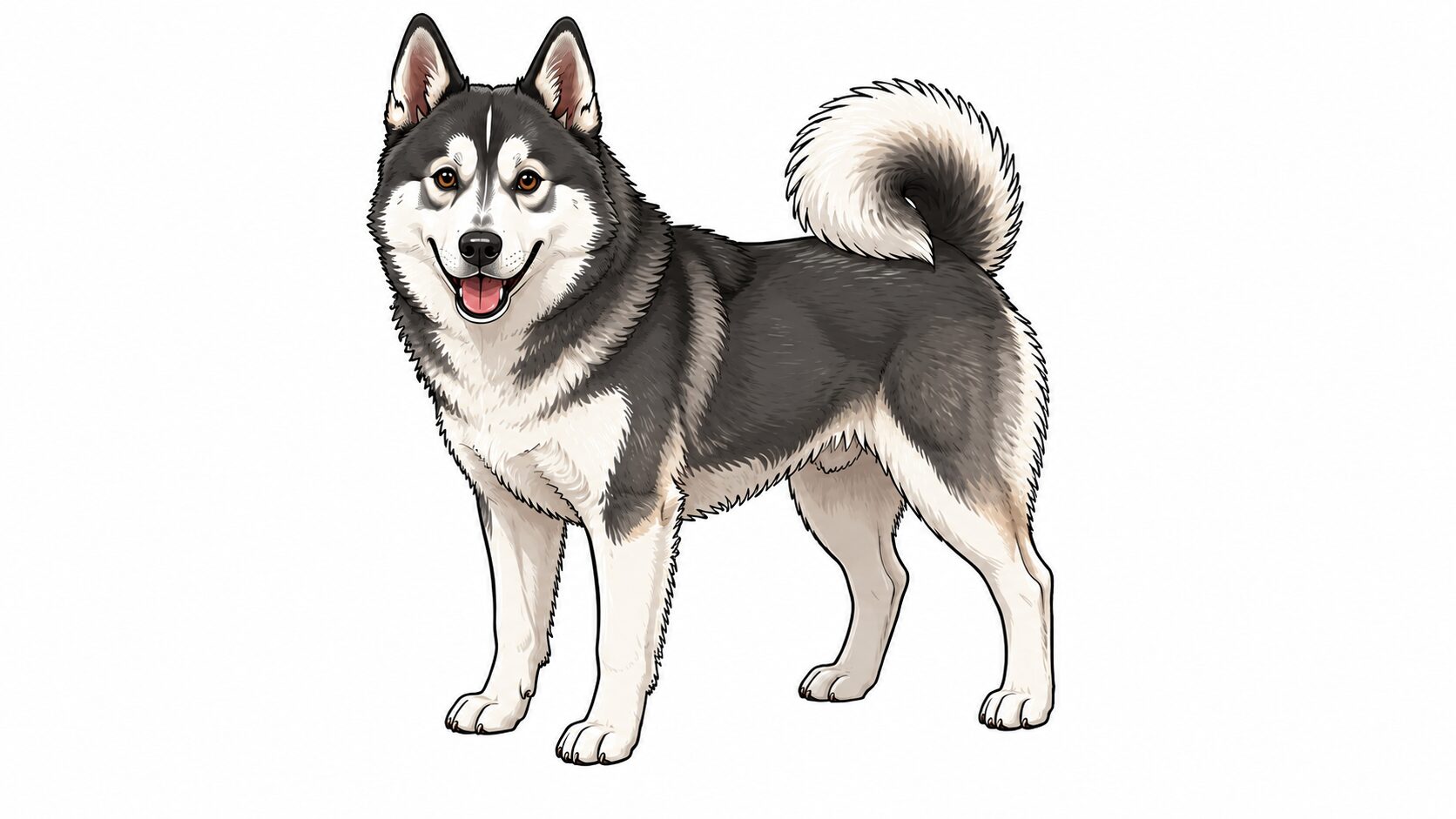
The East Siberian Laika is a large, strongly built, and squarely proportioned spitz-type hunting dog that presents with the powerful, capable appearance of a breed developed for sustained performance in some of the most demanding hunting conditions on earth. Males stand 55 to 66 centimeters at the shoulder and weigh between 18 and 30 kilograms. Females are somewhat smaller. The overall impression is of a strong, well-muscled, balanced dog that carries its substance with the alert, forward-leaning energy of a breed perpetually ready to work.
The head is wedge-shaped, broad between the ears, and strongly constructed, with a defined but moderate stop and a muzzle of good length. The eyes are dark and oval, small by the standards of some breeds, and carry the alert, intelligent expression that is characteristic across all Laika breeds. The ears are erect, triangular, mobile, and of moderate size, always pricked forward in active attention to the environment.
The body is squarely proportioned in males and slightly rectangular in females, with a broad, deep chest providing substantial lung capacity for the sustained hunting activity the breed was developed for. The neck is strong and moderately arched. The hindquarters are powerful and well-muscled. The tail is of moderate length, heavily furred, and carried in a characteristic curl or sickle shape over the back, the classic spitz tail carriage that is one of the most visually recognizable features of the type.
The coat is of medium length, straight, and coarse in the outer layer, over a soft, dense undercoat that provides the genuine cold-weather insulation appropriate for Siberian winters. The coat forms a characteristic collar or mane around the neck and shoulders, and males typically carry a more pronounced mane than females. Colors are notably varied compared to some other Laika breeds: white, grey, black, red, and brown of all shades are all accepted, as are patched and ticked patterns and the distinctive black and tan with light karamis patches that is one of the breed’s most recognizable color expressions.
Housing And Living Requirements
The East Siberian Laika’s housing requirements are shaped clearly and honestly by its heritage as a large, high-endurance hunting dog developed for sustained outdoor work in the demanding conditions of the Siberian taiga. This is not a breed for apartment living, urban settings, or inactive households, and the most responsible approach to prospective ownership begins with honest evaluation of whether the breed’s genuine requirements are achievable in the owner’s actual situation.
A rural or semi-rural property with significant outdoor space is the most appropriate setting. The East Siberian Laika thrives with access to varied outdoor terrain, meaningful physical activity, and the kind of working engagement that its hunting heritage shaped it to need. The breed is adaptable to cold climates with the ease of a dog whose coat was specifically developed for Siberian winters. In warm or hot climates, the dense double coat creates heat management challenges that require active management including shade, adequate water, and exercise scheduling during cooler parts of the day.
A securely fenced outdoor area is important. The breed’s prey drive and independent working character mean that an unsecured perimeter will be assessed and potentially overcome by a dog this capable and this motivated to pursue anything interesting in the environment.
Inside the home, a well-exercised East Siberian Laika is a warm, affectionate, and loyal companion. A large dog bed in a social position suits the breed’s family-oriented nature during rest periods between active sessions.
Exercise Requirements
The East Siberian Laika is a high-endurance working breed with daily exercise needs that are among the highest of any breed covered in this series. This is a dog developed to hunt large game including bear and moose across extended multi-day expeditions in terrain that demands extraordinary physical capability and endurance. At least one to two hours of vigorous daily exercise is appropriate, and for a breed this capable, more is genuinely better when the owner can provide it.
Hunting is the most naturally satisfying and most complete outlet available to this breed. For non-hunting owners, long runs across varied terrain, hiking through forest or mountain environments, and activities that engage the breed’s exceptional nose and working instincts in purposeful ways are the most appropriate alternatives. Scent work and tracking activities directly engage the hunting heritage and the remarkable scenting capability that is central to the East Siberian Laika’s working identity.
A GPS tracker is an essential safety investment for outdoor exercise management in any open or unfenced area. The breed’s prey drive and hunting instinct mean that a dog that has identified quarry will follow it with the focused, independent commitment of a breed bred for exactly this purpose.
Puzzle toys and enrichment activities provide meaningful cognitive engagement between physical exercise sessions.
Grooming Requirements
The East Siberian Laika’s medium-length double coat provides genuine Siberian winter protection and requires consistent but manageable grooming. Brushing two to three times a week under normal conditions removes loose hair and keeps the coat in healthy condition. During the seasonal shedding periods in spring and fall, when the dense undercoat releases in substantial volume, daily brushing is necessary to manage the output effectively. The breed sheds considerably during these periods.
Bathing every six to eight weeks is appropriate under normal conditions. The coarse outer coat provides natural weather resistance and the coat dries relatively efficiently after bathing or field exposure to rain and snow.
The erect ear carriage of the East Siberian Laika provides better airflow to the ear canal than pendant-eared breeds, reducing the ear infection risk significantly. Regular inspection and occasional cleaning remains appropriate preventive maintenance, particularly after field work where debris can enter the ear canal.
Dental care should be established as a consistent routine from puppyhood. Nails should be trimmed monthly, though working dogs may maintain nail length through terrain contact during hunting and field activity.
Diet And Nutrition
The East Siberian Laika is a large, highly active working breed with significant daily caloric needs that should be matched to its actual size and activity level. A high-quality large breed formula with a named protein source as the first ingredient provides the nutritional foundation this athletic breed requires. Active and working breed formulas are appropriate for hunting or field-active dogs with high daily physical output.
Most adults do well on two measured meals per day. Maintaining appropriate weight throughout the dog’s life is one of the most practically meaningful ongoing health investments an owner can make. Extra weight in a large, active working breed with any joint predispositions directly compounds those conditions and reduces the athletic capability that defines the breed’s working character.
Discussing joint supplements with your veterinarian as the dog reaches middle age is worthwhile given the significant physical demands this breed places on its joints across its working life. Training treats are effective motivators and should be counted into the daily calorie total.
Compatibility
The East Siberian Laika’s compatibility profile reflects its heritage as a working hunting dog that lived in close partnership with the indigenous peoples of eastern Siberia rather than as a purely solitary working animal, combining genuine family loyalty and warmth with the independent, prey-driven working character of a breed that made its own hunting decisions across vast Siberian terrain.
With its own family, the breed is affectionate, loyal, and genuinely devoted. The East Siberian Laika forms close bonds with the people it lives with and expresses those bonds through the warm, attentive presence of a dog that has always regarded its human family as its pack and its primary social group.
With children, the breed is generally good-natured and patient when socialized from puppyhood. Its large size and boisterous outdoor energy mean that interactions with very young children benefit from supervision not because of any aggressive tendency toward family members but because of the physical dynamics involved with a large, active working dog in full play mode.
With strangers, the breed maintains the alert, watchful reserve of a Siberian hunting and guardian dog. Early and consistent socialization from puppyhood is the most effective tool for ensuring this natural alertness is expressed as appropriate discernment rather than persistent anxious reactivity.
With other dogs, the breed’s pack hunting heritage makes it generally adaptable in multi-dog households when properly socialized from early in life, though the dominant, independent working character means introductions to unfamiliar dogs benefit from careful management. With small animals, the prey drive that made this breed capable of hunting sable, marten, and before its banning, Siberian tiger, is genuine and consuming, and should not be assumed manageable without direct experience with the individual dog and careful, supervised introduction over extended time.
A dog crate is useful during puppyhood and the settling-in period.
Behavior And Temperament
The East Siberian Laika’s temperament is the authentic expression of a breed shaped across thousands of years by the specific demands of indigenous Siberian hunting life: courageous enough to confront a bear without hesitation, intelligent enough to locate and hold diverse quarry across varied terrain, independent enough to make its own working decisions at considerable distances from the hunter, enduring enough to sustain hunting activity across multi-day expeditions in extreme cold, and loyal enough to return home as a devoted family companion at the end of the hunt.
The courage is genuine and deeply embedded. A breed that was hunting bears and moose in the Siberian taiga before it was ever shown in a kennel club ring has a working courage that is not performative but functional, shaped by the genuine necessity of confronting dangerous quarry in circumstances where hesitation would be both ineffective and potentially fatal. This quality makes the East Siberian Laika an impressively capable working dog and a companion that should be understood as possessing real working intensity.
The independence is the behavioral characteristic that most practically shapes the domestic experience. A breed developed to work at considerable distances from its handler, making its own tracking and hunting decisions without constant direction, brings that same self-directed character to every aspect of its domestic life. Managing this independence through consistent training rather than expecting automatic compliance is the foundation of effective East Siberian Laika ownership.
The voice is both a working tool and a domestic management consideration. The Laika’s bark is its working instrument, used to locate and alert the hunter to held game, and it uses this voice with the conviction of a breed for which baying is a primary working function. In hunting contexts this is celebrated. In residential settings it requires consistent management from the earliest age.
Training And Handling
The East Siberian Laika is an intelligent breed that takes well to training when approached with the patience, consistency, and genuine respect for its independent working character that primitive Northern hunting breeds require. It is considered easy to train for basic commands and for hunting work, though its independence means that training must engage the breed’s intelligence genuinely rather than simply demanding compliance.
Positive reinforcement methods are the approach that works most reliably. The East Siberian Laika responds to reward and to genuine engagement, and its food motivation makes treat-based training productive when training treats are used purposefully in sessions. Harsh corrections or confrontational approaches produce avoidance and resistance in a breed this self-possessed, and they are both unnecessary and counterproductive.
Early socialization from puppyhood is important, exposing the young dog to a wide range of people, environments, sounds, and other animals during the critical developmental window. The breed’s natural reserve with strangers and its strong prey drive make early socialization one of the most significant investments in its adult social ease and domestic manageability.
Recall training deserves the most sustained, consistent attention of any skill trained with this breed. A dog on an active hunting trail is functionally committed to that trail, and realistic management through leash discipline in open areas and secure fencing rather than absolute off-leash reliability in the presence of prey stimuli is the most honest and responsible approach.
Health And Lifespan
The East Siberian Laika is a generally robust and healthy breed with a lifespan of 12 to 14 years. Its development through practical hunting selection in demanding Siberian conditions, without intensive inbreeding or the aesthetic trait selection that compromises many modern breeds, has produced a constitution that is more durable than most. Comprehensive health data specific to the breed is limited given its rarity outside Russia, but the conditions that are documented are consistent with those affecting large primitive Nordic hunting breeds.
Hip and Elbow Dysplasia Abnormal joint development causing pain, restricted movement, and progressive arthritis is documented in the breed consistent with large primitive breeds generally. Maintaining appropriate weight throughout the dog’s life is the most practically meaningful preventive measure. Discussing joint supplements with your vet as the dog reaches middle age is worthwhile given the significant physical demands this breed places on its joints across its working life.
Eye Conditions Eye problems are documented at low rates in the breed. Regular annual veterinary eye examinations allow for early detection and appropriate management.
Ear Conditions The erect ear carriage reduces the ear infection risk compared to pendant-eared breeds, but active hunting dogs are at some risk from debris entering the ear canal during field work. Regular inspection after field activity is appropriate preventive maintenance.
Cold Weather Adaptation vs. Heat Sensitivity The dense double coat that provides genuine Siberian winter insulation creates meaningful heat management challenges in warm climates. Active management of exercise timing, shade access, and hydration is an important ongoing welfare commitment for East Siberian Laika owners in warm or hot environments.
General Robustness The breed’s development through practical selection in one of the world’s most demanding environments has produced a constitution that is generally sound and resilient. Early health and safety concerns encountered in field work include injuries from large game encounters, which working Laika hunters manage through appropriate protective measures and post-hunt veterinary assessment.
Routine preventive care, including regular vet check-ups, consistent dental hygiene, up-to-date vaccinations, and parasite prevention appropriate for an active outdoor breed in varied field environments, provides the foundation for a healthy East Siberian Laika across its lifespan.
Price And Availability
The East Siberian Laika is essentially unavailable outside Russia and the former Soviet states, where the breed is maintained within the hunting dog community that sustains its working purpose. The breed has no established breeding community in North America, is not recognized by the AKC, and essentially does not appear in international shelter or rescue systems.
Within Russia, the breed is available through working dog breeding communities, particularly in the hunting dog culture of Siberia and the Russian Far East where the breed remains actively used for its original purpose. Prices reflect the working dog market context within Russia.
International buyers interested in acquiring an East Siberian Laika must engage directly with Russian working dog breeders willing to export and must navigate the health certification, documentation, and import requirements of their specific jurisdiction. The FCI member organization in Russia and the All-Russian Cynological Federation are the most appropriate starting points for anyone seriously pursuing the breed internationally.
Conclusion
The East Siberian Laika has been hunting across the taiga and mountains of eastern Siberia for longer than any formal breed record documents, developed by the indigenous peoples of one of the most demanding environments on earth into the most versatile and most capable large game hunting dog that the Russian hunting tradition has ever produced. It could hunt squirrel and sable and grouse and then, without any apparent philosophical difficulty, switch to tracking moose or bear or, before the law intervened, Siberian tiger. It pulled sleds when the hunting expedition required transport. It came home to the family as a devoted companion when the work was done. This comprehensive versatility is the breed’s most extraordinary quality and the quality that most accurately reflects the demands of the Siberian indigenous hunting life that produced it. Outside Russia it is essentially unknown, maintained by hunting communities with no particular interest in international recognition. For the rare owner in an appropriate northern environment who connects with the Russian working dog community and acquires one, the East Siberian Laika offers a hunting partnership and a working dog experience that no other breed in the world quite replicates. Get properly set up before bringing one home. Our Best Dog Products page has everything you need for powerful, courageous, whole-heartedly devoted Siberian hunting dogs that carry thousands of years of taiga working heritage into every field they cross.