

Origin And Natural Habitat
Northeastern Brazil is where Acanthoscurria natalensis was first collected and described, with the type locality recorded as Natal in the state of Rio Grande do Norte — the city that gives the species its common name. The 2011 redescription by Lucas, Gonzalez Filho, Paula, Gabriel, and Brescovit in Zoologia substantially expanded the known range, establishing the species across the Caatinga and Cerrado biomes of Brazil and including records from Guyana and possibly Peru. This range expansion also absorbed five formerly separate species — A. cursor, A. fracta, A. rondoniae, A. chiracantha, and A. parahybana — as junior synonyms, making A. natalensis considerably more widespread than the original single-locality description suggested.
The Caatinga is one of Brazil’s most ecologically distinctive biomes — a semi-arid, seasonally dry scrubland covering much of the northeastern interior, characterised by thorny vegetation, sparse tree cover, rocky outcroppings, and strongly seasonal rainfall concentrated between January and April before months of genuine drought. The Cerrado is Brazil’s vast central savanna, wetter than the Caatinga but still markedly seasonal. Both biomes share the characteristic of pronounced wet and dry seasons, warm to hot temperatures year-round, and soils that alternate between damp and baked depending on the season. A. natalensis has evolved in this variable, relatively dry environment rather than the perpetually wet Amazonian rainforest, and that ecology shapes every aspect of its care.
Field documentation includes a published observation of A. natalensis preying on the lizard Tropidurus semitaeniatus in the Caatinga of northeastern Brazil — concrete evidence that this species takes vertebrate prey opportunistically when available, consistent with the “birdeater” label applied across the genus.
Scientific Classification
First described by Ralph V. Chamberlin in 1917, the species accumulated five junior synonyms under different names as collectors working independently across Brazil’s vast interior described what they believed to be separate species from specimens of the same animal. The comprehensive 2011 redescription by Lucas et al. in Zoologia consolidated all five synonyms and expanded the distribution data substantially using museum material from multiple Brazilian institutions and the Hope Entomological Collection at Oxford University. The species is morphologically similar to both A. paulensis and A. chacoana, distinguished technically by the less developed keels and longer embolus in males and by more pronounced lobes projected from the spermathecal base in females. Full classification: Kingdom Animalia, Phylum Arthropoda, Class Arachnida, Order Araneae, Infraorder Mygalomorphae, Family Theraphosidae, Subfamily Theraphosinae, Genus Acanthoscurria, Species A. natalensis Chamberlin, 1917.
Species Overview
The Natal Brown Birdeater occupies an unusual position in the Acanthoscurria genus as a species with substantial published scientific documentation — multiple redescriptions, a 2011 comprehensive revision, venom research characterising its neurotoxic peptide µ-theraphotoxin-An1, and field predation observations — but comparatively limited presence in the hobby. It is genuinely rare in captive collections outside of Brazil, where it occurs naturally and may be kept without the legal complications of international collection and export. Keepers who do keep this species consistently note its reclusive nature and slow growth rate as the defining characteristics distinguishing it from faster, more visible genus relatives. Intermediate experience is appropriate.
Appearance And Size
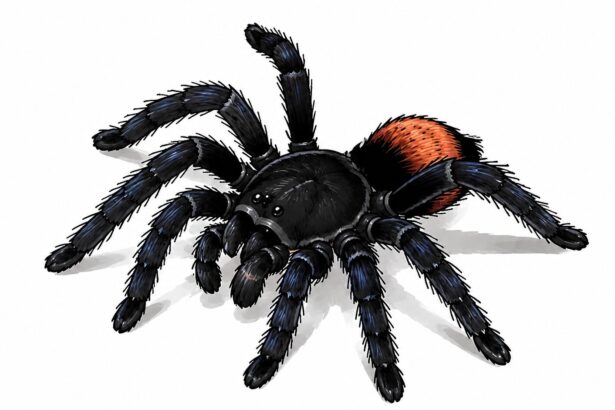
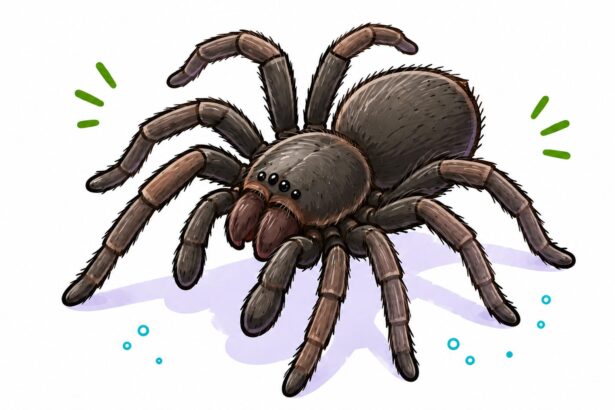
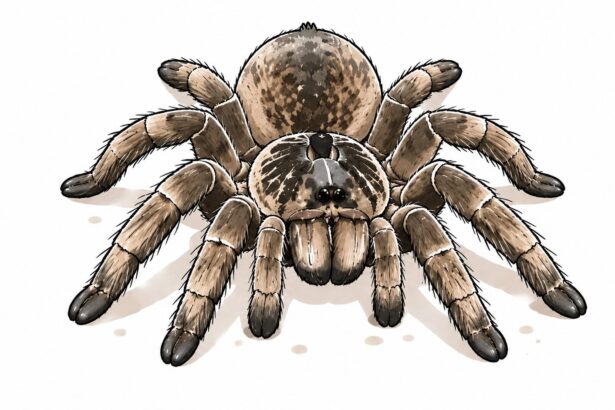
Rusty brown across the carapace with a darker chocolate-brown body and caramel-brown banding or striping at the leg joints are the consistent descriptions from keeper accounts. One source describes it as having a “rusty brown shade on its carapace which is perfectly complemented by the caramel brown stripes along its knees” — a warm, earthy appearance that differs from the richer red-brown of the Bolivian Red Rump and the darker colouration of the black velvet species. Dense setae give the body the velvety texture characteristic of the genus. Field specimens are noted as having a particularly shiny, lustrous quality to the setae that is striking in good light.
Adult size is somewhat debated in the limited keeper literature, partly reflecting the rarity of long-term captive specimens and the slow growth rate of this species. The range of 5 to 7 inches diagonal legspan appears across sources, with some individual reports suggesting larger specimens are possible. Males are smaller and live considerably shorter lives than females, as with all Acanthoscurria.
Housing
A terrestrial enclosure with adequate floor space and substrate depth for occasional burrowing. A footprint of at least 25 by 25 centimetres for adults, with four or more inches of substrate and a secure latching lid. The species is described across keeper accounts as reclusive and rarely visible — it prefers rock crevices, small holes, and bark retreats in the wild, and in captivity will spend the majority of its time hidden, emerging after dark to investigate the enclosure. This nocturnal reclusive tendency means enclosure design should prioritise the spider’s comfort and concealment over maximising keeper visibility, which often produces a more settled, well-fed animal over time. Front-opening access is preferred. Our best tarantula enclosure guide covers terrestrial formats with appropriate substrate depth for ground-dwelling fossorial species.
Enclosure’s Decorations
Cork bark, either flat pieces or tubes, positioned at substrate level gives the spider its primary retreat option. The wild habitat preference for rock crevices and bark shelter translates well to curved cork bark positioned to create a tight, enclosed cavity space — the species reportedly settles quickly in setups that replicate this enclosed shelter character. A shallow water dish at substrate level is essential. Additional cork bark, rocks if available, or fake plants contribute to a realistic semi-arid aesthetic and give the spider additional concealment options that match its preference for staying hidden. Our best tarantula hide guide covers shapes well suited to a reclusive burrowing species.
Substrate
Four to six inches minimum, using a substrate blend that holds moderate moisture in the lower portion while allowing the surface to dry, replicating the seasonal drought-to-rain cycle of the Caatinga and Cerrado. Coconut coir with peat moss or topsoil for structural firmness is appropriate. The Caatinga context is important: this is not a rainforest species requiring consistently moist substrate throughout. The standard approach used by the keeper documented at Mike’s Basic Tarantula — dampening roughly half the substrate monthly by overflowing the water dish then allowing it to dry — reflects the seasonal nature of the biome well. Our best tarantula substrate guide covers moisture-retaining blends appropriate for Brazilian seasonal biome species.
Water And Humidity
A shallow water dish at all times, refreshed every two to three days. Target ambient humidity of 65 to 75 percent, maintained through the partial substrate moisture and water dish evaporation rather than constant misting. The Caatinga and Cerrado are not humid biomes year-round — the semi-arid character of the Caatinga in particular means the spider is well adapted to periods of lower ambient humidity provided water access is always available. The keeper observation that despite three years of consistent water dish presence the spider was never observed drinking reflects the species’ ability to remain hydrated through substrate moisture and retained bodily reserves. A hygrometer confirms actual ambient conditions, and a misting bottle handles any targeted moisture additions.
Heating And Temperature
Brazil’s Caatinga and Cerrado maintain warm temperatures averaging above 22°C year-round, with the northern Caatinga among the hottest regions in Brazil. A captive range of 73 to 82°F is appropriate, with most keepers in temperate climates maintaining this species at room temperature without supplemental heat for most of the year. A side-mounted heat mat controlled by a thermostat addresses periods when ambient temperatures drop below 68°F. A thermometer at substrate level confirms actual enclosure conditions rather than ambient room temperature.
Diet And Nutrition
An aggressive feeder toward prey despite its reclusive general character, which is the consistent description across keeper accounts. Adults take crickets, roaches, and other appropriately sized invertebrates, with one keeper feeding adults two large roaches or five adult crickets weekly. Juveniles every five to seven days. Given the nocturnal, reclusive nature of this species, food offerings are best made in the evening when the spider is naturally most active, which improves both the feeding response and the keeper’s chance of observing the interaction. Remove uneaten prey within 24 hours. Our best tarantula food guide covers feeder insect options and gut loading relevant to a large semi-arid terrestrial species. Field documentation of predation on Tropidurus semitaeniatus lizards confirms this is a species that will opportunistically take larger prey in the wild, though standard invertebrate feeders are appropriate for captive nutrition.
Compatibility
Solitary only. For breeding, a well-fed female and supervised introduction are the standard requirements. The species’ rarity in captive collections makes successful breeding genuinely valuable.
Behavior And Temperament
Reclusive and nocturnal is the defining behavioural profile. Keepers consistently report this species as rarely visible — spending daylight hours well inside its retreat and emerging primarily after dark to patrol and feed. This is not a display species in the sense of an A. geniculata that sits out in the open; it is a species that rewards patient observation during evening feeding sessions and is better appreciated for the quality of its care than for constant visibility. When disturbed, it is described as moderately defensive and a urticating hair kicker, consistent with the genus character. Biting behaviour is not commonly reported. The venom has been characterised in published research, with the neurotoxic peptide µ-theraphotoxin-An1 isolated and described, though clinical significance for humans in a captive keeping context is considered low based on genus norms. Our article on are tarantulas nocturnal covers the circadian biology behind this species’ particularly strong nocturnal tendency.
Handling
Not recommended as a routine practice. The urticating hair deployment at disturbance, the moderate defensive response, and the general reclusive temperament that makes handling stressful for the spider all argue against it. Venom is considered medically insignificant to healthy humans based on genus norms. Enclosure maintenance should be carried out with long feeding tongs and unhurried movement.
Health And Lifespan
Precise lifespan data for captive specimens is limited by the small number of individuals held long-term in collections outside Brazil. Female lifespan is estimated in the 15 to 20 year range based on genus norms and the slow growth rate observed in captivity. Males live considerably shorter lives. The slow growth documented by keepers — one keeper observed minimal size change in a 3.5-inch individual over three years — means health monitoring relies more on abdomen condition and moult regularity than on growth rate as an indicator of wellbeing. The Caatinga-adapted physiology means chronically high humidity may be more problematic for this species than for rainforest relatives. Our tarantula dehydration article covers identification and recovery for dehydration-related health concerns.
Price
Rare in the hobby outside of Brazil and specialty collectors. When available from captive breeders, slings typically sell for $35 to $65 USD. Juveniles range from $60 to $100. Adult females, when they appear, command $100 to $180 or more. Brazilian-based breeders are the most likely source for this species, with European markets occasionally carrying stock. Source captive-bred specimens only. Everything you need to set this species up correctly from the first day is on our best tarantula products page.