
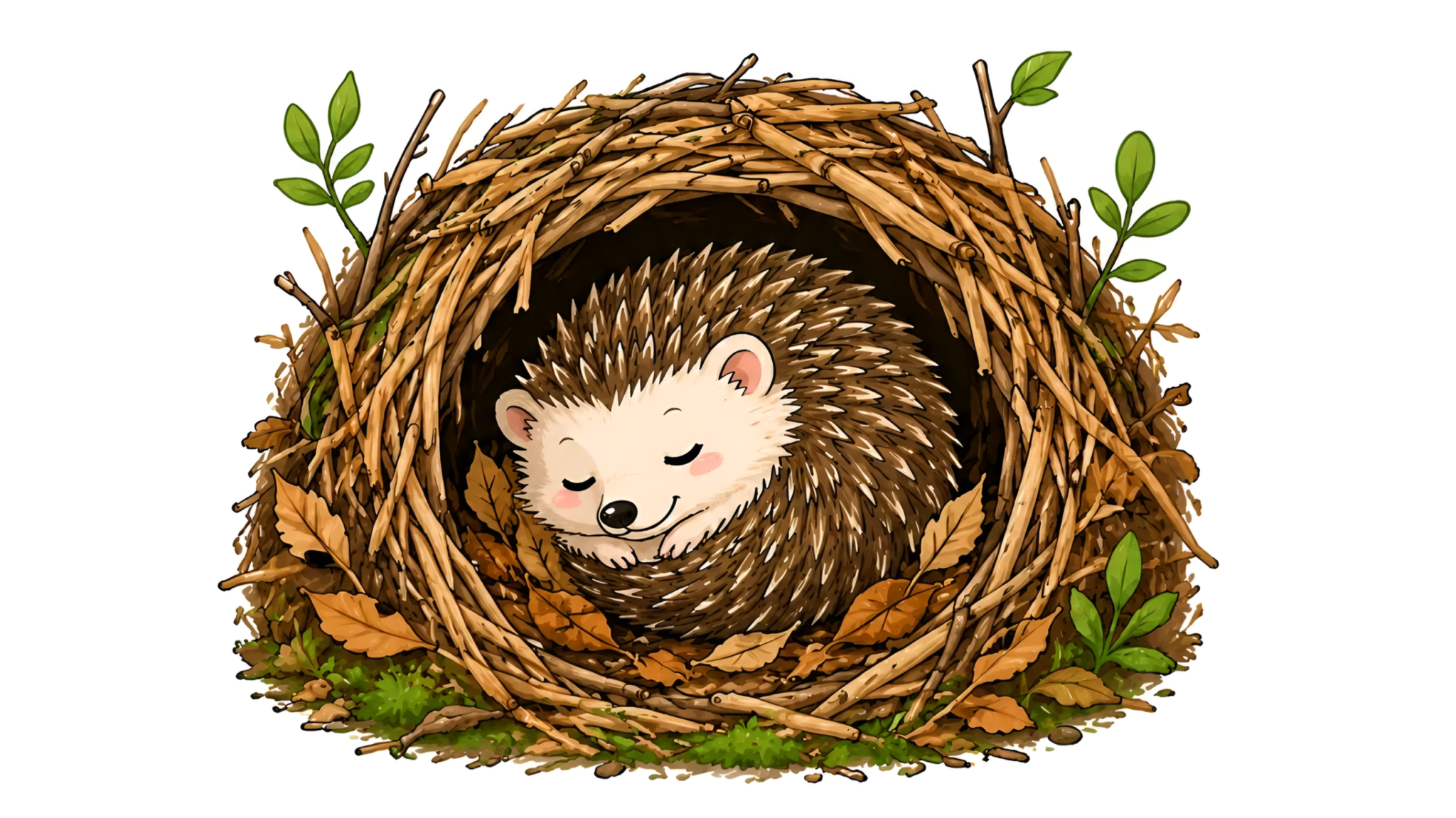
Where do hedgehogs sleep? It is a question that matters more than it might initially seem, because hedgehog sleep behavior is deeply tied to their biology, their stress levels, and their long-term health. Hedgehogs are nocturnal animals that spend the vast majority of daylight hours sleeping, and where and how they sleep — both in the wild and in captivity — reflects instincts that are millions of years old. Understanding those instincts helps you set up a captive environment that genuinely meets your hedgehog’s needs rather than simply containing it.
Where Do Hedgehogs Sleep in the Wild?
In the wild, where hedgehogs sleep is determined by two primary requirements: darkness and protection from predators. Wild hedgehogs are prey animals in a landscape populated by foxes, badgers, owls, and other hunters, and their sleeping sites must provide enough cover to prevent detection during the long, vulnerable hours of daylight rest.
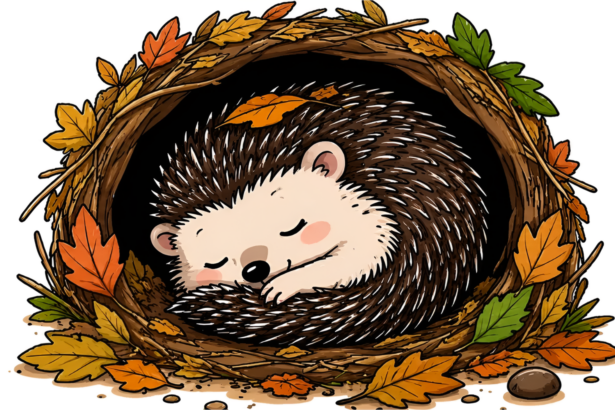
European hedgehogs (Erinaceus europaeus) typically sleep in nests built from dry leaves, grass, and other plant debris gathered and arranged in a sheltered location. According to a study published in the Journal of Zoology by researchers examining European hedgehog habitat use, hedgehogs are highly selective about nest placement — preferring sites under dense hedgerow vegetation, at the base of bramble patches, beneath piles of garden debris, in compost heaps, and inside hollow logs or under garden sheds. These sites share key characteristics: they are concealed from above and from the sides, they retain warmth from the surrounding vegetation, and they are structurally stable enough to protect the sleeping animal from casual disturbance.
Wild nests are often constructed with impressive care. A hedgehog building a summer sleeping nest will gather and carry plant material repeatedly, arranging it into a domed structure with a narrow entrance. The inside is compacted and shaped to fit the hedgehog’s body. Hibernation nests — built by European hedgehogs before winter — are more substantial, with thicker walls of damp leaves that insulate against cold and maintain a more stable internal temperature. The British Hedgehog Preservation Society documents that hibernation nests are typically built in more sheltered, hidden locations than summer nests, often at the base of piles of vegetation or inside dense ground cover.
African pygmy hedgehogs (Atelerix albiventris) — the species kept as pets — sleep in similar shelter types within their native sub-Saharan African habitat. In the wild they use dense grass tussocks, piles of debris, rock crevices, burrows made by other animals, and any available dark enclosed space as daytime sleeping sites. Unlike European hedgehogs, they do not build elaborate nests in the same way, but the preference for enclosed, dark, protected spaces is equally strong.
How Long Do Hedgehogs Sleep?
Hedgehogs sleep for a remarkable proportion of their lives. Adult African pygmy hedgehogs typically sleep 18–20 hours per day, spending only the nighttime and early morning hours active. This is not laziness — it is the biological rhythm of a small nocturnal predator that expends significant energy during its active hours foraging, running, and exploring, and requires extended rest to recover.
This sleep duration surprises many new owners who expect their hedgehog to be more interactive during the day. A hedgehog that sleeps from dawn until dusk and is active only after the household lights go down is a completely healthy hedgehog — it is behaving exactly as its biology intends. Attempting to force a hedgehog to be active during daylight hours by waking it repeatedly is genuinely stressful for the animal and should be avoided.
The relationship between sleep and the nocturnal activity pattern is worth understanding clearly. Hedgehogs do not simply nap — they enter genuine deep sleep states during daylight hours, and the disruption of these sleep periods by noise, light, or handling has real physiological consequences. Chronic sleep disruption in small mammals is associated with immune suppression, elevated stress hormones, and reduced lifespan in the scientific literature on small mammal biology.
Where Do Captive Hedgehogs Sleep?
In captivity, where hedgehogs sleep is determined by what you provide inside the cage. Without an appropriate sleeping site, a hedgehog will attempt to sleep in whatever corner or covered area feels most sheltered — often wedging itself under the wheel, behind a food bowl, or in a corner of the cage. While hedgehogs are adaptable enough to rest this way, it does not provide the darkness, warmth, and enclosure that support quality sleep.
Providing a proper sleeping enclosure is one of the most important things you can do for a captive hedgehog’s wellbeing. A hedgehog hideout — a small enclosed shelter with a single entrance that the hedgehog can enter and feel completely concealed — most closely replicates the shelter type hedgehogs choose in the wild. The key qualities are a completely enclosed interior that blocks light, enough space for the hedgehog to turn around and nest comfortably, and an entrance narrow enough that the hedgehog feels secure once inside.
A hedgehog sleeping bag made from soft fleece is an alternative that many hedgehogs prefer to rigid hideouts. Sleeping bags allow the hedgehog to burrow inside — replicating the burrowing and nesting behavior natural to the species — and the fleece fabric retains body heat and provides tactile comfort. Many owners find their hedgehog consistently uses a sleeping bag when offered alongside other options, often carrying or rearranging it to suit their preference.
A hedgehog blanket placed loosely in the cage gives the hedgehog the option to burrow underneath it, which some individuals strongly prefer. Our article on whether hedgehogs burrow covers this instinct in more detail and explains why providing materials the hedgehog can manipulate enhances its sense of security and control.
Some owners offer a hedgehog hammock, though these are better suited to hedgehogs that are already confident and social rather than anxious or newly acquired animals. A hammock in an elevated position may feel exposed rather than sheltered to a hedgehog that is still adjusting to its environment.
Lighting and Sleep Quality
Where hedgehogs sleep is inseparable from how light is managed in the cage environment. Because hedgehogs sleep during daylight hours and have no eyelids to block light, ambient lighting directly affects sleep quality. A hedgehog in a brightly lit room with light falling on its sleeping area cannot enter deep sleep effectively — the light signals wakefulness, even if the animal attempts to rest.
Managing light is therefore a practical welfare consideration. Placing the sleeping enclosure inside the cage in a position that receives the least direct light — against a wall rather than center-cage, positioned away from windows — helps. Using a hedgehog night light on a timer to provide dim illumination only during the hedgehog’s active hours supports a natural rhythm without disturbing daytime sleep. Some owners place the cage in a room where light levels can be controlled — a spare room or a room without south-facing windows sees lower daytime light levels and is better for hedgehog sleep than a bright living area.
The hedgehog cage setup overall — including positioning of the hideout, bedding depth, and ambient lighting — contributes significantly to how well the hedgehog sleeps and therefore to its overall health.
Temperature and Sleep
Where hedgehogs sleep is also affected by temperature. African pygmy hedgehogs require ambient temperatures of 72–80°F to remain healthy and maintain a normal sleep-wake cycle. Below 65°F, they risk entering torpor — a dangerous state that resembles hibernation but is physiologically harmful for this species, unlike the true hibernation of European hedgehogs.
A hedgehog entering torpor will appear to be sleeping very deeply — cold to the touch, barely responsive, curled up and unresponsive to normal stimuli. This is medical emergency behavior, not deep sleep, and requires immediate gentle warming. Our article on whether hedgehogs hibernate explains the distinction between torpor and true hibernation and what to do if your hedgehog enters torpor.
Maintaining appropriate cage temperature with a hedgehog heat lamp or heating pad, regulated by a reliable thermostat and monitored with an accurate thermometer, creates the thermal conditions in which a hedgehog can sleep naturally and safely. The sleeping enclosure itself — whether a hideout or sleeping bag — retains body heat and keeps the sleeping area warmer than the ambient cage air, which is one reason why a good sleeping enclosure matters even in a correctly heated cage.
Bedding and Nesting Material for Sleep
Wild hedgehogs choose and arrange their own nesting material to create the ideal sleeping environment. In captivity, providing appropriate bedding gives the hedgehog the opportunity to express this natural behavior and create a sleeping space it finds comfortable.
Soft, unscented bedding or cage liners in and around the sleeping enclosure allow the hedgehog to gather, push, and arrange material to its preference. Many hedgehogs will move pieces of bedding into their hideout or sleeping bag to create a more cushioned, insulated sleeping surface. Our guide to best hedgehog bedding covers the safest and most appropriate materials, with emphasis on avoiding dusty, aromatic, or rough-textured options that can cause respiratory or skin issues.
Loose, soft materials like recycled paper bedding or unscented fleece scraps placed inside the hideout give the hedgehog tactile material to nest with. Observing whether your hedgehog rearranges its sleeping area is a useful behavioral indicator — a hedgehog that actively nests is engaged with its environment and feeling secure enough to invest in its sleeping space, which is a positive welfare sign.
Sleep Positions and What They Tell You
Hedgehogs sleep in several positions, and recognizing what each position looks like helps owners distinguish comfortable rest from signs of illness.
The most common sleeping position in a comfortable, relaxed hedgehog is a loose curl or semi-curl — not the tight defensive ball that hedgehogs adopt when frightened, but a relaxed, partially uncurled position with legs tucked and face tucked toward the belly. The quills will be lying flat rather than erect, and the hedgehog will feel warm and slightly limp when gently touched rather than rigid and tensed.
Some hedgehogs sleep fully stretched out on their side or belly, which looks alarmingly like an unwell animal to new owners but is actually the most relaxed, trusting sleep position a hedgehog can adopt. A stretched-out, deeply sleeping hedgehog is a hedgehog that feels completely safe in its environment — it is not even maintaining the partial curl as a precaution. This position is more common in highly socialized, confident animals and in very warm conditions.
A tightly balled, rigid, cold hedgehog that does not respond to normal stimuli should not be assumed to be sleeping. This is the presentation of a hedgehog in torpor or serious illness, and warrants immediate temperature assessment and, if the hedgehog does not warm and become responsive within an hour of gentle warming, a vet visit.
Do Hedgehogs Sleep Alone or Together?
Hedgehogs are solitary animals that do not naturally seek sleeping companionship. In the wild, each hedgehog occupies and defends its own territory and sleeps alone in its own nest. Our article on whether hedgehogs live alone or in groups covers the social structure of the species in detail.
In captivity, housing two hedgehogs in the same cage and expecting them to sleep together harmoniously is not generally advisable. Even animals that cohabit tolerably during active hours may compete for the same sleeping enclosure, causing stress, biting, and potential injury. If you keep more than one hedgehog, providing at least one sleeping enclosure per animal — ideally positioned in different areas of the cage — minimizes competition and allows each hedgehog to sleep undisturbed.
Frequently Asked Questions
Why does my hedgehog sleep so much? This is entirely normal. Hedgehogs are nocturnal animals that sleep 18–20 hours per day. A hedgehog that sleeps through most of the day and becomes active in the evening is following its natural biology perfectly.
Should I wake my hedgehog during the day to interact with it? Occasionally and gently is acceptable, but making a habit of waking your hedgehog during its main sleep period causes genuine stress. Schedule the majority of your interaction time for the evening when your hedgehog is naturally active.
My hedgehog won’t use its hideout — what should I do? Try different types — some hedgehogs prefer enclosed rigid hideouts while others prefer sleeping bags they can burrow into. Positioning matters too: the hideout should be in the darkest, most sheltered corner of the cage. Placing a piece of used bedding or a fleece scrap inside with your scent on it sometimes helps a new hedgehog associate the hideout with safety.
Is it normal for my hedgehog to make noises while sleeping? Yes — some hedgehogs produce small squeaks, snuffles, or chirping sounds during sleep. These are normal and often entertaining. Loud distress calls or unusual hedgehog sounds during what appears to be sleep are worth paying attention to, but routine sleep sounds are not a concern.
Can I use a camera to watch my hedgehog sleep? A hedgehog monitoring camera with a night vision function lets you observe your hedgehog during its active nighttime hours without disrupting it with light — and gives you the reassurance of being able to check on a sleeping hedgehog without entering the room.
Final Thoughts on Where Hedgehogs Sleep
Where hedgehogs sleep matters — to their stress levels, their immune health, their willingness to be handled, and ultimately to how long and well they live. A hedgehog with a dark, warm, enclosed sleeping space in a properly heated, appropriately lit cage is a hedgehog whose most fundamental biological needs are being met. That foundation makes everything else — socialization, feeding, health management — easier and more rewarding.
Getting those fundamentals right starts with the right products, and you will find everything from hideouts and sleeping bags to heating equipment and cage essentials at the Herdurbia Best Hedgehog Products hub — because a well-rested hedgehog is a happier, healthier hedgehog in every way.