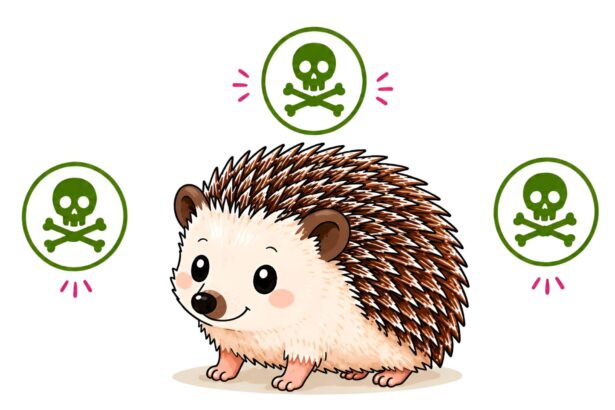

Hedgehog breeds are a topic that surprises most new owners, because the reality of hedgehog taxonomy is quite different from what people expect. Unlike dogs or cats — where “breed” refers to selectively developed varieties within a single species — hedgehogs are a diverse family of animals containing multiple distinct species spread across Europe, Africa, and Asia, each with different appearances, temperaments, and care requirements. Within the most common pet species, there is also an extraordinary range of color varieties that many people refer to loosely as “breeds.” This guide covers every hedgehog species, the color varieties found in the most popular pet hedgehog, which hedgehog breeds make the best pets, and what you need to know before choosing one.
Are “Hedgehog Breeds” the Same as Species?
Before diving into individual breeds and species, it is worth clarifying terminology. The word “breed” is most accurately applied to selectively developed varieties within a single domesticated species — like dog breeds within Canis lupus familiaris. In hedgehogs, what most people call “breeds” are actually a mix of two different things: distinct wild species within the family Erinaceidae, and color morphs within the primary pet species.
According to the Integrated Taxonomic Information System, the family Erinaceidae contains 17 species across five genera, all of which are collectively referred to as hedgehogs in common usage. Of these, only a handful are kept as pets with any regularity, and one species — the African pygmy hedgehog — dominates the pet trade so completely that most discussions of “pet hedgehog breeds” are really discussions of its color varieties.
With that clarified, this guide covers both: the distinct species you may encounter in the pet trade or in the wild, and the color varieties of the African pygmy hedgehog that are commonly called breeds by hobbyists.
The African Pygmy Hedgehog — The Standard Pet Hedgehog
The African pygmy hedgehog (Atelerix albiventris) is by far the most common hedgehog kept as a pet worldwide, and it is the species almost everyone is referring to when they say “pet hedgehog.” It is a hybrid developed primarily from two African species — Atelerix albiventris (the four-toed hedgehog) and Atelerix algirus (the North African hedgehog) — selectively bred in captivity over decades to produce a small, relatively handleable animal suited to domestic life.
Adult African pygmy hedgehogs typically weigh between 300 and 700 grams and measure around 6–8 inches in length. They have a characteristic compact body covered in short, cream-tipped spines on the back and soft fur on the face, belly, and legs. They are nocturnal animals that spend their active hours foraging, running, and exploring. Our article on whether hedgehogs are nocturnal provides a full breakdown of their activity patterns and what this means for owners.
African pygmy hedgehogs are legal in many parts of the United States, the UK, and much of Europe, though regulations vary significantly by location. They are the hedgehog most people will encounter when buying from a breeder or pet store, and virtually all of the color varieties discussed below belong to this species.
Image suggestion: An African pygmy hedgehog showing its classic cream-and-brown quill pattern being held. Alt text: “African pygmy hedgehog breed — most common pet hedgehog species”
Color Varieties of the African Pygmy Hedgehog
Within the African pygmy hedgehog, selective breeding has produced a remarkable range of color varieties. These are sometimes called “breeds” in the pet trade, though they are more accurately described as color morphs — variations in pigmentation rather than distinct breeds in the strictest sense. The coloration of a hedgehog is determined by the pigment in both its quills and its skin, and the combination of these creates the wide range of appearances available.
The Salt and Pepper variety is arguably the most classic and recognizable. These hedgehogs have quills banded in dark brown or black at the base and white at the tips, with a white or cream face and belly. The overall effect is a dark, speckled appearance reminiscent of classic wild-type coloration. Salt and pepper hedgehogs are widely available and are often among the most affordable, making them a popular first choice for new owners.
The Chocolate variety has quills with a warm brown banding rather than the dark grey or black of salt and pepper, giving the animal a softer, richer appearance. Chocolate hedgehogs often have brown masks on their faces and brown-toned skin, which distinguishes them from the cooler-toned salt and pepper.
The Cinnamon variety carries a reddish-brown to orange-brown quill banding with a warm skin tone to match. These hedgehogs are visually striking and somewhat rarer than the classic salt and pepper, making them a popular choice for hobbyists interested in less common colorations.
The Apricot variety has very pale quills — almost white — with a faint golden or pinkish wash. Their skin is typically light pink or peachy and they often have dark eyes. Apricots are one of the lighter varieties without crossing into full albinism and are popular for their delicate, soft appearance.
The Albino variety — the white hedgehog with pink eyes — is one of the most recognizable color varieties in the hobby. True albino hedgehogs have completely white quills, white fur, pink skin, and red or pink eyes caused by the absence of melanin, which removes the pigment that would otherwise be present in the iris. Our dedicated article on albino hedgehogs covers their specific characteristics, care considerations, and health implications in detail. Albinos require more careful attention to lighting given their light-sensitive eyes.
The Snowflake variety is sometimes described as a pinto pattern — hedgehogs with predominantly white quills but scattered darker quills creating an irregular, snowflake-like pattern across the back. No two snowflake hedgehogs look exactly alike, which makes them particularly appealing to collectors. The amount of dark quilling can range from just a few scattered dark quills to large patches.
The Pinto variety is similar to snowflake but refers more specifically to a distinct two-toned pattern where patches of dark quilling are clearly visible alongside patches of white, creating a calico-like appearance. Pinto and snowflake hedgehogs are sometimes categorized together and sometimes separately depending on the breeder.
The Dark Grey variety has very deeply pigmented quills — almost charcoal — with a corresponding dark skin mask. These hedgehogs have a bold, dramatic appearance and retain strong pigmentation throughout their lives. They are sometimes confused with salt and pepper at a glance but are distinctly darker in overall tone.
The Champagne variety has warm golden-beige quills with pinkish or peachy skin undertones. They are not quite as pale as apricots but lack the stronger brown tones of chocolate or cinnamon. Champagne hedgehogs have a subtle, elegant appearance that has made them increasingly popular in recent years.
The Black variety — sometimes called “black-eyed white” or simply described as a very dark hedgehog — represents animals with extremely heavy dark pigmentation and minimal white banding on the quills, producing an overall near-black appearance. True heavily melanistic hedgehogs are uncommon in the pet trade.
Image suggestion: An albino hedgehog next to a chocolate-colored hedgehog showing quill color contrast. Alt text: “hedgehog color varieties breeds — albino and chocolate hedgehog quill comparison”
The European Hedgehog
The European hedgehog (Erinaceus europaeus) is the species most British and continental European readers will be familiar with from their gardens. It is a larger hedgehog than the African pygmy, typically weighing between 400 and 1,200 grams and measuring up to 12 inches in length. European hedgehogs have darker, more uniformly banded quills than most pet hedgehog color varieties, a wider rounder body shape, and a more pronounced snout.
European hedgehogs are not typically kept as pets in most countries. In the UK, it is illegal to keep wild European hedgehogs in captivity without a specific license, and the species is not bred for the pet trade. According to the British Hedgehog Preservation Society, European hedgehog populations have declined significantly in recent decades, and conservation efforts strongly discourage removing them from the wild. If you find a European hedgehog that appears injured or ill, the appropriate response is to contact a wildlife rescue rather than to attempt to keep it.
European hedgehogs are also true hibernators, unlike African pygmy hedgehogs. They enter genuine hibernation during cold months — a physiological state quite different from the torpor that African pygmy hedgehogs may fall into inappropriately in captivity. Our article on whether hedgehogs hibernate explains the distinction between true hibernation and torpor and why it matters for pet hedgehog owners.
The North African Hedgehog
The North African hedgehog (Atelerix algirus) is one of the two species that contributed to the development of the African pygmy hedgehog. In the wild, it is found across North Africa and parts of southern Europe, including Spain and the Canary Islands. It is somewhat larger than the typical pet African pygmy hedgehog and has a white belly and a more pronounced facial mask.
North African hedgehogs are occasionally encountered in the European pet trade but are far less common than the African pygmy. Their care requirements are broadly similar to the African pygmy hedgehog, though they tend to be slightly more variable in temperament and less extensively selectively bred for handleability.
The Long-Eared Hedgehog
The long-eared hedgehog (Hemiechinus auritus) is found across a wide range spanning from Eastern Europe through Central Asia and into China and North Africa. As the name suggests, it has noticeably longer ears than other hedgehog species, giving it a distinctive appearance. Long-eared hedgehogs are also smaller and more slender than African pygmy hedgehogs, with a more agile, energetic build.
Long-eared hedgehogs are occasionally kept as pets in parts of Asia and the Middle East but are not widely available in the Western pet trade. They require warmer conditions than African pygmy hedgehogs and are considered better suited to experienced exotic animal keepers than to beginners. They are more inclined to run, climb, and explore than the African pygmy and can be more challenging to handle regularly. Our article on whether hedgehogs can climb covers how this trait varies across species.
The Indian Long-Eared Hedgehog
The Indian long-eared hedgehog (Hemiechinus collaris) is closely related to the long-eared hedgehog and is found primarily across Pakistan and northwestern India. It is smaller and less commonly encountered in captivity than its relative. Research from the IUCN’s Small Mammal Specialist Group documents this species as data deficient in terms of population trends, meaning its wild status is not well understood. It is not a species that appears in the mainstream pet trade.
The Indian Hedgehog
The Indian hedgehog (Paraechinus micropus) is native to India and Pakistan and is one of the smaller hedgehog species, typically reaching only 14–23 cm in length. It has adapted to arid and semi-arid environments and has physiological traits that differ from the African and European species — including a greater capacity to tolerate dry conditions and a more pronounced tendency toward aestivation (summer dormancy) rather than hibernation. Indian hedgehogs are not widely kept as pets outside of their native range.
The Desert Hedgehog
The desert hedgehog (Paraechinus aethiopicus) is found across the Arabian Peninsula and North Africa and is one of the smallest hedgehog species in the world, sometimes weighing as little as 200 grams. It has adapted to extreme desert conditions, with long legs relative to its body size, large ears for heat dissipation, and a more active burrowing habit than most other species. Our article on whether hedgehogs burrow covers burrowing behavior across species.
Desert hedgehogs are occasionally kept in parts of the Middle East and North Africa but are not commonly available in the Western pet trade and have specific environmental requirements — particularly warmth and arid conditions — that differ significantly from the African pygmy hedgehog.
The Daurian Hedgehog
The Daurian hedgehog (Mesechinus dauuricus) is found in Mongolia, northern China, and parts of Russia. It is a medium-sized species that is less well-studied than the European or African species. Like the European hedgehog, it is a true hibernator in response to cold seasonal conditions. It is not kept as a pet in mainstream practice and is primarily of interest from a zoological and conservation standpoint.
What Makes a Hedgehog Suitable as a Pet?
Of all the hedgehog species discussed above, the African pygmy hedgehog stands out as the most suitable for captive life by a significant margin. It has been selectively bred for captivity over many generations, producing animals that are more accustomed to human presence, more manageable in size, and more predictable in temperament than wild-caught or less selectively bred species. The extensive body of care knowledge available — covering diet, housing, health management, and handling — relates almost exclusively to this species.
This does not mean African pygmy hedgehogs are easy pets. They are nocturnal, can be shy and prone to defensive balling when stressed, require specific temperature ranges to avoid dangerous torpor, and have health needs that many general veterinarians are not familiar with. Our article on whether hedgehogs are good pets gives an honest assessment of the commitment involved. They also can bite when stressed or mishandled, particularly before they are well-socialized.
For anyone seriously considering hedgehog ownership, understanding the costs involved is essential. Our guide on how much hedgehogs cost covers purchase price, ongoing food and supplies, and veterinary costs across the animal’s lifespan.
Image suggestion: A salt and pepper African pygmy hedgehog being gently held showing classic quill patterning. Alt text: “African pygmy hedgehog breeds salt and pepper variety being held”
Hedgehog Color Varieties and Health
One question many new owners ask is whether certain hedgehog color varieties are associated with specific health problems. The answer is nuanced. Albino hedgehogs carry a higher rate of certain conditions, most notably Wobbly Hedgehog Syndrome (WHS) — a progressive neurological condition that is one of the most serious health concerns in captive African pygmy hedgehogs. According to research cited by the Association of Exotic Mammal Veterinarians, genetic factors appear to influence WHS susceptibility, and some color lines may carry higher rates than others. Reputable breeders screen for WHS history in their lines.
Albino hedgehogs are also more sensitive to light due to the absence of eye pigmentation, which is worth considering for cage placement and lighting choices. A hedgehog cage setup that avoids bright overhead lighting and provides plenty of dark hiding spots is particularly important for albino animals.
Beyond albinism, most color varieties do not carry inherent breed-specific health risks in the same way some dog breeds do — the African pygmy hedgehog is a sufficiently unified species that color expression is a surface-level variation rather than a marker of deep physiological difference. Health in African pygmy hedgehogs is primarily determined by genetics from specific breeding lines, husbandry quality, diet, and temperature management rather than by color variety.
Choosing Between Hedgehog Color Varieties
If you are choosing between African pygmy hedgehog color varieties, the decision can be largely aesthetic — the care requirements, temperament range, and health risks are broadly comparable across colors. Where it becomes more meaningful is in sourcing: buying from a reputable breeder who can tell you the lineage and health history of their animals matters more than which color variety you choose.
A good breeder will be able to tell you whether WHS or other conditions appear in their animals’ lineages, will have socialized their hoglets before selling, and will be able to provide guidance on the specific temperament tendencies of individual animals. Hedgehog quills can actually provide some early information about an animal’s confidence — a hedgehog that repeatedly balls up tightly or huffs and clicks extensively during handling may take longer to socialize than one that uncurls and explores relatively quickly.
Diet is identical across all color varieties of the African pygmy hedgehog. Our article on what hedgehogs eat covers the full nutritional requirements, and the best hedgehog food guide helps you choose quality options.
Frequently Asked Questions
How many hedgehog species are there? There are 17 recognized species within the family Erinaceidae, though the number recognized varies slightly depending on the taxonomic authority consulted. Of these, the African pygmy hedgehog is by far the most common in the pet trade.
What is the most common pet hedgehog breed? The African pygmy hedgehog (Atelerix albiventris), often sold simply as a “hedgehog” or “pet hedgehog,” is the dominant species in captivity worldwide. Almost all color varieties sold in pet stores and by breeders belong to this species.
Are some hedgehog breeds more aggressive than others? Within the African pygmy hedgehog, temperament varies more by individual and socialization history than by color variety. Wild-type hedgehog species like the European or long-eared hedgehog are generally less suited to handling and may be more defensive, but these are rarely encountered in the mainstream pet trade.
Do different hedgehog breeds need different care? Within the African pygmy hedgehog, care is essentially identical across color varieties. Between species, care requirements can differ significantly — particularly regarding temperature, hibernation behavior, humidity, and diet. Any hedgehog species other than the African pygmy should be researched thoroughly before acquisition.
What is the rarest hedgehog color variety? True pinto and snowflake patterns with dramatic color division are among the less common varieties, as are very heavily melanized dark varieties. Rarity in color varieties also depends on regional availability and breeder specialization.
Final Thoughts on Hedgehog Breeds
Hedgehog breeds span a fascinating range — from the wild-living European hedgehog of British gardens to the selectively bred African pygmy hedgehog in dozens of color varieties, to the rarely encountered desert and long-eared species of Asia and the Middle East. For most people considering a pet hedgehog, the African pygmy is the practical and ethical choice, with color variety being a matter of personal preference rather than meaningful care difference. Whatever variety you choose, the commitment to providing excellent care is the same.
Great hedgehog care starts with the right setup, and the right setup starts with the right products. Browse the full collection of handpicked hedgehog essentials — from cages and bedding to food, heating, and health supplies — at the Herdurbia Best Hedgehog Products hub, where everything you need for a thriving pet is in one place.