
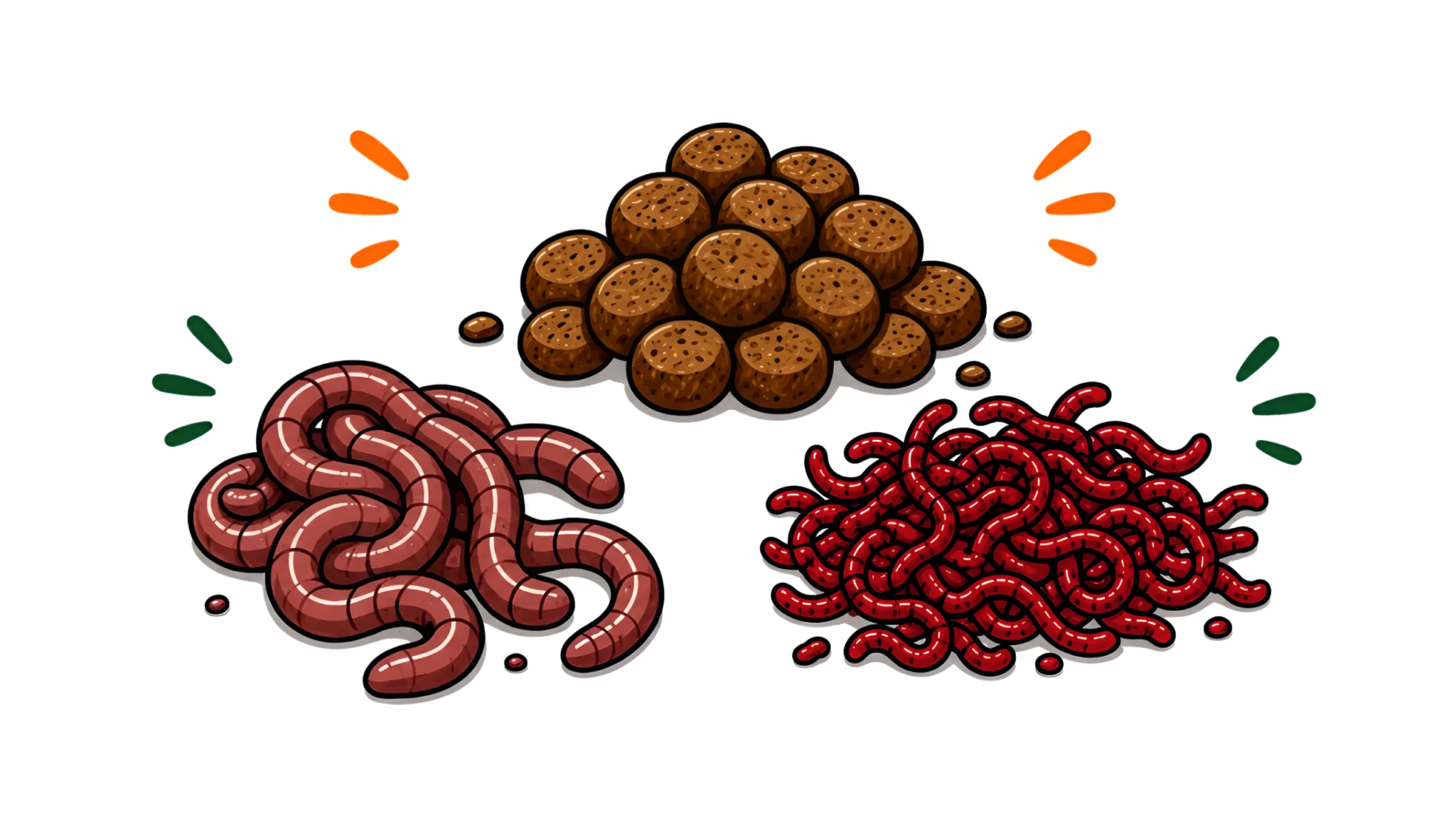
Choosing the best axolotl food is one of the most important ongoing responsibilities of axolotl ownership. Feed your axolotl the right diet in the right amounts, and you will have a healthy, well-conditioned animal that can live for 10–15 years. Feed the wrong things — or overfeed, or underfeed — and you will face health problems that are directly linked to nutrition: obesity, organ stress, nutritional deficiencies, water quality problems from uneaten food, and stunted growth in juveniles. This guide covers everything you need to know about axolotl food: what axolotls eat naturally, what the safest and most nutritious food options are, how to feed correctly, and our top Amazon picks for every food category. Pair this with our full axolotl care guide for the complete picture on keeping your axolotl thriving.
What Do Axolotls Eat? Understanding Their Natural Diet
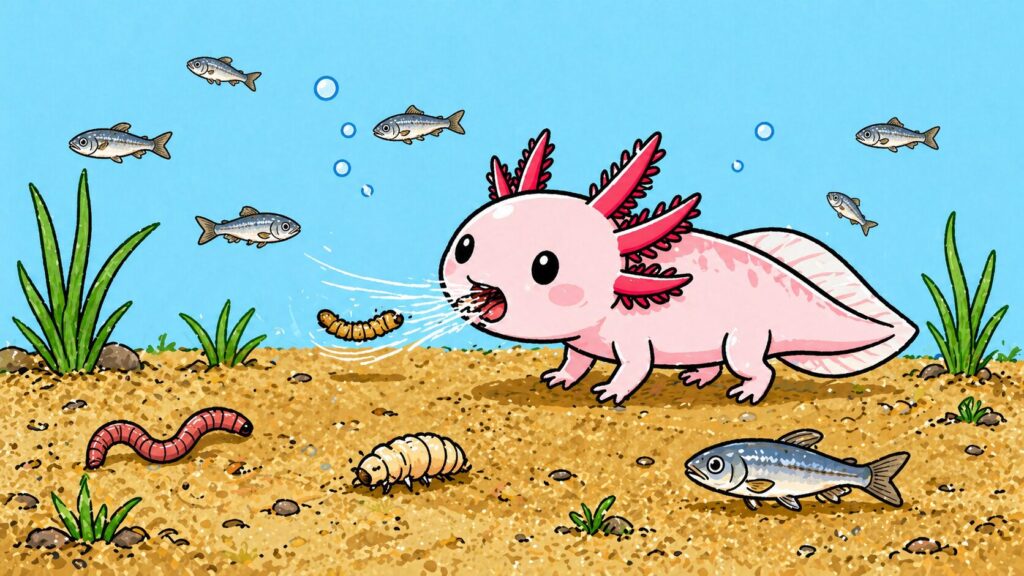
Axolotls are carnivores — strict meat-eaters that have no interest in plant material whatsoever. In the wild, Ambystoma mexicanum feeds on small crustaceans, aquatic insect larvae, small fish, worms, molluscs, and any other small invertebrate or vertebrate prey they can capture within the remnants of the Xochimilco lake system in Mexico City. The wild axolotl population is critically endangered, which underscores the importance of understanding their natural biology for responsible captive care.
Their feeding mechanism is straightforward and efficient: axolotls use suction feeding, rapidly opening their wide mouths to create a pressure differential that inhales prey along with surrounding water. This mechanism works best for prey items that are appropriately sized — roughly the width of the axolotl’s head — and that are delivered to the bottom of the tank where the axolotl can detect them through scent and ground vibration. Axolotls have relatively poor eyesight and primarily hunt by smell and vibration detection rather than visual pursuit.
This feeding biology tells us several important things about what the best axolotl food should look like in captivity: it should be protein-rich, it should be delivered to the tank floor (sinking rather than floating), it should be appropriately sized for the individual axolotl, and it should not be left to rot in the tank after feeding since uneaten food deteriorates water quality rapidly and creates ammonia spikes that damage your nitrogen cycle.
The Best Axolotl Food Categories
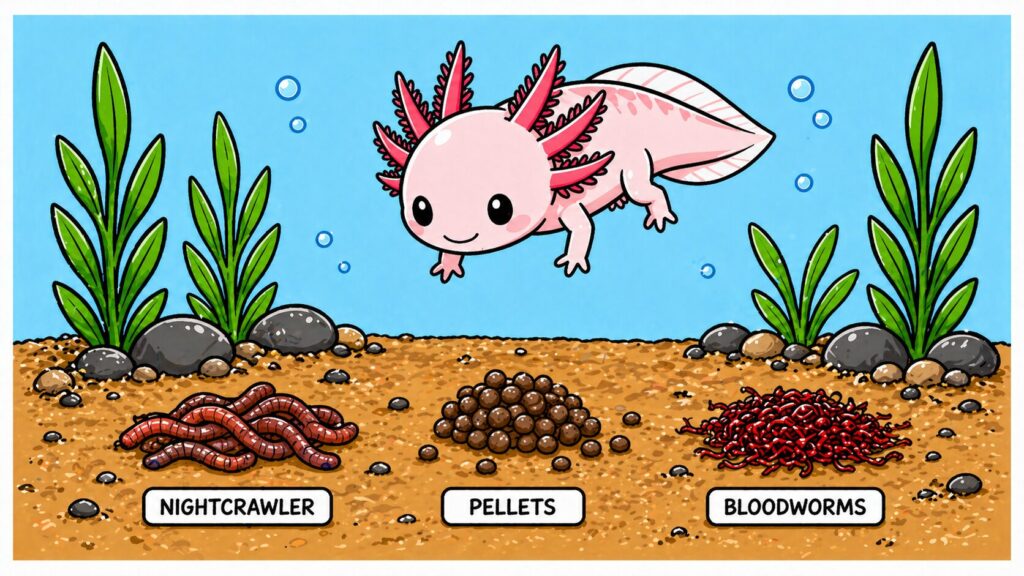
Nightcrawlers (Earthworms) — The Gold Standard
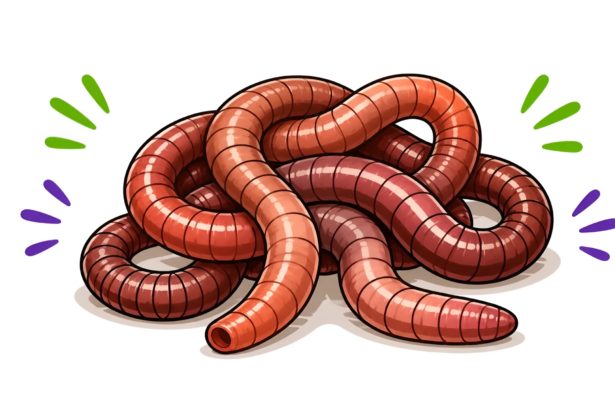
Nightcrawlers — large earthworms of the species Lumbricus terrestris and related varieties — are considered by most experienced axolotl keepers to be the best overall axolotl food available. They are nutritionally complete for axolotls, containing a balanced protein profile, appropriate fat content, and natural moisture that supports hydration. Earthworms are also one of the most natural analogues to the prey axolotls evolved to eat — wild axolotls regularly consume aquatic and semi-aquatic worms as a significant part of their diet.
Nightcrawlers are large worms — typically 4–8 inches — that must be cut to an appropriate size for the axolotl before feeding. A piece roughly the width of the axolotl’s head is the right size for a single feeding item. This does involve some hands-on food preparation, which is why some keepers prefer pellets for convenience, but the nutritional superiority of nightcrawlers makes the extra effort worthwhile as the primary staple food. Our guide to the best axolotl nightcrawlers covers top Amazon picks in detail.
According to research published in Aquaculture, earthworms provide a protein profile that closely matches the natural prey composition of wild axolotls, with a crude protein content of approximately 60–70% on a dry weight basis and a fat content well-suited to axolotl metabolic needs. Earthworms also contain natural minerals including calcium that support bone development — particularly important in growing juveniles.
High-Quality Sinking Pellets — Best for Daily Convenience
For most axolotl keepers, the practical reality is that a high-quality sinking pellet forms the backbone of the daily feeding routine. Pellets are convenient, provide consistent nutrition, and — unlike live or fresh foods — do not introduce parasites or pathogens into the tank. The key word is “high-quality”: many generic fish pellets are not appropriate for axolotls, being too high in plant-based filler ingredients and not protein-dense enough for a strict carnivore.
The best axolotl pellets are sinking carnivore formulations with a high crude protein content (40%+), fish meal or other animal protein as the primary ingredient, and a size appropriate for the individual axolotl. Pellets should be fed one at a time using feeding tongs to ensure your axolotl eats each piece before the next is offered, preventing uneaten pellets from dissolving and fouling the water. Our dedicated guide to the best axolotl pellets covers the top options in depth.
Bloodworms — Best as a Treat and Supplement
Bloodworms — the larvae of Chironomus midges — are a popular treat food for axolotls that most animals accept enthusiastically. They are high in protein and are excellent for stimulating feeding responses in axolotls that are being transitioned to pellets or that have lost appetite due to stress.
However, bloodworms should not be fed as a staple food for adult axolotls. Their nutritional profile, while protein-rich, lacks the complete amino acid and mineral balance needed for long-term health — they are deficient in some essential nutrients compared to nightcrawlers or quality pellets. Over-reliance on bloodworms as a primary food source has been associated with nutritional deficiencies in long-term axolotl keeping. Use bloodworms 2–3 times per week as a supplement to a pellet or nightcrawler diet, or as a standalone treat for variety. Our guide to the best axolotl bloodworms covers frozen and freeze-dried options with Amazon links.
What Not to Feed Axolotls
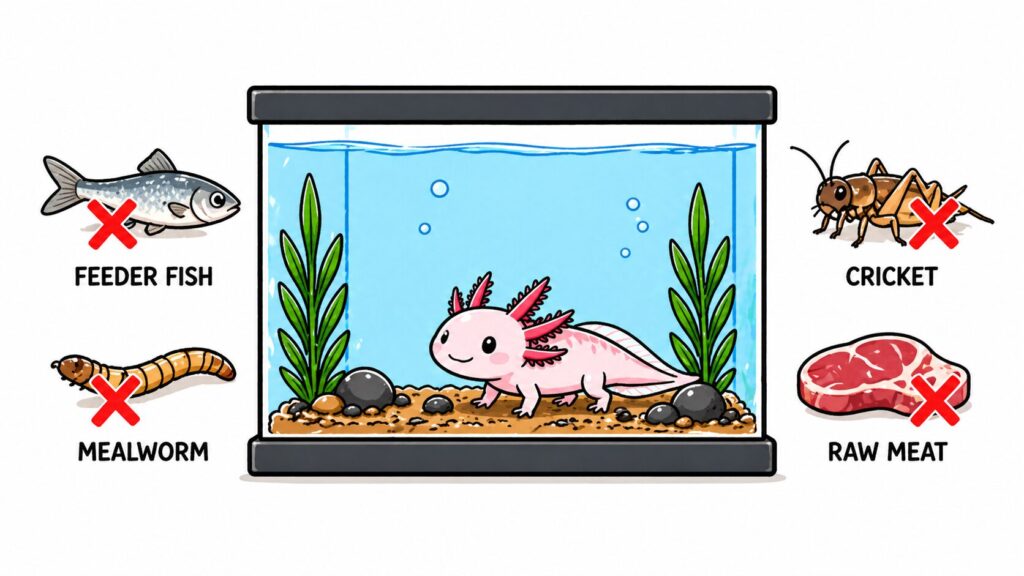
Understanding what to avoid is as important as knowing what to feed. Several commonly available foods cause serious problems in axolotls:
Feeder fish (goldfish, minnows, guppies). Feeder fish are nutritionally inappropriate for axolotls and carry a significant parasite and disease transmission risk. They also introduce thiaminase — an enzyme that destroys vitamin B1 — which causes thiamine deficiency over time. Feeder fish should never be used as axolotl food.
Mealworms and waxworms. These have high fat content and a chitin-heavy exoskeleton that axolotls cannot digest well. They cause digestive issues and can lead to impaction. Avoid entirely.
Crickets and other terrestrial insects. Axolotls have no evolutionary context for hunting or digesting terrestrial insects. These are not appropriate axolotl food.
Raw beef heart or chicken. Popular in some older care guides but not recommended by modern keepers. Mammalian meat has a different fat and protein composition than aquatic prey and the high fat content can cause organ stress over time.
Anything larger than the axolotl’s head. Axolotls swallow prey whole. Offering food that is too large causes choking, regurgitation, and digestive stress. Always size food appropriately.
How Often to Feed Axolotls
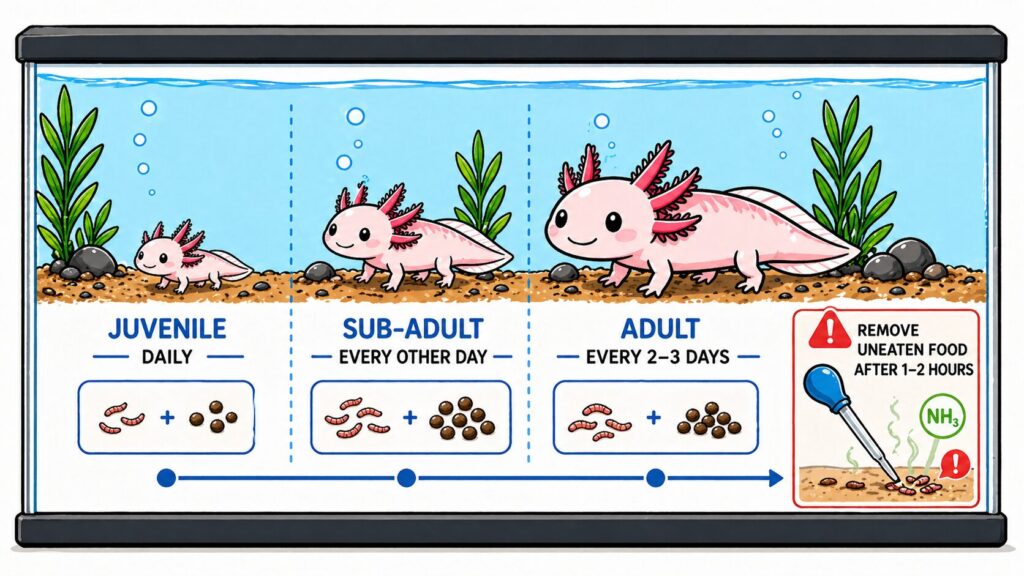
Feeding frequency depends on the axolotl’s age and size:
Juveniles (under 4 inches): Feed daily, or even twice daily for very small juveniles. Growing axolotls have high protein requirements for development and should never be underfed during the growth phase. Offer small pieces of nightcrawler or appropriately sized pellets.
Sub-adults (4–6 inches): Feed every other day. Appetite and growth rate are still high but slowing from the juvenile phase.
Adults (6+ inches): Feed every 2–3 days. Adult axolotls have a much lower metabolic rate than juveniles and do not need daily feeding. Overfeeding adults causes obesity and organ stress — our article on axolotl health notes that excess body fat around the axolotl’s head and limbs is a common sign of overfeeding.
Always remove any uneaten food from the tank within 1–2 hours of feeding using a turkey baster or feeding tongs. Uneaten food breaks down and spikes ammonia, directly harming your water quality. This is one of the most common water quality mistakes among new axolotl keepers.
How to Feed Axolotls Correctly
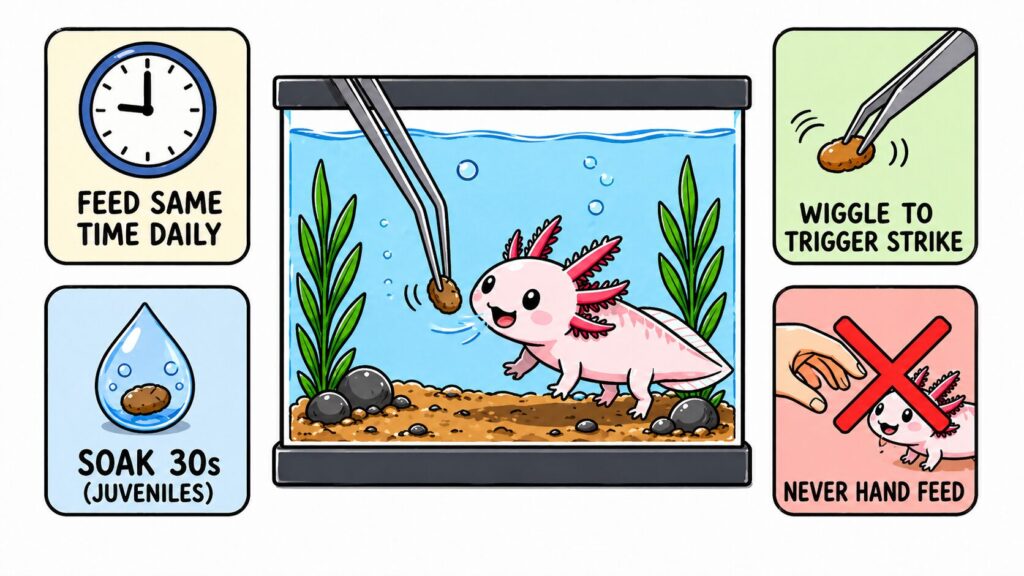
Always use feeding tongs for live or fresh food. Offering food using feeding tongs allows you to position food precisely near your axolotl’s mouth, reducing the risk of it exploring the tank for missed pieces and accidentally inhaling substrate. Tongs also allow you to retrieve uneaten pieces cleanly. Our guide to the best axolotl feeding tongs covers the best options.
Feed at the same time each day. Axolotls learn feeding schedules and become more responsive and active at their established feeding time. Consistent timing also makes it easier to judge whether appetite has changed — a sudden loss of interest in food that has previously been eagerly accepted is an early sign of stress or illness worth investigating.
Wriggle the food if necessary. Axolotls are motion-sensitive feeders. If your axolotl is ignoring a pellet or worm piece, gently wriggling it with feeding tongs mimics the movement of live prey and triggers the feeding response. Never wave food directly at the axolotl’s face — approach from the front and slightly below, dropping or lowering the food to tank floor level.
Never feed by hand. Axolotls have a powerful suction feeding strike and will bite fingers presented near their mouths — not out of aggression but because their feeding strike is instinctive and non-discriminatory. Hand feeding increases the risk of injury to both the keeper and the axolotl (bite stress, dropping the axolotl, or the axolotl ingesting skin cells). Always use tongs.
Soak pellets before feeding juveniles. For small juveniles that are transitioning to pellets, briefly soaking the pellet in tank water for 30 seconds softens it enough for small axolotls to manage. This also reduces the risk of the pellet expanding in the stomach after swallowing. As the axolotl grows, pre-soaking becomes less necessary.
Our Top Axolotl Food Picks
Best Overall Staple Food: Nightcrawlers — Uncle Jim’s Worm Farm
The best overall food for most adult axolotls is fresh nightcrawlers, and while live worms from a local bait shop are the freshest option, Uncle Jim’s Worm Farm Live Nightcrawlers available on Amazon provide a convenient, high-quality source. These are live Lumbricus terrestris earthworms delivered to your door — the same species used by fishing enthusiasts and axolotl keepers alike. Store in the refrigerator for up to several weeks and cut to appropriate size before each feeding. For adult axolotls, a piece approximately 1–1.5 inches long dropped to the tank floor is an ideal feeding portion.
Best Everyday Pellet: Hikari Sinking Carnivore Pellets (2.61oz)
The Hikari Sinking Carnivore Pellets (2.61oz) are the most widely recommended pellet food for axolotls and the one consistently recommended in experienced keeper communities. They are a sinking pellet formulated for carnivorous bottom-dwelling species, with a high protein content driven by fish and other animal protein sources. They sink immediately on contact with water, hold their shape well without dissolving rapidly, and are accepted by most axolotls without issue. For adult axolotls, one pellet per feeding session (every 2–3 days) is an appropriate amount. For sub-adults, one to two pellets every other day. These are the pellets we recommend in our best axolotl pellets guide and they have been the community standard for years.
Best Pellet for Small and Juvenile Axolotls: Hikari Minivore Delite Pellets (1.41oz)
For smaller axolotls and juveniles where the standard Hikari Sinking Carnivore pellet is too large to be swallowed whole, the Hikari Minivore Delite Pellets (1.41oz) are specifically developed for smaller carnivorous species — and the product listing explicitly names axolotls as a target species with a recommended feeding schedule. The smaller pellet size is easier for juveniles to swallow whole without risk of choking or regurgitation. As your axolotl grows beyond 6 inches, transition to the standard Hikari Sinking Carnivore pellets.
Best Specialist Axolotl Pellet: A Lot’l Axolotls Carnivore Sinking Pellets (50g)
For keepers who want a pellet specifically formulated and marketed for axolotls, the A Lot’l Axolotls Carnivore Sinking Fish Food (50g) is a dedicated axolotl pellet from a brand created specifically for axolotl keeping. It is a meat-based, high-protein sinking carnivore formula that is described by the manufacturer as the best live earthworm alternative for axolotls. The 50g sample size is a good way to test whether your axolotl takes to this pellet before committing to a larger quantity.
Best Freeze-Dried Bloodworm Treat: San Francisco Bay Brand Freeze-Dried Bloodworms (1.13oz)
The San Francisco Bay Brand Freeze-Dried Bloodworms (1.13oz) are the most trusted freeze-dried bloodworm product available and the one we recommend as a supplementary treat for axolotls. San Francisco Bay Brand is one of the oldest and most respected names in aquatic food products, and their freeze-dried bloodworms are produced without preservatives or additives — just whole bloodworms that have been freeze-dried to preserve nutritional content. At 54.6% protein and explicitly listed as suitable for aquatic amphibians, they are a safe and effective treat to offer 2–3 times per week alongside a staple pellet or nightcrawler diet. For more options, see our dedicated guide to the best axolotl bloodworms.
Feeding Tips for Specific Situations
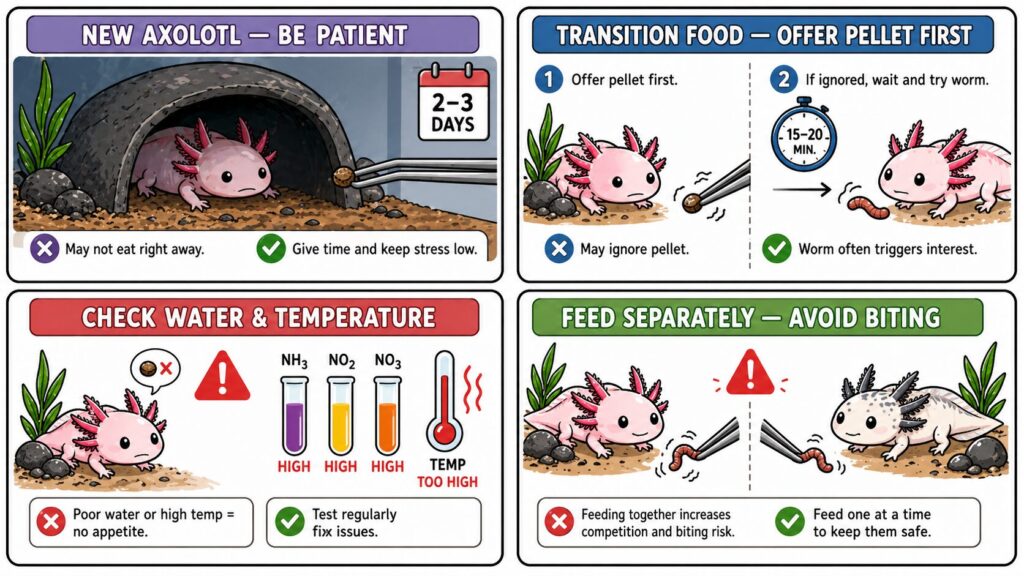
New axolotl refusing food. A newly arrived axolotl may refuse food for several days to a week as it settles into its new environment. This is normal and not a cause for immediate concern. Maintain excellent water quality, keep lighting dim, provide hides for security, and offer food gently every 2–3 days without pressure. Most axolotls begin eating within a week of arrival once they feel secure.
Transitioning from one food to another. If your axolotl is accepting only one food type — common in axolotls raised on bloodworms alone — transitioning to pellets requires patience. Offer the pellet first and only provide the preferred food if the pellet is ignored after 15–20 minutes. Wriggling the pellet with tongs helps. Most axolotls transition within 2–3 weeks.
Axolotl suddenly refusing food in an established tank. This is a warning sign that warrants immediate investigation. Check water parameters with your water test kit and temperature with your thermometer. Elevated ammonia, nitrite, nitrate, or temperature above 68°F (20°C) are the most common causes of appetite loss in established axolotls. Address the underlying issue before assuming a food-related problem. Our guide on what temperature axolotls need is essential reading for temperature troubleshooting.
Keeping axolotls together and feeding. If you house more than one axolotl — having first read our guides on axolotl cannibalism and tank mates — feed each animal separately using tongs to ensure both receive adequate food and do not compete or nip at each other during the feeding response. Feeding competition is one of the most common triggers for biting between co-housed axolotls.
Frequently Asked Questions
Are axolotls carnivores? Yes, completely. Axolotls are obligate carnivores that eat only animal-based prey. They have no interest in or ability to digest plant material. All axolotl food should be animal-protein based.
How much should I feed my axolotl? Juveniles: small portions daily. Sub-adults: every other day. Adults: every 2–3 days. In each case, offer only what the axolotl will consume within 5–10 minutes and remove any uneaten food promptly.
Can I feed my axolotl live food? Yes, but with caution. Live nightcrawlers and live blackworms are safe and nutritionally excellent. Live feeder fish are not — they carry parasites and disease risks and should never be used. If using live food, source it from a reputable supplier that does not treat worms or other invertebrates with pesticides.
Can axolotls get fat from overfeeding? Yes. Overfeeding is a genuine concern, particularly with adults. Signs of obesity include excessive fatty deposits visible around the head and limbs, and a bloated appearance. Reduce feeding frequency and quantity if these signs appear. A lean, well-muscled axolotl is healthier than a fat one.
How do I remove uneaten food from the tank? Use a turkey baster to target and suck up uneaten pellets or worm pieces within 1–2 hours of feeding. For regular tank maintenance, our guides on how to clean an axolotl tank and how often to clean an axolotl tank cover the full routine.
What is the lifespan of an axolotl on a good diet? A well-fed, properly cared-for axolotl can live 10–15 years in captivity — significantly longer than many people realise. Nutrition is one of the most important factors in achieving that lifespan, alongside water quality, temperature management, and appropriate housing.
Feed Well, Live Long
Great axolotl food is the fuel for everything your axolotl does — growing, healing, exploring, and thriving over the years ahead. Pair the right diet with the right environment and your axolotl has every opportunity to reach its full lifespan in excellent health. For trusted, keeper-tested recommendations across every product category your axolotl relies on — from the tank, filter, and substrate to health supplies and beyond — Best Axolotl Products is your complete guide to the best gear in every aspect of axolotl care.