

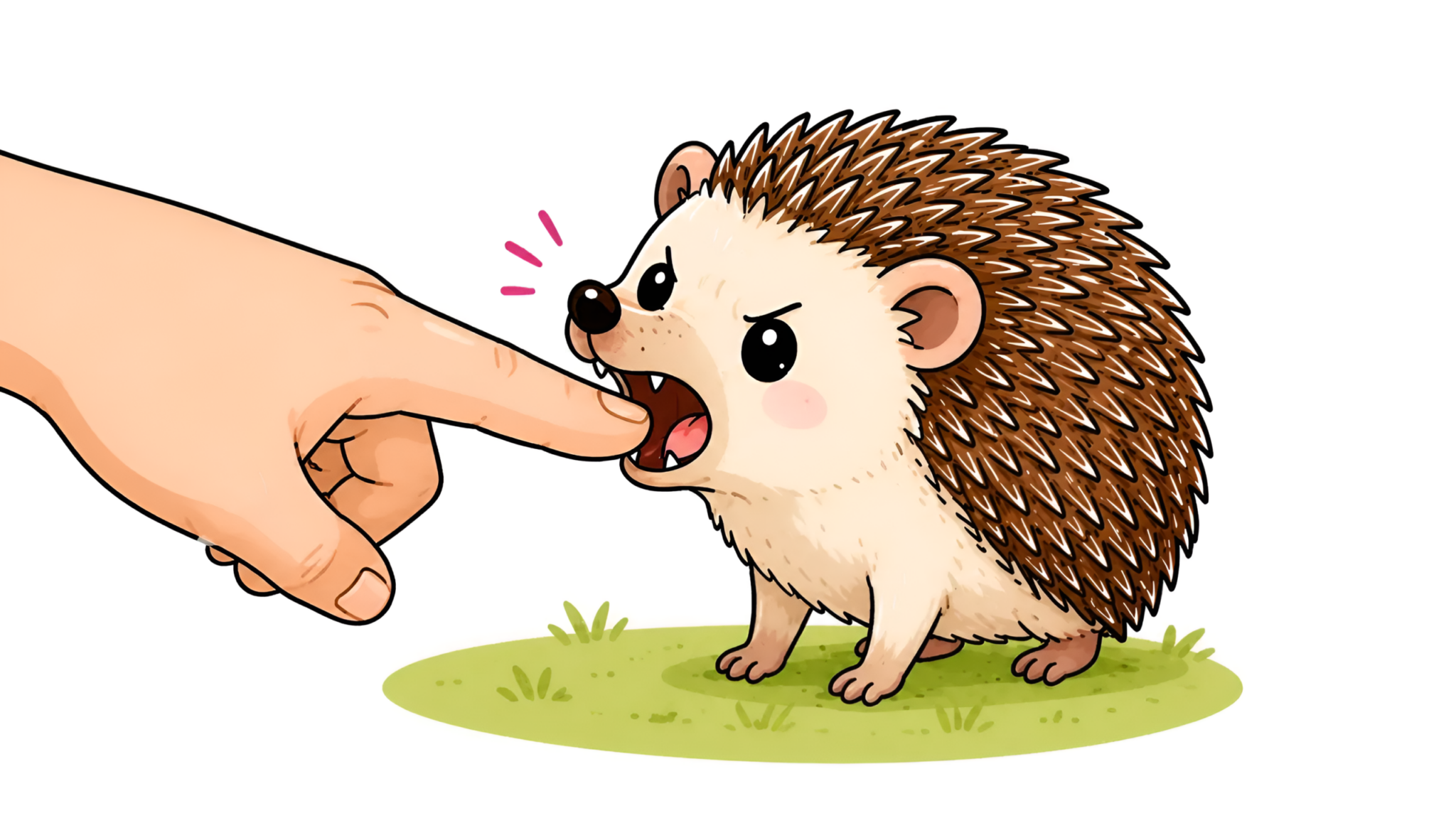
Do hedgehogs bite? Yes, they do — and it is something every prospective owner should understand before bringing one home. Unlike the quills, which new owners expect to be the primary handling challenge, hedgehog biting catches many people off guard. The good news is that hedgehog biting is almost always a communication, not an attack — it is a response to specific triggers that are predictable and manageable once you understand what drives them. This guide covers why hedgehogs bite, how much it hurts, which situations are highest risk, and exactly what you can do to prevent biting and build a better relationship with your hedgehog.
Do Hedgehogs Bite Hard?
The first question most people actually want answered is not why hedgehogs bite but how much it hurts. Hedgehog bites range considerably in intensity depending on the reason for biting and the individual animal’s size and temperament.
A curious exploratory bite — the most common type — is typically gentle and more of a mouthing action than a true bite. It often feels like a firm pinch and is unlikely to break skin. Many owners barely notice this type of bite, particularly through clothing or if the hedgehog is being held in a way that positions its mouth away from bare skin.
A defensive bite from a genuinely frightened or stressed hedgehog is considerably more forceful and can absolutely break skin. Hedgehogs have sharp front teeth designed for crushing insects, and a determined bite can leave a visible puncture or small cut. This is painful, though not in the same league as a bite from a larger animal. Most owners who have experienced a defensive hedgehog bite describe it as sharp but brief — the hedgehog bites and releases, rarely clamping down and holding.
A taste-testing bite — where the hedgehog bites because you smell interesting rather than because it is alarmed — tends to be moderate in intensity and is usually followed by the distinctive behavior known as hedgehog self-anointing, where the animal licks at its own spines after encountering a novel scent. These bites are not aggressive but can still catch owners off guard.
According to the Association of Exotic Mammal Veterinarians, hedgehog bites rarely require medical treatment beyond basic wound care, but standard hygiene precautions — thorough handwashing and basic wound care for any break in the skin — should always be observed after any animal bite.
Why Do Hedgehogs Bite?
Understanding the reasons behind hedgehog biting is the key to preventing it. Hedgehogs bite for several distinct reasons, each with its own trigger and its own solution.
Fear and stress is the most common cause of defensive biting. Hedgehogs are prey animals with a nervous temperament — they rely on their spines as their primary defense and their instinct when genuinely threatened is to curl into a ball, huff, and click in warning. If that warning is ignored and the perceived threat continues — for instance, if a handler keeps pressing on a balled-up, huffing hedgehog rather than giving it time to calm — biting becomes the next escalation. A hedgehog that bites out of fear is not a bad animal; it is a frightened animal that has been pushed beyond its comfort threshold. Our article on whether hedgehogs are good pets covers temperament expectations in more detail and is useful reading before getting a hedgehog.
Scent-triggered curiosity is a very different kind of bite and arguably not biting in the aggressive sense at all. Hedgehogs have an extraordinarily sensitive sense of smell, and they will sometimes bite at fingers, skin, or fabric that smells interesting — particularly if you have recently handled food, animals, or strongly scented products. The bite is exploratory rather than defensive and is usually followed by the self-anointing response. Washing hands before handling your hedgehog removes most food and scent triggers that cause this type of bite.
Pain or discomfort can cause a normally calm hedgehog to bite when it would not otherwise do so. A hedgehog that is being handled in a way that causes physical discomfort — pressure on an injury, handling of a sore spot, or being held in an uncomfortable position — may bite in response. If a previously calm hedgehog suddenly starts biting during handling, checking for signs of illness, injury, or mites is worthwhile, as skin irritation from mites in particular can make hedgehogs more reactive to touch.
Being awakened during the day is another significant trigger. Hedgehogs are nocturnal animals that sleep for the majority of daylight hours. Waking a deeply sleeping hedgehog to handle it — particularly by grabbing it quickly from a dark sleeping spot — triggers a startle response that can include biting. A hedgehog that bites when suddenly woken is reacting normally to an unexpected and unpleasant experience. Letting the hedgehog wake naturally or gently rousing it by talking softly near its enclosure before reaching in dramatically reduces this type of bite.
Insufficient socialization is an underlying factor in many bite-prone hedgehogs. Hedgehogs that were not handled regularly as young animals, or that went through a period without human contact, are more easily startled by handling and more likely to respond defensively. Regular, gentle, consistent interaction from a young age builds the tolerance for human contact that reduces bite risk over a hedgehog’s lifetime.
Which Situations Put You at Highest Bite Risk?
Knowing which situations carry the highest bite risk lets you approach hedgehog handling with appropriate awareness rather than avoidance.
Reaching into the cage while the hedgehog is sleeping is one of the highest-risk moments. The hedgehog is in a deeply calm state and a sudden hand entering its space can trigger an immediate startle and defensive response. Let your hedgehog wake on its own timeline and then offer your hand at the edge of the enclosure before picking it up.
Handling immediately after feeding is another risk window. A hedgehog that has recently eaten may still be in a food-focused state and may bite at fingers that smell of food. Washing hands thoroughly before and after handling eliminates most food-scent triggers.
Handling during the quilling process is particularly likely to produce bites. Quilling is the process by which juvenile hedgehogs lose their baby spines and grow adult spines, typically occurring around 6–8 weeks of age and again around 4–6 months. During quilling, hedgehogs experience genuine skin discomfort, are more irritable than usual, and are significantly more bite-prone. Minimizing handling during active quilling periods and approaching carefully when it is necessary reduces bite risk and respects the animal’s discomfort. Our article on hedgehog quills explains the quilling process and what to expect.
New environments or changes in routine can temporarily increase a previously calm hedgehog’s bite tendency. Hedgehogs are creatures of habit, and significant changes — a new cage, a new home, a change in the scent of familiar people — can temporarily elevate stress and reactivity. Give hedgehogs time to adjust to new situations before pushing handling sessions.
How to Stop a Hedgehog From Biting
Preventing hedgehog biting is primarily about reading your hedgehog’s communication accurately and responding appropriately, combined with consistent socialization that builds trust over time.
Respond to warning signals before they escalate to biting. Hedgehogs give clear warning before they bite — they ball up, raise their spines, huff and click repeatedly, and may emit a high-pitched squeak. These are all signals that the hedgehog is uncomfortable and needs space. If you ignore these signals and continue pressing the interaction, biting is the logical next step. When you see warning signals, put the hedgehog down calmly, give it a few minutes, and try again later rather than forcing the interaction.
Build socialization gradually and consistently. Spending regular time with your hedgehog — even just sitting near its enclosure and talking softly, or letting it walk across a blanket on your lap without trying to pick it up — builds familiarity and reduces the startle response over time. Hedgehogs that are handled for short, positive sessions multiple times per week become significantly calmer and less bite-prone than those handled irregularly or only when necessary. The Hedgehog Welfare Society recommends daily handling sessions of 20–30 minutes for socialization, particularly with younger or less confident animals.
Use a fleece blanket or small towel when first picking up a bite-prone hedgehog. The barrier between your skin and the hedgehog’s mouth reduces bite impact if it does occur, and the hedgehog’s scent familiarity with the fleece can make the approach feel less threatening. Once the hedgehog is settled and uncurled on the fleece, you can make more direct contact.
Avoid wearing strongly scented products when handling your hedgehog. Perfume, heavily scented lotion, and strong food smells on hands are all common triggers for curiosity biting. Wash hands with unscented soap before handling as a consistent habit.
Keep handling sessions to appropriate lengths for the hedgehog’s comfort level. A hedgehog that is clearly becoming agitated — frequent huffing, attempting to ball up, pushing against your hands — is telling you the session has gone on long enough. Ending the session before the hedgehog reaches the biting threshold means the interaction ends on a neutral rather than negative note, which is better for trust building.
Do Some Hedgehog Color Varieties Bite More Than Others?
Within the African pygmy hedgehog — the most common pet hedgehog — there is no consistent evidence that specific color varieties are reliably more or less bite-prone. Temperament varies far more between individual animals and breeding lines than between color varieties. Our full guide on hedgehog breeds covers the variety of color types available and clarifies what “breed” actually means in hedgehog terms.
What does influence bite tendency significantly is lineage and early socialization. Hedgehogs from breeders who handle hoglets daily from birth, select breeding pairs for calm temperament, and prioritize human habituation tend to produce animals that are considerably easier to work with than hedgehogs from breeders who prioritize color over temperament or who do minimal early socialization.
When purchasing a hedgehog, asking to handle the animal before buying — and observing how quickly it unrolls, whether it bites readily, and how it responds to calm handling — gives you meaningful information about its individual temperament.
What to Do If a Hedgehog Bites You
If a hedgehog bites you, the most important immediate response is to not flinch or pull away sharply. A sharp withdrawal can cause the hedgehog to clamp harder in surprise, and a sudden jerking movement can frighten it further. Stay calm, allow the hedgehog to release on its own, and then calmly place it back in its enclosure.
After the bite, wash the area thoroughly with soap and water. Hedgehogs can carry Salmonella and other bacteria, as the Centers for Disease Control and Prevention notes in its guidance on exotic pet hygiene — thorough handwashing after any hedgehog contact is a good habit regardless of whether a bite occurred. If the skin was broken, clean the wound, apply an antiseptic, and monitor for signs of infection.
Do not punish the hedgehog. Hedgehog biting is a communication, not a decision made with malice, and any form of punishment increases fear and makes future biting more likely rather than less. The appropriate response is to understand what triggered the bite, adjust your approach to avoid that trigger, and continue gradual socialization.
Are Hedgehog Bites Dangerous?
For most healthy adults, hedgehog bites are not medically dangerous. They are painful in proportion to the force of the bite, and a defensive bite can break skin and require basic wound care, but they do not carry the same bite force or depth as bites from larger animals.
The primary health concern from hedgehog bites is bacterial infection from skin puncture. Hedgehogs can carry Salmonella, and their mouths harbor the same range of opportunistic bacteria as most small mammals. Standard wound care — thorough cleaning, antiseptic application, and monitoring for redness, swelling, or unusual warmth around the wound — is appropriate for any bite that breaks the skin.
People with compromised immune systems, young children, and pregnant women should be more cautious around hedgehog bites and should seek medical advice promptly if bitten. The CDC recommends that people in these groups discuss exotic pet ownership with their healthcare provider as a general precaution.
Frequently Asked Questions
Do hedgehogs bite their owners? Yes, even well-socialized hedgehogs occasionally bite their owners, most often in response to scent confusion or being startled. Regularly handled, comfortable hedgehogs bite far less frequently than poorly socialized ones.
Why does my hedgehog bite me and then lick itself? This is the self-anointing behavior — your hedgehog found your scent interesting, bit to collect saliva on the novel substance, and is now anointing its spines with it. It is a normal and fascinating hedgehog behavior with no clear single explanation, covered in more detail in our article on hedgehog self-anointing.
At what age do hedgehogs bite the most? Young hedgehogs going through the quilling process — typically at 6–8 weeks and again at 4–6 months — are often at peak bite tendency due to skin discomfort. Newly acquired hedgehogs of any age may also bite more as they adjust to their new environment.
Can a hedgehog be trained not to bite? Not in the traditional sense of training — hedgehogs cannot be taught commands the way dogs can. However, consistent gentle handling, reading and responding to warning signals, and building familiarity over time produces hedgehogs that bite significantly less frequently. The approach is desensitization and trust-building rather than training per se.
Does a biting hedgehog mean it is unhealthy? Not necessarily. Bite tendency is primarily about socialization and stress rather than health. However, a sudden increase in biting from a previously calm hedgehog — particularly if accompanied by other behavioral changes — can indicate pain, illness, or skin discomfort from mites, and is worth investigating with an exotic vet.
Final Thoughts on Whether Hedgehogs Bite
Do hedgehogs bite? Yes — but a bite from a hedgehog tells you something useful about its emotional state, and an owner who listens to that communication has the tools to reduce biting over time through patient, consistent socialization. Hedgehogs that are handled regularly, treated calmly, and approached with respect for their warning signals become far less bite-prone as they learn that human contact is safe and unthreatening.
A hedgehog that trusts you is a hedgehog that thrives — and giving it every advantage starts with the right care setup. Find everything from cage essentials and bedding to food, grooming tools, and health supplies at the Herdurbia Best Hedgehog Products hub, where small pet care is taken seriously.