
Origin And Natural Habitat
Argentina and southern Uruguay are the documented native range of Acanthoscurria cordubensis, with the species name referencing its strong association with the Córdoba province of central Argentina. Across this range it occupies two distinct habitat types that together define its ecological profile. In the mountainous and semi-arid regions of Córdoba specifically, it inhabits terrain with low vegetation, rocks, and shrubland where it shelters beneath rocks and in available burrow sites. In Uruguay and the broader pampas grasslands stretching across southern South America, it becomes one of the most abundant tarantulas in the dominant ecosystem, burrowing into meadow soil in a more open, pastoral environment. Published ecological research on what was then called A. suina documented this species as one of the characteristic “road tarantulas” of Uruguay, observed frequently crossing roads during mating season alongside its co-occurring neighbour Eupalaestrus weijenberghi.
This combination of habitats — semi-arid rocky Argentine uplands and humid Uruguayan pampas grasslands — produces a species with broader environmental tolerance than many tarantulas, comfortable across a meaningful range of conditions rather than rigidly adapted to a single narrow microclimate. The spider is nocturnal, excavating tubular burrows in meadow soil and remaining hidden during daylight hours, emerging at night to hunt and patrol near the burrow entrance.
Scientific Classification
Described by Tord Thorell in 1894, Acanthoscurria cordubensis spent considerable time in the literature under the synonym Acanthoscurria suina before the current name was confirmed as valid. The genus Acanthoscurria was established by Anton Ausserer in 1871, with A. geniculata as the type species, and contains nineteen species distributed across South America and the West Indies. A. cordubensis is one of the more southerly-distributed members of the genus, extending into Uruguayan pampas well beyond the tropical range of most of its relatives. Full classification: Kingdom Animalia, Phylum Arthropoda, Class Arachnida, Order Araneae, Infraorder Mygalomorphae, Family Theraphosidae, Subfamily Theraphosinae, Genus Acanthoscurria, Species A. cordubensis Thorell, 1894.
Species Overview
Among the large South American terrestrial tarantulas available in the hobby, A. cordubensis occupies an interesting niche as a genuinely hardy, broadly adaptable species that requires less specific environmental management than many of its genus relatives. It is less commonly encountered than the Brazilian White Knee or the Bolivian Red Rump, but it shares the genus’s characteristic appetite and active, visible behaviour while offering a different aesthetic — earthy and unpretentious where the striking banding of A. geniculata or the vivid abdomen of A. chacoana announce themselves immediately. Its keeper reputation is as a tough, no-nonsense display animal with a strong feeding response and strong webbing tendencies. Beginner to intermediate is the honest experience recommendation, with the urticating hair propensity and adult size the primary factors that push it past absolute beginner territory.
Appearance And Size
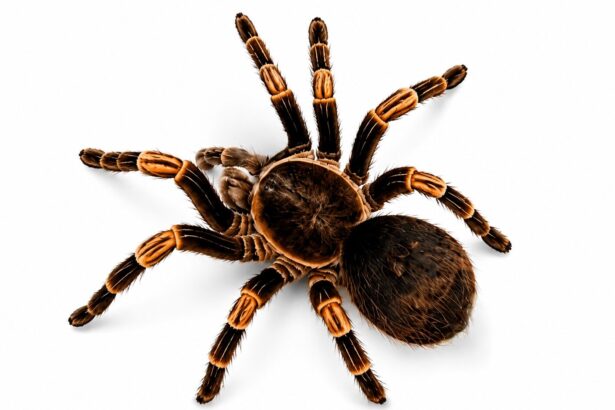
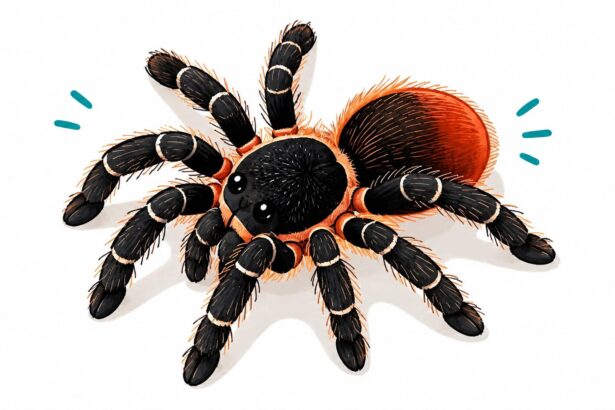
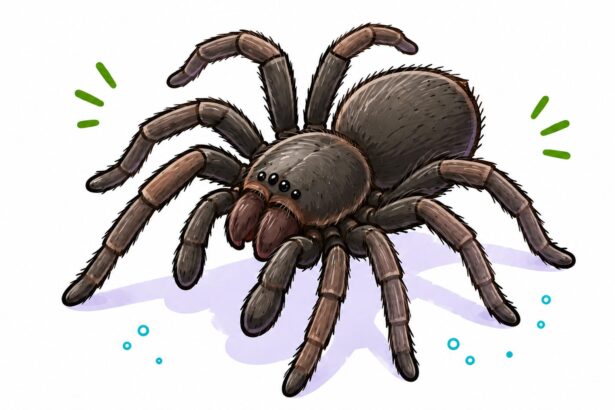
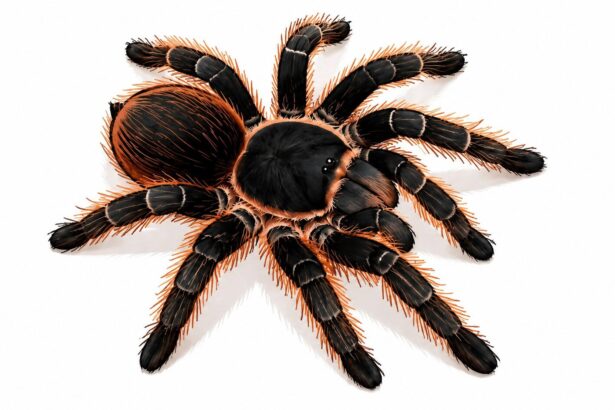
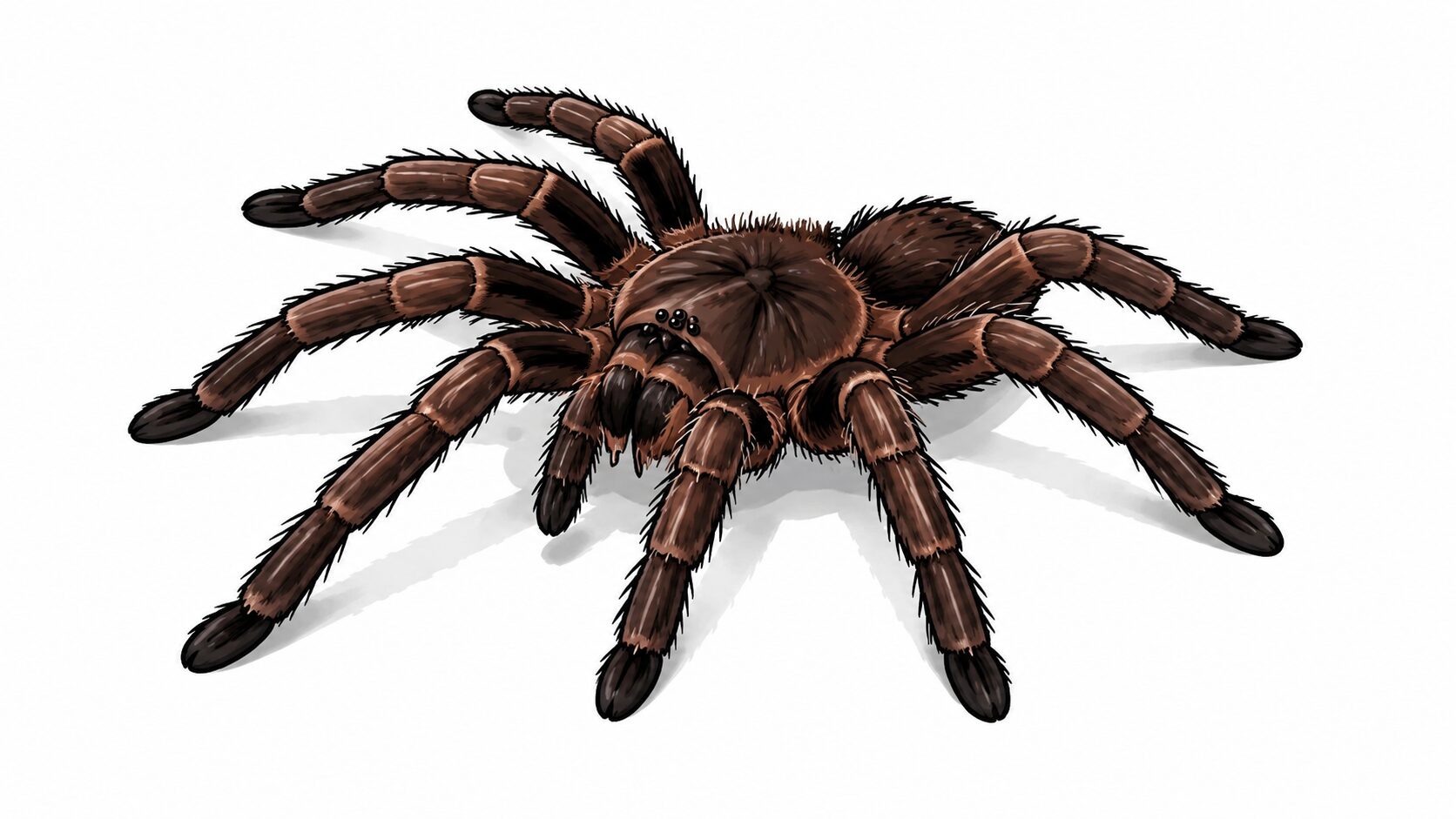
The common name tells the story honestly. This is a medium brown to reddish-brown spider, large-bodied and heavily set, covered in the dense setae characteristic of the Acanthoscurria genus but without the high-contrast banding or vivid colour patches of more visually flamboyant relatives. The brown colouration has a warm, rusty quality rather than a cool grey-brown, and the setae contribute a slightly shaggy, textured appearance to the legs and abdomen that gives the spider more character at close range than photographs typically convey. It is a spider that rewards looking at carefully rather than at a distance. The abdomen carries somewhat denser, warmer-toned setae that enhance the rusty quality of the colouration overall.
Adult females reach a diagonal legspan of approximately 7 to 7.5 inches, with some sources noting 7.5 inches as a reported maximum based on limited sample sizes. Males mature smaller and die within approximately 4 years of sexual maturity, while females are documented to live up to 20 years in captivity. Growth rate is generally described as medium to fast for a large terrestrial species.
Housing
A wide, floor-focused enclosure is the priority for this large terrestrial species. A footprint of at least 30 by 30 centimetres for adults, with a secure lid and front-opening access, provides the appropriate configuration. Height above the substrate surface should be kept modest — twice the spider’s legspan maximum — to reduce fall risk for a heavy-built adult. The lid requires a proper latch; like other large Acanthoscurria species, A. cordubensis is strong enough to push an unsecured lid. The species is noted for active webbing behaviour, often webbing up corners of the enclosure or around the hide, which adds to its visible presence but also means enclosure maintenance needs to be planned around the silk architecture it constructs. Our best tarantula enclosure guide covers terrestrial formats with appropriate floor space, substrate depth, and security for large active South American species.
Enclosure’s Decorations
Cork bark at substrate level provides a retreat anchor and the starting point for the webbing this species typically builds around its hide. A water dish at the opposite end of the enclosure from the cork bark gives clear access to hydration. This species is described as a willing modifier of its environment — it will web up corners, shift substrate, and combine surface and shallow-burrow living depending on individual preference and setup — so providing both the option of a cork bark surface retreat and adequate substrate depth for excavation gives the spider the full range of natural behaviours to express. Our best tarantula hide and best tarantula cork bark guides cover appropriate pieces for large terrestrial setups.
Substrate
Four to six inches minimum for adults, using a moisture-retaining blend that holds moderate dampness throughout without becoming waterlogged. Coconut coir and peat moss in equal parts is reliable, with optional topsoil or vermiculite additions for structural variation. The documented habitat range — from semi-arid Argentine uplands to humid Uruguayan grasslands — suggests this species tolerates a broader moisture spectrum than more tropical relatives, but the Wikipedia entry noting it “thrives in high humidity environments” should be taken seriously. A substrate gradient from lightly damp in the lower portion to drier at the surface, combined with a consistent water dish, maintains appropriate conditions without creating the stagnant wet substrate that invites mould. Our best tarantula substrate guide covers moisture-retaining blends appropriate for large terrestrial South American species.
Water And Humidity
A shallow water dish at all times, refreshed every two to three days. Ambient humidity of 65 to 75 percent is the appropriate target, achieved through the substrate moisture gradient and the evaporation from the water dish rather than through heavy regular misting. The pampas and Córdoba habitats both experience meaningful seasonal variation, which means this species is more tolerant of humidity fluctuation than some strictly tropical tarantulas, but consistently dry conditions below 60 percent should be avoided. A hygrometer inside the enclosure confirms actual conditions, and a fine-mist misting bottle provides a targeted top-up when needed without saturating the substrate.
Heating And Temperature
The range from Córdoba’s upland semi-arid regions to Uruguay’s grassland pampas spans genuine environmental variation, but the lowland grassland portions where this species is most abundant experience warm summers and moderately cool winters. A captive range of 70 to 82°F covers this species comfortably. Most keepers in temperate climates maintain A. cordubensis at room temperature without supplemental heat for most of the year, adding a side-mounted heat mat controlled by a thermostat only when ambient temperatures drop consistently below 65°F. A thermometer at substrate level provides accurate data on actual conditions within the enclosure.
Diet And Nutrition
Consistent with the genus reputation, this species is an enthusiastic and committed feeder. Adults take crickets, dubia roaches, and other appropriately sized invertebrates every seven to fourteen days without hesitation under good conditions. Juveniles can be fed every five to seven days. Prey should be sized to the spider’s abdomen or slightly smaller. Remove uneaten prey within 24 hours. The species is noted for rarely refusing meals outside of pre-moult periods, making it a rewarding animal to observe at feeding time and a reliable species for demonstrating tarantula predatory behaviour. Our best tarantula food guide covers feeder insect options and gut loading relevant to a large, active terrestrial species with this kind of consistent appetite.
Compatibility
Solitary only. For breeding, introductions require a well-fed female, supervision throughout, and prompt separation of the male after mating is confirmed. Pre-moult timing affects female receptivity — females in pre-moult are generally unreceptive and may attack males, so mating introductions should be timed to well-fed, recently moulted females where possible.
Behavior And Temperament
Not aggressive in the charge-and-bite sense, but a consistent urticating hair kicker at even moderate disturbance. This is the primary behavioural fact a keeper needs to understand before acquiring this species — enclosure maintenance requires working around or accepting hair exposure, and eye protection during any significant enclosure intervention is genuinely advisable. Beyond the hair-kicking, A. cordubensis is described as having a grounded, observable temperament that becomes progressively bolder and more visible as the spider grows. Juveniles may use hides frequently; adults tend to spend more time in the open or near the burrow entrance, making them reasonably good display animals for their size. The webbing behaviour — corners and hides covered in dense silk — adds visual complexity to the enclosure over time and gives the keeper evidence of active spider engagement with the space.
Handling
Possible with some care but not particularly recommended given the liberal urticating hair deployment and adult size. The species is not a biter by inclination, and venom is considered medically insignificant to healthy humans. Keepers who handle do so at floor level with deliberate movements and appropriate eye protection awareness. Many find the feeding response and enclosure webbing rewarding enough that handling is simply unnecessary.
Health And Lifespan
Females live up to 20 years in captivity. Males survive approximately 4 years after sexual maturity. The species is considered hardy and broadly adaptable, tolerating the normal range of keeper variation without the fragility of more specialist tropical species. The primary health concerns are the standard combination of mould from excess moisture with poor ventilation and dehydration from chronically dry conditions — both managed by the substrate moisture gradient and consistent water dish described above. Our tarantula dehydration article covers identification and recovery for dehydration-related concerns.
Price
Relatively accessible when available, though less commonly stocked than genus companions like A. geniculata. Slings typically sell for $20 to $45 USD from captive breeders. Juveniles range from $40 to $70. Confirmed adult females command $70 to $130 depending on size and source. The species is more commonly encountered in European and South African markets than in the United States, where availability can be intermittent. Source captive-bred specimens only. Everything needed to set this species up correctly from day one is covered on our best tarantula products page.