
Origin And History
The Black Norwegian Elkhound is the less celebrated sibling of the grey Norwegian Elkhound, a compact, agile, jet-black spitz hunting dog from the border regions between Norway and Sweden that has existed as its own distinct type since the mid-19th century and that was nearly lost to extinction when the grey variety absorbed all the institutional recognition and popular attention in the late 1800s and early 1900s. It is now recognized by the FCI as a separate breed and is growing in popularity within its Scandinavian homeland, but it remains genuinely rare outside Norway and almost unknown in the rest of the world.
The Norwegian Elkhound as a type is one of the ancient breeds of Europe, with fossil records suggesting Elkhound-type dogs may have been present in Scandinavia as far back as 4,000 to 5,000 BC. These ancient spitz dogs were hunting companions, guardians, and herders for the prehistoric people of Scandinavia, and they later sailed with the Vikings and were interred alongside their owners in Viking burial sites, a measure of the profound cultural significance these dogs held in Nordic life.
The origin of the specifically black variety within this ancient spitz tradition is more recent and more precisely locatable geographically. In the early to mid-1800s, solid black dogs began emerging with increasing consistency from the general Elkhound population in the border areas between Norway and Sweden. These black dogs were sometimes back-crossed with the traditional grey Norwegian Elkhounds, but breeders who preferred the black variety maintained their lines with different priorities, producing a dog that diverged meaningfully from the grey in both appearance and working style. The breed was mentioned in literature by the Welshman Llewelyn Lloyd, who hunted bear near the border areas between Norway and Sweden in 1828, providing some of the earliest documentation of the black type as a distinct working variety.
The critical divergence in the two varieties’ institutional histories came in 1901, when the first Norwegian Elkhound breed standard was drawn up and specified only grey dogs. The black dogs were excluded from the show ring. This exclusion had devastating consequences for the black variety. While the grey Norwegian Elkhound gained international recognition, including AKC recognition in 1913, the black dogs fell progressively out of favor as the grey variety’s popularity rose. By the mid-20th century, the Black Norwegian Elkhound was close to extinction.
The revival began in the mid-1950s, when several dedicated Norwegian breeders recognized what was being lost and began systematic preservation efforts. These efforts established a stable breeding population in Norway, and the breed has grown slowly but steadily since. The FCI recognizes the Black Norwegian Elkhound as a separate breed under FCI Standard 268. The breed is not recognized by the AKC or UKC, though smaller national breed clubs have provided recognition in several countries.
One working characteristic that significantly distinguishes the Black Norwegian Elkhound from its grey relative is its hunting style. Where the grey Norwegian Elkhound hunts by finding moose, barking to hold them at bay, and alerting the hunter with its voice, the Black Norwegian Elkhound was developed specifically for on-leash hunting. It is smaller and more agile, has a keener sense of smell, and notably does not bark during the hunt, tracking silently on leash and alerting the hunter through its body language and movement rather than its voice.
Breed Overview
| Trait | Details |
|---|---|
| Breed Group | Spitz / Nordic Hunting Dogs (FCI Group 5, Section 2) |
| Height | Males 46–51 cm (18–20 inches) / Females 44–49 cm (17–19 inches) |
| Weight | 16–20 kg (35–44 pounds) |
| Lifespan | 12–15 years |
| Coat | Dense, short double coat |
| Colors | Jet black; small amounts of white on chest and feet acceptable |
| Temperament | Energetic, intelligent, loyal, alert, bold |
| FCI Recognition | Yes (Standard 268) |
| AKC Recognition | Not recognized |
Appearance And Size
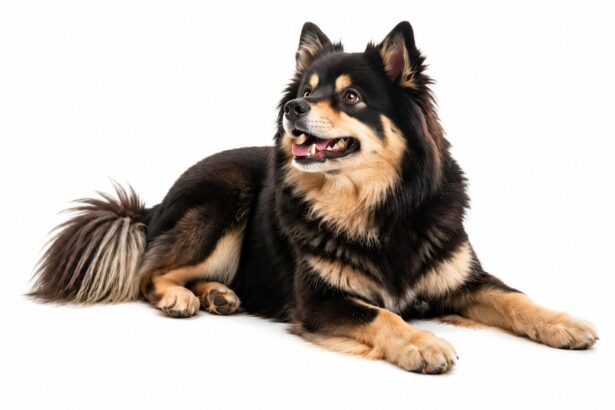
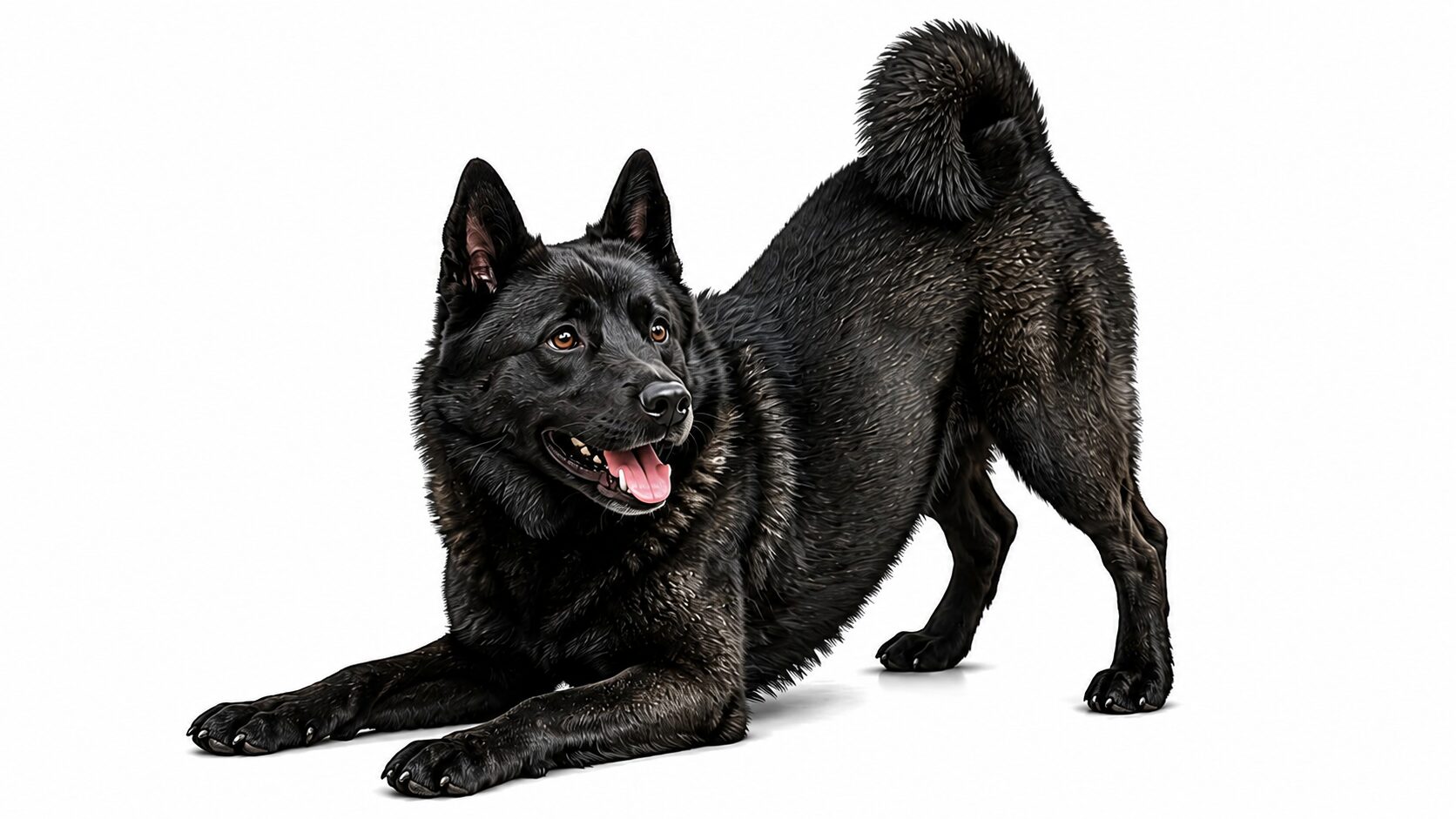
The Black Norwegian Elkhound is a compact, sturdy, and well-muscled spitz-type dog that is noticeably smaller and more agile than the grey Norwegian Elkhound, a difference that directly reflects the different working roles for which the two varieties were developed. Males typically stand 46 to 51 centimeters at the shoulder and weigh between 16 and 20 kilograms. Females stand 44 to 49 centimeters and are somewhat lighter. The overall impression is of a clean-lined, athletic, well-balanced dog carrying its body with the upright, alert bearing characteristic of the spitz group.
The head is wedge-shaped, with a broad skull and a moderately tapered muzzle. The eyes are dark, oval, and carry the bright, alert expression that reflects the breed’s perpetual environmental awareness. The ears are erect, triangular, and mobile, constantly swiveling toward sounds with the attentive responsiveness of a breed that has always been expected to notice and react to its surroundings.
The body is compact and square in profile, with a broad, deep chest, a level topline, and well-muscled hindquarters built for the speed and agility that moose hunting in varied Norwegian terrain demands. The tail is set high and carried curled over the back in the classic spitz fashion. The feet are compact and well-arched.
The coat is the breed’s most immediately distinguishing feature from its grey sibling: a dense, short double coat that is jet black throughout, with the longer, wispy outer coat lying over a soft black undercoat. The overall texture is described as dense and stiff but smooth on the head and front of the legs, with more pronounced furnishings on the chest, neck, thighs, back of the front legs, and underside of the tail. A small amount of white on the chest and feet is acceptable under the breed standard, though solid black is the preferred and most commonly seen expression.
Housing And Living Requirements
The Black Norwegian Elkhound’s housing requirements reflect its heritage as a compact, agile working hunting dog developed for the forests and mountains of Scandinavia. It is a breed that needs meaningful outdoor access, consistent daily exercise, and the kind of active engagement that its hunting heritage shaped it for.
A home with a securely fenced garden of meaningful size is the baseline appropriate setting. Rural and semi-rural environments that provide outdoor space and varied terrain are most naturally suited to this breed, and suburban settings with active owners and daily outdoor activity are manageable. Urban apartment life is a genuinely poor match for a breed this energetic and this keen on its outdoor environment.
The fence matters with this breed. The Black Norwegian Elkhound has the alert, curious, independent character of a spitz hunting dog, and a fence that is not genuinely secure will be assessed and potentially overcome by a breed this capable and this motivated. The hunting drive that makes it such an effective tracker can redirect toward anything interesting in the environment beyond the perimeter.
Inside the home, a well-exercised Black Norwegian Elkhound is a warm, affectionate, and engaged companion. The breed is known for forming close bonds with its family and for the cheerful, attentive presence it brings to household life. A comfortable dog bed in a social position suits the breed’s people-oriented, watchful nature during rest periods.
The breed’s dense black double coat provides genuine cold weather insulation appropriate for the Scandinavian mountain environment it was developed in. In hot and humid climates, appropriate management of outdoor activity during the warmest parts of the day is important, as the insulating coat that keeps these dogs comfortable in Norwegian winters can cause heat stress in tropical or subtropical conditions.
Exercise Requirements
The Black Norwegian Elkhound is an active, energetic hunting breed with genuine daily exercise needs that reflect its working heritage as a swift, agile moose dog. At least one to two hours of vigorous daily exercise is appropriate for an adult, combining structured activity with opportunities for the dog to move freely and engage its keen sense of smell.
The breed’s hunting style, tracking on leash rather than ranging freely and baying like the grey variety, makes it an unusually natural candidate for structured scent work activities. Scent work and tracking directly engage the Black Norwegian Elkhound’s exceptional nose and its methodical, focused tracking intelligence, providing the combination of physical and cognitive engagement that keeps this breed genuinely content. Hiking across varied terrain is among the most naturally satisfying exercises for a breed developed in the Norwegian mountains.
Dog agility suits the breed’s athleticism and handler-focused responsiveness, and a set of dog agility equipment at home provides a structured and purposeful physical outlet for a breed that thrives on having something specific to do.
Puzzle toys and enrichment activities are genuinely important between physical exercise sessions. A GPS tracker is a practical safety investment for outdoor exercise management in any open or unfenced area.
Grooming Requirements
The Black Norwegian Elkhound’s dense, short double coat requires consistent but manageable grooming. Brushing two to three times a week under normal conditions removes loose hair, prevents the minor matting that can develop in the denser furnishing areas, and keeps the coat in healthy condition. During the seasonal shedding periods in spring and fall, when the undercoat releases in significant volume, more frequent brushing is necessary to stay ahead of the output. The breed sheds moderately throughout the year with heavier seasonal coat blows.
The Norwegian breeding recommendations suggest brushing the coat two or three times a week, which is consistent with what the coat type requires to remain clean and tangle-free. The black coat in particular shows dander and light-colored debris readily, and regular brushing keeps the coat’s characteristic gloss and clean appearance.
Bathing every six to eight weeks is appropriate under normal conditions. The dense double coat takes time to dry thoroughly, and complete drying is important to prevent skin issues from developing under the coat.
Ears should be checked and cleaned weekly. The erect ear carriage of the Black Norwegian Elkhound reduces the ear infection risk associated with pendant-eared breeds, but regular inspection and cleaning prevents minor debris accumulation from becoming established problems. Dental care should be established as a consistent routine from puppyhood. Nails should be trimmed monthly.
Diet And Nutrition
The Black Norwegian Elkhound is a medium-sized, active hunting breed with daily caloric needs that should be matched to its actual size and activity level. A high-quality medium breed formula with a named protein source as the first ingredient provides the nutritional foundation the breed requires. The breed’s athletic build and genuine working energy are best maintained by a diet with appropriate protein and fat ratios.
Most adults do well on two measured meals per day. Portion control is genuinely important throughout the dog’s life. Norwegian Elkhounds of both varieties have a documented tendency toward obesity when food quantities are not matched to actual activity levels, and extra weight in a breed with documented predispositions to hip dysplasia creates compounding joint problems.
The breed’s Fanconi syndrome predisposition is worth discussing with a veterinarian in terms of dietary implications. Fanconi syndrome affects kidney tubule function and creates abnormal nutrient losses in the urine, which can have dietary management implications that a veterinarian knowledgeable about the condition can advise on appropriately.
Training treats are effective motivators given the breed’s food motivation and should be counted into the daily calorie total. Discussing joint supplements with your vet as the dog reaches middle age is worthwhile given the breed’s joint predispositions.
Compatibility
The Black Norwegian Elkhound is a warmly family-devoted breed that combines the bold, independent character of a Nordic hunting dog with a genuine affection for and loyalty to the people it lives with.
With its own family, the breed is affectionate, engaged, and demonstrably loyal. The close bond that hunting dogs develop with the people they work alongside is genuine and consistent in this breed, and the Black Norwegian Elkhound expresses its family loyalty through the watchful, attentive presence of a dog that regards the household as its pack and its responsibility.
With children, the breed is generally good-natured and playful when socialized from puppyhood. Its moderate size and genuine playfulness make it a reasonable companion for children who know how to interact with dogs appropriately, and its patient, good-tempered character is one of the breed’s most consistent domestic qualities.
With strangers, the breed maintains the alert, watchful reserve of a Nordic hunting and guardian dog. It notices everything and takes its watchdog role seriously, which makes it an effective property alarm dog and a breed that takes time to warm to unfamiliar people. Early and consistent socialization from puppyhood is the most effective tool for ensuring this natural alertness is expressed as confident, appropriate discernment rather than reactive wariness.
With other dogs, the breed is generally sociable when well-socialized from early in life, though same-sex tensions occasionally arise as they do in many spitz breeds. With small animals, the hunting prey drive should be acknowledged and managed rather than assumed absent.
A dog crate is useful during puppyhood and the settling-in period.
Behavior And Temperament
The Black Norwegian Elkhound’s temperament combines qualities from both the spitz and the hunting hound traditions in a particularly interesting way. It has the alert, independent, confident self-possession of the spitz group alongside the methodical, nose-driven working focus of a hunting dog bred specifically to track large game in challenging terrain.
The alertness is one of the most consistently expressed behavioral characteristics. The Black Norwegian Elkhound misses very little in its environment, responds to stimuli with the quick attentiveness of a breed always on watch, and takes its guardian responsibilities with the seriousness of a dog that has historically been trusted with the security of the hunting camp and homestead alongside its hunting duties.
The notable behavioral distinction from the grey Norwegian Elkhound is the hunting voice. Where the grey variety was developed to bay continuously when it has located moose, alerting the hunter by sound, the Black Norwegian Elkhound was developed for silent on-leash tracking. This makes it considerably less vocal than its grey sibling in the hunting context, and potentially less prone to the nuisance barking that can accompany the grey variety’s guardian alerting. However, it is still a Nordic spitz breed with the characteristic alertness and vocal responsiveness to perceived threats that the group generally expresses.
The independence is real and shapes the training relationship in ways worth understanding clearly. A breed developed to make its own tracking decisions without constant handler direction will apply that same independent judgment to the domestic context, which means training requires genuine engagement and consistency rather than passive expectation of automatic compliance.
Training And Handling
The Black Norwegian Elkhound is an intelligent breed that takes well to training when approached with the consistency, patience, and positive engagement that suit its independent Nordic character. It learns new behaviors readily when training is purposeful and rewarding, and the genuine desire to work with its handler that hunting partnership produces makes it more cooperative than some more purely independent spitz types.
Positive reinforcement methods are the approach that works most reliably. The Black Norwegian Elkhound responds to reward, to genuine engagement, and to training that acknowledges its intelligence rather than simply demanding compliance. Its food motivation makes treat-based training highly productive, and training treats used purposefully in sessions produce quick, reliable results. The independent streak that all spitz hunting breeds share means that repetitive, boring training drills lead to declining engagement, while varied, purposeful sessions maintain enthusiasm.
Early socialization from puppyhood is important and should be maintained consistently throughout the dog’s life. The breed’s natural alertness with strangers and its spitz independence make the quality of early socialization one of the most significant factors in its adult suitability as a companion in varied social environments.
The breed’s development for on-leash tracking work makes it a natural candidate for structured working sports including tracking trials and mantrailing, where its methodical nose-work can be expressed in purposeful, organized contexts that provide both physical activity and deep cognitive engagement.
Health And Lifespan
The Black Norwegian Elkhound is a generally robust breed with a lifespan of 12 to 15 years. Its development through practical hunting selection over many generations, with strict Norwegian breeding requirements that include mandatory health testing, has produced a constitution that is generally sound. The Norwegian breeding committee currently only approves matings where one of the dogs is known to be free of hereditary glaucoma, and there is a requirement for known hip dysplasia status for all dogs used in breeding, which provides meaningful health management infrastructure for the breed.
Hip Dysplasia Abnormal hip joint development causing pain, restricted movement, and progressive arthritis is the most consistently documented hereditary health concern in the breed. Statistics from Norwegian breeding records show that 83.2% of Black Norwegian Elkhounds are free from hip dysplasia, which is a positive result but also confirms that approximately one in six individuals is affected. Sourcing puppies from breeders who conduct OFA hip screening or equivalent Norwegian documentation on their breeding animals is the most important preventive step available. Maintaining appropriate weight throughout the dog’s life and discussing joint supplements with your vet as the dog reaches middle age are meaningful protective measures.
Hereditary Glaucoma Elevated pressure within the eye causing pain and progressive vision loss is a documented hereditary condition in the breed, and the Norwegian breeding committee’s requirement that at least one parent be known free of hereditary glaucoma reflects the seriousness with which Norwegian breeders approach this condition. Regular annual veterinary eye examinations allow for early detection and appropriate management. Sourcing from breeders who test for this condition is the most meaningful preventive step.
Progressive Retinal Atrophy Gradual degeneration of retinal photoreceptors causing progressive vision loss is documented in the broader Norwegian Elkhound breed complex and should be monitored in the black variety through regular veterinary eye examinations. DNA testing for PRA mutations is available for related breeds, and responsible breeders in Norway conduct appropriate eye certification.
Fanconi Syndrome This renal tubular disorder, in which the kidney tubules fail to properly reabsorb nutrients, causing abnormal losses of glucose, amino acids, and electrolytes in the urine, is documented in the Norwegian Elkhound breed complex. Regular urinalysis as part of annual preventive care allows for early detection, and dietary management in consultation with a veterinarian provides meaningful support for affected dogs.
Hypothyroidism Decreased thyroid hormone production causing weight gain, lethargy, and coat changes is documented in the breed. Annual blood work beginning in middle age allows for early detection and management with lifelong hormone replacement therapy.
Sebaceous Cysts Skin cysts arising from blocked skin pores are documented in the breed. They are generally benign and not life-threatening, but should be monitored and evaluated by a veterinarian if they change in size or character.
Routine preventive care, including regular vet check-ups, consistent dental hygiene, up-to-date vaccinations, and parasite prevention appropriate for an active outdoor breed, provides the foundation for a healthy Black Norwegian Elkhound across its full lifespan.
Price And Availability
The Black Norwegian Elkhound is genuinely rare outside Scandinavia and one of the most challenging breeds to locate in North America or the United Kingdom. It is not recognized by the AKC or UKC, has no formal breed club in North America, and appears essentially never in shelter or rescue systems outside Norway.
Within Norway, the breed is uncommon but growing in popularity, concentrated primarily within the active hunting community and among dedicated preservation breeders. Prices from Norwegian breeders reflect the breed’s working dog rather than pet market context. International buyers must add the significant costs of health certification, export documentation, and transport, which typically far exceed any purchase price. The Norwegian breeding community and FCI member organizations in Norway are the most appropriate starting points for anyone seriously pursuing the breed.
Prospective North American or international buyers should approach the search with realistic expectations about timeline, logistics, and the genuine challenges of importing a breed with this level of international obscurity. This is a breed for someone whose primary motivation is the authentic Norse working heritage and the specific hunting and tracking capabilities of the black variety, rather than someone seeking an unusual companion breed.
Adoption is not a realistic option outside Norway given the breed’s extremely small international population.
Conclusion
The Black Norwegian Elkhound was nearly lost twice: once when the 1901 breed standard excluded it entirely in favor of its grey sibling, and once when it was reduced to near-extinction by the mid-20th century. It survived both near-extinctions through the dedication of Norwegian breeders who understood what was being lost and refused to let it happen, and it exists today as a growing but still rare breed whose compact size, jet-black coat, exceptional nose, and silent tracking capability distinguish it clearly from the grey variety with which it is so often confused. Outside Norway it is virtually unknown, which makes it one of the most genuinely obscure FCI-recognized breeds available to international enthusiasts. For the rare owner in an appropriate environment who values the specific working heritage, the silent tracking style, and the handsome black Nordic appearance of this breed, the Black Norwegian Elkhound offers a connection to Norse hunting culture and a partnership of quiet, methodical capability that is genuinely unlike what any other breed provides. Get properly set up before bringing one home. Our Best Dog Products page has everything you need for compact, jet-black, silently tenacious Nordic hunting dogs that carry ancient Scandinavian working heritage into every trail they follow.