
Origin And History
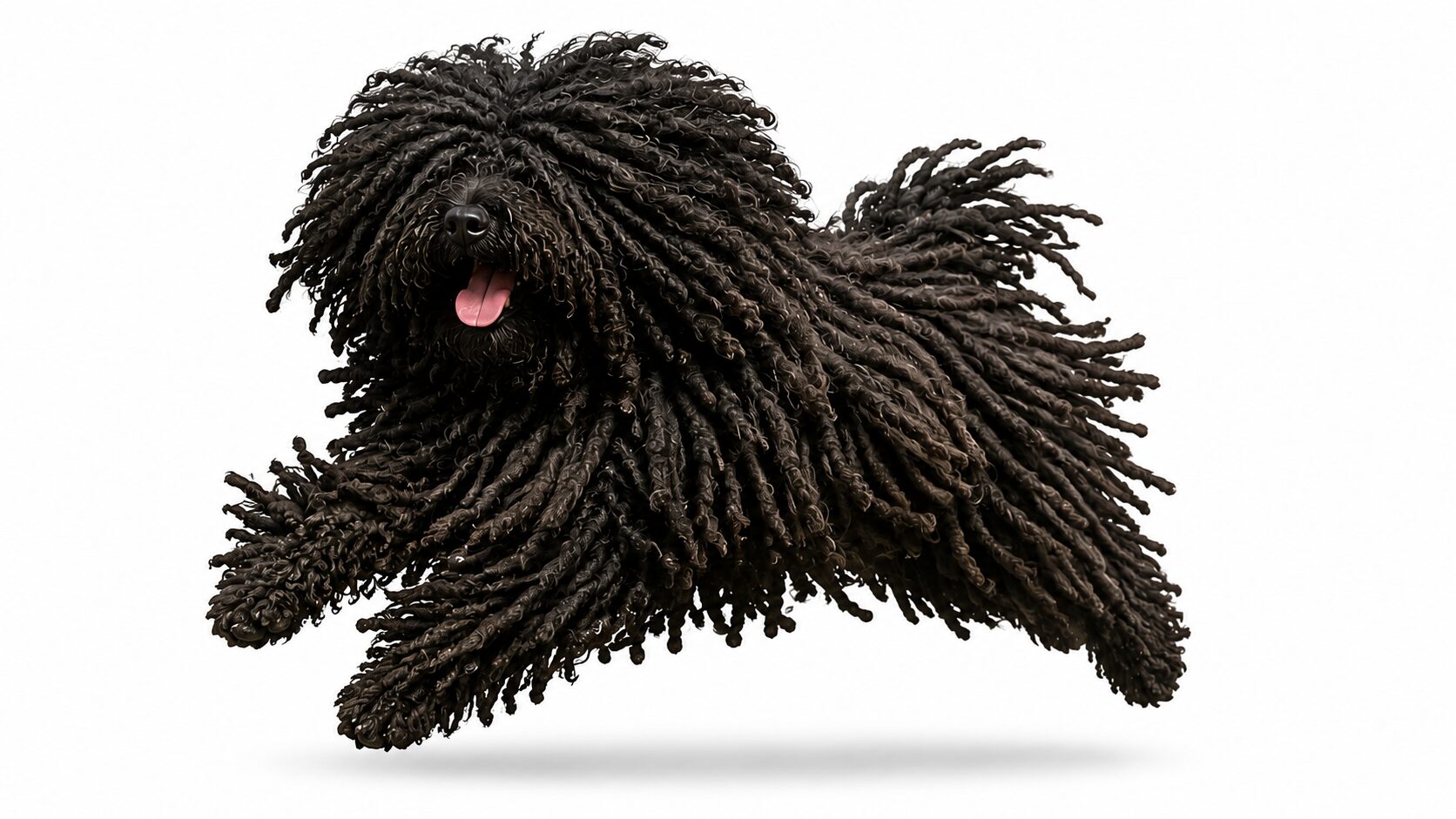
The Puli, whose plural in Hungarian is Pulik — a grammatical specificity that the breed’s enthusiast community insists upon and that reflects the breed’s specifically Hungarian identity in the most grammatically committed fashion — also called the Hungarian Puli and nicknamed with the specific affection that novelty can inspire the Hungarian Mop Dog or the Dreadlock Dog in English-speaking circles that encounter the breed for the first time and whose first response is to the coat before the dog beneath it, is a small-to-medium-sized, compact, square-bodied, extraordinarily agile and athletic herding breed from Hungary whose most immediately and the most universally recognizable individual feature is the corded coat — a profuse, weather-resistant double coat that naturally develops through a controlled matting process beginning around six months of age into distinct rope-like cords similar to dreadlocks that at maturity can reach the ground and weigh as much as five to seven pounds in the most fully corded adults — and a breed whose name in Hungarian means both drover and destroyer, a dual translation that is the most specifically accurate individual name etymology in this series, simultaneously capturing the breed’s primary working function as the active herding and driving partner of Hungarian shepherds and the specific ferocity with which the breed defended its flock and its shepherd’s property from predators and thieves.
The breed’s origins are among the most specifically debated and the most honestly uncertain of any herding breed in this series, reflecting the pre-documentary reality of a breed that developed during and before the period when any systematic written record of dog breeding was maintained. The most broadly accepted origin theory traces the Puli to ancient communities in India, western China, and Tibet, from which Asiatic herding dogs were brought westward through the great migration routes of Central Asia. The Puli Club of America identifies a specific migration pathway through the Cuman people — a Turkic-speaking nomadic group who originated near the Yellow River in what is now China and who began migrating westward around 900 CE, fleeing the advancing Mongol forces that disrupted Central Asian populations throughout that period. The Cumans brought with them small herding dogs that were possibly relatives to the Tibetan Terrier — a connection that judges familiar with both breeds have independently noted for the striking structural similarities between the two — and these dogs, developing in the specific climatic conditions of the Hungarian plains, gradually produced the specific corded coat that distinguishes the Puli from every other herding breed in the world.
The Cumans settled in Hungary in the mid-13th century, granted refuge by the Hungarian king, and subsequently intermarried with the Magyars who had themselves brought herding dog traditions from Central Asia as early as 800 CE. The Puszta — the vast treeless plain of Hungary that stretched across the center of the country and that provided the most specific individual working environment that shaped the breed’s character and capabilities — presented the herding dog with the most specifically demanding individual working conditions of any herding terrain in Europe: open, treeless ground across which enormous flocks of Merino sheep needed to be managed, driven, and protected across distances that could involve several hundred animals and many miles of daily travel.
The value that Hungarian shepherds placed on their Pulik was among the most personally specific individual economic statements of any working dog in this series. Nomadic shepherds of the Hungarian plains valued their herding dogs, paying as much as a year’s salary for a Puli. This was not sentimentality but economic rationality — a shepherd with one excellent Puli could manage a flock that would require multiple men without one, and the selection pressure that this economic premium created was among the most ruthless in any working dog tradition: shepherds would eliminate any dogs that didn’t show these qualities immediately. To survive, the Puli had to be physically sound and mentally capable, agile and willing to work.
The working partnership between the Puli and the Komondor is the most specifically and the most personally elegant division of labor in any pastoral working dog tradition: the small, dark Puli worked the sheep during the day with its quick-stepping herding energy and its visible contrast to the white flock, while the massive, white Komondor guarded the flock at night, camouflaged among the sheep until a predator came close enough to attack. This day-night, active herder and passive guardian partnership is still noted by Hungarian shepherds today.
The breed’s formal modern recognition history began with the first Budapest dog show in 1923. FCI recognition came in 1924. In 1935, the U.S. Department of Agriculture imported four purebred Pulik to Beltsville, Maryland as part of an experiment studying herding dogs that sometimes killed the animals they were meant to guard. The results were extraordinary: Pulik scored between 75 and 85 on assessment tests where other herding breeds scored in the range of 12 to 14, placing the breed in a different performance category entirely. Because the tests were deemed inconclusive in other ways, the results were never published — the most specifically frustrating individual research outcome in any breed’s American history. The AKC recognized the Puli in 1936, initially placing it in the Working Group, where it remained until the creation of the Herding Group in 1983. The UKC recognized the breed in 1948. World War II reduced the breed to near-extinction — at one point its numbers were reduced to two figures — before dedicated breeders around the world rebuilt the population. A significant social media boost came around 2011 when Mark Zuckerberg adopted a white Puli named Beast and shared the dog’s photos extensively, producing a notable spike in breed inquiries.
Breed Overview
| Trait | Details |
|---|---|
| Origin | Hungary (from Asiatic herding dog traditions; Cuman and Magyar migrations) |
| Hungarian Name | Puli; plural Pulik |
| Name Meaning | Drover AND Destroyer (dual meaning) |
| Nicknames | Hungarian Mop Dog; Dreadlock Dog |
| Possible Ancestry | Tibetan Terrier type brought by Cumans from China/Tibet |
| Cuman Migration | From Yellow River, China; settled Hungary mid-13th century |
| Magyar Introduction | ~800 CE; possibly independent of Cuman introduction |
| Working Partnership | Puli (day herding) + Komondor (night guarding) — classic Hungarian pastoral team |
| Shepherd Valuation | A year’s salary paid for an excellent Puli (most extreme recorded price for any herding dog) |
| FCI Recognition | 1924 (Group 1, Section 1, Sheepdogs) |
| AKC Recognition | 1936 (Herding Group since 1983 reorganization) |
| UKC Recognition | 1948 (Herding Dog Group) |
| First Budapest Show | 1923 |
| US Department of Agriculture | Imported four Pulik in 1935; scored 75-85 vs 12-14 for other herding breeds (unpublished) |
| WWII Status | Near-extinction; numbers reduced to double figures |
| Mark Zuckerberg | Owned white Puli named Beast (~2011); caused notable breed interest spike |
| Westminster Notable | Ch. Afkee’s Just One Look (Preston) — first Puli to win a major US all-breed Best in Show (2016) |
| Parent Club (USA) | Puli Club of America (PCA) |
| AKC Ranking | Approximately 164th of 200 recognized breeds |
| Height | Males 43 cm (17 inches) / Females 42 cm (16.5 inches) |
| Weight | Males 25–35 pounds (11–16 kg) / Females 22–30 pounds (10–14 kg) |
| Lifespan | 10–15 years |
| Coat | Corded double coat; coarse outer coat + soft woolly undercoat; develops cords by 2 years; fully corded by 4–5 years |
| Mature Cord Weight | 5–7 pounds (2–3 kg) |
| Coat Reaches Ground | By approximately 5 years of age |
| Colors | Black (most common); rusty black; gray; white; cream |
| Shedding | Minimal — cords trap shed hair inside coat |
| Tail | Tightly curled over back; sometimes indistinguishable from body |
The Corded Coat: Not a Novelty but a Working Tool
Before discussing care, the Puli’s most immediately remarkable and the most specifically misunderstood individual feature deserves honest acknowledgment: the corded coat is not a decorative or novelty grooming choice but a functional adaptation developed over centuries of outdoor working life in the extreme weather conditions of the Hungarian plains.
The corded coat begins to develop spontaneously around six months of age when the soft woolly undercoat begins to intermingle with the coarser outer coat. Left to develop naturally, this intermingling produces mats that must be manually separated at the puppy stage into individual cord units — each cord approximately pencil-width in diameter — before they grow together into an unmanageable mass. Once properly formed, the cords protect the Puli against bitter frost in Hungarian winters and from the bites of predators attacking the flock — the coat is dense enough to significantly reduce the penetrating capability of a wolf’s bite while still allowing the dog to move with the extraordinary speed and agility that herding work requires.
The coat develops continuously through the first four to five years, eventually reaching the ground in the most fully corded adults. A mature fully corded coat weighs five to seven pounds — a substantial individual addition to the dog’s total body weight that any owner encountering a Puli for the first time should account for in their physical handling of the dog.
The Puli and the Komondor
Because the Puli is most specifically understood in the context of its working partnership with the Komondor — Hungary’s other ancient corded working dog — a brief acknowledgment of this partnership serves any reader encountering the Puli for the first time.
The two breeds worked in a carefully structured division of labor across the Hungarian plains. When sheepdogs were being developed, color and size played a part in defining their jobs. The larger, lighter-colored dogs were used to guard the flocks at night, and the smaller, darker-colored dogs — the Pulik — were used to drive and herd the sheep during the day. The Puli’s black color against the white Merino sheep made it highly visible to both shepherd and flock during daylight herding. The Komondor’s white color against the white sheep made it invisible to night predators until it was too late. This complementary system is the most specifically elegant individual working-dog-partnership design in the European pastoral tradition.
Appearance And Size
The Puli is a small-to-medium-sized, compact, square-bodied, and specifically athletic herding dog that presents with the most immediately remarkable visual experience of any breed in this series — the dog upholstered in rope, as one experienced observer described the first encounter, a description that captures both the coat’s visual character and the surprise of finding a genuinely athletic, purpose-built herding dog underneath all that fiber.
Males stand ideally 43 centimeters and weigh 25 to 35 pounds; females are marginally smaller at 42 centimeters. The body is essentially square — height at the withers equals body length from point of shoulder to point of buttock — conveying the compact, balanced power that the quick-stepping herding trot requires. The tail is tightly curled over the back, often indistinguishable from the body coat — contributing to the famous difficulty of determining which end of a Puli is which, and earning the breed the affectionate nickname push-me, pull-me.
Housing And Living Requirements
The Puli is more adaptable in terms of living environment than its specifically active herding heritage might initially suggest, provided the specific exercise requirement is consistently met and the coat’s specific temperature management limitations are respected.
The most critically important individual housing welfare consideration beyond exercise is the corded coat’s specific heat vulnerability. Because of the denseness of the corded coat, special care should be taken to avoid letting Pulik overheat. The coat that provided such effective thermal protection in Hungary’s winters creates significant heat stress risk in warm climates and seasons, and all outdoor exercise must be managed with specific attention to temperature.
A comfortable dog bed in a social area of the home suits the breed’s specifically people-devoted domestic character. An orthopedic dog bed provides appropriate joint support.
Exercise Requirements
The Puli is a highly active breed with the herding dog’s genuine need for daily vigorous exercise that engages both the physical body and the remarkable working intelligence simultaneously. A daily walk or jog is essential at minimum, with organized working or sport activities providing the most complete individual engagement.
Dog agility is the most specifically celebrated competitive sport for the Puli — the breed’s extraordinary agility, speed, and ability to change direction rapidly makes it specifically and personally impressive in timed agility courses. The Puli moved to its natural Herding Group home in 1983 and herding trials provide the most authentically heritage-appropriate competitive outlet. Obedience trials engage the breed’s exceptional intelligence in handler-focused competitive format.
Puzzle toys and enrichment activities are genuinely important for the Puli — an extremely intelligent dog with a sense of humor who will remain happy and playful to an advanced age and who applies that intelligence to finding creative entertainment when outdoor engagement is insufficient. A GPS tracker is a practical safety investment for outdoor exercise in open areas given the herding drive that will take this breed after moving objects with the same constitutionally embedded purpose it brought to the Hungarian plains. Dog agility equipment at home provides structured daily engagement appropriate to the breed’s specific athletic excellence.
Grooming Requirements
The Puli’s corded coat requires the most specifically unusual and the most personally committed individual grooming program of any breed in this series — not necessarily the most time-intensive in daily minutes, but the most consistently specific in technique, the most patience-demanding in the puppyhood cord formation period, and the most logistically elaborate in the bathing and drying process.
The cord formation period — beginning around six months of age — is the most critically important grooming investment for any Puli owner. As the puppy coat transitions to the adult double coat, mats form spontaneously and must be manually separated by hand from tip to skin into individual cord units approximately pencil-width in diameter. These separations must happen regularly during this period; if allowed to merge unmanaged, the entire coat can felt into an unworkable single mass. The cord formation process continues for approximately two years before cords are established enough to be self-maintaining with regular separation.
Bathing a fully corded adult coat is the most specifically logistically elaborate individual grooming event in this series. The cords must be thoroughly soaked and cleaned, then thoroughly dried — the most important single aspect, as a corded coat that is not completely dried after bathing can develop mildew within the cord structure. Complete drying of a fully corded coat can take 24 to 48 hours even with forced-air dryers. Monthly bathing is standard.
Dental care should be established as a consistent routine from puppyhood. Ears should be checked and cleaned weekly — hair grows inside the Puli’s ear canal and must be regularly removed to prevent the accumulation that creates infection risk. Nails should be trimmed regularly.
Diet And Nutrition
The Puli is a small-to-medium, highly active herding breed with daily caloric needs calibrated to its actual size and genuine working output. A high-quality medium breed active formula with a named protein source as the first ingredient provides the nutritional foundation.
Most adults do well on two measured meals per day. The mature coat’s weight of five to seven pounds means that the dog’s actual body weight under the coat is significantly less than the total weight on the scale — body condition assessment requires physically parting the coat to feel the ribs and assess the body beneath. Maintaining lean, athletic body condition supports both working capability and long-term health. Training treats are highly effective motivators. Discussing joint supplements with your veterinarian is worthwhile from middle age.
Compatibility
The Puli is fiercely dedicated to its family and friends — a devotion so specifically complete and so specifically personal that the breed was described by Hill’s Pet as the sole companion of a shepherd working in isolation in the hills, a dog above all an incomparable companion. This shepherd-isolation companion heritage produced a breed that bonds with its established human family with the depth and exclusivity of a dog that has always been the shepherd’s only daily social contact across the remote Hungarian plains.
With its own family, the breed is completely devoted and specifically attentive. Pulik will often try to herd their people by nipping at their owners’ heels — a herding instinct that is entirely constitutional and entirely specific, reflecting the breed that managed the direction of hundreds of sheep by precisely controlling their movement from behind. With children, the breed is typically appropriate with older respectful children, though the heel-nipping tendency requires specific management with young children who run. With strangers, the breed is typically reserved — loyal to their owners and wary of strangers — a quality that makes excellent watchdogs but requires specific socialization management. With other dogs, the breed is typically cooperative when properly socialized. A dog crate is a useful management tool during puppyhood.
Behavior And Temperament
The Puli is sensitive, fun-loving, courageous, but also at times tough and headstrong — the characterization from Hill’s Pet that captures the essential behavioral duality of a breed that spent centuries simultaneously managing hundreds of sheep with athletic brilliance and defending both flock and shepherd against predators with the specific fearlessness that a willingness to confront wolves required.
The intelligence is the most specifically celebrated individual behavioral quality — among the most quick-witted and the most specifically manipulative of any herding breed, with a genuine sense of humor and a playful quality that owners describe as puppy-like throughout the dog’s entire life. The Puli is extremely intelligent — and this intelligence is the quality that produced the extraordinary USDA test scores of 75 to 85 when other herding breeds scored 12 to 14, and that makes the breed simultaneously the most capable training partner and the most specifically mischief-creative when that intelligence has no appropriate outlet.
Hungarian Pulik owners have long said of their breed: it’s not a dog, it’s a Puli. This specific pride is the most personally accurate individual national dog statement in this series — an acknowledgment that the Puli is so specifically itself, so unlike any other breed in appearance, intelligence, and working capability, that the standard category dog does not quite contain it.
Training And Handling
The Puli is an obedient enough dog to train for athletic competition — a characterization that acknowledges both the genuine trainability and the breed’s independence, because any description of Puli trainability that does not acknowledge the specific headstrong quality would be specifically incomplete.
Positive reinforcement methods are the most effective approach. Training treats are highly effective motivators in varied, genuinely challenging sessions that engage the breed’s exceptional intelligence without allowing it to become bored. An intelligent and active dog, the Puli needs obedience training while still young — a specific recommendation reflecting the reality that an untrained adult Puli’s independence and manipulative intelligence produces behavioral management challenges significantly more demanding than an untrained adult of most other herding breeds.
Health And Lifespan
The Puli is a generally healthy and constitutionally robust breed with a lifespan of 10 to 15 years, reflecting the extraordinary selection pressure that Hungarian shepherds who paid a year’s salary for an excellent dog applied across centuries — only the most constitutionally sound individuals could justify that price.
Hip Dysplasia Hip dysplasia is the most consistently documented orthopedic concern. OFA hip evaluation of breeding animals is recommended. Maintaining lean body condition and appropriate juvenile exercise management are the most practically meaningful protective measures.
Eye Conditions Progressive retinal atrophy and other eye conditions are documented. Annual CAER ophthalmological examination from the dog’s first year provides ongoing clinical monitoring.
Heat Management The dense corded coat creates specific and potentially urgent heat stress risk. Outdoor exercise in warm conditions must be specifically monitored and limited. The coat should never be allowed to remain wet for extended periods.
Ear Infections Hair growing inside the ear canal creates specific infection risk. Regular ear hair removal and weekly cleaning prevents accumulation. This is among the most consistently important preventive health practices for the breed.
Routine preventive care including regular vet checks, OFA evaluation, CAER ophthalmological examination, consistent dental hygiene, regular ear hair removal and cleaning, up-to-date vaccinations, and parasite prevention provides the foundation for a healthy Puli.
Price And Availability
The Puli is a relatively rare breed in the United States, ranking approximately 164th of 200 AKC-recognized breeds with an average of approximately 110 Pulik registered annually. Finding a well-bred Puli requires direct engagement with the Puli Club of America and patience with the wait lists that inevitably accompany rare breed breeding programs. From reputable breeders with appropriate OFA and CAER health testing, expect to pay between $1,000 and $2,000 for a well-bred puppy.
Conclusion
The Puli has herded sheep across the Puszta of Hungary for at least 1,000 documented years and possibly as long as 5,500 years according to the most expansive historical estimates, most likely descended from Tibetan Terrier-type dogs brought to Hungary by the Cuman people fleeing Mongol expansion from their homeland near the Yellow River in China beginning around 900 CE, was valued so specifically by Hungarian shepherds that a year’s salary was routinely paid for an excellent individual, worked in classic day-herding partnership with the Komondor as night guardian, developed the corded coat as a functional adaptation to the extreme climate and the predator threats of the Hungarian plains, was first shown at the Budapest dog show in 1923, received FCI recognition in 1924, had four individuals imported to Beltsville, Maryland by the U.S. Department of Agriculture in 1935 who scored 75-85 on herding assessment tests where other breeds scored 12-14 (results never published), received AKC recognition in 1936 (moved from Working to Herding Group in 1983), received UKC recognition in 1948, was reduced to double-figure numbers by World War II before dedicated breeders rebuilt the population, had Mark Zuckerberg’s white Puli Beast cause a notable breed interest spike around 2011, had Ch. Afkee’s Just One Look win a major US all-breed Best in Show in 2016, and stands today as the most specifically a-year’s-salary-valued-by-Hungarian-shepherds, the most specifically drover-AND-destroyer-dual-named, the most specifically Tibetan-Terrier-ancestored-Cuman-migration, the most specifically day-herder-to-the-Komondor’s-night-guardian, the most specifically USDA-1935-scored-75-to-85-when-others-scored-12-to-14-results-unpublished, the most specifically corded-coat-takes-five-years-to-reach-the-ground, and the most specifically it’s-not-a-dog-it’s-a-Puli of all the Herding Group breed partnerships available. Get properly set up before bringing one home. Our Best Dog Products page has everything you need for corded-rope-coated, black-most-common, square-bodied, tail-curled-over-back-indistinguishable-from-body, whole-heartedly devoted Hungarian plains herding dogs that carry the full heritage of the Cuman migration from the Yellow River, the Tibetan Terrier shared ancestry, the Hungarian shepherd’s year-of-salary valuation, the day-herding Komondor-night-guardian partnership, the 1923 Budapest dog show, the 1924 FCI recognition, the 1935 USDA extraordinary test scores, the 1936 AKC recognition, the World War II near-annihilation and dedicated-breeder recovery, and the specific agile, intelligent, headstrong, sense-of-humor-possessing, heel-nipping, sheep-managing, wolf-confronting, push-me-pull-me-direction-indeterminate intelligence of the Hungarian breed that Hungarian owners correctly identify as not merely a dog but specifically, unmistakably, and entirely its own thing.