
Origin And History
The Rampur Greyhound, also called the Rampur Hound and known in its homeland of northern India as the companion of Nawabs and Maharajas who valued it as the most capable hunting dog of the North Indian plains, is a medium-to-large, short-coated, powerfully built sighthound from the princely state of Rampur — now in the state of Uttar Pradesh between Delhi and Bareilly — a breed that is recognized by many authorities as specifically resembling the Sloughi of North Africa in appearance despite its Central Asian and British Greyhound ancestry, that was developed with the specific design brief of a dog that could hunt wolves, jackals, wild boar, deer, and dangerous large game including leopards, panthers, and tigers with the combination of wolf-hunting courage from the Central Asian Tazi tradition, the explosive speed of the English Greyhound, and the heat tolerance and endurance of the indigenous Indian hounds that neither European nor Central Asian breeds could sustain in the unrelenting summer climate of the North Indian plains, and a breed that in the early 21st century stands at the most precarious individual survival threshold of any dog breed in this series — on the verge of extinction with populations concentrated in Delhi and Uttar Pradesh and recognized by no major international kennel club, though honored by the Government of India with a commemorative postage stamp in 2005 alongside the Rajapalayam, Mudhol Hound, and Himalayan Sheepdog.
The most specifically documented individual founding event in the breed’s history is the deliberate breeding program initiated by Ahmad Ali Khan Bahadur — the Nawab of Rampur — in the late 18th or early 19th century. The Nawab’s precise goal was specific and specifically ambitious: he wanted to create a dog that combined the wolf-hunting capability of the Tazi — the ancient Central Asian sighthound related to the Saluki and Afghan Hound — with the greater speed and more tractable temperament of the English Greyhound that the British presence in India had made available. The Tazi possessed extraordinary courage and the specific capability to pull down wolves — an aggressive quarry that required a dog willing to engage large predators directly rather than simply chasing speed-based prey — but was extremely independent-minded and could become aggressive and difficult to manage. The English Greyhound was faster and more tractable but lacked the stamina, heat tolerance, and prey-confrontation courage for Indian hunting conditions and quarry. The resulting cross, further refined through subsequent selection and possible addition of Afghan Hound and native Indian hound blood, produced a dog that exceeded the Nawab’s expectations: an exceptionally capable hunting dog with the courage to confront dangerous game including wild boar and leopards, sufficient speed to run down jackals and deer, the endurance to sustain hunting in the heat of Uttar Pradesh’s summers, and the tractability to work cooperatively with human hunters rather than operating entirely independently.
The breed’s Wikipedia description specifically notes that it is believed to descend from early Tazys — the most ancient form of the Central Asian sighthound — with its present-day appearance the result of extensive crosses to the English Greyhound in the 19th century to improve the breed’s speed. The physical result of this specific founding combination is the most immediately distinctive individual quality of the breed relative to other sighthounds: more powerfully built and heavier boned than the refined English Greyhound, with a broader skull, more substantial muzzle, and greater muscular development reflecting the wolf and boar hunting heritage, while retaining the deep chest, long legs, and the aerodynamic silhouette that confers the speed its English Greyhound ancestry contributed.
The breed was strictly controlled by the royal families of northern India, maintained exclusively in the kennels of Maharajas and Nawabs who used them for the great hunting expeditions that characterized aristocratic culture in the Mughal Empire and its successor states. These hunting parties — shikars — were among the most elaborate social occasions of Indian royal culture, and the Rampur Greyhound’s role in bringing down jackals, deer, wild boar, and even assisting in hunts for dangerous large cats made it one of the most specifically prized individual hunting assets a ruler could possess.
The breed’s decline began with Indian independence in 1947. The abolition of the princely states and the Maharajas’ system of royal governance removed the primary institutional support for the breed’s maintenance. Hunting of large game became progressively restricted and ultimately prohibited under Indian wildlife protection law, eliminating the breed’s functional justification. Interbreeding with English hounds and neglect of purebred lines during the subsequent decades fragmented the breed’s type and reduced its numbers to critical levels by the early 2000s. Local breeders and some NGOs subsequently launched conservation campaigns that have produced a modest recovery, with some purebred individuals now found in Delhi and nearby cities. The Government of India honored the breed with a commemorative postage stamp on January 9, 2005 — the same occasion as the Rajapalayam’s stamp — as part of a national effort to raise awareness of indigenous Indian dog breeds.
Breed Overview
| Trait | Details |
|---|---|
| Origin | Rampur, Uttar Pradesh, northern India (between Delhi and Bareilly) |
| Also Known As | Rampur Hound; North Indian Greyhound |
| Named After | Rampur — princely state in northern India |
| Founding Breeder | Ahmad Ali Khan Bahadur (Nawab of Rampur; late 18th to early 19th century) |
| Founding Cross | Tazi (Central Asian sighthound) × English Greyhound |
| Additional Ancestry | Afghan Hound; indigenous Indian hounds; possibly Mughal-era sighthound imports |
| FCI / AKC / UKC | Not recognized by any major international kennel club |
| Kennel Club of India | Recognized |
| India Post Stamp | Commemorative postage stamp issued January 9, 2005 (alongside Rajapalayam, Mudhol Hound, Himalayan Sheepdog) |
| Conservation Status | On verge of extinction; recovery efforts underway by local breeders and NGOs |
| Near-Extinction Cause | Indian independence 1947; abolition of princely states; hunting prohibition; English Greyhound crossbreeding |
| Resemblance | Wikipedia describes as resembling the Sloughi in appearance |
| Historical Patrons | Nawabs and Maharajas of northern India; used exclusively by royalty |
| Military/Guard Role | Used as guard dogs and camp protectors |
| Height | Males 60–76 cm (24–30 inches) / Females 58–71 cm (23–28 inches) |
| Weight | Males 27–35 kg (60–77 pounds) / Females 22–28 kg (48–62 pounds) |
| Lifespan | 12–14 years |
| Coat | Short, smooth, close-fitting; minimal grooming |
| Colors | Black; tan; fawn; brindle; blue; black and white; various combinations |
| Skin | Thinner than most breeds; vulnerable to bed sores; requires soft bedding |
| Gait | Distinctive sighthound double-suspension gallop |
| Top Speed | 38–42 miles per hour (reported) |
| Primary Quarry | Jackal; wild boar; deer; hare; historically leopards, tigers, lions |
| Working Style | Primarily sight-based; also tracks by scent |
| Specific Achievement | Single Rampur Greyhound taking down a golden jackal — considered a test of courage |
| Day/Night Activity | Notably calm and even lethargic during day; more active and alert at night |
The Nawab’s Vision: Engineering a Supreme Indian Hunter
Before discussing care, the Rampur Greyhound’s founding concept deserves dedicated acknowledgment, because it is the most specifically documented and the most specifically personally ambitious individual breed creation program of any Indian native breed in this series.
Ahmad Ali Khan Bahadur’s breeding program was not a casual selective refinement of existing local dogs but a deliberate engineering project with a specific performance brief — to create a dog that could function as both the Tazi’s fearless wolf-confronting hunter and the English Greyhound’s speed-optimized coursing specialist simultaneously, while adding the climate-adapted endurance that neither founding breed possessed in sufficient quantity for North Indian hunting conditions. The success of this program produced a dog that exceeded expectations: stalwart, strong, and fast enough to run down any animal but relatively tractable and obedient compared to the Tazi. The breed that resulted became so valued that it was exclusively held by Maharajas and Nawabs — a royal restriction that simultaneously maintained the breed’s quality through controlled breeding and created the vulnerability that would threaten its survival when the royal system was abolished in 1947.
Appearance And Size
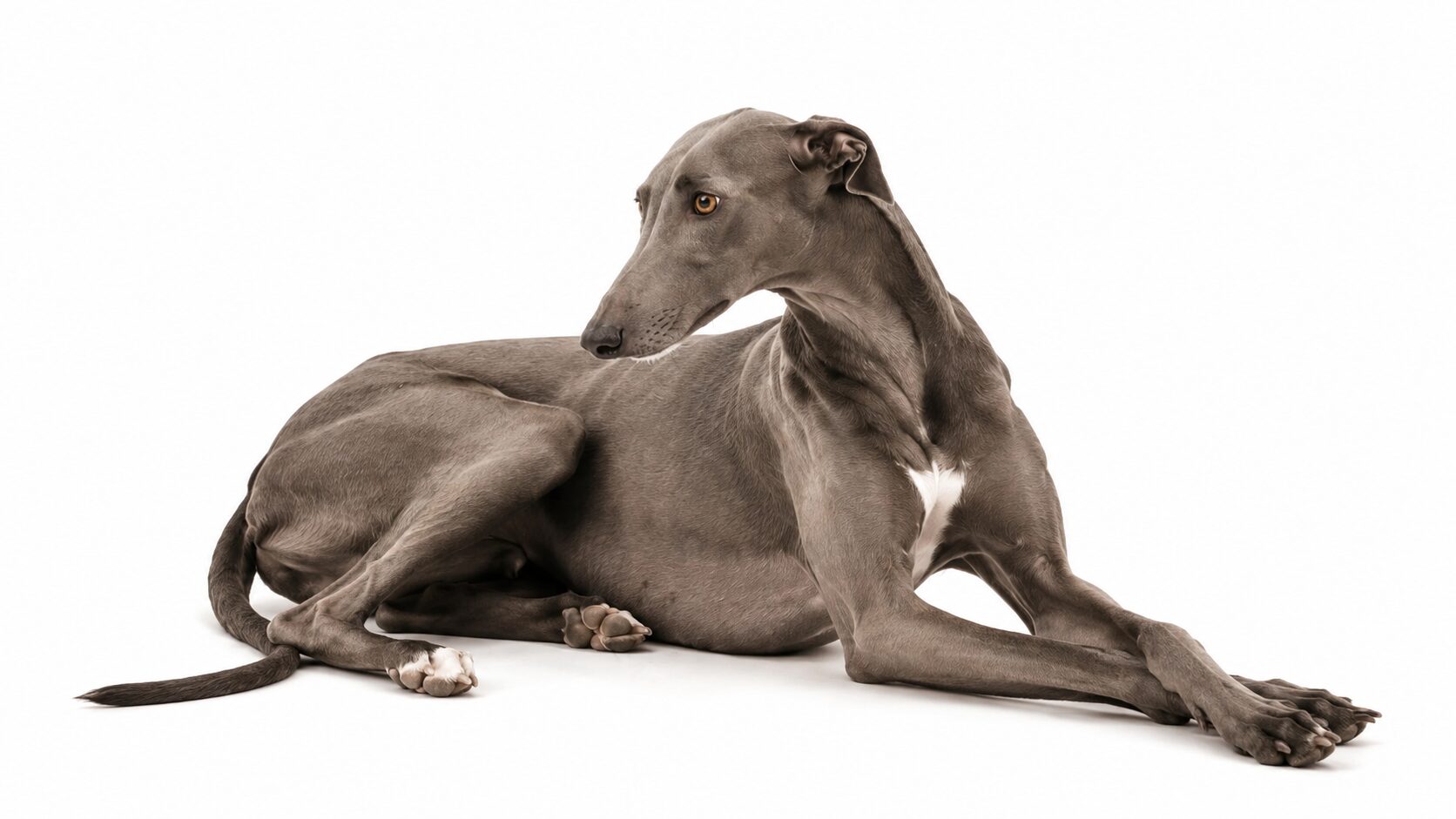
The Rampur Greyhound is a medium-to-large, powerfully built, and specifically impressive sighthound that presents with the most immediately striking individual quality compared to the English Greyhound — the greater muscularity, broader skull, and more substantial muzzle that the wolf-hunting Tazi ancestry contributed to the English Greyhound’s basic sighthound conformation.
Males typically stand 60 to 76 centimeters and weigh 27 to 35 kilograms. The body is lean and aerodynamic — the deep chest, tucked-up abdomen, and long legs of the sighthound type — but with the heavier bone density and more powerful musculature that the dangerous game confrontation heritage specifically required. The coat is short, smooth, and close-fitting, available in a range of colors including black, tan, fawn, brindle, and blue, with various combinations permissible. The oval or almond-shaped eyes in shades of amber and yellow carry the focused, regal intensity that breed enthusiasts consistently celebrate as among the most personally captivating individual facial qualities of any Indian native breed. The ears are typically rose or pendant shaped, set high on the narrow skull.
The skin is notably thinner than most breeds — a quality that requires specific soft bedding to prevent bed sores and gentle grooming technique to prevent skin damage from vigorous brushing.
Housing And Living Requirements
The Rampur Greyhound is more adaptable in terms of living environment than its large size and active working heritage might initially suggest — these dogs can thrive in both houses and apartments as long as they get daily vigorous exercise and maintain the run-of-the-house freedom that prevents the pent-up energy from becoming destructive behavior. The breed is notably calm indoors after exercise, tending toward what owners describe as a relaxed, almost languorous indoor temperament that contrasts dramatically with the explosive athletic capability they display in the field.
The most critically important housing welfare consideration is secure fencing. A breed that can reach 38 to 42 miles per hour will cover extraordinary ground in seconds when a prey animal is detected, and no amount of recall training reliably overrides the sighthound’s pursuit instinct at full chase speed in open terrain. A securely fenced yard is a non-negotiable safety requirement.
The breed is specifically adapted to the hot climate of Uttar Pradesh and thrives in warm and hot conditions. The short coat provides adequate protection against heat, and the breed’s natural heat tolerance is among the most specifically valued individual characteristics that distinguished it from the English Greyhound in the original breeding program. Cold weather requires specific management — the thin skin and short coat provide minimal thermal insulation.
An orthopedic dog bed is specifically important for the Rampur Greyhound given the breed’s notably thin skin that is specifically documented as prone to developing bed sores without adequate cushioning. A comfortable dog bed with substantial padding in a social area of the home suits the breed’s warmly family-devoted character.
Exercise Requirements
The Rampur Greyhound requires at least one hour of vigorous daily exercise reflecting its heritage as an active hunting dog that historically coursed dangerous game across the plains of northern India. The breed appears deceptively calm and even lethargic during the day — tending to be less active, sleepy, and relaxed during daylight hours than most working breeds — but requires genuine vigorous daily exercise to maintain physical and behavioral health.
Lure coursing is the most naturally appropriate and most personally fulfilling competitive sport — engaging the breed’s sighthound coursing heritage in organized format that approximates the prey pursuit that defined its working tradition. Dog agility suits the breed’s athleticism in structured competitive sport. Extended daily running sessions in secured areas provide the most practically manageable daily exercise outlet for most owners.
Puzzle toys and enrichment activities are genuinely important for cognitive engagement between outdoor sessions — the same intelligence that made these dogs valued hunting companions requires purposeful mental engagement in the domestic context. A GPS tracker is an absolutely essential safety investment for outdoor exercise in any area without complete secure enclosure — a breed capable of 40 miles per hour in pursuit of quarry will disappear over the horizon before most owners can physically respond.
Grooming Requirements
The Rampur Greyhound’s short, smooth, close-fitting coat is among the most practically low-maintenance grooming commitments of any large working breed, reflecting the functional coat heritage of a dog bred for hunting in Uttar Pradesh’s hot climate where a longer or denser coat would create heat management problems.
Brushing once or twice weekly with a soft slicker brush, rubber curry comb, or chamois cloth removes minimal loose hair and maintains the coat’s characteristic sheen. The specific caution against vigorous brushing reflects the breed’s notably thinner-than-average skin — gentle technique is required to prevent the skin damage that aggressive grooming can produce. The breed is noted for very low doggie odor — bathing is required only occasionally rather than on the frequent schedule that most large active breeds need.
Dental care is specifically important given the documented tendency toward dental disease and the recommendation to add vitamin A to the diet to support skin health. Ears should be checked and cleaned weekly. Nails should be trimmed regularly. The soft bedding requirement for preventing bed sores in the thin-skinned breed is the most specifically unusual individual husbandry requirement compared to other large sighthounds.
Diet And Nutrition
The Rampur Greyhound is a large, highly active sighthound with daily caloric needs calibrated to its genuine working output. A high-quality large breed active formula with a named protein source as the first ingredient provides the nutritional foundation appropriate for the breed’s lean, athletic build.
Most adults do well on two measured meals per day. The sighthound’s naturally lean physique can be maintained through consistent measured feeding — overfeeding creates weight gain that disproportionately stresses the lean frame and the joints that the sighthound’s athletic performance demands. Vitamin A supplementation is specifically recommended to support and protect the breed’s thin skin. Training treats are effective motivators in training sessions.
Compatibility
The Rampur Greyhound is a one-person dog in the most specifically documented and the most personally complete sense of that characterization — the breed attaches with exclusive intensity to its primary person, shows deep affection for its established family, and reserves all warmth for that inner circle while presenting aloof reserve or outright suspicion toward anyone outside it.
These dogs are enormously loyal and affectionate towards their owners and are known as a one-person dog. With its primary person and established family, the breed is completely devoted and specifically warm. With children within the established family, the breed can be appropriate when raised together from puppyhood. With strangers, the breed is specifically suspicious and reserved — the breed’s aloof, almost aristocratic reserve toward unfamiliar people reflects the centuries of royal kennel maintenance in which these dogs’ social contact was tightly controlled.
With other dogs, the breed can be territorial and aggressive given the dominance confidence of a dog bred for confronting dangerous large game. With small animals, the prey drive is constitutionally genuine and specifically intense. Early socialization from puppyhood is the most critically important behavioral investment for managing these tendencies in domestic residential contexts. A dog crate is a useful management tool during puppyhood.
Behavior And Temperament
The Rampur Greyhound is aloof, reserved, obedient, and devoted — with intelligence that shows most specifically in running and hunting contexts rather than in the general obedience intelligence of more handler-focused working breeds. The breed barks less and growls more than most dogs — a specific vocal characteristic that reflects the aristocratic, self-possessed character of a breed that historically made its own hunting decisions with minimal handler direction.
The daytime lethargy and nighttime alertness pattern is the most specifically unusual individual domestic behavioral characteristic of the breed — the tendency to be calm, sleepy, and relaxed during daylight hours while becoming more active and alert at night reflects the hunting tradition in which jackals and other preferred quarry were most active during the cooler hours of darkness in the hot North Indian climate. This nocturnal alertness makes the Rampur Greyhound a particularly effective nighttime watchdog — the breed’s combination of territorial awareness, reserved suspicion toward strangers, and selective vocalness with a strong growl makes it among the most naturally effective individual guard dogs of any sighthound type.
Training And Handling
The Rampur Greyhound is intelligent and capable of learning from patient, consistent handlers who understand the sighthound’s independent working style. The breed responds best to patient, respectful training rather than repetitive drills — a characteristic it shares with all sighthounds whose working heritage required independent decision-making rather than handler compliance.
Positive reinforcement methods are the most effective approach. Training treats are effective motivators in patient, varied sessions. Early socialization from puppyhood is the most critically important behavioral investment — the breed’s natural aloofness and potential aggression toward strangers and other dogs requires the broadest possible exposure to diverse people, animals, and environments before the adult patterns of reserve are fully established.
The most specifically important individual training limitation is off-leash reliability in open spaces — the prey drive that made this breed one of the most capable individual hunting dogs in northern Indian history cannot be reliably overridden by recall training when a prey animal is detected at full chase speed in unsecured terrain.
Health And Lifespan
The Rampur Greyhound is a relatively healthy breed with a lifespan of 12 to 14 years, and the constitutional robustness of an active working breed maintained through functional selection in demanding conditions. Several specific health considerations require awareness.
Hip Dysplasia Hip dysplasia is possible in a large active sighthound. OFA hip evaluation of breeding animals is the most important orthopedic screening.
Bloat (Gastric Dilatation-Volvulus) The deep chest creates GDV susceptibility. Two smaller meals daily and avoiding vigorous exercise for at least one hour before and after meals are permanent preventive practices.
Eye Conditions Eye problems are documented in the breed. Annual CAER ophthalmological examination from the dog’s first year provides monitoring.
Skin Vulnerability The breed’s notably thin skin creates specific vulnerability to bed sores without adequate soft cushioning and to skin damage from vigorous grooming. Soft bedding and gentle grooming technique are the most critically important daily husbandry practices for this specific condition.
Patellar Luxation Luxating patellae causing intermittent hopping lameness are documented. OFA patellar evaluation is recommended for breeding animals.
Routine preventive care including regular vet checks, OFA evaluation, CAER ophthalmological examination, consistent dental hygiene, up-to-date vaccinations, and soft bedding for skin protection provides the foundation for a healthy Rampur Greyhound.
Price And Availability
The Rampur Greyhound is extremely rare, primarily available in Delhi, Uttar Pradesh, and surrounding northern Indian states through the small community of breeders and NGOs working to preserve the breed. Outside India, the breed is practically nonexistent — a few individuals have been reported in the United States but the breed is essentially unavailable through conventional international channels. Prices within India are typically modest relative to the breed’s rarity, reflecting its status as a working breed rather than a commercial companion breed.
Conclusion
The Rampur Greyhound was created in the late 18th to early 19th century by Ahmad Ali Khan Bahadur — the Nawab of Rampur in what is now Uttar Pradesh — through the deliberate cross of the Central Asian Tazi’s wolf-confronting courage with the English Greyhound’s speed and tractability, producing a dog that combined wolf-hunting fearlessness with speed sufficient to run down jackals and deer and heat tolerance sufficient for the unrelenting summer climate of the North Indian plains, was used exclusively by the Nawabs, Maharajas, and royal families of northern India for hunting jackals, wild boar, deer, and dangerous large cats including leopards and tigers, is described by Wikipedia as resembling the Sloughi in appearance despite its Central Asian and British Greyhound origins, has a speed documented at 38 to 42 miles per hour making it among the fastest dogs in India, was specifically prized for the courage to take down a golden jackal alone — considered a test of the individual dog’s quality, declined precipitously after 1947 when Indian independence abolished the princely states and subsequent wildlife protection laws ended legal hunting, was recovered from near-extinction by local breeders and NGOs, was honored by the Government of India with a commemorative postage stamp on January 9, 2005, is recognized by no major international kennel club, has notably thinner skin than most breeds requiring specific soft bedding management, tends to be calm and lethargic during the day while becoming more active and alert at night, and stands today as the most specifically Nawab-Ahmad-Ali-Khan-Tazi-plus-English-Greyhound-engineered, the most specifically wolf-hunting-courage-plus-Greyhound-speed-Indian-climate-endurance, the most specifically sloughi-resembling-despite-Indian-origin, the most specifically one-person-dog-aristocratic-reserve, the most specifically daytime-lethargic-nighttime-alert, the most specifically thin-skin-needs-soft-bedding, and the most specifically 1947-royal-patronage-ended-near-extinct-now-conservation-recovering of all the Indian sighthound breed partnerships available. Get properly set up before bringing one home. Our Best Dog Products page has everything you need for short-smooth-close-coated, rose-eared, amber-eyed, powerfully-built-more-muscular-than-Greyhound, whole-heartedly devoted northern Indian royal hunting sighthounds that carry the full heritage of the Nawab Ahmad Ali Khan Bahadur’s deliberate Tazi-and-English-Greyhound engineering program, the Mughal Empire and successor state royal hunting party tradition, the shikar hunting expeditions against jackals, boar, deer, and dangerous big cats, the 1947 abolition of the princely states and near-extinction, the NGO and local breeder conservation recovery, the 2005 India Post commemorative stamp, and the specific aloof-by-day-alert-by-night, thin-skinned-needs-soft-bedding, one-person-exclusively-devoted, prey-drive-at-42-miles-per-hour intelligence of the breed that the Nawabs of Rampur built from the best hunting dogs of two continents and that India’s royal hunting tradition considered the most capable individual hunting companion its plains and jungles could produce.