
Origin And History
The Drentse Patrijshond, known in English as the Dutch Partridge Dog and affectionately shortened by its devotees to simply the Drent, is a versatile spaniel-type pointing dog from the Dutch province of Drenthe whose documented history spans four centuries and whose character as a multipurpose farm and hunting dog for ordinary people rather than aristocratic sportsmen gives it a distinctly democratic heritage that sets it apart from most other European gun dog breeds.
The breed’s origins trace to the early 16th century and the Spioenen, also recorded as Spanjoelen, Spanish pointing dogs that traveled northward through France along the Spanish Road, a military supply and trade route, eventually reaching the Netherlands. The same foundational Spanish dogs that arrived in France and Germany during this same period gave rise to the French Spaniel and the Small Münsterlander, which the Drentse Patrijshond most closely resembles among its continental relatives. All three breeds share a common ancestral origin, diverging over subsequent centuries through geographic isolation and different local selection pressures.
What made the Drentse Patrijshond’s development genuinely distinctive among European gun dog breeds was the social context in which it occurred. In most European hunting culture of the 16th, 17th, and 18th centuries, gun dogs were the exclusive property of the aristocracy and nobility. Game laws reserved hunting rights for the elite, and the specialized hunting breeds they developed reflected their single-purpose needs: a dedicated flusher, or a dedicated retriever, or a dedicated pointer, each bred to perform one function within an organized hunt supported by multiple dogs and handlers.
The province of Drenthe was different. In Drenthe, even the common gentry were given the right to hunt, extending hunting privileges to a much broader segment of society than in most European regions. The Dutch farmer and landowner needed a dog that could do everything: point game, flush it, retrieve it from land and water, track wounded game, hunt all manner of small game from partridge through hare and rabbit, keep vermin from the farmstead, serve as a watchdog, pull a cart, entertain the children, and be an affectionate household companion. No single-purpose hunting dog met these requirements. What emerged from four centuries of Drenthe farmers breeding for exactly these qualities was a versatile, adaptable, warm-tempered all-rounder that remains one of the most genuinely multipurpose gun dogs in existence.
The breed’s presence in Dutch cultural history is documented in art. A partridge dog matching the Drentse Patrijshond’s description appears in Gabriel Metsu’s 17th century painting The Hunter’s Present, dating to approximately 1658 to 1660, demonstrating that the breed type was well-established and recognizable more than three centuries ago.
For centuries, Drenthe farmers maintained these dogs pure, refusing to introduce outside breeds even as neighboring regions crossed their hunting dogs with various fashionable imports. This conservative, isolation-driven approach preserved the landrace integrity that made the Drentse Patrijshond the consistent type its admirers eventually sought formal recognition for. It was rising Dutch national pride in the years around the Second World War that finally provided the impetus for pursuing kennel club recognition, with prominent Dutch advocates including Baroness van Hardenbroek, Mr. van Heek Jr., and Mr. Quartero championing the breed’s cause.
The breed’s first field trial and conformation show was held in Groningen in April 1943, with Dutch Kennel Club representatives present specifically to evaluate whether the Drentse Patrijshond merited official recognition. On May 15, 1943, the Raad van Beheer op Kynologisch Gebied formally recognized the breed. The Nederlandse Vereniging De Drentsche Patrijshond was established in 1948 to administer the breed standard and maintain the stud book. The FCI recognized the breed under standard number 224 in Group 7 (Continental Pointing Dogs). The UKC recognized the breed in 1996, and the AKC added the breed to its Foundation Stock Service in 2010, with the Drentsche Patrijshond Club of North America formed in 2008 working toward eventual full recognition.
Breed Overview
| Trait | Details |
|---|---|
| Breed Group | Sporting / Continental Pointing Dog (FCI Group 7) |
| Height | Males 58–63 cm (23–25 inches) / Females 55–60 cm (21.5–23.5 inches) |
| Weight | 25–33 kg (55–73 pounds) |
| Lifespan | 12–15 years |
| Coat | Medium length, dense, slightly wavy; feathering on ears, legs, belly, tail |
| Colors | White with brown, orange, or black markings and mantle |
| Temperament | Gentle, loyal, intelligent, cooperative, versatile |
| FCI Recognition | Yes (Standard 224) |
| UKC Recognition | 1996 |
| AKC Status | Foundation Stock Service |
Appearance And Size
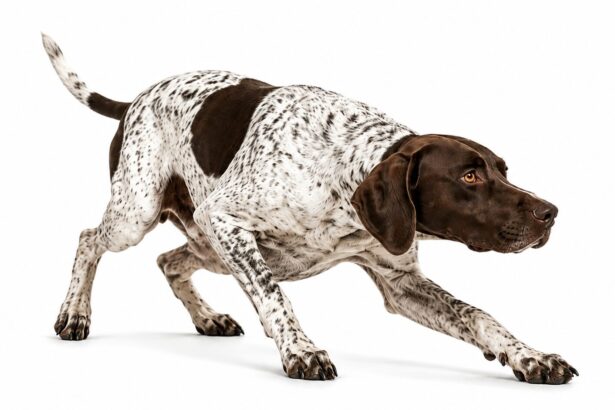
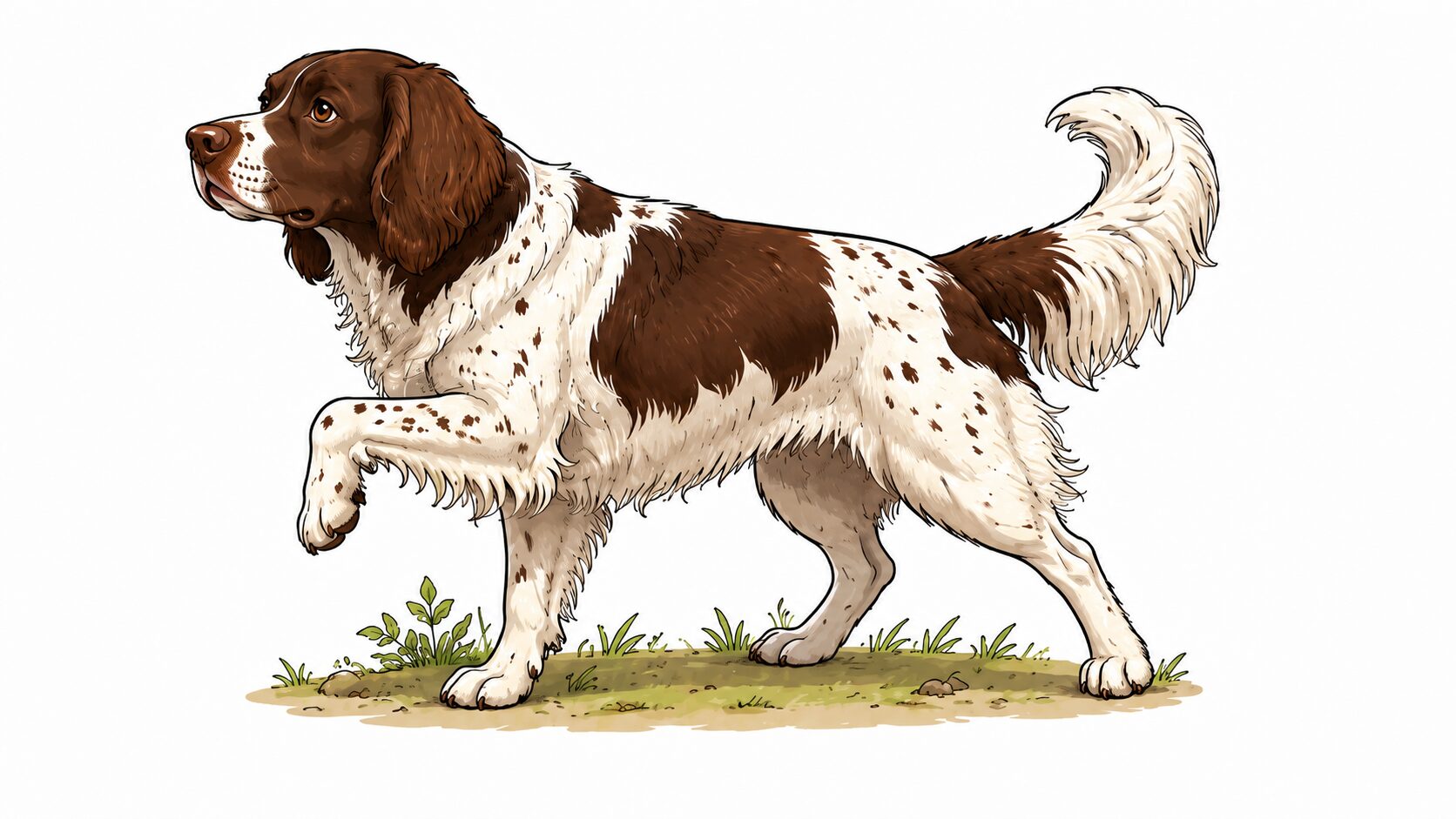
The Drentse Patrijshond is a medium-sized, well-proportioned, and athletically built continental pointing dog that presents with the clean, functional elegance of a breed shaped by practical working selection across many generations. Males stand 58 to 63 centimeters at the shoulder and weigh between 25 and 33 kilograms. Females stand 55 to 60 centimeters and are somewhat lighter. The overall impression is of a harmoniously built, dryly muscled pointing dog of good substance, carrying its frame with the flowing, ground-covering movement of a breed built for sustained working days across the varied terrain of the Dutch countryside.
The head is moderately large and well-proportioned, with a slightly domed, broad skull and a muzzle that is approximately equal in length to the skull. The eyes are large and warm amber to dark brown, set wide apart, and carry the gentle, intelligent, engaged expression that is one of the breed’s most immediately appealing features. The ears are of medium length, rounded at the tip, and hang flat and close to the cheeks, covered with long hair and feathering that blends into the general coat.
The body is slightly longer than tall, with a deep, well-sprung chest, a level topline, and well-developed, muscular hindquarters. The tail is of medium length, densely feathered, and carried in a gentle horizontal or slightly upward sweep during active work.
The coat is one of the breed’s most distinguishing features. It is medium in length, dense, and slightly wavy in texture, providing genuine field protection against water, briars, and cold without requiring the intensive maintenance of longer-coated sporting breeds. The coat forms feathering on the ears, backs of the legs, belly, and tail. Colors are white with brown, orange, or black markings distributed as patches, speckles, or a mantle over the body. The combination of the warm coat color, the feathered silhouette, and the gentle expression gives the breed one of the most immediately approachable and warmly appealing appearances in the gun dog world.
Housing And Living Requirements
The Drentse Patrijshond is a more genuinely adaptable breed in terms of living environment than many other continental gun dog breeds, combining active field capability with a calm, settled indoor character that manages suburban and semi-rural settings more comfortably than some more intensely driven sporting breeds.
A home with access to meaningful outdoor space is the most naturally suited setting. Rural and semi-rural environments where the dog can exercise across varied terrain and engage its working instincts legitimately are ideal. Suburban settings with large, securely fenced gardens work well for active owners genuinely committed to daily vigorous exercise. Urban apartment living is a poor match for a breed with genuine working heritage and significant daily exercise needs.
A securely fenced garden is important for a breed with pointing and hunting instincts. The Drentse Patrijshond’s prey drive is real and present, and a dog that has identified bird or small animal activity beyond its perimeter will be motivated to investigate. The breed does not tend toward extreme escape behaviors, but adequate fencing prevents its working instincts from becoming a management problem.
Inside the home, the Drentse Patrijshond is one of the most warmly family-integrated gun dog breeds available. The breed is particularly human-oriented, just loving being around his human family, and this quality is genuine and consistently expressed. A comfortable dog bed in a social position suits the breed’s people-oriented nature during rest periods between active sessions.
Exercise Requirements
The Drentse Patrijshond is an active sporting breed with genuine daily exercise needs that reflect its heritage as a versatile hunting dog expected to work all game across full hunting days. At least one to two hours of vigorous daily exercise is appropriate, combining structured physical activity with opportunities for the breed to engage its working instincts in purposeful ways.
Hunting and field work are the most naturally satisfying outlets. For non-hunting owners, the breed excels at dog agility, tracking, scent work, and other structured activities that engage both the physical capability and the working intelligence of a breed that has always been expected to be more than a single-purpose gun dog. A set of dog agility equipment at home provides structured physical and cognitive engagement. Swimming is a particularly natural and enjoyed exercise form for a breed that was developed to retrieve from water as well as land.
Puzzle toys and enrichment activities are important between outdoor sessions. A GPS tracker is a practical safety investment for outdoor exercise in any open or unfenced area.
Grooming Requirements
The Drentse Patrijshond’s medium-length double coat is a genuine field coat built to protect the dog from water, briars, and cold during hunting work, providing meaningful practical protection with a grooming commitment that is moderate rather than demanding.
Brushing two to three times a week under normal conditions prevents matting in the feathered areas and removes loose hair and field debris. After field work in heavy cover, prompt brushing to remove burrs, seeds, and other debris before they become embedded in the feathering is important preventive maintenance. The coat’s weather-resistant texture means it does not require professional grooming or trimming under normal circumstances, though occasional tidying of the feathering is appropriate.
Bathing every six to eight weeks is appropriate under normal conditions. The coat dries relatively efficiently after bathing or field water work given its medium length and dense but not excessively heavy structure. Thorough drying after water exposure is important to prevent the skin issues that can develop under persistently damp feathering.
The ears are the most important health-related grooming consideration. The long, feathered, pendant ears that hang close to the cheeks significantly reduce airflow to the ear canal, and the breed’s love of water and field work in wet conditions creates elevated susceptibility to bacterial and yeast infections. Weekly inspection and cleaning with a veterinarian-recommended ear cleaner, with particular attention after any water exposure or field work, is the most effective preventive measure.
Dental care should be established as a consistent routine from puppyhood. Nails should be trimmed monthly.
Diet And Nutrition
The Drentse Patrijshond is a medium to medium-large, active sporting breed with significant daily caloric needs that should be matched to its actual size and activity level. A high-quality medium or large breed formula with a named protein source as the first ingredient provides the nutritional foundation the breed requires. Active and sporting breed formulas are appropriate for dogs with high daily physical output during hunting or sport seasons.
Most adults do well on two measured meals per day. Portion control is genuinely important throughout the dog’s life. The breed’s cooperative, food-motivated nature makes it susceptible to weight gain if portions are generous and exercise is insufficient, and obesity in any sporting breed directly compounds joint health concerns and reduces documented longevity.
Maintaining lean body condition throughout the dog’s life is one of the most practically meaningful ongoing health investments. Discussing joint supplements with your veterinarian as the dog reaches middle age is worthwhile given the documented hip and elbow dysplasia in the breed.
Training treats are highly effective motivators given the breed’s food motivation and eagerness to engage with its handler, and should be counted into the daily calorie total.
Compatibility
The Drentse Patrijshond is one of the most broadly family-compatible gun dog breeds available, combining genuine sporting capability and working drive with a warmth, gentleness, and family devotion that make it accessible and rewarding across a wide range of household compositions.
With its own family, the Drentse Patrijshond is deeply and genuinely devoted. The breed forms a deep bond with those that care for it and cannot bear to be separated from its human family, and this quality is genuine and consistently expressed. The breed particularly loves being close to its people and participates actively in household life with the cheerful, engaged presence of a dog that has always lived alongside its farming family rather than in a working kennel separate from domestic life.
With children, the breed is exceptionally gentle and patient. Its moderate size, genuine playfulness, and natural warmth with children of all ages make it a natural family companion for households with children. The Drentse Patrijshond actively plays with children and retrieves balls for them, and its patience and affection in this role are among the breed’s most consistently celebrated domestic qualities.
With strangers, the breed is typically friendly and approachable after a brief assessment. It is not a suspicious guardian breed, though it will alert on arrivals and unfamiliar presences with appropriate watchdog conviction. Early socialization from puppyhood ensures this natural alertness is expressed as confident, appropriate discernment.
With other dogs, the breed is consistently sociable and adaptable. With birds and small wildlife, the pointing and hunting instinct is genuine and should be managed appropriately. A dog crate is useful during puppyhood and the settling-in period.
Behavior And Temperament
The Drentse Patrijshond’s temperament is one of the most consistently and most warmly described in the continental gun dog world: gentle, loyal, intelligent, cooperative, and possessed of the versatile working character that four centuries of development as a multipurpose farm and hunting dog for ordinary Dutch people produced. The Drentsche Patrijshond is a versatile, active, intelligent, cooperative, and joyful breed, and this description captures the essential qualities accurately.
The versatility is genuine and expressed in the breed’s willingness to engage with varied working contexts and domestic activities with equal enthusiasm. This is a breed that was never permitted the luxury of specializing in a single task, and the adaptable, cooperative working character that multi-task selection produced is one of its most valued and most consistently expressed qualities.
The gentleness is authentic and pervasive. The Drentse Patrijshond brings a warm, unhurried quality to its domestic interactions that makes it one of the more genuinely pleasant medium-sized gun dog companions available, and this quality coexists authentically with genuine working drive and field capability.
The breed’s strong human orientation, the quality that leads it to position itself close to its family and to monitor household activity with warm attentiveness, is the direct expression of centuries of development as a farm companion as well as a working hunting dog. This quality makes the Drentse Patrijshond one of the most naturally family-integrated sporting breeds available.
Training And Handling
The Drentse Patrijshond is an intelligent, cooperative, and genuinely trainable breed that approaches training with the enthusiastic, handler-focused responsiveness that centuries of close partnership with Dutch farmers produced. The Partridge Dog’s smart, attentive, and enthusiastic disposition makes it fairly easy to train, and this assessment is accurate and consistent across sources.
Positive reinforcement methods are the approach that works most reliably. The Drentse Patrijshond responds to reward, to genuine engagement, and to training that feels collaborative and purposeful. Its food motivation makes treat-based training highly productive, and training treats are among the most effective tools available for a breed this food-motivated and this genuinely eager to engage with its handler.
The breed occasionally shows some stubbornness and an independent streak, particularly when training becomes repetitive or when it has formed its own opinion about a situation. This is the working gun dog’s independent field judgment expressing itself in a training context, and patient, varied, reward-rich sessions are considerably more effective than repetitive drilling at maintaining the breed’s engagement and compliance.
Early socialization from puppyhood is important, exposing the young dog to a wide range of people, environments, sounds, and other animals during the critical developmental window. The breed’s natural friendliness means it typically takes well to broad early socialization, producing the confident, warm, socially easy adult that its character naturally supports.
Health And Lifespan
The Drentse Patrijshond is a generally healthy and robust breed with a lifespan of 12 to 15 years. The breed is hardy with few health problems noted, and this accurate assessment reflects the constitutional soundness that centuries of practical working selection in the demanding conditions of Dutch farm and field life produced. The limited number of breeds in the founding gene pool and the Drenthe farmers’ conservative approach to maintaining their dogs pure have contributed to a breed that is more genetically sound than many with larger and more commercially influenced breeding histories.
Progressive Retinal Atrophy PRA is the most consistently documented hereditary health concern in the breed, causing gradual degeneration of retinal photoreceptors leading to progressive vision loss and eventually blindness. Historically present in some breed lines, PRA has been largely eliminated from the responsible breeding population through consistent CAER eye examination and exclusion of affected and carrier individuals from breeding programs. CAER ophthalmological examination by a board-certified veterinary ophthalmologist is the recommended screening for all breeding animals, and sourcing from breeders who conduct this examination and provide documentation of results is the most important preventive step for prospective owners. Regular annual veterinary eye examinations allow for early detection and appropriate management.
Hereditary Stomatocytosis This rare genetic disorder affects red blood cell membrane integrity, causing abnormal cell rigidity that leads to hemolytic anemia, jaundice, and related complications. It is documented in the breed at low rates and is one of the more breed-specific health conditions in the Drentse Patrijshond. DNA testing for stomatocytosis is available for breeding animals, and responsible breeders screen their dogs and provide documentation.
Hip and Elbow Dysplasia Abnormal joint development causing pain, restricted movement, and progressive arthritis is documented in the breed consistent with medium to large sporting breed predispositions. OFA hip and elbow evaluation is required for all breeding animals by the American Drentsche Patrijshond Association, and sourcing from breeders who provide this documentation reduces inherited risk. Maintaining appropriate weight throughout the dog’s life and discussing joint supplements with your vet as the dog reaches middle age are meaningful protective measures.
Ear Infections The pendant ears and the breed’s love of water create elevated susceptibility to bacterial and yeast infections. Weekly inspection and cleaning, with particular attention after any water exposure or field work in wet conditions, is the most effective preventive measure and the most important routine health management commitment for Drentse Patrijshond owners.
Von Willebrand Disease Type I This mild hereditary clotting disorder causing a deficiency in von Willebrand factor protein is documented at low rates. DNA testing identifies carriers and affected individuals, and responsible breeders screen their animals.
Eye Lid Conditions Entropion, in which the eyelid rolls inward, and ectropion, in which the lower eyelid droops outward, are documented at low rates. Regular annual veterinary eye examinations allow for early detection and appropriate management.
Routine preventive care, including regular vet check-ups, consistent dental hygiene, up-to-date vaccinations, and parasite prevention appropriate for an active outdoor sporting breed, provides the foundation for a healthy Drentse Patrijshond across its impressive lifespan.
Price And Availability
The Drentse Patrijshond is genuinely rare outside the Netherlands, where approximately 5,000 dogs are registered with the breed club and the breed enjoys meaningful national recognition and appreciation. In the United States, the American Drentsche Patrijshond Association estimates fewer than 150 Drents currently reside in the country, making it one of the rarer continental hunting breeds in American ownership and contributing to the wait times of six months to a year or more that prospective owners typically face when seeking a puppy from responsible breeders.
From reputable breeders in North America, prices typically range from $1,200 to $2,500 for a well-bred puppy from health-tested parents. European breeders, particularly in the Netherlands where the breed is most established, are an option for buyers willing to navigate international import logistics. In the Netherlands, the breed is considerably more accessible with multiple active breeders producing regular litters.
The American Drentsche Patrijshond Association is the most reliable starting point for locating breeders in the United States who breed to the established standard and conduct appropriate health testing. Responsible breeders will conduct OFA hip and elbow evaluations, CAER eye certification, and DNA testing for stomatocytosis and von Willebrand disease on their breeding animals. In the Netherlands, the Nederlandse Vereniging De Drentsche Patrijshond maintains the official breeding registry and coordinates health testing requirements for all registered breeding stock.
Adoption is possible through the breed club’s rehoming network on an occasional basis, though the breed’s rarity means this is an infrequent option rather than a reliable channel.
Conclusion
The Drentse Patrijshond spent four centuries being carefully maintained by Dutch farmers in the province of Drenthe who refused to dilute their all-purpose hunting and farm dog with foreign blood, who needed a single dog that could hunt every game, guard the farmstead, pull a cart, and make a warm companion for the entire family because ordinary people hunting on ordinary budgets could not afford the aristocracy’s luxury of maintaining different specialized breeds for different tasks. The result of that practical, democratic selection is a breed of genuine versatility, extraordinary domestic warmth, and working capability that has earned it the description of a hidden gem among continental gun dog breeds. With fewer than 150 individuals in the United States and a global population concentrated mostly in the Netherlands, finding one requires patience and engagement with a small, dedicated community of enthusiasts. For the active owner who manages that search, the Drentse Patrijshond offers a working partnership and a family companionship of remarkable quality. Get properly set up before bringing one home. Our Best Dog Products page has everything you need for gentle, versatile, whole-heartedly devoted Dutch hunting dogs that carry four centuries of Drenthe farming heritage into every home they grace.