
Origin And History
The Romanian Raven Shepherd Dog, known in its native Romania as the Ciobănesc Românesc Corb — with ciobănesc meaning shepherd’s dog and corb meaning raven in Romanian, giving the breed the most immediately evocative and the most specifically color-descriptive individual name of any of the four Romanian shepherd dog breeds — also called the Corb Shepherd and known within their home region simply as the Corbi, is a large, imposing, predominantly black-coated livestock guardian dog from the Meridional Carpathian and sub-Carpathian regions of south-central Romania, specifically from the counties of Dâmbovița, Argeș, Prahova, and around Brașov in the old Muntenia region of Wallachia, the fourth and the most recently formally recognized of the four native Romanian shepherd dog breeds alongside the Romanian Mioritic Shepherd Dog, the Carpathian Shepherd Dog, and the Bucovina Shepherd Dog, recognized by the Asociația Chinologică Română (Romanian Kennel Club) on November 14, 2008 — making it the most recently officially recognized native breed by the Romanian Kennel Club of any of the four Romanian shepherd dog types — and receiving FCI recognition on September 17, 2024, making it one of the most recently internationally recognized livestock guardian breeds in this series, and a breed that in all the most specifically important individual characteristics that define authentic livestock guardian breeds — courage in confronting the largest predators of the Carpathian Mountains, independence in working without constant human supervision, devoted loyalty to the established family and flock, and a booming voice that carries great distances through mountain terrain — is among the most complete and the most genuinely functional of any European livestock guardian.
The breed’s ancient origins trace back to the same ancient Molossian dog tradition that gave rise to the broader family of European livestock guardian breeds, with the most specifically documented visual evidence for the breed’s antiquity coming from the same historical source that supports several of the four Romanian shepherd breeds: the murals and archaeological record of the Dacian-Roman wars of the 1st and 2nd centuries CE, in which large, shaggy, powerful dogs accompanying Dacian warriors and shepherds are depicted in sufficient detail to suggest strong similarity to the modern Romanian shepherd dog types. The black coat of the Raven Shepherd was a natural development in the specific geographic heartland of the breed — the Meridional Carpathian and sub-Carpathian regions of south-central Romania — where Romanian shepherds living in isolated rural communities of Wallachia selected dogs over generations for the specific working qualities of strength, endurance, predator confrontation courage, and an effective guard bark that could alert shepherds at great distances across mountain terrain, with the predominantly black coat developing as a natural landrace characteristic of the specific populations of these counties rather than through any deliberate color selection program.
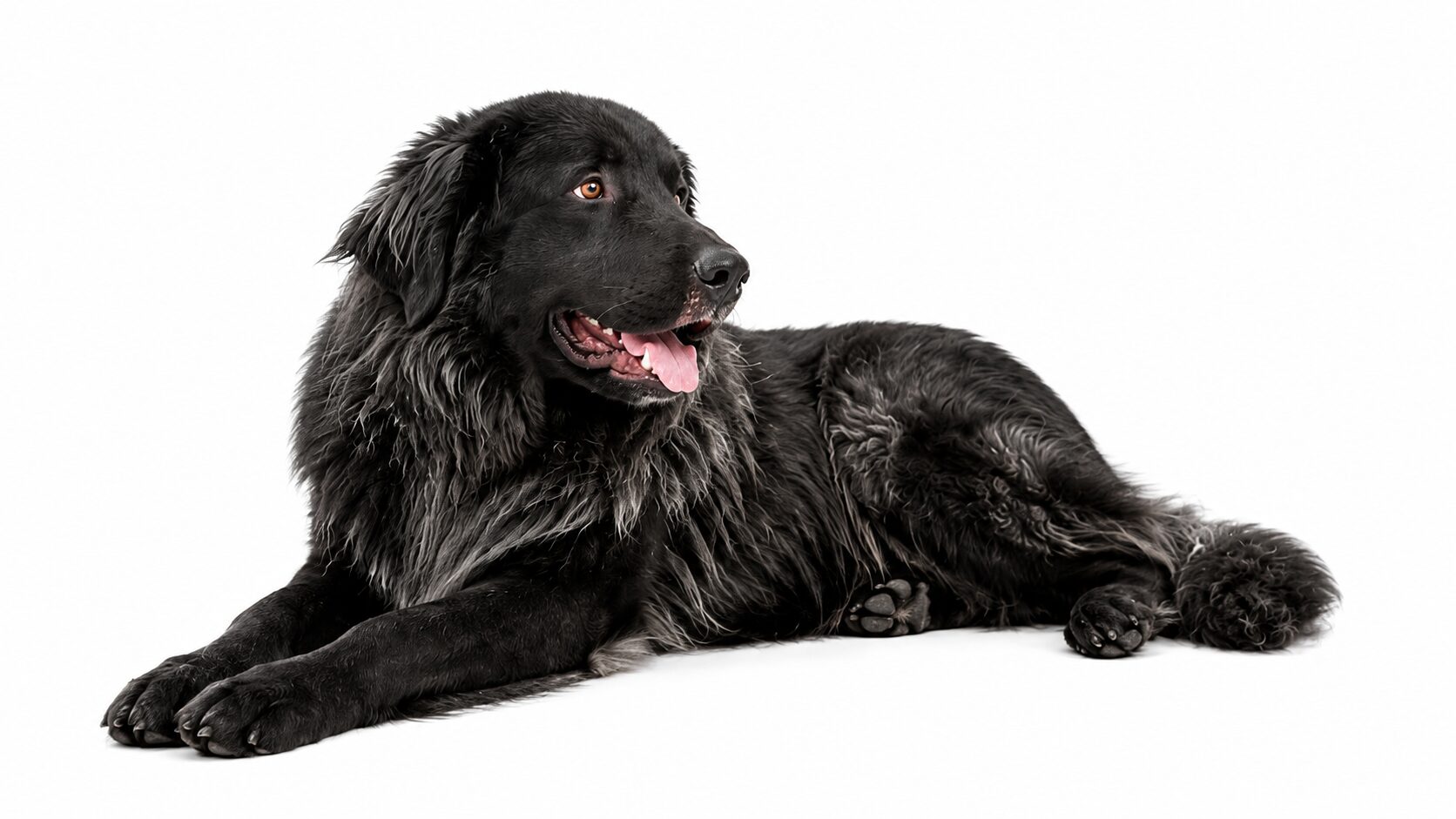
The Corb’s name — Raven — is the most linguistically direct individual breed name etymology in the four Romanian shepherd dog group. The word corb means raven in Romanian, and the name is applied with the specific directness that traditional rural naming conventions always employ: this dog’s coat is the color of the raven’s feathers, a clear black that covers at least 80% of the body with white markings permissible on the chest, forequarters, and occasionally the tips of the rear feet. The Corbi were simply the black shepherd dogs of the Wallachia mountain communities, known by this descriptive name for generations before any formal cynological documentation was undertaken. This informal regional recognition long preceded the formal institutional recognition that arrived only in 2008 from the Romanian Kennel Club and 2024 from the FCI.
The breed plays a specific and specifically documented role in the transhumance tradition — the seasonal movement of livestock from winter lowland pastures to high summer mountain pastures — that has characterized Romanian pastoral life in the Carpathians for centuries. During these seasonal migrations, the Corbi serve as the primary guardians that allow flocks to coexist with wolves, brown bears, and lynxes in the mountain pastures without significant losses to either — a coexistence role that has acquired new urgency in the context of Romania’s contemporary large predator conservation programs, where the country maintains the largest wolf and brown bear populations in Central and Eastern Europe and where the effective integration of livestock guardian dogs into pastoral practices is the most practically important single conservation tool available for maintaining public acceptance of large predator populations.
The breed’s near-endangerment in the 20th century reflects the broader social transformation of Romanian agricultural communities — as millions migrated from rural areas to cities for economic opportunities during the communist period and after the 1989 revolution, the demand for working shepherd dogs diminished significantly, threatening breeds that had always been maintained through working utility rather than aesthetic or competitive breeding programs. Preservation efforts intensified in the 2000s through initiatives by the Asociația Chinologică Română and related cynological clubs, which established selective breeding programs to maintain genetic purity and working abilities. The first breed standard was written in 1987, and recognition by the Romanian Kennel Club on November 14, 2008, and by the FCI on September 17, 2024, formalized the institutional framework that sustains the breed going forward.
Breed Overview
| Trait | Details |
|---|---|
| Origin | Meridional Carpathian and sub-Carpathian regions of south-central Romania (Dâmbovița, Argeș, Prahova counties; around Brașov) |
| Romanian Name | Ciobănesc Românesc Corb |
| Name Meaning | Corb = raven (Romanian); named for the predominantly black coat |
| Also Known As | Corb Shepherd; Corbi (regional plural) |
| One of Four Romanian Shepherd Breeds | With Romanian Mioritic Shepherd Dog; Carpathian Shepherd Dog; Bucovina Shepherd Dog |
| Romanian Kennel Club Recognition | November 14, 2008 (most recently recognized of four Romanian shepherd breeds) |
| FCI Recognition | September 17, 2024 (Group 2, Section 2.2, Molossoid Breeds, Mountain type) |
| AKC Status | Not yet recognized |
| First Breed Standard | 1987 |
| Geographic Heartland | Old Muntenia region of Wallachia (south-central Romania) |
| Historical References | Dacian-Roman battle murals; centuries of Carpathian pastoral tradition |
| Transhumance Role | Guardian during seasonal livestock migrations; allows coexistence with wolves, bears, lynxes |
| Conservation Significance | Key tool for large predator coexistence in Romania’s Carpathians |
| Coat Color | Predominantly black (minimum 80% of body); most distinctive feature |
| White Markings | Chest, forequarters, occasionally rear feet tips; permissible |
| Coat in Summer | Can develop reddish tinge after extended sun exposure |
| Height | Males 23–28 inches (58–71 cm) / Females slightly smaller |
| Weight | 88–110 pounds (40–50 kg); males up to 130 pounds |
| Lifespan | 12–14 years |
| Coat | Long, straight, rough outer coat; short dense undercoat; mane around neck; fringes on leg backs |
| Coat Head and Forelegs | Sparse and short |
| Eyes | Hazel, dark brown, or light brown; calm, intelligent expression |
| Ears | V-shaped; pendant; close to cheeks |
| Bark | Very strong; capable of travelling great distances |
| Discipline | Calm and balanced off-duty; fearless and courageous with predators |
| Independence | Works autonomously for extended periods without human intervention |
The Black Guardian: What the Raven Color Means in Context
Before discussing care, the Romanian Raven Shepherd Dog’s most immediately distinctive individual characteristic deserves a dedicated acknowledgment, because the predominantly black coat that gives the breed its name is not merely an aesthetic identifier but carries specific practical implications that distinguish this breed from the three other Romanian shepherd dog breeds in ways that extend beyond color alone.
The most immediately obvious implication is the contrast to the white or pale coats of the Romanian Mioritic Shepherd Dog — the breed that is most specifically and the most personally associated with the white livestock guardian tradition shared by the Great Pyrenees, Kuvász, Maremma Sheepdog, and Akbash. The white coat’s primary claimed advantage in livestock guardian tradition is camouflage among white-wooled sheep flocks, allowing the guardian to be indistinguishable from the animals it protects. The Corb’s black coat contrasts completely with the white flock, making it immediately visible to the shepherd and to predators alike — a visibility that serves a different strategic purpose: announcing the guardian’s presence as a deterrent rather than relying on concealed approach. The booming, far-traveling voice that the breed is celebrated for complements this visibility strategy — the Corb announces itself at great distances, deterring predators through the combination of visible size and audible warning rather than through the concealment-until-contact approach.
After summer sun exposure, the coat can take on a reddish tinge — a temporary seasonal color change that is entirely normal for the breed and that reverses with autumn coat renewal.
The Four Romanian Shepherd Dog Breeds in Context
Because the Romanian Raven Shepherd Dog is most specifically understood alongside its three sibling breeds from the same Carpathian Mountain pastoral tradition, a brief comparison serves any reader encountering these breeds for the first time.
The Romanian Mioritic Shepherd Dog — the Barac — is the most profusely coated, predominantly white, and the most specifically massive of the four. The Carpathian Shepherd Dog — formerly the Zăvod — is the more wolf-like, shorter-coated, grey-and-fawn colored breed of the eastern Carpathians. The Bucovina Shepherd Dog comes from Bucovina in northeastern Romania and is closely related to the Greek Shepherd and Šarplaninac. The Romanian Raven Shepherd Dog — the Corb — is the most recently formally recognized, the most specifically and immediately identified by its predominantly black coat, and the most specifically from the Meridional Carpathians and Wallachia lowland-margin counties. All four share the fundamental livestock guardian temperament of independence, courage with predators, calm loyalty to family, and wariness with strangers.
Appearance And Size
The Romanian Raven Shepherd Dog is a large, powerfully built, and specifically imposing livestock guardian that presents with the most immediately memorable individual combination of its predominantly black coat and the proud, commanding bearing that the breed’s centuries of autonomous predator confrontation in the Carpathian Mountains specifically and constitutionally produced.
Males typically stand 23 to 28 inches at the shoulder and weigh 88 to 110 pounds, with the largest males reaching 130 pounds; females are somewhat smaller. The body is massive and sturdy, rectangular and rather long, with a strong skeleton and wide, tall chest. The massive, well-chiseled head features a broad muzzle and the calm but alert expression that characterizes the most settled and the most genuinely capable livestock guardian breeds. The mane of longer fur around the neck is one of the most personally striking individual visual features — combined with the predominantly black coat, the mane gives the breed a leonine quality that is among the most impressive individual aesthetic presentations of any Romanian shepherd breed.
The coat is long, straight, and rough on the body — the outer coat with a short, dense insulating undercoat beneath — with the notable characteristic that the hair is sparse and short on the head and forelegs while being abundant on the body, creating the distinctive textural contrast that makes the breed’s physical proportions appear simultaneously lean in the face and massive in the body.
Housing And Living Requirements
The Romanian Raven Shepherd Dog is among the most specifically rural-oriented of any livestock guardian breed in this series — a breed developed for mountain and sub-Carpathian pasture work, patrolling large, remote mountain pastures, often working without direct human oversight, is genuinely not appropriately housed in urban apartments or small suburban properties. Rural properties with meaningful outdoor space — ideally farm or ranch settings where the breed’s working guardian instincts can be genuinely and appropriately applied — provide the most genuine individual welfare context.
Secure fencing of substantial physical robustness is essential. A breed that confronts wolves and brown bears will not be contained by inadequate perimeter fencing. The predominantly black coat provides somewhat less cold-weather insulation than the profuse white coat of the Mioritic, though the dense double coat still provides meaningful protection in the Carpathian climate for which the breed was developed. Heat management in warm climates is an important welfare consideration for any heavy-coated breed.
An orthopedic dog bed is specifically important for a large active breed with documented joint disease susceptibility. A comfortable dog bed in a social area of the home suits the breed’s devoted family character when indoors.
Exercise Requirements
The Romanian Raven Shepherd Dog requires at least 90 minutes of daily exercise appropriate to its large working dog heritage — the livestock guardian’s sustained patrol across mountain pastures produces a breed with the endurance and the working drive that modest daily walks do not adequately address. Daily hiking, extended outdoor roaming in secured property, and the territorial patrol that the breed’s instincts make constant and naturally fulfilling provide the most appropriate daily engagement.
Scent work and tracking activities engage the breed’s exceptional environmental awareness in purposeful organized sport — the perceptual acuity that allows a Corb to detect a wolf or bear at great distance in mountain terrain translates directly to organized scenting sport. The breed’s most natural and most personally fulfilling individual activity remains exactly the territorial guardian patrol that its instincts have always directed — free outdoor movement with guardian purpose across the full perimeter of its territory.
Puzzle toys and enrichment activities are genuinely important for cognitive engagement between outdoor sessions — a breed that has always made independent guardian decisions without constant handler direction requires genuine cognitive challenge to remain balanced and content in domestic contexts. A GPS tracker is a practical safety investment for outdoor exercise given the guardian breed’s tendency to expand its patrol range when predator signs are detected.
Grooming Requirements
The Romanian Raven Shepherd Dog’s long, rough outer coat with its dense undercoat requires consistent regular maintenance — though working dogs in their native Romanian pastoral context receive minimal formal grooming, domestic companions require consistent brushing to prevent the mat formation that develops in the body coat when brushing is inconsistent, particularly in the longer-haired areas around the neck mane and the leg fringing.
Weekly brushing with a pin brush and metal comb removes loose hair and prevents tangles from progressing to mats — ravens don’t generally require baths but should be brushed weekly to remove any loose fur or dirt. During seasonal shedding periods, more frequent daily brushing manages the undercoat release effectively. The coat’s natural sebaceous oils provide weather resistance that excessive bathing can diminish — bathing should occur only when genuinely needed rather than on a fixed calendar schedule.
The V-shaped pendant ears require weekly inspection and cleaning — reduced airflow to the ear canal from the pendant conformation creates the warm, moist environment where infections develop, particularly after wet weather in mountain conditions. Dental care should be established as a consistent routine from puppyhood. Nails should be trimmed regularly. Discussing joint supplements with your veterinarian from early adulthood is warranted given the breed’s large size.
Diet And Nutrition
The Romanian Raven Shepherd Dog is a large active working breed with daily caloric needs calibrated to its actual size and genuine working output. A high-quality large breed active formula with a named protein source as the first ingredient provides the nutritional foundation. Puppies benefit from a large-breed growth diet — specially formulated diets help prevent large dogs from growing too fast, which may decrease the likelihood or severity of hip dysplasia as they age.
Most adults do well on two measured meals per day. To help this breed maintain a healthy weight, measure meals to avoid overfeeding and keep treats to 10% or less of daily calories. Maintaining lean, athletic body condition appropriate to an active working guardian supports both working capability and long-term joint health. Training treats are effective motivators in training sessions.
Compatibility
The Romanian Raven Shepherd Dog is devoted to family members while being specifically and constitutionally wary of strangers — the most concisely accurate individual temperament characterization of any livestock guardian breed in this series, and one that applies to the Corb with particular authenticity given the breed’s centuries of autonomous property and flock guarding in the isolated rural communities of Wallachia and the Meridional Carpathians.
With its own established family, the breed is completely devoted. They are friendly and devoted to their family. The depth of this devotion reflects the working shepherd’s integration of dog and family into a single social unit — the Corb has always been the shepherd’s constant companion, guarding both flock and family with equal commitment. With children, the breed is generally appropriate and protective when raised together from puppyhood.
With strangers, the breed is specifically and constitutionally suspicious — a working Corb raised entirely in livestock guardian contexts will not be trustworthy with unknown people, a characterization that must be understood as a feature of authentic working livestock guardian heritage rather than a behavioral problem. Early socialization from puppyhood is the most critically important individual investment for any Corb that will live in domestic contexts with regular visitor contact. With other dogs, the breed is typically pack-cooperative within the established group but may be dominant with unfamiliar individuals. A dog crate is a useful management tool during puppyhood.
Behavior And Temperament
The Romanian Raven Shepherd Dog is vivid and balanced; alert and vigilant; instinctively courageous in confronting wolves and bears; disciplined in its response to its owner’s direction; and calm in familiar domestic settings between working duties — the behavioral profile of a genuine livestock guardian breed that has been honed by centuries of autonomous mountain work.
The booming bark is the most specifically celebrated individual behavioral quality — a bark that travels great distances through mountain terrain, alerting the shepherd and deterring predators before physical confrontation becomes necessary. This bark is the Corb’s primary working tool, used purposefully rather than indiscriminately: to announce the guardian’s presence, to signal the alarm, and to communicate the nature and location of a detected threat across the mountain distances that separate working dogs from their human partners in Carpathian pastoral practice.
The independence is genuine and specifically embedded — these dogs were bred to patrol large, remote mountain pastures, often working without direct human oversight, and to make independent guardian decisions when predators are detected without waiting for human direction. In domestic contexts, this independence requires the specific consistent confident leadership that the breed respects rather than the passive ownership that it will simply disregard.
Training And Handling
The Romanian Raven Shepherd Dog requires experienced, patient, and specifically guardian-breed-knowledgeable handling — not an appropriate breed for first-time dog owners or for handlers who underestimate the combination of large size, genuine predator-confrontation courage, and the independent working intelligence of a breed that has always operated without constant handler supervision.
Positive reinforcement methods are the most effective approach. Training treats are effective motivators in patient, consistent sessions. The breed is relatively easy to train for an experienced owner who understands livestock guardian breed psychology — the intelligence is genuine, the cooperative instinct with a respected handler is real, and the Corb’s responsiveness to patient consistent training is among the most specific and most consistently noted individual positive training assessments of any Romanian shepherd breed. Early socialization from the earliest possible puppyhood age is the most critically important individual behavioral investment.
Health And Lifespan
The Romanian Raven Shepherd Dog has a lifespan of 12 to 14 years and is generally very healthy, with fewer hereditary conditions than some other breeds — a specifically encouraging individual health assessment that reflects the constitutional robustness of a natural landrace breed maintained through centuries of practical working selection in the demanding Carpathian Mountain environment. Their active lifestyle spending much of their time outdoors herding and protecting livestock helps them stay physically fit and mentally sharp.
Hip Dysplasia and Joint Issues Hip dysplasia and joint conditions are the most consistently documented individual health concerns given the breed’s significant size. OFA hip evaluation of breeding animals is specifically recommended. Large breed puppy nutrition management and lean body condition maintenance throughout adult life are the most practically meaningful protective investments.
Bloat (Gastric Dilatation-Volvulus) The deep chest creates meaningful GDV risk. Two smaller meals daily, slow-feeder bowls, and avoiding vigorous exercise for at least one hour before and after meals are permanent preventive practices.
Skin and Coat Conditions The dense double coat can accumulate moisture and debris that leads to skin irritation when grooming is inconsistent. Weekly brushing and skin inspection are the most important preventive practices.
Routine preventive care including regular vet checks, OFA hip evaluation for breeding animals, consistent dental hygiene, up-to-date vaccinations appropriate for an active outdoor breed in tick-rich Carpathian Mountain and lowland environments, year-round parasite prevention, and weekly ear inspection and cleaning provides the foundation for a healthy Romanian Raven Shepherd Dog.
Price And Availability
The Romanian Raven Shepherd Dog is rare outside Romania — the most recently recognized of the four Romanian shepherd breeds by the Romanian Kennel Club and among the most recently recognized by the FCI of any European livestock guardian breed, it remains predominantly working dogs in their native counties of Dâmbovița, Argeș, Prahova, and around Brașov. Outside Romania, the breed is essentially unavailable through conventional channels, with the small community of Asociația Chinologică Română registered breeders being the most appropriate source for any prospective owner.
Conclusion
The Romanian Raven Shepherd Dog has guarded sheep and cattle from wolves, brown bears, and lynxes in the Meridional Carpathian and sub-Carpathian regions of south-central Romania for centuries, known for generations in the counties of Dâmbovița, Argeș, Prahova, and around Brașov simply as the Corbi — the Raven Dogs — for the clear black coat that gives the breed its most immediately distinctive individual characteristic, descends from ancient Molossian dog ancestors with possible visual documentation in the Dacian-Roman battle murals of the 1st and 2nd centuries CE, evolved as a natural landrace in the old Muntenia region of Wallachia selected entirely for working utility rather than aesthetic criteria, plays a specific role in the transhumance pastoral tradition and in contemporary large predator coexistence programs in Romania’s Carpathians, had its first breed standard written in 1987, was recognized by the Romanian Kennel Club on November 14, 2008 — the most recently recognized of the four Romanian shepherd breeds — received FCI international recognition on September 17, 2024 making it among the most recently internationally recognized livestock guardian breeds, has the most far-traveling individual bark of any Romanian shepherd breed, works autonomously for extended periods without human intervention, and stands today as the most specifically raven-black-coat-named, the most specifically Dâmbovița-Argeș-Prahova-Brașov-Wallachia-Muntenia-heartland, the most specifically November-14-2008-Romanian-Kennel-Club-and-September-17-2024-FCI-most-recently-recognized, the most specifically booming-bark-travels-great-mountain-distances, the most specifically predominantly-black-coat-mane-and-fringed-leg-contrast, the most specifically large-predator-coexistence-conservation-tool, and the most specifically autonomous-working-without-human-oversight of all the four Romanian shepherd breed partnerships available. Get properly set up before bringing one home. Our Best Dog Products page has everything you need for predominantly-black-long-rough-coated, V-shaped-pendant-eared, neck-maned, leg-fringed, booming-bark-mountain-distance-carrying, whole-heartedly devoted Wallachia and Meridional Carpathian livestock guardian dogs that carry the full heritage of the ancient Molossian ancestry, the centuries of Romanian pastoral tradition, the Corbi regional naming from generations of black-coated mountain shepherding, the transhumance seasonal migration guardian role, the contemporary wolf and bear coexistence conservation function, the 1987 first breed standard, the 2008 Romanian Kennel Club recognition, the 2024 FCI international recognition, and the specific vivid-and-balanced, alert-and-vigilant, fearless-with-predators, devoted-to-family, suspicious-of-strangers, autonomous-working-intelligence of the breed that the shepherds of Wallachia named after the raven and trusted with their flocks in the deepest forests of the Carpathian Mountains.