
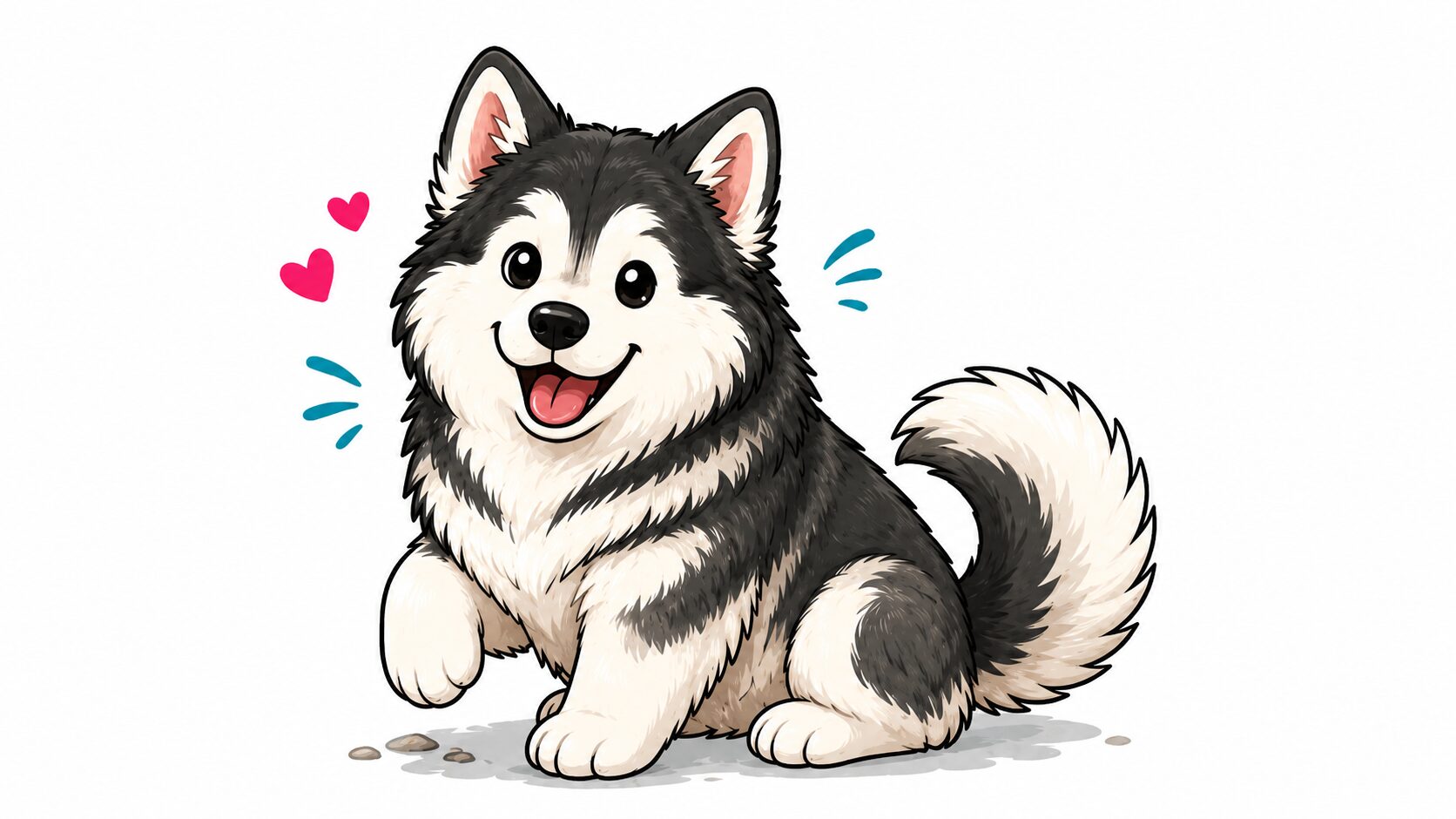
Origin And History
Long before Alaska was a state, before the Gold Rush, before any Western explorer had mapped the coastline of northwestern Alaska, the Mahlemut people were already living there alongside one of the most remarkable working dogs ever developed. The Alaskan Malamute is not a recently invented breed refined over a few generations in a kennel. It is an ancient animal, shaped over thousands of years by one of the most demanding environments on earth and by a people whose survival depended entirely on what their dogs could do.
The Mahlemut were an Inuit tribe who settled along the shores of Kotzebue Sound in northwestern Alaska, and the dogs they kept were not a luxury or a hobby. They were as essential to daily life as any other survival tool. These dogs hauled heavy sleds laden with food, camp supplies, and people across vast distances of ice and snow. They assisted in hunting seal and fending off polar bears. They slept alongside children in the coldest conditions imaginable, providing warmth through their bodies and safety through their presence. Early accounts of the Mahlemut people note consistently that they cared for their dogs exceptionally well by the standards of Arctic tribes, and that their dogs were correspondingly more affectionate and bonded to humans than most working sled dogs of the region. That care produced a temperament that has remained consistent in the breed for millennia.
Bone and ivory carvings dated to thousands of years ago show dogs almost identical in form to the modern Alaskan Malamute, which speaks to how stable and purpose-fitted the breed became across its long development. It was never bred for speed. The Siberian Husky was the racer. The Malamute was the freighter, built to pull enormous loads steadily across long distances, valued for power and endurance above all else.
The Gold Rush of 1896 nearly destroyed the breed. The flood of prospectors into Alaska brought with them a chaotic demand for sled dogs, and crossbreeding with whatever working dogs were available diluted many of the native Alaskan dog types into unrecognizable mixtures. The Mahlemut’s relative isolation and the remoteness of their territory protected their dogs from the worst of this scramble, and it is from that protected lineage that the modern breed descends.
Three distinct strains contributed to the AKC-recognized Malamute. The Kotzebue line, developed by Arthur Walden and later Eva Seeley, produced the uniform, compact dogs that formed the initial AKC foundation. The M’Loot line, developed by Paul Voelker Sr., contributed a larger, more diverse type. The Hinman-Irwin line added further balance to the gene pool. The AKC formally recognized the Alaskan Malamute in 1935, and the breed’s first championship was awarded that same year.
During World War II, registered Alaskan Malamutes were borrowed for military service as freight dogs and search and rescue animals. Many of these dogs were lost during service in Antarctica, a sacrifice that significantly reduced the breed’s numbers and created a genetic bottleneck that modern breeders have worked steadily to address.
Breed Overview
| Trait | Details |
|---|---|
| Breed Group | Working |
| Height | Males 25 inches / Females 23 inches |
| Weight | Males 85 pounds / Females 75 pounds |
| Lifespan | 10–14 years |
| Coat | Thick, dense double coat |
| Colors | Light grey to black, sable, red, and white; always with white markings |
| Temperament | Loyal, friendly, playful, independent, energetic, stubborn |
| AKC Recognition | 1935 |
Appearance And Size
The Alaskan Malamute is the largest of the Arctic sled dogs and looks every inch of it. The AKC standard calls for males to stand 25 inches at the shoulder and weigh 85 pounds, with females at 23 inches and 75 pounds. In practice, many Malamutes, particularly those from giant breeding lines, exceed these measurements considerably, with some individuals reaching 100 to 130 pounds or more. The standard size and the giant size carry the same fundamental characteristics. They simply carry them at different scales.
The build is one of the most powerful in the working dog world. Broad shoulders, a deep chest, a muscular back, and heavily boned legs are combined into a frame built specifically for pulling enormous loads at a steady pace over long distances. There is nothing delicate or refined about the Malamute’s structure. It is heavy, solid, and purposefully built in a way that communicates functional power at a glance.
The head is broad and deep, with a moderately rounded skull, a well-defined stop, and a substantial muzzle. The ears are medium-sized and triangular, carried erect when the dog is alert. The eyes are almond-shaped, obliquely set, and brown. Blue eyes are a disqualifying fault in the show ring, which distinguishes the Malamute from the Siberian Husky, where blue eyes are permitted. The expression is one of the Malamute’s most distinctive qualities. It is soft, warm, and intelligent, entirely at odds with the dog’s imposing physical presence.
The face markings are one of the breed’s signature features. The standard calls for either an all-white face or a face marked with a bar or mask, combined with a cap over the head. These markings are consistent and precise in well-bred dogs. The coat is thick, dense, and double-layered, with a coarse outer guard coat and a dense, oily, woolly undercoat that was designed to insulate against temperatures that would kill most dogs. The tail is well-furred and carried over the back like a waving plume, another characteristic of the northern spitz type.
Color ranges from light grey to black, with sable, red, and all gradations between. White is always present on the underbody, legs, feet, and face markings. Solid white dogs are also accepted within the standard.
Housing And Living Requirements
The Alaskan Malamute is adaptable in some respects but has non-negotiable requirements in others, and being clear about those requirements before bringing one home makes everything that follows considerably more manageable. A home with a large, securely fenced yard is the minimum appropriate setup. A rural or suburban property with significant outdoor space is genuinely ideal. Urban apartment living, while possible in theory with extraordinary daily commitment, is a poor environmental fit for a dog of this size and energy output.
The fence is a subject that Malamute owners discuss with a weary specificity that reflects hard experience. The Malamute is an expert digger, a capable jumper, and an inventive problem solver when it comes to the barrier between itself and whatever interests it on the other side. Standard fencing that would contain most dogs presents what many Malamutes treat as an interesting challenge rather than a genuine obstacle. Tall, solid fencing with a dig guard at the base is the practical minimum, and even that should be inspected regularly.
Inside the home, a Malamute that is getting adequate exercise and engagement is a calm, affectionate, and often surprisingly quiet housemate. The challenge is getting it to that point consistently. A large orthopedic dog bed in a position where the dog can observe household activity is both appropriate for a breed this size and genuinely appreciated by an animal that rests with purpose between exercise sessions.
The Malamute’s thick double coat makes it supremely well-adapted to cold weather and considerably less comfortable in hot and humid climates. In warmer regions, exercise must be scheduled for early morning or evening when temperatures are lower, shade and fresh water must be available at all times, and air-conditioned indoor access during the hottest parts of the day is an important welfare consideration rather than an optional luxury.
Exercise Requirements
The Alaskan Malamute needs substantial daily exercise, and no amount of yard access substitutes for structured, intentional physical activity. A dog in a yard will wander, dig, and patrol. That is not the same as genuine exercise, and Malamute owners who rely on yard access as their primary exercise strategy consistently report the behavioral consequences. A minimum of two hours of vigorous daily physical activity is the realistic requirement for an adult Malamute in its working years.
Long hikes, weight pulling, skijoring, canicross, and sustained off-leash running in securely fenced spaces are all well-suited outlets for a breed built for endurance over distance. The Malamute was not designed for sprint activities but for sustained, steady effort, and exercise programs that reflect that natural rhythm suit it considerably better than brief, intense bursts. Dog agility equipment provides a useful supplementary outlet, engaging the dog’s athleticism and intelligence in a structured and productive way.
Mental stimulation is as important as physical exercise for a breed this intelligent. Scent work, tracking, and problem-solving activities engage the Malamute’s considerable intelligence and provide the kind of mental tiredness that physical exercise alone cannot fully replicate. A Malamute that is physically tired but mentally bored will still find ways to express that deficit, and those expressions reliably involve holes, destruction, and escape attempts.
During puppyhood, exercise should be kept to low-impact activities. Giant breed puppies growing through rapid developmental phases are acutely vulnerable to joint damage from excessive high-impact exercise before growth plates close, and the Malamute’s substantial adult size means the development period demands particular care.
Grooming Requirements
The Alaskan Malamute’s double coat is spectacular, functional, and demanding in roughly equal measure. It sheds throughout the year at a manageable level and then twice annually, in spring and fall, blows its undercoat in quantities that new owners consistently describe as overwhelming. During these shedding seasons, daily brushing is the only practical approach to managing the volume. Outside of coat blow periods, a thorough brushing two to three times a week prevents matting, removes loose hair, and keeps the dense undercoat aerated and functional.
The undercoat must never be shaved. The double coat provides insulation against both cold and heat, and removing it disrupts the coat’s temperature-regulating function in both directions. This is a particularly important point for owners in warmer climates who may be tempted to clip the coat in summer. The coat should be left intact and managed through regular brushing and appropriate environmental management instead.
Bathing every six to eight weeks is appropriate under most circumstances. The Malamute’s thick coat holds moisture and takes considerable time to dry fully, so thorough drying after every bath is important to prevent skin issues from developing underneath the dense undercoat.
Professional grooming is worth considering, particularly during the heavy seasonal sheds, when a professional deshedding treatment can remove far more undercoat in a single session than most home brushing manages across a week. The cost is justified by the practical benefit and the reduction in household hair volume.
Standard maintenance rounds out the grooming routine. Dental care is particularly important for this breed, which is documented as more prone to dental disease than many other breeds. Regular home brushing from puppyhood and professional cleanings at veterinary check-ups make a meaningful difference in long-term dental health. Nails should be trimmed monthly, and ears should be checked and cleaned weekly.
Diet And Nutrition
Feeding an Alaskan Malamute correctly requires genuine attention to the dog’s size, activity level, and individual metabolism. A high-quality large or giant breed formula with a named protein source as the first ingredient provides the nutritional foundation this breed needs. The Malamute’s working heritage means it was designed to process a diet high in protein and fat, and a formula that reflects those needs supports the lean, muscular build the breed should maintain.
Most adult Malamutes do well on two measured meals per day. Portion control throughout the dog’s life is important and worth taking seriously. The Malamute can and does gain weight when its food intake is not matched to its actual activity level, and extra weight on a breed already carrying significant mass accelerates the development of hip dysplasia and joint problems considerably. Monthly food costs for a large, active Malamute typically run between $70 and $100 depending on the brand and formula.
Bloat is a genuine and life-threatening concern for the Malamute given its deep chest. Gastric dilatation-volvulus requires emergency surgery and can be fatal if not treated immediately. Feeding two smaller meals rather than one large daily serving, avoiding vigorous exercise for at least an hour before and after eating, and using a slow-feeder bowl to reduce eating speed are all practical and meaningful preventive steps. The warning signs, which include unproductive retching, a visibly distended abdomen, and extreme restlessness after eating, should be understood by every Malamute owner before they are ever needed.
Training treats are useful motivators but should always be counted into the daily calorie total rather than added freely on top of full meals.
Compatibility
The Alaskan Malamute is a fundamentally friendly, socially oriented breed that extends warmth broadly, which is one of the qualities that makes it both so appealing to live with and so ineffective as a guard dog. It does not have the territorial suspicion of guardian breeds or the reserved aloofness of more independent working dogs. Most Malamutes greet strangers with the same cheerful interest they show their own family, which means they will not alert reliably to intruders and should not be expected to.
With children, the Malamute has a long and well-documented history of patience and affection, reflecting the Mahlemut tradition of allowing these dogs to sleep alongside and watch over children in the community. With older children who can match the dog’s energy and understand how to interact with a large, strong animal respectfully, the Malamute is an excellent companion. With very young children, the dog’s sheer size and boisterous playfulness create a risk of accidental injury even without any aggressive intent, and supervision is always appropriate.
With other dogs, the Malamute’s compatibility is more complicated. Same-sex aggression, particularly between males, is a well-documented tendency in the breed and one that new owners should take seriously before establishing a multi-dog household. With dogs it has been raised alongside from puppyhood, the Malamute typically coexists well. Introductions to unfamiliar dogs should be handled carefully and on neutral ground.
With small animals, the Malamute’s prey drive, inherited from a dog that hunted alongside its people, can be significant. Cats, rabbits, and other small pets should be introduced with extreme care and managed consistently. Co-existence is possible in many cases but should not be assumed.
A dog crate is genuinely useful during puppyhood and the settling-in period, providing a secure space for the dog and preventing the destructive behavior that a young, under-exercised Malamute is more than capable of.
Behavior And Temperament
The Alaskan Malamute is one of the most joyful and energetically expressive large breeds a person can share a home with, and that quality sits alongside one of the most impressively stubborn independent streaks in the working dog world. Both things are true simultaneously, and understanding that combination is the foundation of managing a Malamute successfully.
The friendliness is genuine and comprehensive. The Malamute likes people, nearly all people, with an openness that reflects centuries of close partnership with the Mahlemut community. It is a pack-oriented breed that needs social connection and does not handle isolation or loneliness well. A Malamute that is well-exercised, well-engaged, and well-connected to its family is a warm, playful, and deeply rewarding companion. One that is bored, under-exercised, or isolated is a completely different proposition.
The vocality is worth preparing for. Malamutes do not bark frequently, but they howl, they yodel, they make conversational noises, and they express their opinions at volumes that carry considerable distances. This is not aggression. It is communication, and it is deeply ingrained in a breed that worked in conditions where human and dog needed to maintain contact across difficult terrain. Managing that vocality through exercise and engagement is more effective than attempting to suppress it directly.
The independence is not stubbornness in the negative sense of the word. It is the self-direction of a breed that was required to make complex working decisions without waiting for human input. A Malamute that does not comply with a command it sees no reason to follow is not being defiant. It is exercising the judgment that made it valuable in the first place.
Training And Handling
Training the Alaskan Malamute requires patience, consistency, a genuine sense of humor, and a realistic acceptance of what this breed will and will not do. The Malamute is intelligent. Nobody who has lived with one doubts that. But its intelligence is paired with an independent confidence that means it applies its intelligence to deciding whether compliance is worth its while rather than to figuring out how to comply as quickly as possible.
Positive reinforcement is the approach that works. The Malamute responds to reward, to genuine engagement from its handler, and to training that feels purposeful and varied rather than repetitive and mechanical. Reward-based training methods that make desired behaviors consistently worth the dog’s while produce the most durable results. Harsh corrections, dominance-based approaches, or any training that relies on physical pressure produce resentment and resistance rather than compliance.
Early socialization beginning in puppyhood is essential. Exposing a young Malamute to a wide range of people, dogs, environments, and sounds during the critical developmental window shapes an adult dog that moves through the world with confidence rather than anxiety or reactivity. Given the breed’s size and strength, a Malamute that has not been properly socialized creates a genuinely significant management challenge.
High-value training treats are particularly important for recall work, where the competition with the Malamute’s natural wandering instinct and prey drive requires maximum motivational input. Off-leash reliability in any unfenced area is not a realistic expectation for most Malamutes regardless of training investment, and a GPS tracker is worth serious consideration for any owner who spends time outdoors with their dog in areas without secure containment.
This is not a beginner’s breed. It suits owners who are active, patient, consistent, and who find the Malamute’s independent personality charming rather than frustrating.
Health And Lifespan
The Alaskan Malamute is a relatively robust breed with an average lifespan of 10 to 14 years. Its working heritage produced a constitution that holds up well in many respects, but there are hereditary and size-related conditions that every owner needs to understand and monitor.
Hip Dysplasia Abnormal development of the hip joint is among the most commonly documented conditions in the breed. It can range from mild to severe, causing pain, restricted movement, and progressive arthritis. Keeping the dog at a healthy weight, limiting high-impact exercise during the growth phase, and sourcing puppies from breeders who conduct OFA hip screening on their breeding stock all meaningfully reduce risk. Joint supplements are worth discussing with your vet as the dog enters middle age.
Bloat (Gastric Dilatation-Volvulus) The Malamute’s deep chest creates significant susceptibility to this life-threatening emergency, in which the stomach fills with gas and twists on itself, requiring immediate surgery. Practical feeding management, including two or more smaller meals, avoiding exercise around mealtimes, and using a slow-feeder bowl, are the most accessible preventive steps.
Hypothyroidism An underactive thyroid is a recognized hereditary concern in the breed. Symptoms include weight gain, lethargy, and changes to skin and coat condition. It is diagnosed through blood testing and managed with daily hormone supplementation that typically restores normal function.
Eye Conditions Cataracts, progressive retinal atrophy, and corneal dystrophy have all been documented in the breed. Regular veterinary eye examinations and sourcing from breeders who screen for these conditions allow for early detection and appropriate management.
Chondrodysplasia A hereditary condition affecting bone growth, chondrodysplasia can produce shortened, bowed limbs and is more common in the Malamute than in most large breeds. Reputable breeders test for this condition and should be able to provide documentation of clear breeding stock.
Dental Disease The Alaskan Malamute is documented as more prone to dental disease than many other breeds. Consistent home dental care from puppyhood, combined with regular professional cleanings, is more important for this breed than for most.
Routine preventive care throughout the dog’s life provides the foundation for reaching the breed’s full lifespan potential. Regular vet check-ups, up-to-date vaccinations, consistent dental hygiene, and parasite prevention are all foundational to keeping a Malamute healthy across its full lifespan. Pet insurance is worth serious consideration given the breed’s predisposition to several conditions that can carry significant treatment costs.
Price And Availability
The Alaskan Malamute is a well-established breed with an active community of reputable breeders across the United States, making finding a well-bred puppy more straightforward than with rarer breeds. From a reputable breeder, expect to pay between $1,000 and $3,000 for a pet-quality puppy, with show-quality dogs from champion bloodlines and giant variety dogs commanding prices at the higher end or beyond. The Alaskan Malamute Club of America maintains a breeder referral program and is the most authoritative starting point for locating breeders who adhere to health testing protocols and breed to the established standard.
Responsible breeders will conduct hip, eye, and thyroid screening at minimum, will provide health guarantees, and will ask prospective buyers thorough questions to ensure the breed is a genuine match for the buyer’s lifestyle and capacity. Waiting lists are common among the most reputable breeders and should be expected as a normal part of the process.
Adoption is a meaningful alternative. The Alaskan Malamute Assistance, the breed’s dedicated rescue organization, operates across the country and regularly has dogs of various ages available for adoption. Fees typically range from $300 to $600 and often include prior veterinary care. Given that Malamutes are sometimes surrendered by owners who underestimated the exercise and management commitment the breed requires, rescue organizations can be a source of dogs that simply need a more appropriate home.
Beyond the purchase price, annual ownership costs for a Malamute are substantial. Food for a large, active dog runs $70 to $100 per month. Professional grooming during coat blows, routine veterinary care, and pet insurance all add meaningfully to the total. Annual ongoing costs typically run from $2,000 to $3,500 or more depending on the individual dog’s health and your location.
Any breeder who cannot provide health testing documentation, refuses to let you meet the parents, or sells without transparency about the dog’s lineage and health history should be avoided entirely.
Conclusion
The Alaskan Malamute is a piece of living history. It pulled sleds across the Arctic for the Mahlemut people thousands of years before anyone wrote it down, it helped feed families in conditions that demanded everything a dog had to give, and it has arrived in the modern world carrying all of that heritage intact in a body that is still built exactly for the work its ancestors did. For the active owner who provides the exercise, the training, the socialization, and the genuine engagement this breed requires, the Malamute gives back a loyalty and a joyful companionship that is genuinely hard to match. Get properly set up before your Malamute comes home. Our Best Dog Products page covers everything you need for large, powerful, high-energy northern breeds that deserve the best from the people fortunate enough to live alongside them.