
Origin And History
The Black Mouth Cur is one of the most genuinely American breeds in existence, a medium to large working dog that was shaped by the specific and demanding needs of the American frontier and that played a practical role in the settlement of the American South and West that historians of working dogs have argued was genuinely indispensable. Its history is not the history of kennel clubs and deliberate breeding programs but of generations of southern farming families who kept the best dogs they could breed and relied on those dogs for hunting, herding, guarding, and survival.
The breed’s origins, like those of many American working breeds, are difficult to trace precisely because they were developed without formal documentation, registry, or institutional oversight. The word cur has a complex cultural history in American English. While it carries negative connotations in casual speech, in the working dog world of the American South it refers to a specific type of versatile, short-coated, drop-eared farm and hunting dog that was an integral part of rural life for centuries. The Black Mouth Cur is one of several recognized cur breeds, alongside the Mountain Cur, Treeing Cur, and Catahoula Leopard Dog, each developed for slightly different working emphases but sharing a heritage as all-purpose frontier dogs.
The Black Mouth Cur traces its ancestry to European working dogs brought to the Southeastern United States by early settlers. The ancestors of these dogs were originally brought over with European immigrants, including the all-purpose dogs used by the Irish and Scottish people who settled throughout the Southeastern United States, as well as the old European hounds and molossoid-type dogs brought by the English and French. These diverse European working dogs, introduced to the challenging environment of the American South, were selectively bred by pioneer families without formal registries or breed standards, shaped entirely by the functional demands of frontier life.
The origin is disputed between Mississippi and Tennessee as the state of first development, with the UKC breed standard noting that some writers have claimed the breed originated in the mountains of Tennessee while others believe the breed originated in Mississippi. The Ladner family of southern Mississippi has maintained one of the most celebrated bloodlines, the Ladner Yellow Black Mouth Cur, for over a century and is among the most historically documented lineages in the breed. The first Black Mouth Curs registered with a national kennel registry were the Ladner Black Mouth Curs, registered through the National Kennel Club in April 1964.
Settlers needed dogs that could perform multiple functions simultaneously: herding and driving cattle, hunting game for the table, treeing squirrels and raccoons, baying feral hogs and bears, guarding the homestead and livestock from predators, and serving as loyal family companions. The Black Mouth Cur excelled at all of these tasks. As Americans moved west, the Black Mouth Curs moved with them, serving as a hunting dog and family guardian. The title character in Fred Gipson’s beloved 1956 novel Old Yeller is widely understood to be a Black Mouth Cur, providing the breed with its most celebrated literary connection.
The Southern Black Mouth Cur Breeders Association was formed in 1987 to support and preserve the breed. The UKC recognized the breed on November 1, 1998. The breed is not recognized by the AKC.
Breed Overview
| Trait | Details |
|---|---|
| Breed Group | Scenthound / Working (UKC) |
| Height | 41–64 cm (16–25 inches) |
| Weight | 16–43 kg (35–95 pounds) |
| Lifespan | 12–16 years |
| Coat | Short, dense, smooth or coarse |
| Colors | Yellow, fawn, brown, brindle, black; always with black muzzle |
| Temperament | Courageous, loyal, energetic, intelligent, protective |
| UKC Recognition | 1998 |
| AKC Recognition | Not recognized |
Appearance And Size
The Black Mouth Cur is a medium to large, powerfully built, and athletically proportioned working dog that presents with the no-nonsense, functional appearance of a breed developed for practical performance rather than aesthetic presentation. The breed shows significant variation in size, reflecting its development across multiple distinct bloodlines without rigid standardization, with heights ranging from 41 to 64 centimeters and weights ranging from 16 to 43 kilograms across different individuals and bloodline types.
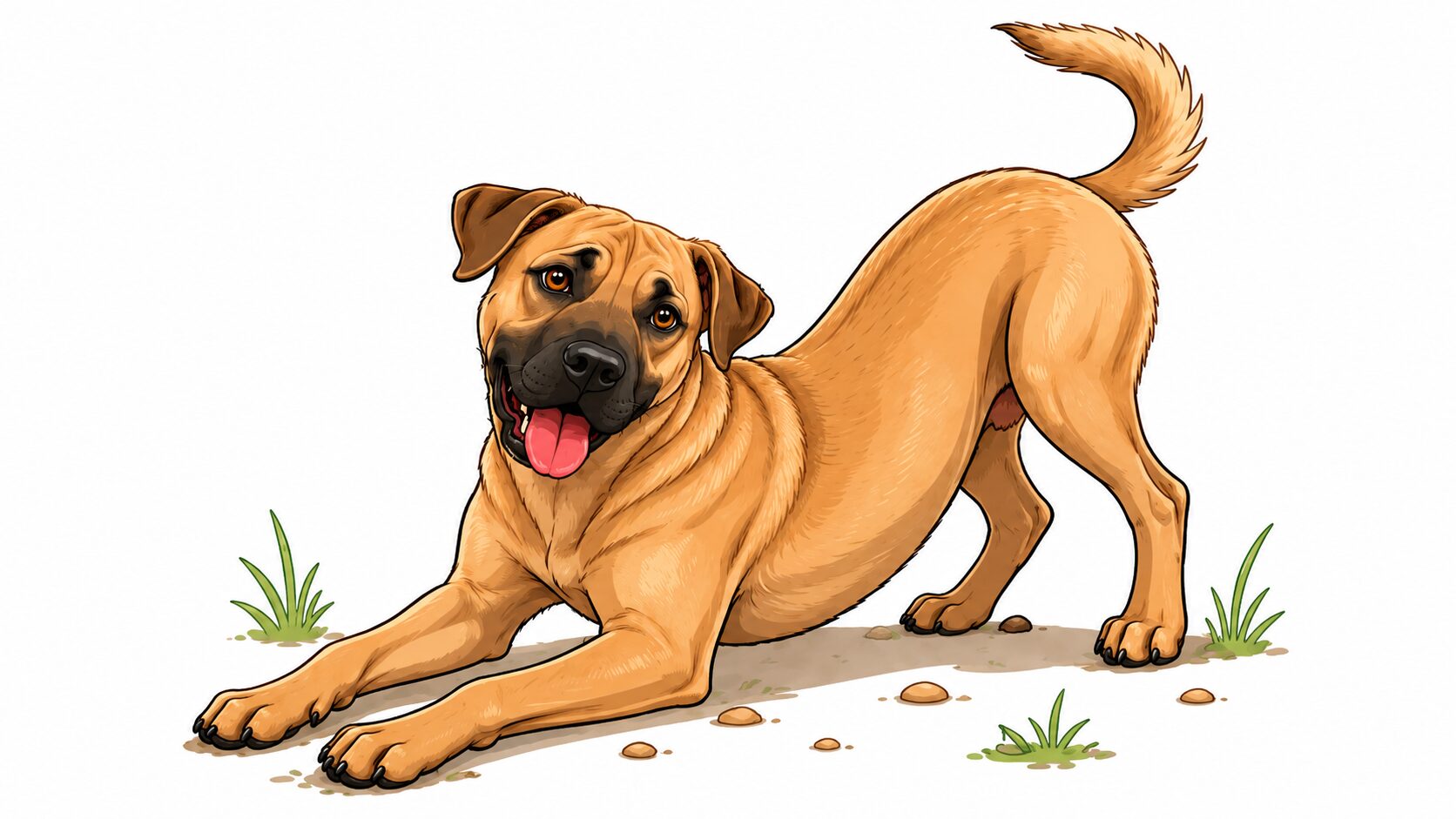
The most immediately distinctive feature is the characteristic black muzzle that gives the breed its name. The dark pigmentation extends across the lips and into the mouth, including the gums and inner cheeks, creating a striking visual contrast against the typically lighter body coat. This black muzzle is a breed-defining requirement, present across all coat colors and all bloodlines.
The head is broad, with a moderate stop and a moderately broad muzzle of good depth and length. The eyes are large, prominent, and typically brown, though some individuals carry lighter eyes. The ears are set at the side of the head, hanging in a pendant or semi-pendant position. The expression is alert and intelligent, reflecting the breed’s perpetual environmental awareness.
The body is square or just slightly longer than tall, well-muscled throughout, with a broad chest, a strong level back, and powerful hindquarters. The legs are long enough to allow the dog to move quickly and with agility in rough terrain, which is the UKC’s specific description of the movement requirement. The tail is straight and tapered, carried in various positions depending on the dog’s activity.
The coat is short and may range from smooth and tight-lying to somewhat coarser in texture, reflecting bloodline variation. Colors include yellow, fawn, brown, brindle, and black, always with the characteristic black muzzle.
Housing And Living Requirements
The Black Mouth Cur’s housing requirements are shaped clearly and honestly by its heritage as an all-purpose frontier working dog that spent its history on active farms and in hunting contexts across the American South. These are outdoor dogs at heart, and being direct about this serves prospective owners considerably better than any softening of the reality.
A rural or semi-rural property with significant outdoor space is the most appropriate setting. The Black Mouth Cur is most fully itself in an environment where it has meaningful outdoor access, work to do, terrain to cover, and the kind of active engagement that its frontier working heritage shaped it to need. Suburban living works for active, committed owners who provide genuine daily vigorous exercise and meaningful mental stimulation. Urban apartment living is genuinely inappropriate for this breed regardless of how diligent the owner is about structured exercise.
The fence is a practical requirement for any Black Mouth Cur household. The breed’s prey drive, working intelligence, and energy mean that unsupervised outdoor access without adequate containment creates obvious complications in any residential context. Tall, secure fencing that the dog cannot climb, jump, or dig under is the appropriate standard.
Inside the home, a well-exercised Black Mouth Cur is an affectionate, warm, and devoted companion that bonds closely with its family. A comfortable dog bed in a social area of the home suits the breed’s family-oriented nature during rest periods between active sessions. The short coat provides moderate weather resistance and is comfortable in the warm southern climate the breed was developed for.
Exercise Requirements
The Black Mouth Cur is a high-energy working breed with exercise needs that are genuinely among the highest of any breed at its size. These dogs have high energy levels that have them constantly looking for something to do. At least one to two hours of vigorous daily exercise is appropriate for most adults, combining structured physical activity with mental engagement that challenges the breed’s considerable working intelligence.
Hunting is the most natural and most complete outlet for the breed’s capabilities, and owners who can provide regular field work with their Black Mouth Curs are providing the most genuinely satisfying daily activity available to the breed. For non-hunting owners, long runs, hiking, and activities that engage the breed’s exceptional nose and working drive are the most appropriate alternatives.
Scent work and tracking activities directly engage the Black Mouth Cur’s hunting heritage and exceptional nose, providing the combination of physical and cognitive engagement that keeps a working dog genuinely content. Dog agility suits the breed’s athleticism and handler responsiveness, and a set of dog agility equipment at home provides a structured and purposeful physical outlet.
Puzzle toys and enrichment activities are genuinely important between physical exercise sessions. A GPS tracker is a practical safety investment for outdoor exercise in any open or partially fenced area, as the breed’s prey drive and working instincts can take it further than anticipated when something interesting presents itself.
Grooming Requirements
The Black Mouth Cur’s short coat is one of the most practically low-maintenance grooming commitments available in any breed of its size. Weekly brushing with a rubber grooming mitt or firm bristle brush removes loose hair, distributes natural oils, and keeps the coat in healthy condition. The breed sheds moderately throughout the year without dramatic seasonal fluctuations.
Bathing every six to eight weeks is appropriate under normal conditions, with more frequent bathing for dogs that are actively hunting or working in muddy and wet field conditions. The short coat dries quickly after bathing, making the process efficient.
The ears are the most important grooming consideration from a health perspective. Regular ear inspections are crucial, especially if your dog spends time in the water, as they are prone to ear infections. The pendant ears that reduce airflow to the ear canal, combined with the breed’s tendency toward outdoor activity in humid southern environments and water, create elevated susceptibility to bacterial and yeast infections. Weekly inspection and cleaning with a veterinarian-recommended ear cleaner prevents the chronic ear infections that are among the most consistently managed health concerns in the breed.
Dental care should be established as a consistent routine from puppyhood. Nails should be trimmed monthly, though active working dogs may partially maintain nail length through terrain contact.
Diet And Nutrition
The Black Mouth Cur is a medium to large, highly active working breed with significant daily caloric needs that should be matched to its actual size and activity level. A high-quality medium or large breed formula with a named protein source as the first ingredient provides the nutritional foundation this athletic breed requires. Active and working breed formulas are appropriate for hunting or field-active dogs with high daily output.
Most adults do well on two measured meals per day. Portion control is genuinely important throughout the dog’s life. Curs need a great deal of exercise and are prey-driven, so they may be prone to obesity if not active enough. An overweight Black Mouth Cur is a dog whose hip and elbow joints carry unnecessary strain, and maintaining lean body condition throughout the dog’s life is one of the most practically meaningful ongoing health investments an owner can make.
Training treats are highly effective motivators given the breed’s food motivation and should be used purposefully in training contexts, counted into the daily calorie total. Discussing joint supplements with your vet as the dog reaches middle age is worthwhile given the breed’s documented orthopedic predispositions.
Compatibility
The Black Mouth Cur is a warmly family-devoted breed that extends genuine loyalty and affection to the household it has bonded with while maintaining the alert, working energy of a dog that has always been expected to do more than simply sit companionably.
With its own family, the Black Mouth Cur is demonstrably affectionate and deeply loyal. They bond closely with families and are known for being exceptionally devoted to the people they live with. The breed’s history as a frontier family dog, valued as much for its loyalty and companionship as its working capability, produced an animal that is as warm and devoted at home as it is capable and tenacious in the field.
With children, the breed is generally good-natured and playful. While they bond well with families and children, their rambunctious and playful personality can make them a hit with kids, but can also lead to collisions, bumps, and bruises with smaller children. The breed’s energy and size mean that interactions with very young children benefit from supervision, not because of any aggressive tendency but because an enthusiastic large dog in full play mode is a substantial physical presence.
With strangers, the breed is protective and watchful, reflecting the homestead guardian heritage that is as much a part of its identity as the hunting capability. Early socialization from puppyhood is the most effective tool for ensuring this natural protectiveness is expressed as appropriate discernment rather than reactive aggression.
With other dogs, the Black Mouth Cur is generally sociable when socialized from early in life, though its working drive and territorial instinct mean introductions to unfamiliar dogs should be managed carefully. With small animals, the prey drive that made this breed such an effective hunter of raccoons, squirrels, and wild boar is genuine and present, and should not be assumed absent without direct experience with the individual dog.
A dog crate is a useful management tool during puppyhood and the settling-in period.
Behavior And Temperament
The Black Mouth Cur’s temperament is the authentic expression of a breed shaped by the specific demands of frontier survival: courageous enough to bay bears and feral hogs, intelligent enough to tree game and return the hunter to it, loyal enough to guard the homestead through the night, and affectionate enough to be a genuinely valued family member in the same household it protected.
The courage is one of the breed’s most consistently noted characteristics. The Black Mouth Cur is known for its bravery and refusal to back down from a fight, which helped repel predators of the American south such as wildcats, raccoons, and other animals. This courage is not aggression or recklessness but the settled confidence of a breed that was selected across generations for willingness to confront threats without hesitation. In the domestic context, this translates to a dog that is reliably protective and watchful rather than anxious or reactive.
The energy and working drive are the other behavioral characteristics that most practically define the ownership experience. This is a dog that has high energy levels and constantly looks for something to do. An under-exercised, under-stimulated Black Mouth Cur is a creative and determined generator of household problems. An appropriately exercised and engaged one is one of the most loyal and rewarding companions in the working dog world.
The breed is sensitive in its response to training and human interaction, despite its physical boldness. Firm yet gentle while training your pet as these sensitive dogs are unable to withstand yelling and spanking is an accurate description of the balance required. The same dog that confronts a wild boar without hesitation will be genuinely hurt by harsh human treatment, and the two qualities coexist without contradiction in this breed.
Training And Handling
The Black Mouth Cur is an intelligent, capable, and genuinely trainable breed that takes well to training when approached with the consistency, positive engagement, and realistic understanding of its working independence that its frontier hunting heritage produced.
Positive reinforcement methods are the approach that works most reliably. The Black Mouth Cur responds to reward, to genuine engagement, and to training that respects its intelligence rather than simply demanding compliance. Its food motivation makes treat-based training highly productive, and training treats are particularly valuable for recall training, where the competition with prey drive and working instincts requires maximum motivational input to produce reliable responses.
Early socialization beginning in puppyhood is essential for a breed with this level of prey drive, working energy, and protective instinct. Exposing a young Black Mouth Cur to a wide range of people, other dogs, environments, and situations during the critical developmental window shapes the adult dog’s ability to navigate varied social contexts with appropriate calibration rather than defaulting to reactive protectiveness.
The independent working intelligence that made this breed so capable across the multiple tasks of frontier life is always present, and training must engage that intelligence rather than attempt to override it with simple compliance demands. Varied, purposeful training sessions that feel like genuine partnership produce considerably better results than repetitive drilling.
Health And Lifespan
The Black Mouth Cur is a generally robust and healthy breed with a notable lifespan of 12 to 16 years, reflecting the constitutional soundness that development through practical working selection without intensive inbreeding or extreme physical traits has produced. Due to its mixed and varied lineage, the Black Mouth Cur is a rugged, healthy dog. The health concerns owners need to be aware of are real but manageable with appropriate preventive care.
Hip and Elbow Dysplasia Abnormal joint development causing pain, restricted movement, and progressive arthritis is the most consistently documented hereditary health concern in the breed. Hip dysplasia is one of the most common health concerns in the canine kingdom, especially among medium to large-size dogs, and the Black Mouth Cur’s size range places it firmly within the population at risk. Sourcing puppies from breeders who conduct OFA hip and elbow screening on their breeding animals reduces inherited risk. Maintaining appropriate weight throughout the dog’s life and discussing joint supplements with your vet as the dog reaches middle age are meaningful protective measures.
Ear Infections The pendant ears combined with the breed’s love of outdoor activity in humid environments and water create elevated susceptibility to bacterial and yeast infections. Weekly inspection and cleaning is the most effective preventive measure, with particular diligence after any water exposure or field activity in wet conditions.
Epilepsy Seizure disorders are documented in the breed. Epilepsy is a neurological condition that causes repeat seizures, and it can be an inherited condition. Most affected dogs manage well with appropriate veterinary monitoring and anti-seizure medication, and the prognosis for well-managed epileptic dogs is generally positive.
Progressive Retinal Atrophy and Eye Conditions Eye conditions including progressive retinal atrophy, cataracts, entropion, and ectropion are documented in the breed. PRA causes gradual vision loss leading to blindness, and DNA testing is available for some PRA mutations. Regular annual veterinary eye examinations allow for early detection and appropriate management. Sourcing from breeders who conduct eye certification on their breeding animals is the most meaningful preventive step.
Mange Demodicosis, caused by Demodex mites that normally inhabit dog skin and become problematic when immune function is compromised, is documented in the breed. Regular skin inspection during grooming and prompt veterinary attention to any skin changes allow for early detection and treatment.
Obesity The breed’s documented tendency toward weight gain when exercise is insufficient is worth active monitoring. An overweight Black Mouth Cur is a dog whose joint health is directly compromised, and the breed’s size and documented joint predispositions make weight management especially meaningful for long-term health.
Routine preventive care, including regular vet check-ups, consistent dental hygiene, up-to-date vaccinations, and parasite prevention appropriate for a breed active in tick and heartworm country, provides the foundation for a healthy Black Mouth Cur across its impressive lifespan.
Price And Availability
The Black Mouth Cur is a moderately available breed in the United States, particularly in the southern states where the breed has its deepest roots and its largest working population. Because the breed is not AKC recognized and was developed through practical working selection rather than show ring competition, prices are generally more accessible than for many AKC-recognized breeds. Average puppy prices typically range from $300 to $1,000, with working-bred hunting dogs from established bloodlines at the higher end and companion-bred dogs at the lower end.
The Southern Black Mouth Cur Breeders Association and the UKC breeder community are the most reliable starting points for locating breeders who breed to the UKC standard and prioritize working capability alongside health. Responsible breeders will conduct OFA hip and elbow evaluations on their breeding animals, conduct eye certification, be transparent about health testing results, and ask questions about the prospective buyer’s lifestyle, outdoor space, and experience with working dogs.
Adoption is a particularly meaningful option for this breed. Black Mouth Curs and cur-type mixes are significantly represented in shelter populations across the southern United States, reflecting both the breed’s working population size and the mismatch between the breed’s genuine energy needs and what some buyers anticipated. Rescue organizations, particularly those based in southern states, regularly have Black Mouth Curs of various ages available. Northern state rescue organizations have been actively transporting rescue dogs of the breed from shelters in the south, making them more accessible to northern adopters as well.
Annual ongoing ownership costs are moderate, with food, routine veterinary care, ear cleaning supplies and regular veterinary ear checks, and standard supplies as the primary ongoing expenses. The short coat adds no professional grooming expense.
Conclusion
The Black Mouth Cur was the dog that helped settle America, or at least that significant part of America represented by the southern frontier: hunting the game that fed pioneer families, herding and driving the livestock they depended on, guarding the homesteads they built in the wilderness, and sharing their lives with the same warmth and loyalty that Fred Gipson captured in Old Yeller and that generations of southern farming families experienced in the real dogs that provided that story with its foundation. It is a genuinely American breed of practical heritage, impressive longevity, and a working capability that remains fully intact in the modern dog. Its exercise needs are high and genuine. Its prey drive requires appropriate management. Its courage and protectiveness require thoughtful socialization from puppyhood. For the active owner with outdoor space who can meet what this breed genuinely requires, the Black Mouth Cur is one of the most loyal, capable, and deeply rewarding working and family dog companions in the American working dog tradition. Get properly set up before bringing one home. Our Best Dog Products page has everything you need for courageous, devoted, hard-working American frontier dogs that bring the full working heritage of the southern United States into every home they grace.