
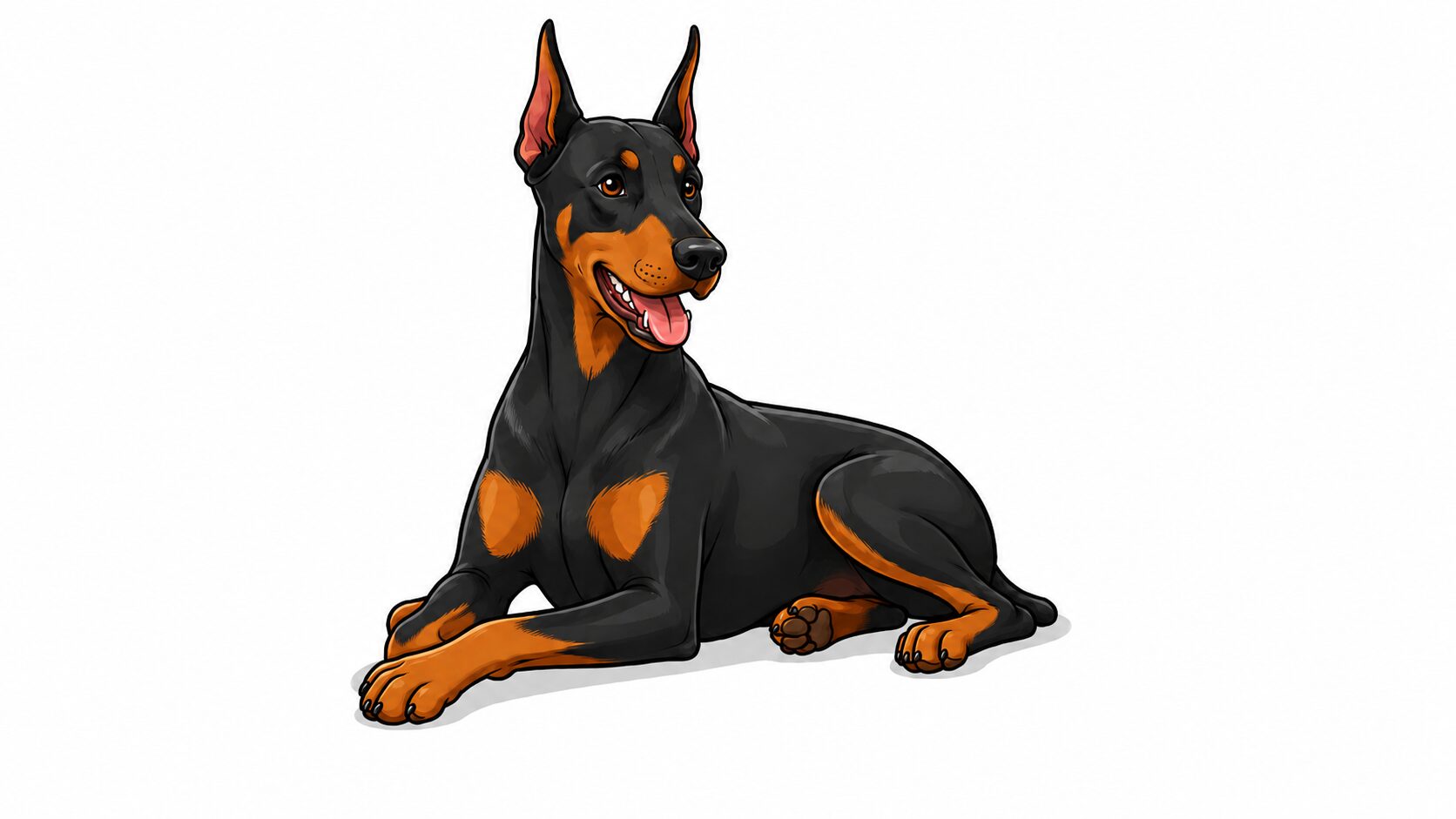
Origin And History
The Dobermann is one of the most precisely dated breeds in the dog world, its creation attributable to a specific man, a specific town, and a specific decade, with a founding purpose that remains one of the more colorful in canine history. It was developed in the late 1880s in Apolda, a small town in Thuringia in central Germany, by Karl Friedrich Louis Dobermann, a man whose varied occupations, which included tax collector, night watchman, municipal dog catcher, and keeper of the local pound, gave him both the motivation to create a formidable personal protection dog and the unique access to a wide variety of canines from which to select his breeding stock.
Dobermann’s work as a tax collector took him through dangerous territory where he was frequently unwelcome, carrying money through areas populated by people who had every reason to resent his presence. He wanted a dog that would give him unambiguous personal protection, a dog that was physically imposing, genuinely courageous, intelligent enough to distinguish between a genuine threat and a harmless encounter, and absolutely devoted to its owner. His position as municipal dog catcher gave him access to dogs that most breeders would never have encountered, and he selected from this unusual pool for the qualities he needed without, apparently, keeping detailed records of exactly what he was doing or why.
The exact combination of breeds that Dobermann used is unknown and remains a matter of educated speculation. The records were lost with his death in 1894. The most widely accepted candidates include the Rottweiler for power and territorial guardian character, the old German Shepherd for intelligence and stamina, the German Pinscher for alertness and sharpness, and the Weimaraner for scenting ability and physical elegance. Later refinements after Dobermann’s death, made by breeders including Otto Goeller who founded the first Dobermann breed club in 1899, incorporated Black and Tan Manchester Terrier blood for refinement and sleekness and English Greyhound blood to improve the breed’s physical appearance and speed.
The result, developed with remarkable speed, was a dog unlike any previously existing: lean, powerful, elegant, genuinely courageous, highly intelligent, and bonded to its owner with the intensity of a dog that had been designed from the beginning with personal protection as its primary purpose. The first Dobermann was registered with the German Kennel Club in 1890, and after Louis Dobermann’s death in 1894 the Germans named the breed Dobermann-Pinscher in his honor. Half a century later the word Pinscher was dropped from the German name, as it means terrier and the breed bears no resemblance to terrier types. The American name retains Pinscher, giving the Doberman Pinscher as its formal AKC designation, while in Germany and most European countries the breed is simply the Dobermann.
The breed’s military career began almost immediately. Dobermanns served in both World Wars, particularly in the Second World War where the United States Marine Corps used them extensively in the Pacific Theater as sentries, messengers, and scouts. The Dobermanns of the Marine Corps are honored by a memorial at the National War Dog Cemetery in Guam, and the breed’s wartime service established its reputation for intelligence, courage, and trainability at the highest levels of working dog performance.
The AKC recognized the Doberman Pinscher in 1908, placing it in the Working Group. The breed remains consistently in the top twenty most popular breeds in the United States.
Breed Overview
| Trait | Details |
|---|---|
| Breed Group | Working |
| Height | Males 68–72 cm (26.5–28 inches) / Females 63–68 cm (24.5–26.5 inches) |
| Weight | Males 34–45 kg (75–100 pounds) / Females 27–41 kg (60–90 pounds) |
| Lifespan | 10–12 years |
| Coat | Short, smooth, close-lying |
| Colors | Black, red, blue, fawn (Isabella); all with rust markings |
| Temperament | Loyal, fearless, alert, intelligent, obedient |
| AKC Recognition | 1908 |
Appearance And Size
The Dobermann is a large, powerfully built, and strikingly elegant working dog that presents with the combination of refined musculature and athletic proportion that makes it one of the most visually impressive breeds in the working group. Males stand 68 to 72 centimeters at the shoulder and weigh between 34 and 45 kilograms. Females stand 63 to 68 centimeters and are somewhat lighter. The overall impression is of a dog of square proportions, well-muscled throughout, carrying its substantial capability with the smooth, fluid movement of a breed built for sustained athletic performance.
The head is long and wedge-shaped, with a flat skull and a strong, clean muzzle equal in length to the skull. The eyes are almond-shaped and dark, typically dark brown, though blue and fawn individuals may have lighter eyes. The expression is alert, determined, and intelligent, one of the most immediately powerful dog expressions in the working group. The ears are naturally pendant and moderate in size, though in countries where cropping is legal they are frequently cropped to the characteristic erect, pointed carriage that gives the Dobermann its most iconic silhouette. In countries where cropping is prohibited, including the UK and most of Europe, the natural pendant ear is required.
The body is compact and well-muscled, with a level back, a moderately broad chest, and clearly visible but not exaggerated musculature throughout. The tail is naturally long and moderately thick, though docking to a short stub has traditionally been practiced in countries where it is legal. Natural uncropped and undocked Dobermanns, increasingly common as cosmetic procedures are banned across more jurisdictions, present with a somewhat different but equally attractive silhouette that many modern enthusiasts find equally or more appealing.
The coat is very short, smooth, and hard in texture, lying close to the body and requiring minimal grooming. Colors are black, red, blue, and fawn (also called Isabella), each with the characteristic rust markings that appear above each eye, on the muzzle and throat, on the chest, on all four legs, and below the tail. The rust markings are precise and consistent across all color varieties.
Housing And Living Requirements
The Dobermann is a breed whose housing requirements are shaped by a combination of its large size, its considerable daily exercise needs, its deep family devotion, and the guardian character that is at the core of its breeding purpose. It is not suited to apartment living or inactive households, and being direct about this serves prospective owners better than any softening of the reality.
A home with meaningful outdoor space and a securely fenced garden is the appropriate baseline. The Dobermann’s athletic capability, combined with the territorial guardian instinct that was its founding purpose, means that adequate, tall, solid fencing is essential. The breed is not reliably safe in any unfenced outdoor setting, as the protective instinct and the intelligence that drives it are always present regardless of training investment.
Inside the home, the Dobermann is one of the most genuinely devoted and family-focused of the large working breeds. It bonds deeply and completely with its family and expresses those bonds through the attentive, close proximity of a dog that is always aware of and responsive to its household’s state. The breed does not tolerate prolonged daily isolation well, and households where the dog is genuinely included in daily life are the most appropriate settings.
The short coat provides minimal insulation against cold. In cold climates, outdoor time in winter may require a dog coat for extended sessions, and a warm sleeping environment is important for a breed this lightly coated. A large orthopedic dog bed is a worthwhile investment for a breed of this size and working intensity, particularly as the dog ages and the joint demands of an active life begin to accumulate.
Exercise Requirements
The Dobermann is a high-energy, athletic working breed with genuine daily exercise needs that reflect its heritage as a dog designed for sustained performance. At least one to two hours of vigorous daily exercise is appropriate for most adults, combining structured physical activity with the mental engagement that the breed’s considerable intelligence specifically requires. Physical exercise alone, however abundant, does not satisfy a Dobermann’s needs. Mental work through training, problem-solving, and purposeful activity is as important as physical output to this breed’s wellbeing.
The Dobermann excels across an exceptional range of performance activities: dog agility, Schutzhund and IPO, tracking, obedience, search and rescue, therapy work, and protection sports are all disciplines at which the breed performs at an elite level. These activities provide the combination of physical challenge and mental engagement that keeps a Dobermann genuinely content. A set of dog agility equipment at home provides a structured and purposeful physical outlet.
Puzzle toys and enrichment activities are genuinely important between structured exercise sessions. A GPS tracker is a practical safety investment for outdoor exercise management.
Grooming Requirements
The Dobermann’s very short, smooth, close-lying coat is among the most practically low-maintenance grooming commitments of any large working breed. Weekly brushing with a rubber grooming mitt or chamois cloth removes loose hair and distributes natural oils, maintaining the characteristic close-lying glossy appearance that is one of the breed’s most immediately distinctive physical features. The breed sheds moderately throughout the year without dramatic seasonal fluctuations.
Bathing every six to eight weeks is appropriate under normal conditions. The short coat dries very quickly after bathing.
The short coat provides no insulation of skin folds or crevices, making skin inspection during grooming straightforward. The breed has some documented predisposition to skin conditions and allergies, and regular skin inspection during grooming sessions allows for early detection of any developing concerns.
Dental care should be established as a consistent routine from puppyhood. Ears should be checked and cleaned weekly. Nails should be trimmed monthly. In natural-eared dogs, the pendant ears require attention to prevent moisture accumulation.
Diet And Nutrition
The Dobermann is a large, highly active working breed with significant daily caloric needs that should be calibrated to its actual size and activity level. A high-quality large breed formula with a named protein source as the first ingredient provides the nutritional foundation this athletic breed requires.
Growth management during puppyhood is particularly important for a breed of this size. Large breed puppy formulas control the rate of growth and reduce the developmental strain on joints and bones during the phase when the Dobermann is growing most rapidly. High-impact exercise should be limited during the growth phase for the same reason.
Most adults do well on two measured meals per day. Feeding two meals rather than one large daily serving is also a meaningful preventive step against bloat, which is a documented risk in this deep-chested large breed. Using a slow-feeder bowl and avoiding vigorous exercise for at least an hour before and after meals are practical preventive measures worth establishing as permanent household routines. Any suspicion of gastric dilatation-volvulus warrants immediate veterinary emergency treatment.
Maintaining lean body condition throughout the dog’s life is one of the most practically meaningful health investments available. Extra weight worsens joint conditions and creates additional cardiac strain in a breed with already documented heart disease predispositions. Discussing joint supplements with your veterinarian from the dog’s early adult years is worthwhile. Training treats should be counted into the daily calorie total.
Compatibility
The Dobermann’s compatibility profile is one of the most nuanced in the working group, combining genuine family warmth and devotion with the protective character and working intensity that make it one of the most capable and most demanding large breed companions available.
With its own family, the Dobermann is deeply, demonstrably affectionate. The stereotype of the Dobermann as a cold, severe dog bears no relationship to the actual character of a well-bred, properly socialized Dobermann with its own family. The breed forms intense, complete bonds with its people and expresses those bonds through the close, attentive, physically engaged companionship that its admirers consistently describe as one of the most rewarding aspects of the breed. This is a dog that leans against its people, positions itself close, and monitors the household with the watchful attentiveness of a dog that has taken its family’s safety as its primary purpose.
With children in its household, the Dobermann is generally gentle and protective when raised alongside them and thoroughly socialized from puppyhood. Its large size requires supervision during interactions with very young children simply because of the physical dynamics of a dog this size in full play mode. With older children who engage appropriately with a large, active breed, the Dobermann is an outstanding companion.
With strangers, the breed’s guardian character is consistent and pronounced. The Dobermann takes its assessment of unfamiliar people seriously, and early and consistent socialization from the earliest possible age is genuinely essential for this breed. An inadequately socialized Dobermann that has reached its full size and capability while retaining reactive wariness toward strangers is a genuine management and safety challenge.
With other dogs, early socialization produces manageable sociability, though same-sex tensions are documented. A dog crate sized for a large breed is an important management tool during puppyhood.
Behavior And Temperament
The Dobermann’s temperament is one of the most precisely engineered in the dog world, the product of deliberate selection by Karl Dobermann and his successor breeders for exactly the qualities that his tax-collecting work required: courage, loyalty, intelligence, and the ability to assess and respond to threats without hesitation. All of those qualities are fully present in the modern breed.
The intelligence is the quality most consistently celebrated by people who know the breed. Dobermanns routinely appear at or near the top of canine intelligence rankings, and the quality they demonstrate in training contexts, the speed of acquisition, the reliability of retention, and the genuine engagement with learning, is consistently impressive to handlers who encounter this breed for the first time. This intelligence means the breed needs genuine mental engagement, not passive ownership.
The loyalty is equally genuine and equally complete. A Dobermann that has accepted its family as its own gives that acceptance with the totality of a breed that was designed to put itself between a threat and the person it serves. This quality, which is the breed’s most valued working attribute, is also the source of the intense, devoted companionship that Dobermann owners consistently describe as the breed’s most rewarding domestic quality.
The protective instinct is always present and always genuine, regardless of how well-socialized the individual dog is. Proper socialization shapes how the instinct expresses itself toward familiar contexts and individuals, but it does not eliminate the instinct. This is worth understanding clearly before acquiring this breed.
Training And Handling
The Dobermann is among the most trainable breeds in existence, and this is not merely reputation but consistent, documented reality across competitive obedience, protection sports, search and rescue, and every other performance discipline that has engaged this breed seriously. It learns with remarkable speed, retains reliably when training is consistent, and engages with training contexts with the genuine enthusiasm of a breed that finds purposeful work intrinsically satisfying.
Positive reinforcement methods are the most effective foundation for Dobermann training. The breed is both motivated by reward and responsive to handler engagement, making treat-based and relationship-based training highly productive. Harsh corrections or confrontational approaches are both unnecessary with a breed this fundamentally motivated to cooperate and counterproductive with a breed this intelligent and this emotionally attuned to the quality of its handler relationship.
Early socialization beginning as early as possible in puppyhood is the most important single investment a Dobermann owner can make. Exposing the young dog to a wide range of people, other dogs, environments, sounds, and situations during the critical developmental window shapes the adult dog’s ability to navigate varied social contexts with the confident, measured response that proper socialization supports. This socialization must be sustained throughout the dog’s life, not treated as a puppyhood phase.
This is not a beginner’s breed. The Dobermann’s size, its intelligence, its protective character, and its working drive make it genuinely appropriate only for experienced dog owners who understand large working breeds and can provide consistent, engaged, knowledgeable handling. Training treats are highly effective motivators in training contexts.
Health And Lifespan
The Dobermann’s health profile is the most important and most sobering aspect of this breed’s ownership consideration, and the breed’s most significant health concern is so specifically and so dramatically associated with it that understanding it is genuinely essential for anyone considering acquiring a Dobermann.
The breed went from a tax collector’s concept to AKC recognition in under two decades, built from a small, partly undocumented founder base and then intensively bred across a relatively narrow genetic pool. The history and the health story are the same story told twice: the speed and efficiency of the breed’s development created a young breed with concentrated genetics in which dilated cardiomyopathy has accumulated to devastating prevalence. The breed lives 10 to 12 years, but the cardiac disease that defines its health picture means that many individuals die before the natural end of their potential lifespan.
Dilated Cardiomyopathy (DCM) DCM is the Dobermann’s most critical health concern and the condition that most defines the medical management requirements of Dobermann ownership. The prevalence of DCM in Dobermanns in Europe is greater than 50%, and multiple studies report prevalence figures of 58%, meaning more than half of all Dobermanns will develop this disease. DCM causes the heart muscle to thin, dilate, and pump weakly, leading to arrhythmias and eventually congestive heart failure. Dogs in the preclinical or occult phase may appear completely healthy for years while the disease progresses, making active surveillance not optional but essential.
The European Society of Veterinary Cardiology recommends screening for occult DCM beginning at three years of age using both Holter monitoring, which records heart rhythm continuously for 24 hours, and echocardiography to assess heart structure and function. Annual screening over the life of the dog is recommended, as a single negative screening does not rule out future development. The average age of detection of occult DCM is between 5 and 7 years in most affected dogs.
DNA testing for two genetic variants associated with DCM risk in Dobermanns is available and recommended for all breeding animals. Sourcing puppies from breeders who provide DCM genetic testing documentation for both parents, who conduct cardiac evaluation of their breeding animals, and who are transparent about cardiac history in their lines is the single most important health decision a Dobermann buyer can make.
Von Willebrand’s Disease (vWD) The Dobermann has one of the highest occurrences of von Willebrand’s Disease of any dog breed. This hereditary clotting disorder causes a deficiency in the von Willebrand factor protein that controls bleeding at damaged blood vessels, meaning affected dogs may bleed excessively from minor injuries or surgical procedures. DNA testing identifies carriers and affected individuals, and responsible breeders test all breeding animals and provide documentation to buyers. Informing every veterinarian who treats the dog of this potential sensitivity before any surgical procedure is important for safe medical management.
Bloat (Gastric Dilatation-Volvulus) The deep, narrow chest that gives the Dobermann its characteristic athletic silhouette creates meaningful susceptibility to this life-threatening emergency. Two smaller meals rather than one large daily serving, slow-feeder bowls, and avoiding vigorous exercise around mealtimes are practical preventive measures. Prophylactic gastropexy surgery, which tacks the stomach to prevent rotation, is worth discussing with your veterinarian.
Hip Dysplasia Abnormal hip joint development is documented in the breed and warrants OFA hip screening of breeding animals. Maintaining appropriate weight throughout the dog’s life and avoiding high-impact exercise during the growth phase are meaningful protective measures.
Hypothyroidism and Autoimmune Thyroiditis The Dobermann has elevated rates of autoimmune thyroiditis leading to hypothyroidism. Annual blood work beginning in middle age allows for early detection and management with lifelong hormone replacement therapy.
Wobbler Syndrome (Cervical Vertebral Instability) Compression of the spinal cord in the neck region causing progressive weakness, uncoordinated movement, and potentially paralysis is documented in the breed. Any signs of gait abnormalities, stumbling, or progressive weakness require prompt veterinary neurological evaluation.
Given the range and severity of conditions the Dobermann is predisposed to, pet insurance established from the day the puppy comes home is one of the most important financial management steps available to owners. Routine preventive care including regular vet checks, annual cardiac screening from three years of age onward, consistent dental hygiene, up-to-date vaccinations, and parasite prevention provides the framework for managing the breed’s health proactively.
Price And Availability
The Dobermann is a well-established and moderately available breed in the United States, with an active community of reputable breeders concentrated particularly in the sport dog, show, and working dog communities. From reputable breeders, expect to pay between $1,500 and $3,500 for a well-bred puppy from health-tested parents, with dogs from elite working or show bloodlines occasionally commanding higher prices.
The Doberman Pinscher Club of America is the most authoritative starting point for locating breeders who adhere to the AKC breed standard and conduct appropriate health testing. Responsible breeders will conduct cardiac evaluation and DCM genetic testing, von Willebrand’s disease testing, OFA hip evaluation, and thyroid evaluation on their breeding animals. They will be transparent about all health testing results and direct about the breed’s genuine health challenges. They will ask pointed questions about the prospective buyer’s experience with large working breeds, lifestyle, fencing situation, and daily schedule.
Adoption is a meaningful option for experienced Dobermann owners. The breed is represented in rescue populations across the United States, often from owners who underestimated the breed’s exercise needs, its handler requirements, or its health management demands. Dobermann-specific rescue organizations and general working breed rescue groups regularly have dogs of various ages available.
Pet insurance is among the most important financial management steps a Dobermann owner can take and should be established from the day the puppy comes home, before any pre-existing conditions are documented.
Conclusion
Karl Friedrich Louis Dobermann set out in the 1880s to create the ultimate personal protection dog, a dog that would make a tax collector moving through dangerous German territory feel genuinely safe, and within a decade he had done exactly that, producing in one of the most compressed breed development timelines in history a dog of remarkable intelligence, fearless courage, elegant athleticism, and complete loyalty to its own people. The breed he created went from his dog pound in Apolda to Marine Corps service in the Pacific in less than sixty years. It has served as police dog, military dog, guard dog, therapy dog, sport dog champion, and devoted family companion across more than a century of remarkable versatility. The DCM prevalence is the price of that rapid, intensive development, and it requires active surveillance and informed sourcing from the first day of ownership. For the experienced owner who engages with the breed on its own terms, provides the training, exercise, and mental engagement it genuinely requires, and manages its health proactively across what should be a 10 to 12 year partnership, the Dobermann offers a companionship of unmatched loyalty, capability, and genuine depth. Get properly set up before bringing one home. Our Best Dog Products page has everything you need for athletic, loyal, whole-heartedly devoted German working dogs that carry the full capability and devotion of one of the dog world’s great breed-creation stories into every home they protect.