
Origin And History
The East European Shepherd, known in Russian as the Vostochnoevropeyskaya Ovcharka and commonly abbreviated as VEO, is a large, powerful working dog created by the Soviet Union from the 1920s through the 1950s with a specific and clearly articulated military requirement: to take the German Shepherd’s celebrated intelligence and trainability, significantly increase its size and physical power, and adapt it to work effectively across all five of the Soviet Union’s distinct climatic zones rather than the single cool-temperate zone of Germany. It became the main service dog of the Soviet military and the KGB, and it remains today one of the most capable working dogs produced by the former Soviet state breeding system.
The first German Shepherd Dogs arrived in Russia in 1904, initially used as sanitary dogs in the Russian Army. Soviet military leadership, observing the German Shepherd’s performance in the First World War alongside German forces, recognized the breed’s exceptional working qualities but identified a fundamental limitation: the German Shepherd was developed for a single temperate climate and lacked the size, power, and cold-weather constitution needed to work effectively in Siberia, the Central Asian steppe, the Caucasus mountains, or the Arctic regions that the Soviet military needed to patrol and secure.
Organized and purposeful breeding of what would become the East European Shepherd began in 1924 when the first specialized kennel, called The Red Star, was established. Development initially centered in Byelorussia, which is present-day Belarus, and the early dogs were known as Byelorussian Owtcharka. The breeding program crossed German Shepherds with native Russian breeds, primarily Ovcharka types including the Caucasian Shepherd and Central Asian Shepherd, and Laika-type dogs. The Ovcharka contribution added size, physical power, cold-weather coat density, and guardian instinct. The Laika contribution added additional cold weather adaptation and the hardiness of a primitive Northern breed. The German Shepherd foundation provided the intelligence, trainability, and working temperament that the Soviet military had identified as worth preserving and building upon.
The Second World War interrupted the breeding program significantly, as it interrupted virtually every aspect of Soviet institutional life. Development resumed after the war with renewed urgency, as the military’s use of dogs in the conflict had further demonstrated their value and clarified what physical and temperamental qualities were most important in a Soviet military working dog. The breed type was established and fixed through the late 1940s and 1950s.
A breed standard was approved in 1955 by the Central Committee of the USSR DOSAAF, the Voluntary Society for Cooperation with the Army, Aviation, and Fleet. DOSAAF, a paramilitary sport organization responsible for patriotic preparation of Soviet citizens, was one of the primary organizational bodies responsible for the East European Shepherd’s development and standardization. A second, more comprehensive standard was approved in 1964 by the Presidium of the Service Dog Breeding Federation.
The KGB adopted the East European Shepherd as its primary working breed, deploying these dogs extensively in guard, patrol, apprehension, and detection roles. Notably, KGB breeding programs that emphasized black-coated individuals were operated with characteristic Soviet ruthlessness: litters produced in KGB kennels that included any coat color other than black were destroyed, and mating pairs were never repeated, maintaining both the desired appearance and preventing the kind of predictable bloodline development that might make KGB breeding programs legible to outsiders.
Following the dissolution of the Soviet Union in 1991, the East European Shepherd became more accessible internationally as export restrictions lifted. The Russian Kynological Federation updated and formalized the breed standard in 2002 and again in 2014. From January 1, 2017, the breed was recognized by the Nordic Kennel Union, making it recognized by the Danish, Finnish, Icelandic, Norwegian, and Swedish Kennel Clubs. The breed is not recognized by the FCI or AKC. Within Russia and the former Soviet states, it remains one of the most popular working and guard breeds.
Breed Overview
| Trait | Details |
|---|---|
| Origin | Soviet Union (Russia / Belarus) |
| Breed Group | Working / Herding |
| Height | Males 67–72 cm (26–28 inches) / Females 62–68 cm (24–27 inches) |
| Weight | Males 35–60 kg (77–132 pounds) / Females 30–50 kg (66–110 pounds) |
| Lifespan | 10–14 years |
| Coat | Dense, medium length double coat |
| Colors | Black, black and tan, black and red, sable, grey, brown; often with dark mask |
| Temperament | Intelligent, courageous, loyal, protective, confident |
| RKF Recognition | Yes |
| Nordic Kennel Union | 2017 |
| FCI / AKC Recognition | Not recognized |
Appearance And Size
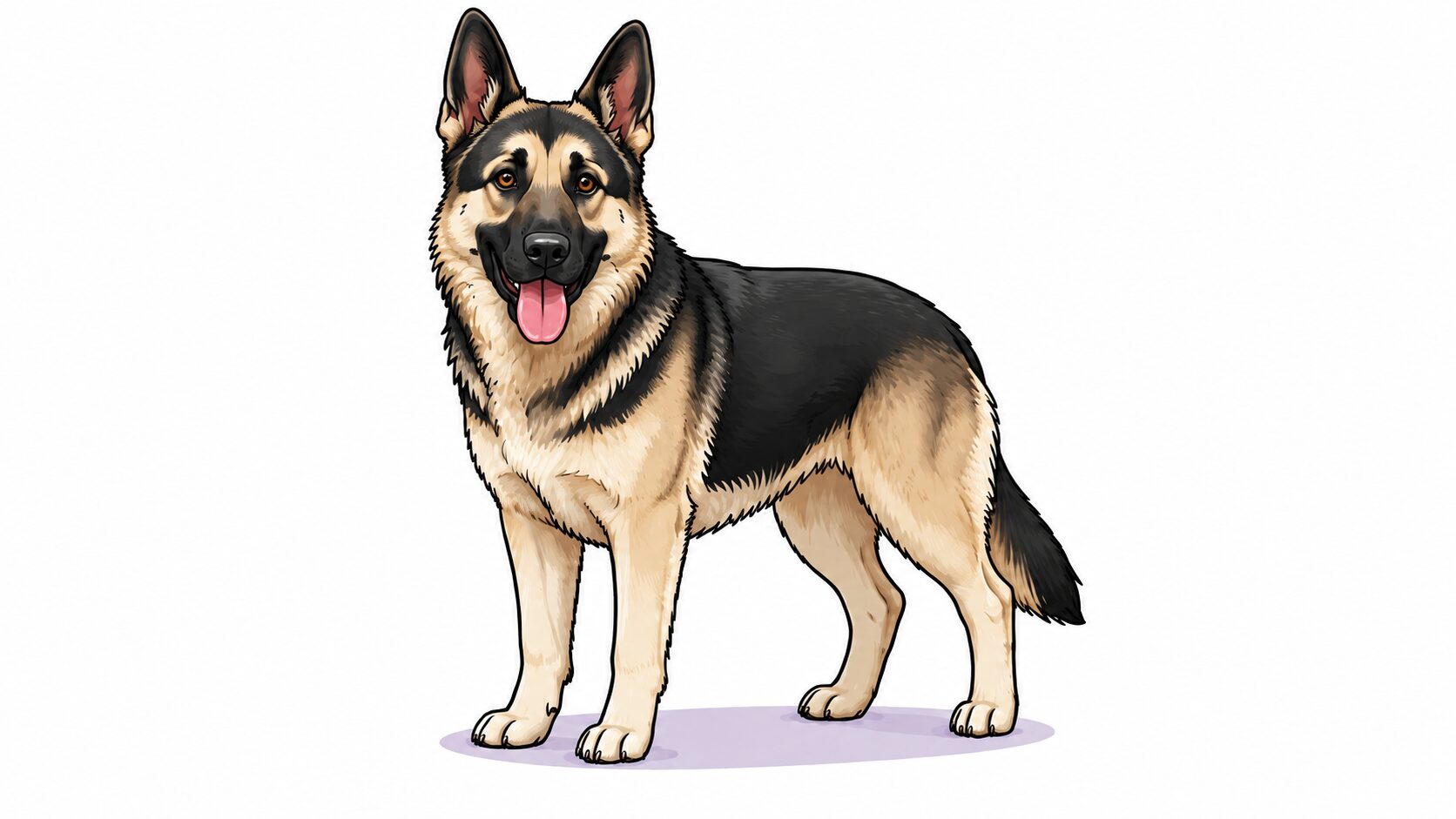
The East European Shepherd is a large to very large, powerfully built, and rectangular-bodied working dog that presents with a combination of size, substance, and athletic capability that immediately communicates its military working heritage. Males stand 67 to 72 centimeters at the shoulder and can weigh up to 60 kilograms. Females stand 62 to 68 centimeters and are somewhat lighter. The breed is significantly larger than the German Shepherd from which it descends, the size increase being the most immediately noticeable physical difference between the two related breeds.
The head is powerful and massive, with a broad, moderately domed skull and a strong, well-developed muzzle. The eyes are dark, oval, and carry the alert, intelligent, confident expression that characterizes the breed. The ears are large and triangular, carried erect, and mobile in response to sound. The overall facial expression is one of confident authority rather than the somewhat more refined intelligence expression of the German Shepherd.
The body is rectangular, with a level or slightly sloping topline from the withers, a broad, deep chest, and powerfully developed hindquarters. The angulation of the hindquarters is moderate rather than extreme, distinguishing the East European Shepherd from the more angulated rear end characteristic of some modern German Shepherd show lines. This moderate angulation provides the structural soundness for sustained working performance without the chronic joint problems that extreme rear angulation has introduced into some German Shepherd populations.
The coat is dense, medium in length, with a well-developed undercoat that provides genuine cold weather insulation. Longer, softer hair is typically present on the ears, neck, limbs, and tail. Colors include black, black and tan, black and red, sable, grey, and brown, often with a dark facial mask. The KGB’s historic preference for solid black individuals has given this color a particular cultural association with the breed.
Housing And Living Requirements
The East European Shepherd’s housing requirements are shaped by the combination of its considerable size, its genuine daily exercise needs, its deep intelligence and working drive, and the guardian character that was at the core of its military breeding purpose. This is not a breed for apartment living, small properties, or inactive households.
A home with meaningful outdoor access and a securely fenced garden is the appropriate baseline. The fence must be genuinely secure for a breed this large and this intelligent. Rural and suburban environments with active owners are the most appropriate settings. The adaptability to varied climates that Soviet breeding specifically targeted, creating a dog capable of working across five distinct Soviet climatic zones, makes the breed more flexible in terms of climate than many working breeds, though heat management requires attention in warm climates given the dense double coat.
Inside the home, a well-exercised East European Shepherd is a devoted, calm, and affectionate companion. The breed bonds deeply with its household and expresses those bonds through the watchful, close proximity of a dog that considers its family its primary responsibility. A large orthopedic dog bed is an important investment for a breed of this size and working intensity, providing joint support across a lifespan that can reach 14 years.
The breed reportedly can adapt adequately to apartment living given sufficient exercise, though this is a compromise from the most appropriate setting rather than a genuinely suitable arrangement for a dog of this size and working heritage.
Exercise Requirements
The East European Shepherd is a large, athletic military working breed with genuine daily exercise needs that reflect its heritage as a dog designed for sustained performance across demanding operational conditions. At least one to two hours of vigorous daily exercise is appropriate for most adults, combining physical activity with the mental engagement that the breed’s considerable intelligence requires.
The breed excels across a wide range of demanding working activities: protection sports, tracking, search and rescue, obedience, and dog agility are all disciplines at which East European Shepherds perform with capability and enthusiasm. A set of dog agility equipment at home provides structured physical and cognitive engagement for a breed that genuinely thrives on purposeful activity.
Puzzle toys and enrichment activities are genuinely important between physical exercise sessions. A GPS tracker is a practical safety investment for outdoor exercise management.
Grooming Requirements
The East European Shepherd’s dense medium-length double coat requires consistent but manageable grooming. Brushing two to three times a week under normal conditions removes loose hair and prevents the matting that can develop in the dense undercoat when maintenance is inconsistent. During the seasonal shedding periods in spring and fall, daily brushing is necessary to manage the significant undercoat release that these periods produce. The breed is a substantial shedder, and owners should be prepared for a meaningful ongoing presence of coat on furniture and clothing.
Bathing every six to eight weeks is appropriate under normal conditions. The dense double coat takes time to dry thoroughly, and complete drying is important to prevent skin issues from developing under the coat.
Ears should be checked and cleaned weekly. Dental care should be established as a consistent routine from puppyhood. Nails should be trimmed monthly.
Diet And Nutrition
The East European Shepherd is a large to very large, highly active working breed with significant daily caloric needs that should be calibrated carefully to its actual size and activity level. A high-quality large or giant breed formula with a named protein source as the first ingredient provides the nutritional foundation this substantial breed requires.
Growth management during puppyhood is particularly important for a breed that may approach 60 kilograms at maturity. Large and giant breed puppy formulas control growth rate and reduce developmental strain on joints during the most vulnerable phase. High-impact exercise during puppyhood should be limited for the same reason.
Most adults do well on two measured meals per day. Feeding two meals rather than one large daily serving also provides practical protection against bloat, which is a genuine concern for any deep-chested large breed. Using a slow-feeder bowl and avoiding vigorous exercise for at least an hour before and after meals are practical preventive measures worth establishing as permanent household routines. Any suspicion of gastric dilatation-volvulus warrants immediate veterinary emergency treatment.
Maintaining lean body condition throughout the dog’s life directly protects against the hip dysplasia and joint conditions to which this size class is predisposed. Training treats should be counted into the daily calorie total. Discussing joint supplements with your veterinarian from the dog’s early adult years is worthwhile.
Compatibility
The East European Shepherd’s compatibility profile combines genuine family warmth and devoted loyalty with the guardian character and working intensity of a breed whose primary purpose was military and police work in the Soviet Union. Understanding both dimensions of this character fully is the foundation of appropriate ownership decisions.
With its own family, the East European Shepherd is deeply devoted and warmly affectionate. The breed bonds completely with its household and expresses those bonds through the close, watchful, attentive companionship of a dog that regards its family’s safety as its primary responsibility. Despite their large size, they are known for their agility and ability to be gentle with family members.
With children, the breed is generally patient and protective when raised alongside them from puppyhood and properly socialized. The pup will bond well to children it grows up with and become devoted to them. Its large size requires supervision during interactions with very young children simply because of the physical dynamics involved with a dog this large and active.
With strangers, the breed’s guardian character is consistent and pronounced. The East European Shepherd does not belong to the breeds for which loyalty to strangers should be expected. Early and consistent socialization from the earliest possible age is genuinely essential for a breed of this intelligence, size, and protective capability.
With other dogs, early socialization produces manageable sociability. With small animals, the prey drive should be acknowledged and managed appropriately. A dog crate sized for a large to giant breed is an important management tool during puppyhood.
Behavior And Temperament
The East European Shepherd’s temperament has been described by owners as similar to that of a Dobermann, which is an illuminating comparison: deeply loyal and warm with its own people, confident and self-possessed in its assessment of the world, and maintaining a controlled, watchful reserve toward unfamiliar people that reflects genuine guardian character rather than anxious reactivity.
The East European Shepherd is considered particularly intelligent, courageous, determined, and tough, and this accurate assessment from the breed’s community reflects qualities that were specifically selected across decades of Soviet military breeding. The intelligence is genuine, consistent, and demanding: a breed this cognitively capable that is not being engaged appropriately will find its own activities, and in a dog this large and this capable, that independent activity creates genuine management challenges.
The laid-back quality that is sometimes cited in breed descriptions refers to the breed’s calmer, more measured baseline temperament compared to the more intensely reactive character of some other large working breeds, particularly the Belgian Malinois. This relative calm is real and genuine, reflecting Soviet breeding that specifically prioritized controllability alongside capability.
The loyalty to the established family group is total and fully expressed, while the wariness toward strangers is equally genuine and requires active, sustained socialization management rather than passive expectation of automatic improvement.
Training And Handling
The East European Shepherd is one of the most trainable breeds in the working dog world, a quality that reflects the German Shepherd foundation that was preserved and amplified through Soviet selective breeding specifically for working performance. It is probably the most intelligent of the Russian guard dogs, and this assessment from the breed community is consistent with the experience of owners and working dog handlers who train these dogs.
Positive reinforcement methods are the most effective foundation, combined with clear, consistent, genuinely confident handling that the East European Shepherd can respect. The breed responds to reward and genuine engagement, and its intelligence means that training must be purposeful and varied rather than repetitive and mechanical. Training treats are highly effective motivators.
Early socialization beginning as early as possible in puppyhood is the most important single investment an East European Shepherd owner can make. Exposing the young dog to a wide range of people, environments, sounds, and situations during the critical developmental window shapes the adult dog’s ability to navigate varied social contexts with the controlled, calibrated responses that the breed’s intelligence and guardian character can produce when properly developed. This socialization must be sustained throughout the dog’s life.
This is not an ideal breed for first-time dog owners. The combination of size, intelligence, guardian character, and working intensity requires experienced, knowledgeable handling from owners who understand large working breeds.
Health And Lifespan
The East European Shepherd is a generally healthy breed with a lifespan of 10 to 14 years, reflecting the constitutional robustness that practical military working selection produced without the aesthetic breeding compromises that have shortened the lifespans of some related German Shepherd populations. The breed is generally a healthy breed, and the moderate rear angulation that distinguishes it from more extreme German Shepherd show lines provides meaningful structural protection against the chronic orthopedic problems that extreme angulation introduces.
Hip and Elbow Dysplasia Abnormal joint development is documented in the breed consistent with large working breeds generally. The incidence appears lower than in heavily bred German Shepherd populations, reflecting both the moderate structural choices of the Soviet breeding program and the ongoing selection pressure for working soundness that identified and removed animals unable to perform. Sourcing puppies from breeders who conduct OFA hip and elbow screening on their breeding animals is the most important preventive step. Maintaining appropriate weight and managing high-impact exercise during the growth phase are meaningful protective measures.
Bloat (Gastric Dilatation-Volvulus) The deep, broad chest creates meaningful susceptibility to this life-threatening emergency. Two smaller meals, slow-feeder bowls, and avoiding vigorous exercise around mealtimes are practical preventive measures worth establishing as permanent household routines. Prophylactic gastropexy surgery is worth discussing with your veterinarian.
Degenerative Myelopathy Progressive spinal cord disease causing hind limb weakness and eventual paralysis is documented in the breed given its German Shepherd ancestry, which carries elevated DM rates. DNA testing for the DM mutation is available and recommended for all breeding animals. Any signs of hind limb weakness or coordination problems warrant prompt veterinary neurological evaluation.
Eye Conditions Eye problems are documented at low rates. Regular annual veterinary eye examinations allow for early detection and appropriate management.
Sensitivity to Anesthesia Like the German Shepherd, some East European Shepherds may demonstrate sensitivity to certain anesthetic agents. Informing any veterinarian of this documented tendency before any procedure requiring sedation is important.
Routine preventive care, including regular vet check-ups, consistent dental hygiene, up-to-date vaccinations, and parasite prevention, provides the foundation for a healthy East European Shepherd across its lifespan.
Price And Availability
The East European Shepherd is rare outside Russia and the former Soviet states, with establishing breeding populations in Europe following the Nordic Kennel Union’s 2017 recognition and gradually increasing international interest. In the United States, the breed is genuinely uncommon, with a small number of dedicated importers and breeders working to establish quality breeding programs.
From reputable breeders, prices in the United States typically range from $1,500 to $3,500 for a well-bred puppy from health-tested and temperament-evaluated parents. The limited availability of established North American breeders means wait times are common and prospective buyers should be prepared to work directly with Russian or European importers in some cases.
Responsible breeders will conduct OFA hip and elbow evaluations and DNA testing for degenerative myelopathy on their breeding animals, provide temperament documentation, and ask thorough questions about the prospective buyer’s experience with large working breeds. Any seller offering immediate availability without health documentation and without thorough buyer assessment should be avoided.
Adoption is not a realistic option given the breed’s rarity in international shelter or rescue systems.
Conclusion
The East European Shepherd was built by the Soviet Union to do what the German Shepherd could not do adequately across the enormous geographic and climatic diversity of the USSR: to work in Siberian cold and Central Asian heat, to provide the power and presence a military guard dog required alongside the intelligence and trainability the KGB needed in a detection and patrol animal, and to do all of this reliably across five climatic zones where Germany’s famous shepherd breed had been proven insufficient. The Soviet military breeding apparatus succeeded at this requirement with characteristic thoroughness, and the result is a breed of genuine capability, impressive constitutional soundness relative to some of its more commercially compromised relatives, and a depth of loyal devotion to its established family that the best working breed partnerships always produce. It remains essentially unknown outside Russia and the Nordic countries, available to international enthusiasts willing to navigate the importation logistics, and rewarding to those with the experience to engage its intelligence and the confidence to establish themselves as the clear, consistent leadership the breed’s guardian character requires. Get properly set up before bringing one home. Our Best Dog Products page has everything you need for powerful, intelligent, whole-heartedly devoted Soviet-engineered working dogs that carry the full capability of the USSR’s military breeding program into every home they protect.