
Origin And History
The English Toy Terrier, formally designated the English Toy Terrier (Black and Tan) by the Kennel Club, is one of the oldest of Britain’s toy breeds, a small, elegant, candle-flame-eared black and tan terrier whose lineage connects directly to the rat pits of Victorian England and to the Old English Black and Tan Terrier that was the foundational working terrier of the British Isles. It is one of the most historically significant toy breeds in England, a living remnant of Victorian working dog culture packaged in an elegant, fine-boned small dog of striking and distinctive appearance. It is also one of the rarest recognized breeds in the United Kingdom, listed as a Vulnerable Native Breed by the Kennel Club, with annual registrations so low that its continuation is genuinely at risk.
The breed’s ancestry traces to the Old English Black and Tan Terrier, a broad type of terrier that is now extinct as a distinct breed but that is considered the ancestor of numerous modern terrier breeds. From this foundational type, selective breeding in Victorian England produced two distinct related breeds: the Manchester Terrier, which retained a working-sized body capable of a full day’s ratting work, and the English Toy Terrier, which was bred progressively smaller to compete in the rat pits of the era under a specific set of rules.
The rat pit was a gambling entertainment popular in Victorian England’s cities in which terriers were placed in a circular pit with a number of rats, and bets were placed on which dog would kill its quota of rats in the shortest time. Small dogs were highly prized because they could work in confined spaces, and competitive pressure drove breeders to produce ever-smaller dogs still capable of effective ratting performance. The sport reached extraordinary extremes of size reduction: in 1848, a Black and Tan Terrier named Tiny the Wonder, weighing just five and a half pounds, is recorded to have killed 200 rats in less than an hour, a performance that made Tiny one of the most celebrated sporting dogs of the Victorian era.
The outlawing of rat baiting under the Cruelty to Animals Act of 1835, though enforcement was inconsistent for decades afterward, coincided with the formation of the Kennel Club in 1873 and the emergence of the dog show as the primary venue for competitive dog culture. The elegant Black and Tan Terrier, with its precise tan markings and its distinctive candle-flame prick ears, transitioned from the rat pit to the show ring with the natural ease of a breed whose appearance had always been as celebrated as its performance. At the first dog show in Newcastle in 1859, Black and Tan Terriers were among the early entries.
The Kennel Club formally recognized the breed in 1962 under the name English Toy Terrier (Black and Tan), distinguishing it from the larger Manchester Terrier with which it had been intermittently confused and classified. The FCI also recognizes the breed. The breed is not recognized by the AKC as a separate breed; in the United States, the equivalent type is registered as the Toy Manchester Terrier, considered a size variety of the Manchester Terrier rather than a distinct breed. The Kennel Club has opened its stud book to allow selected North American Toy Manchester Terriers to be registered as English Toy Terriers to address the breed’s critically low population.
Breed Overview
| Trait | Details |
|---|---|
| Breed Group | Toy |
| Height | 25–30 cm (10–12 inches) |
| Weight | 2.7–3.6 kg (6–8 pounds) |
| Lifespan | 12–13 years |
| Coat | Short, smooth, dense, close-lying; glossy |
| Colors | Black and tan only; precise tan markings required |
| Temperament | Alert, loyal, intelligent, energetic, affectionate |
| Kennel Club Recognition | Yes |
| FCI Recognition | Yes |
| AKC Recognition | Not as a separate breed (see Toy Manchester Terrier) |
Appearance And Size
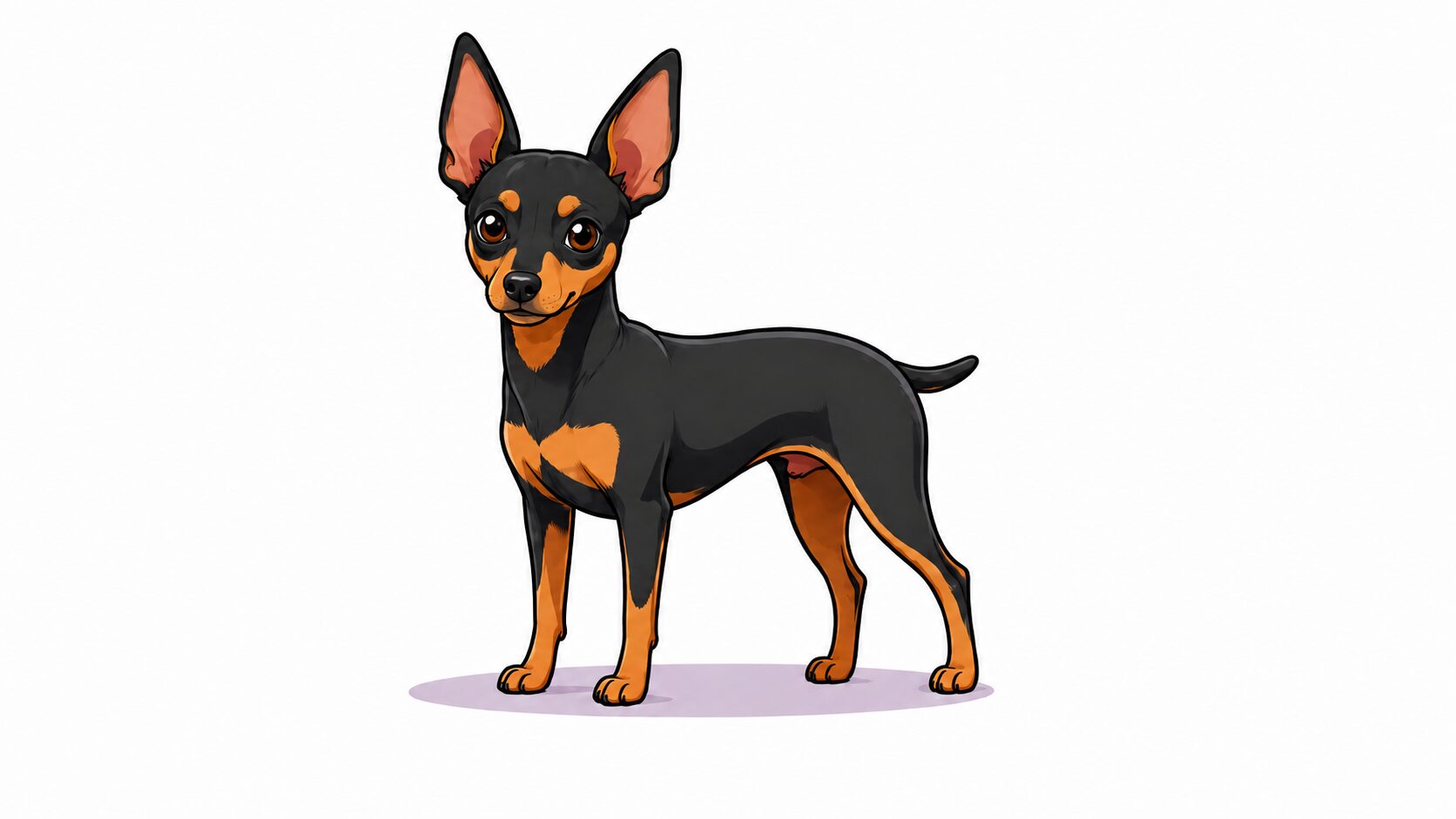
The English Toy Terrier is a small, elegant, and finely structured toy dog that presents with an immediately distinctive appearance dominated by two features that are unlike those of virtually any other breed: the characteristic candle-flame prick ears and the precise, formally distributed black and tan coat pattern. It stands 25 to 30 centimeters at the shoulder and weighs between 2.7 and 3.6 kilograms, making it one of the smaller recognized terrier breeds. The overall impression is of a sleek, refined, athletic small dog whose movement the Kennel Club standard describes as being like the extended trot of a horse, a flowing, front-reaching, ground-covering gait that is entirely different from the mincing movement of some toy breeds and that reflects the breed’s genuine terrier athleticism beneath its elegant exterior.
The head is long and narrow, with a flat skull and an almost imperceptible stop, producing the distinctive wedge-shaped, clean-lined profile that gives the breed its characteristic aristocratic expression. The eyes are small, almond-shaped, and very dark, nearly black, set obliquely and carrying the bright, alert expression that reflects the breed’s keen intelligence and perpetual environmental awareness.
The ears are the breed’s most immediately recognizable and most celebrated feature: erect, carried directly upright, pointed at the tip, with the inner edge slightly concave and the outer edge straight, producing the candle-flame shape that is uniquely characteristic of the English Toy Terrier. This ear shape is specific, required by the breed standard, and unlike any other terrier ear carriage.
The neck is long, elegant, and slightly arched, flowing into well-laid-back shoulders. The body is moderately short in the back, with a deep, narrow chest and a slight tuck of the underline producing the characteristic terrier outline.
The coat is short, smooth, dense, and close-lying with a natural gloss. The only accepted color is black and tan, with the tan markings appearing in specific, precisely defined locations: above each eye producing the characteristic tan spots, on the muzzle and cheeks, on the chest in two discrete tan spots called buttons, on the inner surfaces of the legs, and on the feet and undersides of the tail. The demarcation between the black and tan must be precise and clearly defined. Any blurring of this boundary or any variation in the exact color or placement of markings is a fault in the show ring.
Housing And Living Requirements
The English Toy Terrier is a more genuinely adaptable breed in terms of living environment than its terrier heritage might initially suggest, combining the compact size of a toy breed with a settled indoor character that manages apartment and urban living effectively when daily exercise and stimulation needs are consistently met.
The breed’s small size and relatively moderate exercise needs make it one of the more practically accessible terrier breeds for urban owners, though its terrier character means it is considerably more energetic and alert than its elegant toy exterior might suggest to someone unfamiliar with the type. It is still a terrier in every meaningful behavioral sense, and its housing should reflect that.
The breed is sensitive to cold given its very short, close-lying coat and its small body mass. Outdoor time in cold or wet conditions benefits from a dog coat, and sleeping arrangements should be warm and draft-free. A soft, comfortable dog bed in a warm, social position suits the breed’s people-oriented nature during rest periods.
A securely fenced garden is important for a breed with genuine terrier prey drive. The English Toy Terrier’s working heritage gave it an instinct for pursuing small animals that is genuinely present despite the toy classification, and adequate containment prevents this instinct from creating management problems in any setting near small wildlife.
Exercise Requirements
The English Toy Terrier’s exercise needs are moderate and achievable for a wide range of committed owners, one of the practical qualities that has made it an appropriate companion for varied lifestyles across its history. A daily walk of 30 to 45 minutes combined with active indoor play sessions meets the baseline needs of most adults.
The breed is more athletic and energetically capable than its small size suggests. English Toy Terriers participate in agility, obedience, and other structured activities at toy breed scale, and owners who provide varied, engaging activities find this breed a genuinely capable and enthusiastic partner. The terrier working heritage is expressed in the breed’s alertness, its quick physical reactions, and the focused attention it brings to activities that engage its working instincts.
Puzzle toys and enrichment activities are genuinely important between structured outdoor sessions. The breed’s intelligence and its terrier curiosity mean that mental stimulation is as significant to its wellbeing as physical exercise.
Grooming Requirements
The English Toy Terrier’s short, smooth, dense, close-lying coat is among the most practically low-maintenance grooming commitments of any recognized breed. Weekly brushing with a soft bristle brush or rubber grooming mitt removes loose hair and maintains the coat’s natural gloss. The breed sheds moderately without dramatic seasonal fluctuations, and the short hairs are less conspicuous than the longer coat of many other breeds.
Bathing every four to six weeks with a quality shampoo that maintains the coat’s natural gloss is appropriate. The short coat dries very quickly after bathing.
The coat requires no professional trimming, stripping, or clipping. Maintaining the precision of the black and tan markings is a breeding consideration rather than a grooming one: the coat itself requires only basic routine maintenance.
Dental care is particularly important for this breed given the documented predisposition to dental disease in small-mouthed toy breeds. Establishing regular tooth brushing from puppyhood and scheduling annual professional veterinary cleanings provides the most effective prevention. Nails should be trimmed monthly. Ears should be checked weekly, and the candle-flame ear shape and erect carriage mean the ears receive good airflow with a lower infection risk than pendant-eared breeds.
Diet And Nutrition
The English Toy Terrier is a small toy breed with modest daily caloric needs that should be matched carefully to its actual size and activity level. A high-quality small breed formula with a named protein source as the first ingredient provides the nutritional foundation the breed requires. Small breed formulas address the higher metabolic rate, the dental disease predisposition, and the specific nutritional needs of toy dogs, making them the most appropriate choice.
Most adults do well on two measured meals per day. Portion control is genuinely important given the breed’s small size: even modest overweight places disproportionate strain on small joints and compounds the patellar luxation and Legg-Calvé-Perthes disease predispositions documented in the breed.
Given the documented predisposition to Von Willebrand Disease in some lines, dietary considerations around supplementation that might affect clotting should be discussed with a veterinarian familiar with the breed’s specific health profile. Training treats are effective motivators and should be counted into the daily calorie total. Fresh water should always be available.
Compatibility
The English Toy Terrier is a warmly loyal and devoted companion breed that extends genuine affection to its own household while maintaining the alert, independent character of a breed with real working terrier heritage.
With its own family, the breed is affectionate, loyal, and genuinely devoted. The English Toy Terrier bonds closely with its people and expresses those bonds with the warm, engaged presence of a small dog that genuinely enjoys human companionship and participation in household life.
With children, the breed is generally appropriate when socialized from puppyhood with children who know how to handle small dogs respectfully. Its small size, at only 3 to 3.6 kilograms, makes it genuinely vulnerable to accidental injury from rough handling, and households with very young children who may not yet understand appropriate handling should supervise all interactions carefully.
With strangers, the breed’s watchdog character is genuine and consistently expressed. The English Toy Terrier notices and announces unfamiliar presences with the alert conviction of a breed that has always taken its guardian function seriously regardless of its small size. Early socialization ensures this natural alertness is expressed as confident discernment rather than anxious reactivity.
With other dogs, the breed is generally sociable when well-socialized from early in life. With small animals including rodents and birds, the ratting heritage means prey drive should be acknowledged and managed rather than assumed absent.
A dog crate sized for a toy breed is useful during puppyhood and the settling-in period.
Behavior And Temperament
The English Toy Terrier’s temperament is the authentic expression of a breed shaped by the rat pit on one side and the Victorian show ring on the other, producing a dog that combines genuine terrier courage, alertness, and working drive with the closeness and warmth of a companion breed that has been bred for human company across many generations.
The terrier character is always present. The English Toy Terrier approaches its world with the quick, alert, self-confident character of a breed that was celebrated for killing 200 rats in under an hour. This is not aggressive character but genuine terrier confidence, expressed in the breed’s willingness to investigate everything in its environment with focused purpose, its refusal to be intimidated by larger dogs or unfamiliar situations, and its characteristic terrier self-possession.
The warmth and devotion are equally genuine. The English Toy Terrier does not distribute its loyalty casually. It bonds closely with its own people and expresses that bond with the engaged, affectionate presence of a breed that genuinely enjoys the company of the humans it has accepted.
The intelligence is genuine and consistently expressed. English Toy Terriers learn quickly, adapt readily to household routines, and engage with training contexts with the focused attention of a breed that has always been expected to make its own working decisions rather than follow close handler direction.
Training And Handling
The English Toy Terrier is an intelligent, curious, and fundamentally trainable breed that takes well to training when approached with the consistency, positive engagement, and genuine respect for its independent terrier character that suit a dog of this heritage.
Positive reinforcement methods are the approach that works most reliably. The English Toy Terrier responds to reward and genuine engagement, and its food motivation makes treat-based training highly productive when training treats are used purposefully in sessions. Harsh corrections or confrontational approaches produce resentment in a breed this proud and this independently minded.
The terrier independence that gives the breed its characteristic self-possession also occasionally expresses itself as a selective responsiveness to commands when something more interesting has presented itself. Consistent, positive training from puppyhood that establishes a strong reward history for compliance is the most effective approach to managing this quality.
Early socialization from puppyhood is important, exposing the young dog to a wide range of people, other dogs, environments, and sounds during the critical developmental window. The breed’s natural alertness with strangers and its small size mean that early confidence-building socialization is particularly valuable for producing the settled, self-assured adult that the English Toy Terrier’s temperament naturally supports.
Health And Lifespan
The English Toy Terrier has a lifespan typically cited at 12 to 13 years. As one of the rarest recognized breeds in the UK with an extremely small annual registration and a critically small gene pool, the breed community’s health management challenges are shaped significantly by the limited genetic diversity available within the breeding population. Responsible breeders work actively with the English Toy Terrier Club to manage this constraint through careful pedigree decisions and the selective use of imported North American Toy Manchester Terrier stock to introduce genetic diversity.
Juvenile Dilated Cardiomyopathy (JDCM) This serious hereditary heart condition causes arrhythmias and possible sudden death in young dogs. DNA screening is available, and the English Toy Terrier Club recommends that all potential sires and dams be DNA tested for JDCM before breeding. This is the most serious breed-specific health concern given its potential for sudden and early death, and sourcing from breeders who provide JDCM DNA testing documentation for both parents is one of the most important health criteria for prospective buyers.
Xanthinuria This rare metabolic disorder affecting uric acid metabolism and creating risk of urinary stone formation is documented in the breed. DNA testing is available, and the breed club recommends that all potential sires and dams be tested.
Patellar Luxation Kneecap dislocation is documented in the breed and ranges from mild, requiring only monitoring, to severe, requiring surgical correction. OFA patellar evaluation is recommended for all breeding animals, and the breed club lists patellar luxation testing as a minimum health requirement for responsible breeding.
Von Willebrand Disease (vWD) This inherited bleeding disorder causes deficiency in von Willebrand factor, a protein necessary for normal platelet function. DNA testing is available, and symptoms include excessive bleeding after injury, surgery, or nail trimming. The condition is rare in English Toy Terriers relative to some other breeds, but given the breed’s small gene pool, awareness and testing are appropriate. Management includes blood transfusions and DDAVP when needed, and affected dogs require careful management around any procedure that might cause bleeding.
Hereditary Deafness BAER testing for hereditary deafness is recommended by the breed club and should be conducted on all puppies before placement. Deafness in dogs can be unilateral or bilateral; bilaterally deaf dogs require visual cue-based training.
Demodectic Mange A skin condition caused by Demodex mites leading to hair loss and skin irritation is documented in the breed. It is treatable but may recur. Awareness of any family history of demodectic mange is appropriate when evaluating puppies.
Legg-Calvé-Perthes Disease Degeneration of the femoral head in the hip joint causing lameness and pain is documented in the breed, consistent with the general predisposition of small toy breeds. Surgical removal of the affected femoral head provides good long-term outcomes in most cases.
Heat Stress The breed’s small size and dark coat make it susceptible to heat stress in warm conditions. Avoiding vigorous exercise during hot weather and ensuring access to shade and fresh water are important ongoing welfare considerations.
Routine preventive care, including regular vet check-ups, consistent dental hygiene, up-to-date vaccinations, and parasite prevention, provides the foundation for a healthy English Toy Terrier across its lifespan.
Price And Availability
The English Toy Terrier is one of the rarest recognized breeds in the United Kingdom, listed as a Vulnerable Native Breed by the Kennel Club, with annual puppy registrations so low that the breed’s continued existence is a genuine conservation concern. Finding a responsibly bred English Toy Terrier puppy requires direct engagement with the small community of UK breeders who maintain the breed, and wait times from reputable sources are common.
Outside the UK, the breed is essentially unavailable. In the United States, the most closely related breed is the Toy Manchester Terrier, which is registered as a size variety of the Manchester Terrier rather than as a separate breed. The Kennel Club’s decision to open the English Toy Terrier stud book to selected North American Toy Manchester Terriers has created some transatlantic connection between these populations, but the English Toy Terrier as specifically recognized by the Kennel Club is a UK breed with essentially no independent North American presence.
The English Toy Terrier (Black and Tan) Club is the most authoritative starting point for anyone seriously interested in the breed, providing breeder contacts, health testing information, and the most current guidance on the breed’s conservation status. Responsible breeders will conduct JDCM and Xanthinuria DNA testing, OFA patellar evaluation, BAER deafness testing, and eye screening on their breeding animals.
Conclusion
The English Toy Terrier is a breed that was celebrating its finest hour in the rat pits of Victorian England when Tiny the Wonder dispatched 200 rats in under an hour in 1848, before rat baiting was outlawed, before the Kennel Club was formed, and before the dog show era gave this elegant black and tan terrier a new context in which to demonstrate that its appearance was as remarkable as its performance. It is now a Vulnerable Native Breed in its homeland, maintained by a small and dedicated community of breeders who understand that what they are preserving is not merely a dog but a living thread connecting modern Britain to the working terrier culture of the Victorian city. The health testing requirements are specific and non-negotiable given the breed’s small gene pool: JDCM and Xanthinuria DNA testing of both parents, BAER hearing testing of puppies, and patellar evaluation are the minimum standards. For the rare owner who connects with the English Toy Terrier Club and acquires a well-bred puppy from this remarkable conservation effort, the breed offers a compact, elegant, genuinely terrier-spirited companion of unique historical resonance and striking appearance. Get properly set up before bringing one home. Our Best Dog Products page has everything you need for sleek, alert, candle-flame-eared British toy terriers that carry the full Victorian working heritage of the rat pit into every home they grace.