
Origin And History
The Swedish Lapphund, known in its native Sweden as the Svensk lapphund and nicknamed affectionately the Lappie by the breed community across Scandinavia and beyond, described poetically in Swedish dog culture as the black beauty of Norrland for the predominantly black coat that is its most characteristic individual color expression, is a medium-sized, double-coated, prick-eared, curled-tailed Spitz-type herding and versatile working dog from the vast northern region of Lapland that stretches across northern Sweden, Norway, Finland, and northwestern Russia, one of three Lapphund breeds developed from the ancient dogs of the Sámi people alongside the Finnish Lapphund and the Lapponian Herder, recognized by the Svenska Kennelklubben (Swedish Kennel Club) in 1903 as the first breed to be registered by that organization, recognized by the FCI in 1944, recognized by the UKC in 2006 in the Northern Breeds Group, recognized by the UK Kennel Club in the Pastoral Group, currently in the AKC Foundation Stock Service as the first step toward eventual full AKC recognition, designated as the national dog of Sweden with the pride of a country that correctly identifies this as its oldest native breed and the most ancient of its nine recognized native breeds, and a breed whose genetic heritage is among the most specifically ancient and the most specifically scientifically documented of any Spitz breed, with seven-thousand-year-old skeletal remains resembling the modern Swedish Lapphund found in northern Norway and with mitochondrial DNA sub-clade research confirming the breed’s membership in haplogroup D — a genetic signature found only in northern Scandinavia that resulted from a female wolf-male dog hybridization event occurring post-domestication approximately 480 to 3,000 years ago and shared only with the closely related Finnish Lapphund, Lapponian Herder, Jämthund, Norwegian Elkhound, and Hällefors Elkhound.
The breed’s origin story is inseparable from the history of the Sámi people — the indigenous inhabitants of the region they call Sápmi, the vast territory encompassing what is now northern Sweden, Norway, Finland, and northwestern Russia. The Swedish Lapphund is therefore not a breed created by other breeds but a breed descended from a landrace dog commonly called the lappish dog. The ancient Sámi mythology surrounding the breed captures the relationship’s essential character most directly: in Sámi tradition it is said that the lapphund sought the post of worker among the Sámi people in exchange for being well treated — namely with good food and never to be scolded when they are unable to work anymore. This mythological compact between dog and human reflects a working relationship built on genuine mutual dependence in one of the most demanding environments on earth, where the Sámi relied on their dogs not as peripheral tools but as essential partners in the most critical activities of daily survival.
The Swedish Lapphund first served as a family guardian and hunting partner in the earliest phase of its documented relationship with the Sámi. The semi-nomadic Sámi followed herds of reindeer — their primary food source — on foot or wooden skis as the animals searched for grazing grass, and the Lapphunds accompanied them as all-purpose working dogs capable of hunting elk and forest birds, alerting to predators, and guarding the family camp. When the Sámi lifestyle gradually evolved from pure hunting to the keeping of domestic reindeer herds beginning in the mid-18th century, the Swedish Lapphund’s role expanded to include herding. The breed’s specific herding method was vocally distinctive: the Sámi favored barking Swedish Lapphunds for two specific reasons. Predators were deterred from coming too close by the sustained barking of the working dogs, and the reindeer came to recognize the high-pitched barking coming from the four-legged creature among them as the sound of a friend rather than a predator, responding to it as a directional signal to move. The breed has an unusually high-pitched bark achieved by rapidly pushing air through the diaphragm while restricting the vocal cords — a specific anatomical adaptation producing a loud, squeakier sound that reindeer learned to respond to rather than flee from. This specific barking characteristic is still fully present in the modern breed.
The Swedish Kennel Club (SKK) was founded in 1893, and a long-haired Lapphund born in 1884 was the first dog ever to be recorded in the SKK’s registry. The Swedish Kennel Club formally recognized the Swedish Lapphund as a distinct breed in 1903, with the first dog registered under the new standard being a Swedish Lapphund named Halli. In the early 1900s, as snowmobiles and ATVs began replacing dogs in reindeer herding, the breed was close to becoming extinct. Preservation efforts began in the 1930s but were interrupted by World War II. In the 1960s, several dedicated Swedish breeders took up the cause of genuine preservation, including the kennels Odds, Sudergatue, Strahles, Torne, and Timmerfallets, whose collective efforts stabilized the breed and established the modern breeding population. Today the Swedish Lapphund numbers approximately 1,000 to 1,200 individuals worldwide, with the vast majority in Sweden and small populations in Finland, other European countries, and scattered individuals in Australia and the United Kingdom.
Breed Overview
| Trait | Details |
|---|---|
| Origin | Lapland (northern Sweden, Norway, Finland, northwestern Russia) |
| Swedish Name | Svensk lapphund |
| Nickname | Lappie |
| Poetic Description | “The black beauty of Norrland” |
| National Dog | Sweden (oldest of nine recognized Swedish native breeds) |
| One of Three Lapphund Breeds | With Finnish Lapphund and Lapponian Herder |
| Genetic Group | Haplogroup D / mitochondrial DNA sub-clade d1 (northern Scandinavia only; wolf-dog hybridization) |
| Archaeological Evidence | 7,000-year-old skeletal remains resembling Swedish Lapphund found in northern Norway |
| Sámi Working Roles | Hunting; guarding; herding reindeer (after mid-18th century domestication) |
| Swedish Kennel Club | First breed recorded 1884 (long-haired Lapphund); formally recognized 1903 |
| First SKK Registered | Halli (first dog registered under 1903 standard) |
| FCI Recognition | 1944 (Group 5, Section 3, Nordic Watchdogs and Herders) |
| UKC Recognition | 2006 (Northern Breeds Group) |
| UK Kennel Club | Pastoral Group |
| AKC Status | Foundation Stock Service (pathway toward eventual full recognition) |
| Near-Extinction | Early 1900s (snowmobiles/ATVs replaced dogs in reindeer herding) |
| Preservation Effort | 1930s (interrupted by WWII); 1960s (successful recovery by dedicated Swedish breeders) |
| Current Population | Approximately 1,000–1,200 worldwide; majority in Sweden |
| Unique Bark | High-pitched; achieved by restricting vocal cords while pushing air through diaphragm |
| Bark Purpose | Deters predators; signals to reindeer (who learned to recognize it as non-threatening) |
| Height | Males 48–51 cm (19–20 inches) / Females 43–46 cm (17–18 inches) |
| Weight | 15–20 kg (33–44 pounds) |
| Lifespan | 12–13 years |
| Coat | Dense, double coat; profuse; fine woolly undercoat; straight outer coat |
| Colors | Solid black (most common); liver; black and brown; rarely all white markings |
| Tail | High-set; sickle; carried curled over back when moving |
| Eyes | Round; dark brown; set well apart; full of expression |
| Ears | Triangular; prick; broad at base; tips slightly rounded; very mobile |
| Competitive Sports | Obedience; agility; herding trials; rally; flyball; blood tracking; search and rescue |
| Military Use | Some certified Swedish army dogs |
The Sámi Covenant: A Mythology of Mutual Respect
Before discussing care, the specific Sámi mythological tradition surrounding the Swedish Lapphund deserves dedicated acknowledgment because it captures the essential character of the human-dog relationship that produced this breed more accurately and more personally than any cynological documentation.
In Sámi mythology the lapphund sought the post of worker among the Sámi people in exchange that it would always be well treated — with good food and never to be scolded when they are unable to work anymore. This tradition reflects a world in which a dog was and still is treated as a valuable co-worker, companion, and member of the family with incredible respect. For the Sámi people, the dog was not equipment but a partner whose commitment was reciprocal and whose welfare was a genuine obligation rather than an optional kindness. The Swedish Lapphund that resulted from thousands of years of this specific relationship brings to every interaction with its human family the same expectation of mutual respect that the mythology encodes. These are dogs that give everything when treated well and respond poorly to harshness — not because they are fragile but because their entire character was shaped by a tradition of partnership rather than subordination.
The Three Lapphund Breeds
Because the Swedish Lapphund is most specifically understood in the context of its two sibling breeds from the same Sámi dog tradition, a brief orientation serves any reader encountering these breeds for the first time.
The Swedish Lapphund, the Finnish Lapphund, and the Lapponian Herder all descend from the ancient lappish dog of the Sámi people but are today distinct breeds with their own separate standards, registries, and governing organizations. The Swedish Lapphund is the smallest of the three and the most predominantly solid black in color. The Finnish Lapphund is slightly larger and comes in a broader range of colors. The Lapponian Herder is the largest and most wolf-like in appearance. All three were essentially the same landrace dog until the 20th century began separating them by national registration standards, geographic focus, and selective breeding emphasis. Calling a Swedish Lapphund a Finnish Lapphund or vice versa is a reliable way to draw a gentle correction from anyone who knows the breeds.
Appearance And Size
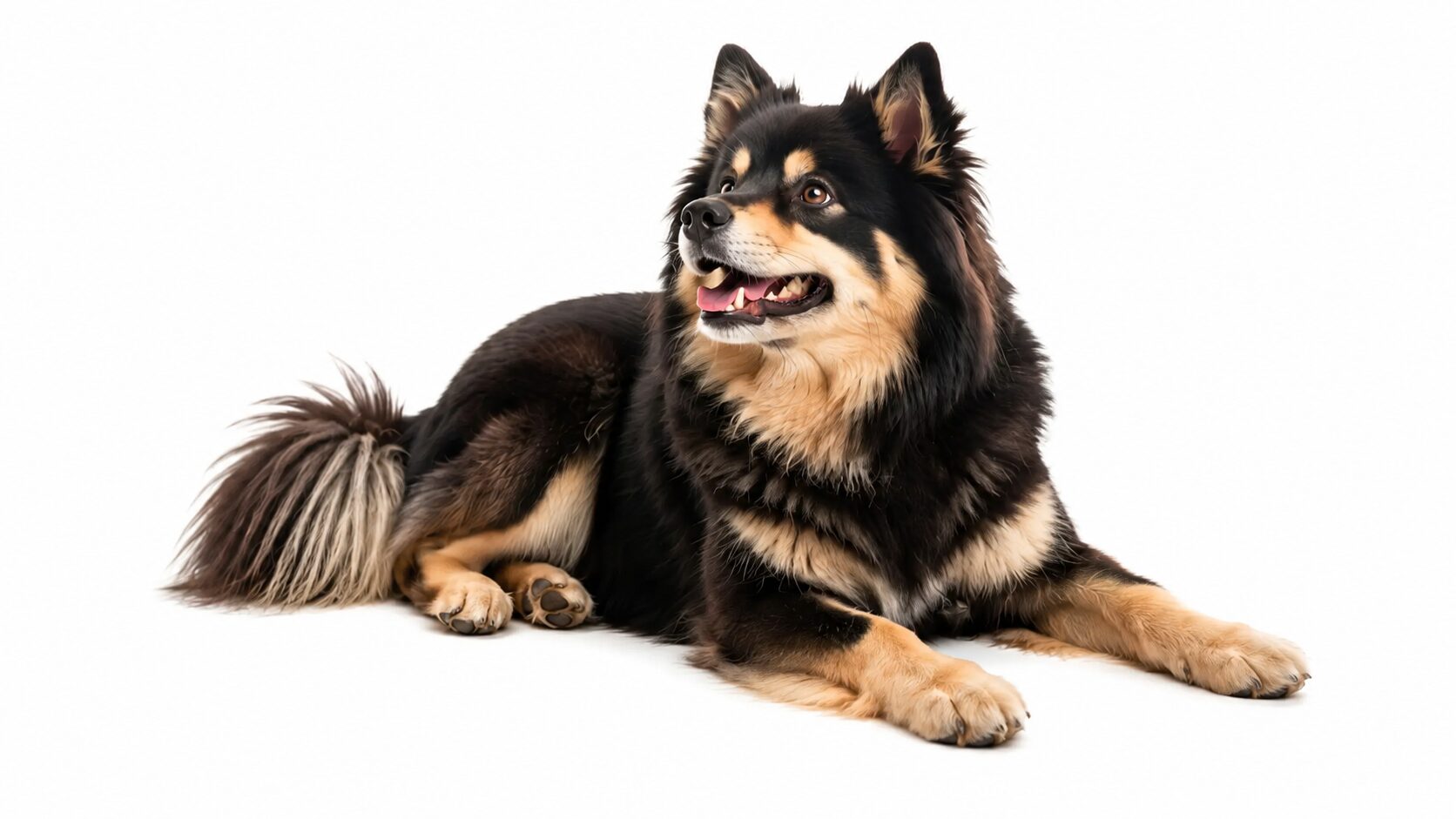
The Swedish Lapphund is a medium-sized, slightly rectangular, powerfully compact, and specifically elegant Spitz dog that presents with the most immediately beautiful combination of the thick, profuse black double coat, the curled tail carried high over the back when moving, the wedge-shaped head with mobile triangular ears, and the large, round, dark brown eyes that are full of expression in the way that experienced Spitz breed observers consistently identify as one of the most personally engaging individual facial qualities of any Nordic breed.
Males stand 48 to 51 centimeters and weigh 15 to 20 kilograms. Females are slightly smaller. The double coat consists of a fine, woolly undercoat and a straight, somewhat harsh outer coat that together provide the weather resistance for Lapland conditions where temperatures regularly fall well below freezing for months at a time. The most common color is solid black — the specific coat expression that earned the breed the title black beauty of Norrland — though liver and black-and-brown combinations are also recognized. The gait is light and springy, covering ground with parallel, well-driven movement.
Housing And Living Requirements
The Swedish Lapphund is more adaptable in terms of living environment than its Arctic herding dog heritage might initially suggest. The breed can manage in an apartment if sufficiently exercised, though a home with yard access is more naturally appropriate for a dog with this level of energy and sociability. The breed does have a significant vocality tendency that requires specific management in residential settings with close neighbors.
The most critically important welfare consideration is social companionship. The Swedish Lapphund is highly social and should never be left alone outdoors for long periods. Isolation produces barking and destructive behavior that are among the most consistently documented individual welfare failures for this breed in domestic contexts. The breed experiences the cold weather of its ancestral Lapland with genuine ease and comfort but requires specific management in warm tropical climates where the thick double coat creates heat stress.
A comfortable dog bed in a social area of the home suits the breed’s warmly family-integrated character. An orthopedic dog bed provides appropriate joint support given the hip dysplasia documented in the breed.
Exercise Requirements
The Swedish Lapphund requires at least one hour of vigorous daily exercise reflecting its heritage as an active reindeer-herding dog that covered substantial distances across Lapland terrain in all weather conditions. The breed loves hiking, running, and playing outside while also having what breed enthusiasts describe as a chill switch when indoors — the ability to settle and relax with the family after adequate outdoor engagement that makes the breed more manageable in the home than its energy level might suggest.
Dog agility is among the most celebrated competitive sports for the breed, engaging the athleticism and the handler-focus that herding selection produced. Herding trials engage the most authentically heritage-appropriate working outlet. Flyball engages the team-competitive energy in organized format. The breed also has certified search and rescue dogs and army dogs in Sweden, reflecting an extraordinary working versatility that extends well beyond the herding heritage.
Puzzle toys and enrichment activities are genuinely important between outdoor sessions for a breed with the independent intelligence of a dog that historically made herding decisions without constant handler supervision. A GPS tracker is a practical safety investment for outdoor exercise given the breed’s independent working instinct. A dog agility equipment set at home provides structured daily engagement.
Grooming Requirements
The Swedish Lapphund’s thick, profuse double coat requires consistent regular maintenance but is specifically described as easy to maintain by experienced breed owners — the coat’s natural texture sheds dirt and debris relatively efficiently and does not tangle as readily as some comparably dense coats.
Brushing two to three times weekly with a pin brush and metal comb removes loose hair and maintains coat health. The twice-yearly heavy shedding seasons — when the undercoat is released in substantial quantities — require daily brushing to manage the significant hair volume. The breed sheds a lot of hair and owners who find the presence of dog hair constantly on furniture and clothing difficult should reconsider this breed. Bathing every six to eight weeks or when genuinely needed maintains coat cleanliness without stripping the natural oils that contribute to weather resistance.
The mobile prick ears require weekly inspection and cleaning. Dental care should be established as a consistent routine from puppyhood. Nails should be trimmed regularly. The tail and its abundant furnishings require specific attention during brushing as this area accumulates the most significant individual mat potential.
Diet And Nutrition
The Swedish Lapphund is a medium-sized, highly active herding breed with daily caloric needs calibrated to its actual size and genuine working output. A high-quality medium breed active formula with a named protein source as the first ingredient provides the nutritional foundation.
Most adults do well on two measured meals per day. Maintaining lean, athletic body condition appropriate to an active herding dog supports both working capability and long-term orthopedic health — specifically important for a breed with the hip dysplasia documentation that the breed community consistently identifies. Training treats are highly effective motivators and should be counted into the daily caloric total.
Compatibility
The Swedish Lapphund loves everyone and is highly social, usually never meeting a stranger. This characterization from breed enthusiasts is among the most personally accurate individual breed assessments in this series. The Sámi tradition of treating the dog as a family member with full reciprocal commitment produced a breed that extends its warmth broadly rather than reserving it exclusively for a single handler.
With its own established family, the breed is completely devoted. With children, the breed is genuinely appropriate, energetic, and patient. The breed is a sturdy and tireless playmate for kids. The herding instinct may produce nipping at children’s heels — a specific management consideration requiring consistent training from puppyhood. With strangers, the breed is typically warm and sociable — lively, alert, kind, and affectionate sums up the essential domestic character accurately. With other dogs, cats, and small animals, the breed is typically appropriate when properly socialized from puppyhood. A dog crate is a useful management tool during puppyhood.
Behavior And Temperament
The Swedish Lapphund is lively, alert, kind, and affectionate. The breed is very receptive, attentive, and willing to work. The combination of genuine working intelligence, social warmth, and the independence of a herding dog that historically made decisions without constant handler direction produces one of the most personally engaging and the most specifically all-around family-appropriate Nordic breeds available.
The barking is the most practically important individual behavioral characteristic for any prospective owner to understand before acquisition. The specific high-pitched bark that the Sámi people valued so specifically for its effect on reindeer is fully present in the modern breed and will be applied to every interesting stimulus in the domestic environment with the same enthusiastic persistence that centuries of working selection fixed into the breed’s most fundamental behavioral expression. Bark management from puppyhood is the most critically important individual training investment for any Swedish Lapphund owner in a residential setting.
Training And Handling
The Swedish Lapphund is an independent thinker — intelligent and quick to learn but not inclined toward unquestioning obedience. The breed responds well to positive reinforcement techniques such as play, praise, and food rewards but does not respond well to harsh training methods — they are sensitive to a harsh hand and do not tolerate those types of corrections well.
Positive reinforcement methods are the most effective approach. Training treats are highly effective motivators in short, varied, genuinely engaging sessions. The breed is full of endurance and toughness in the working context, with the same physical and mental resilience that Lapland conditions demanded. Early socialization from the earliest possible puppyhood through puppy kindergarten classes and broad exposure to diverse people, animals, and environments builds the socially confident adult character the breed’s warm temperament supports naturally.
Health And Lifespan
The Swedish Lapphund is a generally healthy breed with a lifespan of 12 to 13 years, reflecting the constitutional soundness of an ancient landrace maintained through thousands of years of natural working selection in the most demanding Scandinavian environment.
Progressive Retinal Atrophy (PRA) Progressive retinal atrophy causing gradual vision loss is the most consistently documented hereditary condition. DNA testing identifies affected and carrier dogs. Annual CAER ophthalmological examination from the dog’s first year provides clinical monitoring.
Hip Dysplasia Hip dysplasia is documented. OFA hip evaluation of breeding animals is the most important orthopedic screening. Maintaining lean body condition and appropriate juvenile exercise management are the most practically meaningful protective measures.
Bloat The moderately deep chest creates some GDV susceptibility. Two smaller meals daily and avoiding vigorous exercise for at least one hour before and after meals are sensible preventive practices.
Heat Sensitivity The thick double coat creates specific heat stress risk in warm tropical climates. Extra care to prevent overheating is warranted for Swedish Lapphunds in such environments.
Routine preventive care including regular vet checks, OFA hip evaluation, PRA DNA testing, annual CAER ophthalmological examination, consistent dental hygiene, up-to-date vaccinations, and parasite prevention provides the foundation for a healthy Swedish Lapphund.
Price And Availability
The Swedish Lapphund is rare outside Sweden, with an estimated worldwide population of approximately 1,000 to 1,200 individuals. The breed’s presence in North America is negligible, and finding a Swedish Lapphund in the United States requires direct engagement with breeders in Sweden and other European countries. The Swedish Lapphund Club of America provides the most accessible pathway for North American prospective owners.
Conclusion
The Swedish Lapphund has accompanied the Sámi people of Lapland since at least the Stone Age, supported by 7,000-year-old skeletal remains found in northern Norway and by mitochondrial DNA haplogroup D evidence confirming a unique genetic signature shared only among Sámi-associated northern Scandinavian breeds, served the Sámi people as hunting dog, camp guardian, and reindeer herder for millennia under the mythological compact of mutual respect, was distinguished from its sibling Lapphund breeds by the Swedish Kennel Club which recorded the first long-haired Lapphund in 1884 and formally recognized the Swedish Lapphund in 1903 with Halli as the first registered individual, received FCI recognition in 1944, received UKC Northern Breeds Group recognition in 2006, is in the AKC Foundation Stock Service, is designated the national dog of Sweden as the oldest of its nine recognized native breeds, was close to extinction in the early 1900s as snowmobiles replaced it in reindeer herding before dedicated Swedish breeders in the 1960s rebuilt the population, numbers approximately 1,000 to 1,200 individuals worldwide today, has a unique high-pitched bark developed specifically to direct reindeer without frightening them, belongs to a Sámi breed family sharing genetic evidence of post-domestication female wolf-male dog hybridization, and stands today as the most specifically Sámi-covenant-well-treated-in-exchange-for-lifelong-work, the most specifically 7000-year-old-Norwegian-skeleton-resembling-modern-breed, the most specifically haplogroup-D-northern-Scandinavia-only-female-wolf-male-dog-hybridization, the most specifically high-pitched-bark-developed-to-direct-reindeer-not-frighten-them, the most specifically black-beauty-of-Norrland, the most specifically first-breed-ever-recorded-by-Swedish-Kennel-Club, the most specifically Sweden’s-national-dog-oldest-of-nine-native-breeds, and the most specifically 1000-to-1200-worldwide-rare-but-deeply-rooted of all the Nordic Watchdog and Herder breed partnerships available. Get properly set up before bringing one home. Our Best Dog Products page has everything you need for thick-profuse-double-coated, solid-black-most-common, prick-eared, curled-tail-over-back, high-pitched-barking, whole-heartedly devoted Lapland herding dogs that carry the full heritage of the 7,000-year-old Sámi dog partnership, the mythological covenant of mutual respect and well-treatment, the haplogroup D wolf-hybridization genetic signature, the mid-18th century shift from hunting to reindeer herding, the 1884 first SKK recording, the 1903 formal recognition with Halli, the 1944 FCI recognition, the 1960s dedicated Swedish breeder recovery, the 2006 UKC recognition, and the specific lively, alert, kind, affectionate, independent-thinker, harsh-correction-sensitive, chill-switch-when-indoors, high-pitched-bark-used-purposefully intelligence of the oldest and most genuinely ancient working dog that Sweden has ever called its national breed.