
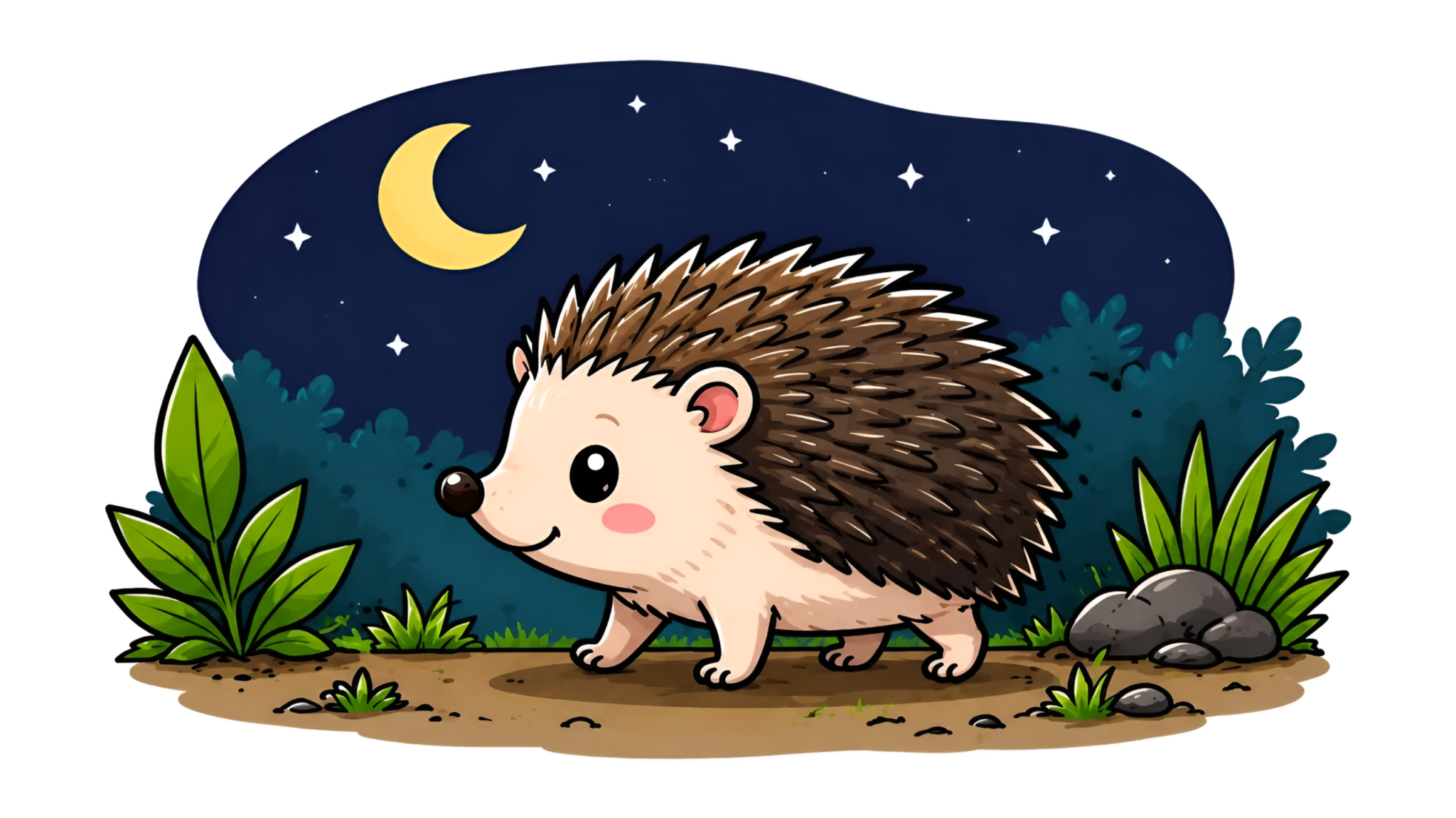
Are hedgehogs nocturnal? Yes — hedgehogs are nocturnal animals, and this single biological fact shapes nearly every aspect of what it means to own one. Their sleep schedule, their activity patterns, when they eat, when they run, when they are most receptive to handling, and even how you should set up their cage are all directly influenced by their nocturnal nature. Understanding why hedgehogs are nocturnal, what that looks like in practice, and how to work with rather than against this biological rhythm is one of the most important foundations of good hedgehog care.
Why Are Hedgehogs Nocturnal?
Hedgehogs evolved as nocturnal animals for reasons deeply rooted in their ecological history as small, prey-vulnerable insectivores. Being active at night offers several significant survival advantages for an animal of their size and dietary niche.
Predator avoidance is the primary driver. The hedgehog’s natural predators — foxes, badgers, birds of prey, and larger carnivores — include many species that are either diurnal (active by day) or have superior daytime visual acuity. By concentrating activity in low-light hours, hedgehogs reduce exposure to these threats. Their quills provide passive defense against many predators, but avoiding detection in the first place is even more effective.
Thermal management is a secondary benefit. In the warm, sub-Saharan African climate where the African pygmy hedgehog evolved, daytime temperatures can be extreme. Foraging at night when temperatures are cooler reduces heat stress and water loss for a small animal with a high surface-area-to-volume ratio.
Prey availability also favors nighttime activity. Many of the invertebrates that hedgehogs eat — beetles, earthworms, slugs, moths, and other soft-bodied invertebrates — are most active and most accessible at night. Foraging when prey is most abundant makes the energy expenditure of foraging most efficient.
According to research on circadian rhythm evolution in mammals published in Proceedings of the Royal Society B, the ancestral mammalian condition is thought to have been nocturnal — early mammals evolved alongside diurnal dinosaurs and occupied the nighttime ecological niche as a survival strategy. Hedgehogs, as members of one of the oldest mammalian lineages, retain this ancestral nocturnal pattern with remarkable fidelity.
What Does Hedgehog Nocturnal Behavior Look Like?
Understanding the typical daily pattern of a nocturnal hedgehog helps owners recognize what healthy behavior looks like and distinguish it from signs of illness.
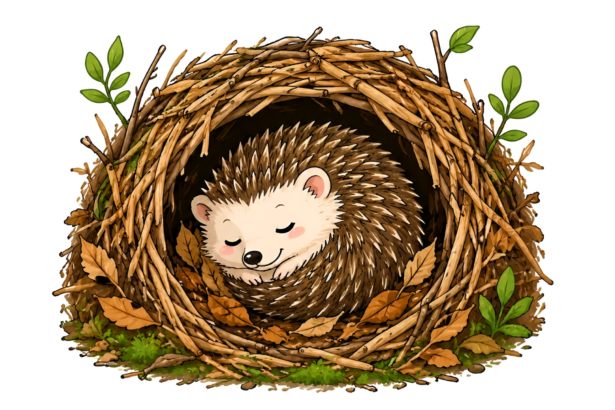
From shortly after dawn until dusk, a healthy hedgehog sleeps. The sleep is genuine, deep, and extended — typically 18–20 hours of the 24-hour cycle. During this time, the hedgehog will be curled in or near its sleeping enclosure, unresponsive to minor disturbances, and completely inactive. A new owner who observes this extended stillness for the first time often worries something is wrong — but a hedgehog sleeping soundly through the day is in perfect health. Our article on where hedgehogs sleep explains the sleep behavior in detail.
As dusk approaches and the ambient light level drops, most hedgehogs begin to stir. The transition from sleep to activity is gradual — the hedgehog typically emerges from its sleeping area, sniffs the air, moves slowly at first, then transitions into the full activity of its active period. This timing is driven by light levels as much as by a fixed internal clock, which is why ambient room lighting around the cage affects when activity begins.
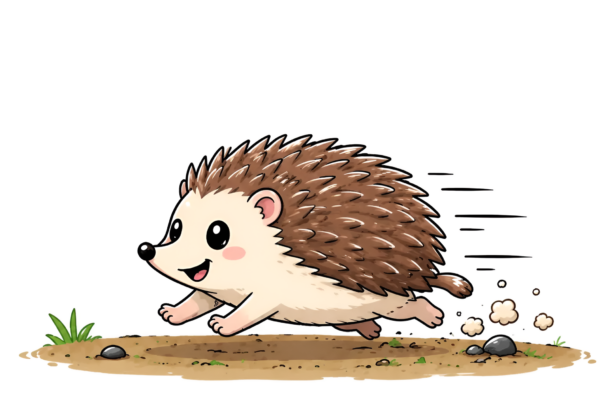
Peak activity occurs between dusk and midnight, with a secondary active period in the hours before dawn in some individuals. During active hours, a well-kept hedgehog will run extensively on its wheel — potentially for several miles per night — forage, explore, eat, drink, and engage in its full behavioral repertoire. This is when the animal is fully engaged with its environment and most receptive to interaction.
By dawn, activity winds down and the hedgehog returns to its sleeping area, often building and rearranging nesting material before settling in for the day’s sleep.
Image suggestion: A hedgehog running on its exercise wheel during nighttime hours showing nocturnal activity. Alt text: “nocturnal hedgehog running on wheel at night showing natural activity pattern”
Are Hedgehogs Crepuscular Rather Than Purely Nocturnal?
Some sources describe hedgehogs as crepuscular rather than strictly nocturnal — meaning primarily active at dawn and dusk rather than through the entire night. The distinction has some basis in observation: in the wild, activity peaks are often concentrated around the transitional light periods of dusk and pre-dawn rather than being evenly distributed through the night.
In practice, captive hedgehogs are most accurately described as nocturnal animals with crepuscular peaks — they are active throughout the night, but often most vigorously active in the first two to three hours after dark and again in the hour or two before dawn. The middle hours of the night may see reduced but not absent activity.
This nuance does not materially change how you manage a pet hedgehog’s care, but it explains why owners who check on their hedgehog at midnight may find it less actively engaged than those who check at 9 or 10 PM in a room that began darkening at dusk.
Can Hedgehogs Change Their Nocturnal Schedule?
This is a question many new owners ask, often hoping to shift their hedgehog’s schedule to align better with household routines. The answer is: not meaningfully, and attempting to force a schedule change causes genuine harm.
The hedgehog’s nocturnal pattern is not a preference or a habit — it is a biological rhythm encoded in the animal’s circadian clock, hormone cycles, and sensory system. Trying to keep a hedgehog awake during the day by repeatedly disturbing it, exposing it to constant bright light, or handling it during its main sleep period does not shift the schedule. It disrupts sleep, elevates stress hormones, suppresses immune function, and gradually degrades the animal’s health without producing the desired behavioral change.
Research on circadian disruption in mammals — including studies referenced by the National Sleep Foundation — consistently documents that forced disruption of species-appropriate circadian rhythms causes measurable physiological harm, including increased cortisol, immune suppression, and metabolic disruption. These findings apply to small mammals as well as humans.
The healthy approach for owners whose schedule does not align perfectly with hedgehog activity hours is to interact with the hedgehog during the early evening window when it first becomes active, rather than attempting to modify the hedgehog’s biology. This is one of the practical lifestyle considerations that our article on whether hedgehogs are good pets addresses honestly.
How Does Being Nocturnal Affect Hedgehog Senses?
Nocturnal animals typically show sensory adaptations that favor low-light function. Hedgehogs are no exception — their sensory profile is strongly biased toward the senses most useful at night.
Smell is the dominant sense. Hedgehogs have an extremely well-developed olfactory system with a large proportion of brain tissue dedicated to processing scent information. This allows them to locate prey, recognize familiar individuals and environments, detect predators, and navigate complex terrain in near-total darkness — all through smell rather than vision.
Hearing is also well-developed. Hedgehogs can detect a wide range of frequencies and use sound to locate prey and monitor for threats. The various hedgehog sounds they produce — snuffling, huffing, clicking, chirping — are also part of their acoustic interaction with their environment.
Vision, by contrast, is relatively poor and is not the primary sensory channel hedgehogs rely on. Their eyes are positioned for a wide field of view — useful for detecting movement — but visual acuity and color discrimination are limited. Our article on whether hedgehogs can see in the dark covers their visual system in detail. Importantly, hedgehog eyes are sensitive to bright light — something directly relevant to how you manage cage lighting.
Lighting and the Nocturnal Hedgehog
Because hedgehogs are nocturnal and sensitive to bright light, how you manage lighting in and around the cage directly affects their health and behavior.
The core principle is providing a consistent and appropriate light-dark cycle — roughly 12 hours of light and 12 hours of darkness that mirrors a natural day-night pattern. This light-dark cycling acts as the primary zeitgeber — the environmental time cue — that synchronizes the hedgehog’s internal circadian clock with the external world.
Constant bright light disrupts this synchronization. A hedgehog in a cage that is kept brightly illuminated for 18 hours a day due to household lighting patterns will have a disrupted circadian rhythm, poorer sleep quality during its rest periods, and impaired nighttime activity. The effects compound over time into chronic low-level stress.
A hedgehog night light on a timer that provides minimal, dim illumination only during the hedgehog’s active hours — without disturbing the dark period needed for daytime sleep — lets you observe your hedgehog during its active window without disrupting its biology. Red light wavelengths are generally less disruptive to nocturnal animals than white or blue light, a principle supported by research on nocturnal mammal biology.
A hedgehog monitoring camera with night vision is the most elegant solution for curious owners — it lets you watch your hedgehog’s nighttime activity without any light in the cage at all, giving you full observation capability while the hedgehog’s light environment remains undisturbed.
Image suggestion: A hedgehog cage at night with a red-spectrum night light showing appropriate low-light observation setup. Alt text: “nocturnal hedgehog cage lighting — red night light setup for observing hedgehog activity without disruption”
Feeding and the Nocturnal Schedule
Hedgehog feeding should be aligned with their nocturnal activity pattern, not with human mealtimes. Offering food in the early evening — shortly before or at the time the hedgehog typically becomes active — means the hedgehog has fresh food available at the start of its active period when appetite and digestive function are at their peak.
Offering food in the morning or midday — when the hedgehog is in deep sleep — means the food sits and potentially degrades before the hedgehog is ready to eat it. Dry food tolerates this better than wet or fresh food, but the timing principle still applies: feed in the evening.
Water should be available at all times. A water bottle or water dish positioned accessibly within the cage ensures the hedgehog can drink whenever it chooses during its active hours. Change water daily to maintain freshness.
Our article on what hedgehogs eat covers the full nutritional picture, including appropriate foods and feeding frequency, in detail. The nutritional content of the food matters independently of timing, but timing does affect palatability and food safety.
The Exercise Wheel and Nocturnal Running
One of the most striking expressions of hedgehog nocturnal behavior is the amount of running they do each night on an exercise wheel. Wild hedgehogs cover one to two miles or more per night foraging — in captivity, the wheel provides an outlet for this locomotion drive that has nowhere else to go.
Most hedgehogs run for several miles per night on their wheel, and this running is concentrated in the nighttime active period. A wheel that is silent — or at least quiet — is therefore not a minor consideration but a significant quality-of-life issue for everyone in the household. A noisy wheel running for hours in the early morning hours is a genuine problem in a bedroom setting. Our guide to the best hedgehog wheel covers silent wheel options that allow nighttime running without disturbing household members.
The wheel should never be removed to reduce noise. Running on the wheel is not optional enrichment — it is a physiological and psychological necessity for a nocturnal animal that evolved to cover large distances each night. Removing the wheel leads to obesity, boredom, and stress-related behavioral problems. The solution is a quiet wheel and thoughtful cage placement, not wheel removal.
Is Being Nocturnal Compatible With Being a Good Pet?
Hedgehog nocturnality is the most common reason people find hedgehog ownership more challenging than they expected. A pet that is active from dusk until dawn and sleeps through most of the day limits interaction to evening and nighttime hours, which does not suit everyone’s schedule or living situation.
Owners who are naturally evening or night people, who work flexible hours, or who have young children who go to bed early (leaving the evening free) often find the hedgehog’s schedule fits their lifestyle naturally. Owners who go to bed at 9 PM or who have early morning schedules may find that meaningful interaction with a nocturnal hedgehog is harder to achieve.
This compatibility consideration is worth thinking through honestly before acquiring a hedgehog. It does not make hedgehogs bad pets — for the right owner, their nocturnal independence is actually a positive. But it is a real lifestyle factor that deserves honest assessment. Our article on whether hedgehogs are good pets explores this question fully and helps prospective owners self-assess their suitability.
Frequently Asked Questions
Can I train my hedgehog to be active during the day? No — and attempting to do so causes genuine harm through sleep disruption and chronic stress. Work with your hedgehog’s natural schedule rather than against it.
My hedgehog seems active during the day sometimes — is this normal? Occasional brief daytime activity — eating, drinking, stretching — is normal and not a cause for concern. A hedgehog that is consistently active throughout the day and sleeping primarily at night may be experiencing a disrupted circadian rhythm from inappropriate lighting or other environmental factors, which is worth addressing.
Should I be worried if I never see my hedgehog because it’s always sleeping? Not if it is active and eating normally during evening hours. Checking in on the hedgehog in the early evening when it first becomes active is the most reliable way to observe it in a healthy, engaged state.
Does nocturnality change as hedgehogs age? Very old hedgehogs may show reduced overall activity compared to younger adults, spending more time resting even during what would normally be active hours. This is a natural age-related change. The fundamental nocturnal pattern does not reverse with age.
Do all hedgehog species have the same nocturnal pattern? Most hedgehog species are primarily nocturnal, though some — particularly those in very hot desert environments — show greater crepuscular or even occasional diurnal activity during cooler parts of the day. The African pygmy hedgehog and European hedgehog are both reliably nocturnal.
Final Thoughts on Whether Hedgehogs Are Nocturnal
Are hedgehogs nocturnal? Completely and fundamentally — it is not a behavioral quirk but a biological identity that shapes everything about how these animals live. The best hedgehog owners are the ones who understand this, design their care routines around it, and find genuine delight in the evening hours when their hedgehog is at its most alert, most exploratory, and most fully itself.
A nocturnal animal with a full, active night ahead of it deserves a cage that is set up to support every part of that night — from the wheel it runs on to the food it eats and the hideout it sleeps in. Find everything it needs at the Herdurbia Best Hedgehog Products hub, where thoughtful, species-appropriate pet care is always the goal.