
Bananas are everywhere. They’re cheap, soft, naturally sweet, and most hedgehogs take to them immediately. So it makes sense that hedgehog owners wonder whether they’re a safe treat to offer. The good news is that fresh banana in small amounts is fine for hedgehogs. The less good news is that bananas come with a few nutritional catches that make them a fruit to approach with some care rather than toss in the bowl without thinking.
Here’s a full breakdown of what bananas offer, what they risk, and exactly how to feed them safely.
What Bananas Actually Contain
Per 100 grams of raw overripe banana, you’re looking at roughly 15.8 grams of sugar, 1.7 grams of fiber, 5 milligrams of calcium, and 22 milligrams of phosphorus, according to USDA data. There’s also a useful amount of vitamin C, vitamin B-6, potassium, and antioxidants in there. On paper, that sounds like a reasonable treat — and it is, in small quantities. But those numbers also tell you exactly why bananas need to be kept occasional rather than routine.
Can Hedgehogs Eat Bananas?
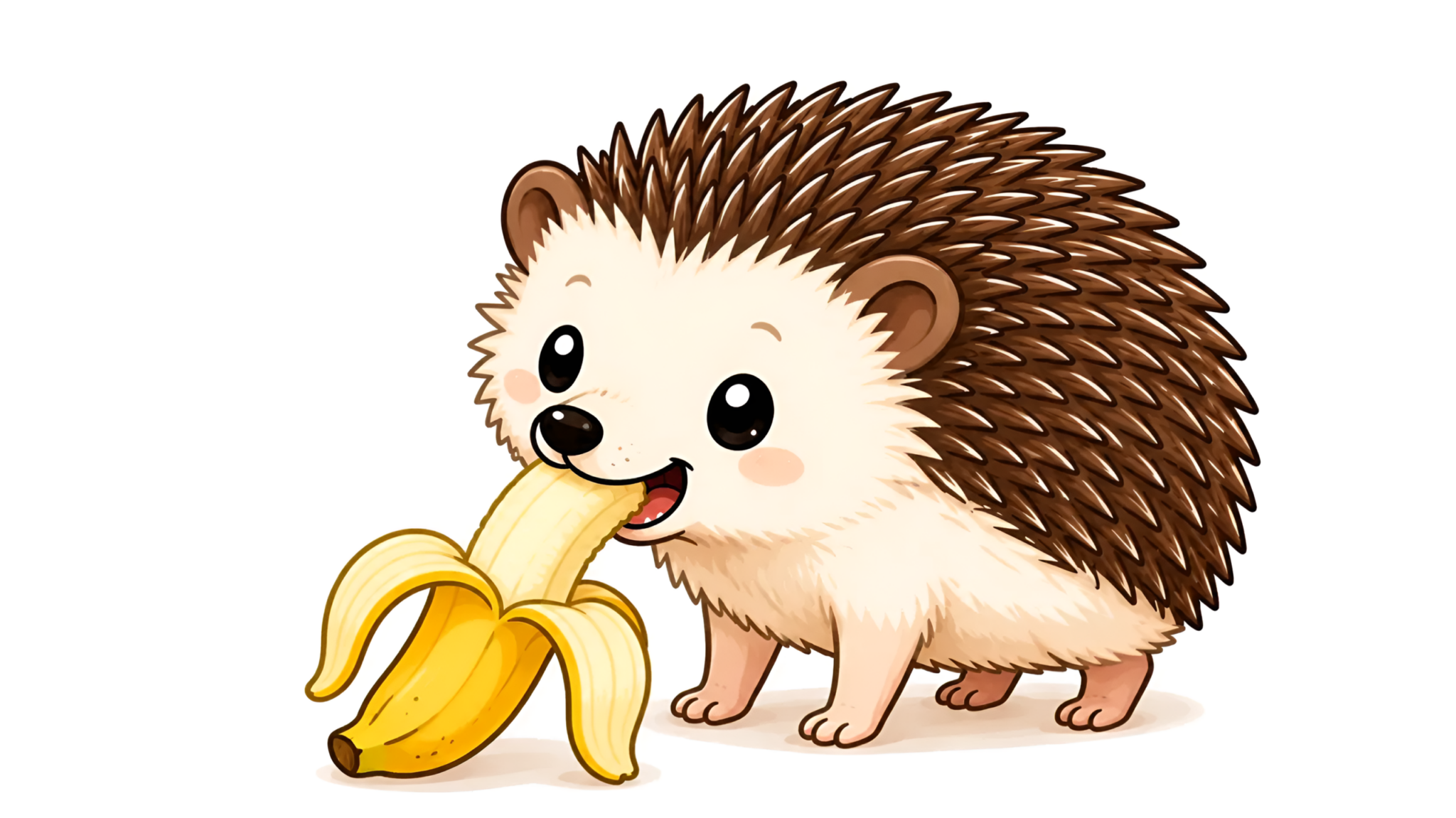
Yes — hedgehogs can eat fresh banana as an occasional treat, and most of them enjoy it. The soft texture makes it easy to eat, the sweetness tends to appeal to them, and the vitamins and fiber do offer some genuine benefit. That said, the high sugar content and the imbalanced calcium-to-phosphorus ratio mean it should never become a regular feature of their diet.
Think of banana as the hedgehog equivalent of dessert — enjoyable, fine in small doses, but not something you’d want them filling up on daily.
The Benefits Worth Knowing
Bananas aren’t nutritionally useless for hedgehogs. The fiber content supports healthy digestion and helps keep things moving — important for animals that can be prone to constipation. Vitamins B-6 and C support healthy development and immune function. Potassium supports heart health and blood pressure. And the antioxidants in bananas help neutralize free radicals that can affect long-term health.
None of this is reason to feed bananas freely, but it does mean that when you offer a small piece as a treat, it’s not entirely without value.
The Risks You Need To Know About
The Sugar Problem
This is the main issue. Ripe bananas have a high glycemic index, meaning the sugars enter the bloodstream quickly, and hedgehogs fed sugary foods regularly become significantly more prone to diabetes and obesity. Pet hedgehogs don’t burn calories the way wild hedgehogs do — they’re not running miles through undergrowth every night hunting for food. That makes them vulnerable to weight gain from high-sugar diets, and keeping on top of hedgehog weight is something every owner needs to take seriously.
Overripe bananas are especially problematic. An overripe banana will be too sugary and can cause hyperglycemia, while an underripe one is harder to digest and can cause stomach upset. The sweet spot is a ripe but not blackening banana — yellow with perhaps a few small spots.
The Calcium-to-Phosphorus Ratio
This is the nutritional detail that most owners miss, but it matters a great deal. Hedgehogs need a diet where calcium meets or exceeds phosphorus — ideally at a 1:1 or 2:1 ratio. With only 5mg of calcium to 22mg of phosphorus per 100g, bananas fall well short of that target. When phosphorus consistently dominates the diet, it can block calcium absorption and weaken bones over time. This is why bananas can’t be a dietary staple — the ratio just doesn’t work for regular feeding. You can read more about the broader principles of what hedgehogs should eat here.
Digestive Issues
Too much banana can cause diarrhea or constipation depending on the individual animal and how much they’ve eaten. Hedgehogs have sensitive digestive systems, and sudden dietary changes can upset their gut. Always introduce banana gradually if it’s new to your hedgehog, and monitor their poop afterward — loose or unusual stools are a clear sign the portion was too large or the fruit didn’t agree with them.
What Types Of Banana Can Hedgehogs Eat?
Fresh ripe banana — yes. A small piece of fresh, ripe banana is the only form that’s appropriate. Mash it or cut it into small chunks before offering it.
Dried banana — no. Dried banana concentrates the sugar dramatically and becomes very hard in texture, creating both a choking hazard and a sugar overload. Dried fruit in general is a bad choice for hedgehogs, and banana is no exception.
Banana chips — no. Banana chips are typically fried in oil and coated in honey or syrup, adding large amounts of fat, calories, and sugar on top of an already sugar-heavy fruit. They have no place in a hedgehog’s diet.
Banana peel — no. Banana crops are among the most intensively sprayed fruit crops, and pesticide residue concentrates on the skin rather than the flesh. Even organic peels offer no real nutritional value to hedgehogs, and the tough texture creates a choking risk. Always discard the peel entirely.
How To Pick The Right Banana
Choose a ripe banana with bright yellow skin — no large green patches (underripe) and no significant blackening (overripe). It should give slightly when gently pressed but not feel mushy. Organic bananas are preferable where available, since this reduces pesticide exposure even from the flesh. Medium-sized bananas tend to have the best flavor and texture.
How To Prepare And Serve Banana
Peel the banana and cut a small piece — roughly a teaspoon’s worth is more than enough. Either cut it into small chunks or mash it with a fork. Mashing is a good habit since it removes any choking risk and makes it easier to serve a controlled amount. Place it in your hedgehog’s food bowl rather than hand-feeding if they’re still getting used to you — new foods and new interactions at the same time can be a lot to process.
Remove any uneaten fruit after your hedgehog is done. Fresh fruit left sitting in a cage attracts bacteria quickly. Keeping the feeding area clean is a basic but important part of good hedgehog care.
How Often Can Hedgehogs Eat Banana?
Once a week at most — and that’s the upper limit, not a target. Some owners prefer to rotate banana with other appropriate fruits so the hedgehog gets variety without too much of any one high-sugar food. The core diet should always be a high-quality, protein-rich staple — the best options are covered on our best hedgehog food page — with fruit as a small supplement, not a central feature.
Storing Bananas
Unripe bananas ripen well at room temperature. Place them in a paper bag to trap the ethylene gas they naturally produce and speed the process up. Once ripe, they can be refrigerated to slow further ripening — the skin will darken in the fridge but the flesh stays fresh. For longer storage, peel and slice, then freeze in an airtight bag. Always thaw fully and bring to room temperature before offering any to your hedgehog.
Conclusion
Banana is one of the more hedgehog-friendly fruits out there, but that friendliness has limits. A small piece of fresh, ripe banana once a week is a perfectly reasonable treat — enjoyable for most hedgehogs and not without nutritional benefit. But the sugar content, the imbalanced calcium-to-phosphorus ratio, and the risks of overfeeding all mean it needs to stay firmly in the occasional treat category. Stick to fresh flesh only, skip the peel and dried varieties entirely, and keep portions small. And when it comes to making sure your hedgehog’s whole setup supports their health — from food to habitat — our best hedgehog products page has everything you need to get it right from the ground up.