
Origin And Natural Habitat
The island of Montserrat — a small British Overseas Territory in the Leeward Islands of the Caribbean — is the exclusive home of Cyrtopholis femoralis, an endemic species found nowhere else on Earth. The island is geologically active, dominated by the Soufrière Hills volcano whose eruptions from 1995 onward devastated the southern half of Montserrat including the capital Plymouth, displacing most of the human population and almost certainly eliminating significant portions of the tarantula’s range in the process. The species is known to be historically widespread and abundant across all of Montserrat, though large sections of its former range are expected to have been recently lost to volcanic activity.
The species is currently common in the north of Montserrat including urban areas, with populations in the Centre Hills having been the focus of dedicated ecological study in recent years. Cyrtopholis spiders are terrestrial tarantulas inhabiting primary and secondary forests, arid hills, agricultural areas, and occasionally urban gardens across the Caribbean — and Montserrat’s remaining northern forest, with its warm Caribbean climate, dense vegetation, and the leaf litter and soil substrate of the tropical island forest floor, provides the habitat this species evolved in. Burrows of C. femoralis feature 5 to 20 centimetre tunnels at 45 to 90 degree angles leading to chambers 10 to 15 centimetres long and 5 centimetres wide — compact underground retreats that reflect the small adult size of this Caribbean island endemic.
The main known predator of this species deserves specific mention. The mountain chicken (Leptodactylus fallax) — a giant frog also endemic to Montserrat and itself one of the rarest amphibians in the world — is documented as the primary predator of C. femoralis, creating a remarkable conservation scenario where two critically threatened Caribbean island endemics are ecologically linked as predator and prey.
A 2024 revision of the genus by Sherwood and Questel published in Arachnology described a new species — Cyrtopholis montserrat sp. nov. — from Montserrat alongside a redescription of C. femoralis from the holotype male, noting the possibility that what was previously considered a single species may comprise two species occupying distinct habitat and altitudinal zones across the island. This taxonomic complexity makes any captive breeding programme particularly valuable from a genetic documentation perspective.
Scientific Classification
First described by Reginald Innes Pocock in 1903, C. femoralis was redescribed with formal figures of the genitalia for the first time in the 2024 Arachnology paper by Sherwood and Questel — a redescription that accompanied the description of the new C. montserrat species. Cyrtopholis is a Caribbean-endemic genus of New World tarantulas; the genus tolerates 18 to 30°C in captivity with optimal ranges of 20 to 27°C. The World Spider Catalog and iNaturalist confirm C. femoralis Pocock, 1903 as the current valid name.
Species Overview
The conservation story of C. femoralis is extraordinary enough to mention before the care profile. The species is the subject of EAZA Best Practice Guidelines published in 2021 — a formal zoo management document produced for an ex-situ captive breeding programme under the European Association of Zoos and Aquaria. This makes it one of the very few tarantula species whose captive breeding is formally managed as a conservation programme rather than simply a commercial hobby activity. The guidelines document that C. femoralis has proven to be very receptive to captive management, breeding and growing successfully in captivity, thriving without overly complex or expensive husbandry requirements — making it an ideal candidate for ex-situ conservation. The captive population may represent an important insurance population and potential founder stock for future reintroductions — a conservation role that makes every captive-bred specimen genuinely significant.
Appearance And Size
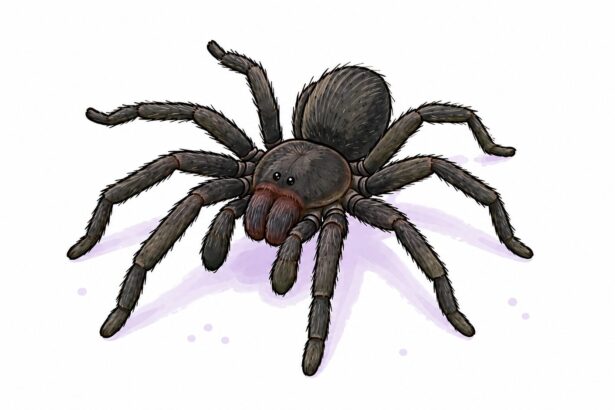
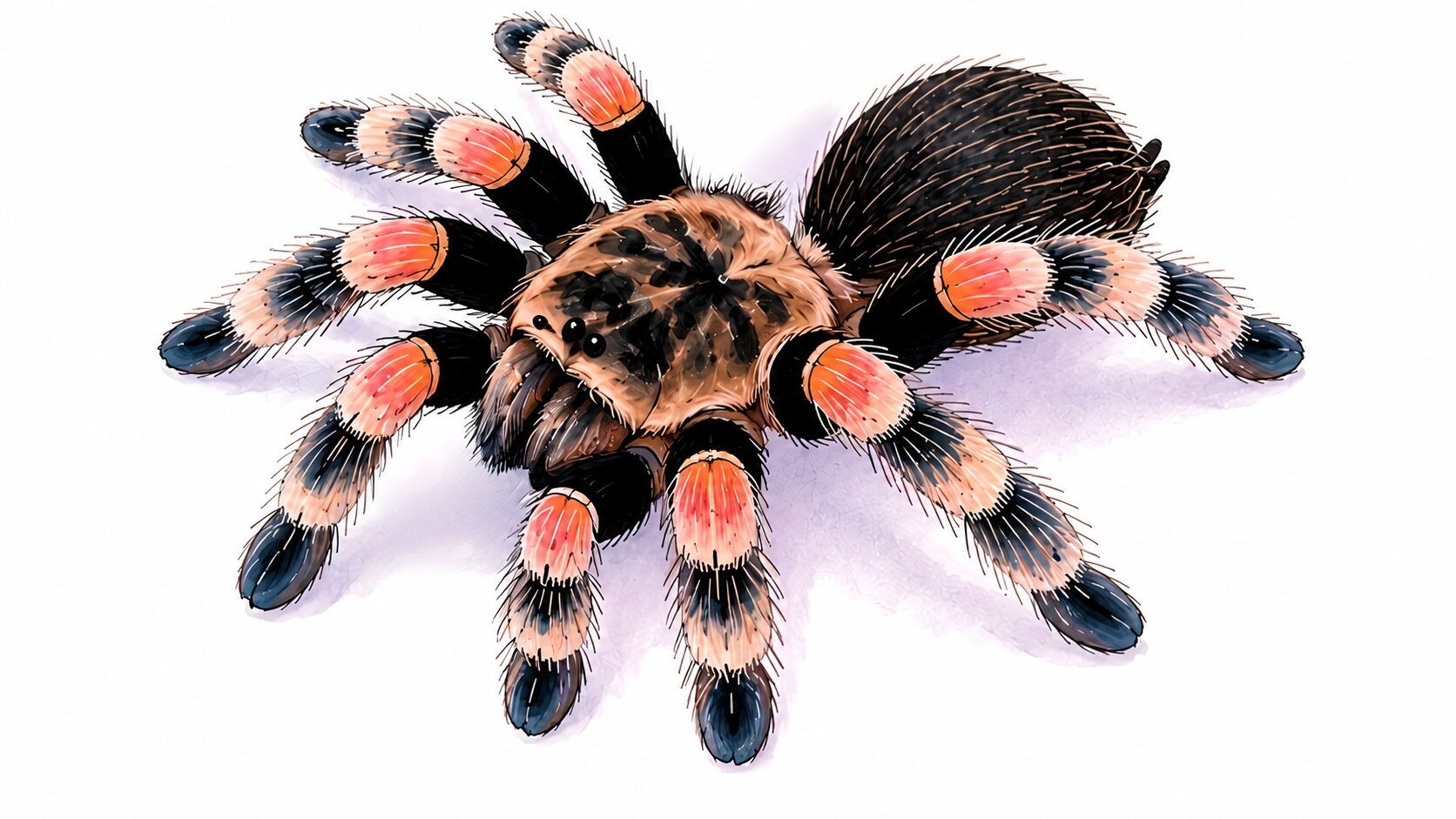
The colouration is a deep chestnut to greyish, sometimes black, on the legs and body with some lighter leg joints — pale brown to grey on the lower segments, with some darker specimens recorded. This is a warm, earthy palette in the brown and chestnut tones rather than vivid contrasting colours — the camouflage colouration of a Caribbean island forest floor species adapted to blending into leaf litter and soil. The lighter leg joints provide subtle contrast that makes the spider more visually interesting at close range than simple photography suggests.
Females grow to approximately 40mm body length — a compact to small adult size, genuinely modest by the standards of many hobby species. Egg sacs contain approximately 220 eggs — a productive clutch size that makes captive breeding reasonably rewarding in terms of spiderling output for conservation breeding programmes. Female lifespan has not been formally documented.
Housing
A terrestrial enclosure appropriate for a small Caribbean island species — compact footprint, moderate substrate depth allowing the 5 to 20 centimetre burrow tunnels documented in the wild. A footprint of 15 by 15 centimetres suits adults at approximately 40mm body length, with 3 to 4 inches of substrate and a latching lid. The urban habitat tolerance documented for this species suggests it is not a specialist requiring pristine tropical forest conditions — a well-maintained enclosure with appropriate humidity and substrate is sufficient. Our best tarantula enclosure guide covers terrestrial formats appropriate for small Caribbean island burrowing species, and our best tarantula sling enclosure covers smaller juvenile formats.
Enclosure’s Decorations
Cork bark at substrate level with a pre-formed starter burrow beneath provides the primary retreat structure. A shallow water dish provides hydration. Leaf litter on the substrate surface gives the Caribbean island forest floor character and additional moisture management. The microhabitat preferences for cryptic retreats under vegetation or in leaf litter suggest that surface decoration providing concealment will be used by a species that has evolved to remain hidden in forest floor debris. Our best tarantula hide guide covers appropriate small cork pieces for compact Caribbean terrestrial species.
Substrate
3 to 4 inches of moisture-retaining substrate appropriate for a warm Caribbean island forest floor species — coconut coir and peat moss or a coconut coir and topsoil blend gives the moisture retention and structural firmness appropriate for the burrow tunnels documented from field observations. The tropical Caribbean climate of Montserrat maintains warm temperatures and high humidity year-round, producing consistently moist forest floor conditions. Our best tarantula substrate guide covers moisture-retaining blends appropriate for Caribbean island terrestrial burrowing species.
Water And Humidity
A shallow water dish at all times, refreshed every two to three days. The EAZA guidelines document the captive humidity requirements as warm and moderately humid — 65 to 75 percent ambient is appropriate for the warm Caribbean island climate of Montserrat. A hygrometer confirms actual conditions, and a misting bottle handles targeted moisture additions.
Heating And Temperature
Montserrat’s Caribbean tropical climate maintains warm temperatures year-round. The genus tolerates 18 to 30°C in captivity with optimal ranges of 20 to 27°C — approximately 68 to 80°F — a temperature range achievable in most temperate indoor environments without supplemental heat for much of the year. A side-mounted heat mat controlled by a thermostat handles periods when ambient temperatures drop below 68°F. A thermometer at substrate level confirms actual conditions.
Diet And Nutrition
Appropriately sized invertebrates every ten to fourteen days — with the small adult body size requiring prey considerably smaller than standard hobby feeders. Small crickets and roach nymphs are the practical options. The urban habitat tolerance documented for this species suggests a broad opportunistic diet of the invertebrates available in both forest and garden environments. Remove uneaten prey within 24 hours. Our best tarantula food guide covers feeder sizing relevant to small Caribbean island terrestrial species.
Compatibility
Solitary only in standard keeping. The conservation breeding programme context makes any successful captive pairing genuinely significant — egg sacs of approximately 220 eggs make successful pairings productively rewarding for ex-situ conservation purposes. The potential cryptic species status of some populations makes provenance documentation particularly important for any breeding programme.
Behavior And Temperament
New World terrestrial with the urticating hairs that characterise the subfamily — a significantly more manageable defensive profile than the Old World species that dominate the earth tiger group. The urban habitat tolerance and the fact that this species is documented in gardens and human-modified environments in Montserrat suggests a relatively calm disposition toward human disturbance compared to strictly forest-interior specialists. The small adult size means the defensive response, whatever its intensity, carries less practical consequence than that of large species.
Handling
Possible with care given the New World status and urticating hair defensive profile rather than immediate bite response. Standard floor-level protocol with slow movements. Venom is medically insignificant to healthy humans as a New World species. The conservation significance of each specimen is itself a reason to minimise handling stress.
Health And Lifespan
Female lifespan is not formally documented in the scientific literature. The species is described as thriving in captive conditions without complex husbandry requirements — a genuine hardiness that makes it manageable for conservation breeding programmes operating across multiple institutions. The primary conservation threats — volcanic activity and introduced predators including rats and mongooses — are external pressures rather than captive care vulnerabilities. Our tarantula dehydration article covers identification and recovery for dehydration concerns in warm Caribbean island terrestrial species.
Price and Availability
Cyrtopholis femoralis is not commercially available in the standard hobby — it is held in conservation breeding programmes coordinated under the EAZA Best Practice Guidelines framework, primarily in European zoos and specialist conservation institutions. Specimens are not for sale through normal vendor channels and should not be sought there. The conservation breeding programme represents one of the most formally documented efforts to preserve any tarantula species ex-situ, and the appropriate engagement with this species is through supporting the conservation institutions involved rather than through hobby acquisition. Everything needed to provide appropriate Caribbean island conditions for any conservation-significant tarantula species is on our best tarantula products page.