
Origin And History
The Pug, known in its ancient Chinese homeland as the Lo-Sze — a name that specifically referenced a short-legged, short-mouthed, and crucially short-coated dog as distinct from the longer-haired Pekingese of similar flattened-face type — called Foo Dog as the Chinese breed among Western importers, and known in France as the Carlin and in Germany as the Mops, is one of the oldest and the most specifically historically documented of all companion breeds in the world, with origins traceable to at least 400 BCE in China, where the emperors of the Han Dynasty brought these flat-faced dogs from the northwestern regions of the empire as tribute to the imperial court, where Buddhist monks at Tibetan monasteries kept them as companions, where the Shih Tzu and Pekingese were bred alongside them as three of the Chinese emperors’ most specifically valued flat-faced companion breeds, where the forehead wrinkles were purposely bred to resemble the Chinese character for prince — a set of wrinkles known as the prince mark (王) that was among the most specifically desirable individual aesthetic qualities in the imperial breeding program — and a breed whose most memorably stated philosophical motto is the AKC’s Latin motto of multum in parvo, meaning much in little or a lot of dog in a small space, which is the most concisely accurate individual breed description in this series and the one that has followed the Pug across four continents and 2,400 years of specifically royal and specifically devoted companionship.
The most personally dramatic individual event in the Pug’s European history occurred in 1572 — making it the most specifically dated individual event in any companion breed’s documented history — when a Pug named Pompey saved the life of Prince William of Orange in the Netherlands. According to the account that has been repeated in every major Pug history since, Spanish assassins hidden among troops attempted to sneak into the Prince’s tent at night. Pompey heard their approach, woke the Prince with barking — and in some versions of the account, bit the approaching soldiers — giving William enough time to draw his sword and defend himself. This act of loyalty made Pompey the most famous individual Pug in history and elevated the breed to the official dog of the House of Orange — a status that remained in the family for generations and that was directly responsible for the Pug’s establishment across Western Europe as the royal breed of choice through the 17th and 18th centuries.
The breed arrived in Europe through the Dutch East India Company traders who encountered the Lo-Sze in Chinese ports in the 16th century and brought specimens back to Holland, where the House of Orange’s adoption following Pompey’s heroism made the breed fashionable throughout the Dutch court and subsequently across every royal house in Europe with which the Orange family had connection. When William III and Mary II ascended the British throne in the late 1600s, they brought their Pugs with them, introducing the breed to England’s royal household. In France, the breed became a favorite of Queen Marie Antoinette. In Italy, they were dressed in miniature clothing appropriate to their human companions’ station. The Pug’s European conquest was the most specifically comprehensive of any breed’s introduction to the continent — within 200 years of its first European appearance, it had achieved royal patronage in every major court from London to St. Petersburg.
Queen Victoria of England developed a particular passion for Pugs in the 19th century, personally breeding a kennel that included Olga, Pedro, Minka, Fatima, and Venus among others, preferring apricot and fawn colors that subsequently became the most fashionable Pug shades in Victorian England. Her involvement with dogs in general helped establish the Kennel Club, which was formed in 1873. Her passion for Pugs was passed to other members of the royal family including her grandson King George V and his son King Edward VIII.
The AKC officially recognized the Pug in 1885, placing it in the Toy Group. The breed has consistently ranked among the most popular in the United States, with the famously adaptable, apartment-appropriate, and universally charming character of a breed that spent 2,000 years being selectively refined for the single purpose of being the most specifically satisfying companion possible.
Breed Overview
| Trait | Details |
|---|---|
| Origin | Ancient China (Lo-Sze; 400 BCE; Han Dynasty and earlier) |
| Chinese Name | Lo-Sze (Lo-Chiang-Sze) |
| European Names | Carlin (France); Mops (Germany); Doguillo (Spain) |
| AKC Motto | Multum in parvo — “Much in little” / “A lot of dog in a small space” |
| Flat-Face Family | One of three Chinese emperor’s flat-faced breeds (with Pekingese and Shih Tzu) |
| Prince Mark | Forehead wrinkles purposely bred to resemble Chinese character for prince (王) |
| Buddhist Monks | Kept in Tibetan Buddhist monasteries as companions |
| Dutch East India Company | Introduced to Europe in 16th century |
| Pompey | Pug who saved Prince William of Orange from assassination (1572) |
| House of Orange | Became official dog after Pompey’s heroism; featured on family coat of arms |
| William III and Mary II | Brought Pugs to British throne (late 1600s) |
| Queen Victoria | Bred own Pugs; helped establish UK Kennel Club (1873) |
| AKC Recognition | 1885 (Toy Group) |
| UKC | Companion Dog Group |
| Parent Club (USA) | Pug Dog Club of America (PDCA) |
| A Group of Pugs | Called a grumble |
| Height | 25–36 cm (10–14 inches) |
| Weight | 6–8 kg (14–18 pounds) |
| Lifespan | 12–15 years |
| Coat | Short, smooth, fine, soft, glossy; double-coated in most individuals |
| Colors | Fawn; black; apricot; silver |
| Shedding | Significant despite short coat — regular grooming essential |
| Tail | Double curl; as tightly curled as possible over hip preferred |
| Eyes | Large, dark, globular; low-set; prominent |
| Face Wrinkles | Must be kept clean and dry to prevent infections |
| Head Wrinkle | Large wrinkle over the nose specifically named and specifically maintained |
Pompey and the House of Orange: The Pug’s Most Famous Hour
Before discussing care, the 1572 Pompey incident deserves its own acknowledgment as the most specifically and the most personally dramatic individual story in any companion breed’s European history, and because its consequences directly shaped the Pug’s centuries-long position as the royal companion of choice across every major European court.
The Prince of Orange that Pompey saved was William the Silent — the founder of the Dutch Republic and the central figure of the Dutch Revolt against Spanish rule. The assassins he was saved from were aligned with the Spanish forces that would eventually succeed in killing him in 1584 — making Pompey’s 1572 intervention one of the most consequential individual acts of any animal in European political history. The Pug’s subsequent elevation to official dog of the House of Orange and its appearance on the family coat of arms was not mere royalty’s affectionate tribute to a pet — it was the formal recognition of a dog who had materially altered the course of the Dutch Revolt by preserving its leader’s life.
Appearance And Size
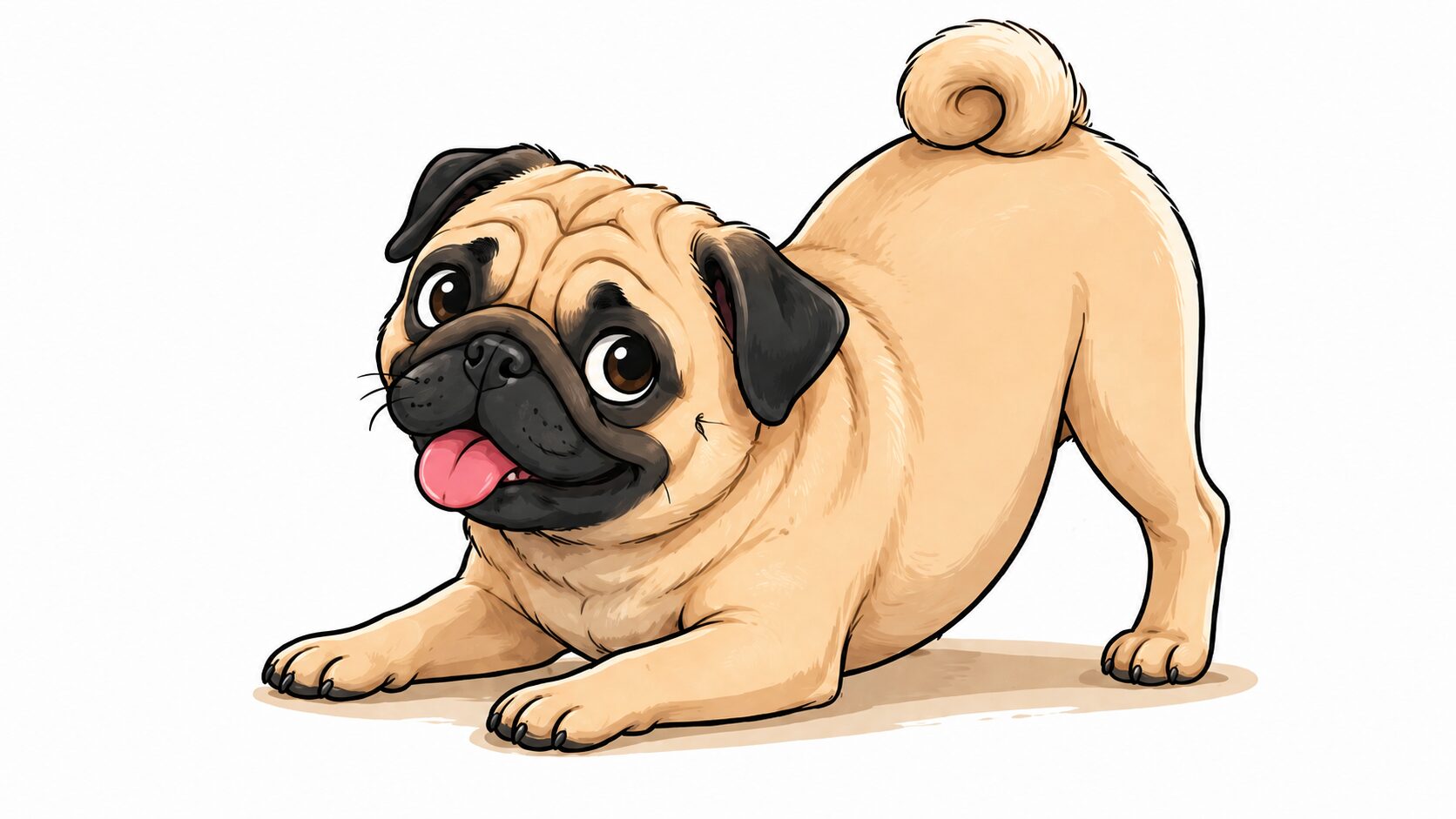
The Pug is a small, compact, square-bodied, and specifically cobby dog that presents with the most immediately and the most universally recognizable face in the companion breed world: the wrinkled, flat, pushed-in muzzle with the most dramatically large, dark, globular, low-set eyes of any small breed, the deep nose roll above the button nose, and the overall impression of alert, good-humored intelligence that has made the Pug’s expression one of the most specifically and the most consistently depicted faces in all of canine art from ancient Chinese ceramics to Instagram reels.
Adults stand 25 to 36 centimeters and weigh 6 to 8 kilograms. The square, compact, cobby body conveys the physical solidity that the AKC breed description captures with specific accuracy as well-developed and thick muscles all over the body — a small dog with the physical density and sturdy robustness that is among the most personally surprising qualities for first-time handlers of the breed. The double curl of the tail, as tightly curled as possible over the hip, is the most specifically celebrated individual aesthetic feature and one that the imperial breeders of China specifically selected for across centuries.
The coat is short, smooth, fine, soft, and glossy — the most minimal coat maintenance of any toy breed. The most common colors are fawn and black, with the black mask that applies to fawn individuals being one of the breed’s most characteristic and most specifically ancient aesthetic features.
Housing And Living Requirements
The Pug is among the most broadly and the most specifically adaptable of any dog breed in terms of living environment, and the AKC breed description captures this with characteristic accuracy: the Pug is big enough to be all dog but small enough to go anywhere. The breed genuinely thrives in apartments, small houses, large houses, urban and rural settings with equal contentment, provided one specific welfare consideration is consistently managed — the flat face that defines the Pug’s most beloved aesthetic quality also makes it the most heat-vulnerable of any toy companion breed, and all outdoor activity must be managed with specific attention to temperature.
Pugs do not like heat and are not acclimated to being outside in heat without cover. In warm or hot climates and seasons, outdoor exercise must be restricted to the coolest parts of the day — early morning and late evening — with air-conditioned indoor rest during peak heat hours. Air conditioning is a welfare requirement rather than a luxury for Pugs in warm climates.
A comfortable dog bed in a social area of the home suits the breed’s specific and specifically documented shadow quality — Pugs are often called shadows because they follow their owners around and like to stay close to the action, craving attention and affection. An orthopedic dog bed provides appropriate joint support.
Exercise Requirements
The Pug is among the most specifically modest in its exercise requirements of any Toy Group breed, making it genuinely appropriate for owners with limited mobility, small spaces, or busy schedules — provided the specific heat and breathing management that the flat face requires is consistently applied to all outdoor exercise sessions.
Several moderate daily walks satisfy the breed’s exercise requirements and its curiosity. Twenty to thirty minutes of moderate activity twice daily is appropriate for most healthy adult Pugs. Vigorous exercise in warm weather is specifically contraindicated — the combination of restricted airway and elevated body temperature in a Pug that is working hard creates overheating risk that can escalate to heat stroke faster than in any other breed. The most appropriate outdoor exercise is moderate-paced walking in the coolest available conditions.
Puzzle toys and enrichment activities are genuinely important for mental engagement between outdoor sessions — the Pug’s intelligence, while modest by border collie standards, is specifically engaged by the problem-solving and food-motivation activities that enrichment toys provide. A GPS tracker is a practical safety investment for outdoor exercise in any open area given the breed’s small size and its tendency to investigate interesting smells at a speed that can exceed owner visual tracking.
Grooming Requirements
The Pug’s short, smooth coat is among the most minimal individual coat maintenance commitments of any breed — but the Pug’s overall grooming requirements are not minimal, because the facial wrinkles and skin folds that are the breed’s most distinctive aesthetic feature are also its most persistently demanding individual health maintenance requirement.
Weekly brushing with a rubber grooming mitt or soft bristle brush removes loose hair — the breed sheds significantly despite its short coat, with most Pugs shedding more than many long-coated breeds, particularly during twice-yearly coat blowouts. The Chinese saying about the Pug, that it sheds half the year and loses the other half, captures the specific reality of Pug ownership for carpet and furniture.
The facial wrinkles must be cleaned daily or every other day. The large nose roll above the button nose, the wrinkles on the forehead, and the skin folds around the eyes must be cleaned with a damp cloth and thoroughly dried after every cleaning — moisture accumulation in the folds creates the warm, moist environment where yeast and bacterial infections develop with specific frequency in this breed. The most common individual Pug health maintenance failure that owners report is inconsistent fold cleaning, and the most common individual health presentation at veterinary visits is the fold dermatitis that results.
Dental care is specifically important given the dental crowding that the flat face and shortened jaw creates. The globular, low-set eyes require regular inspection for irritation and corneal injury. Ears should be checked and cleaned weekly. Nails should be trimmed every two to three weeks.
Diet And Nutrition
The Pug is a small breed with daily caloric needs specifically calibrated to its actual 6-to-8-kilogram size — and the most urgently important individual dietary management consideration is the breed’s specific and specifically well-documented propensity for obesity. Pugs live to eat, in the most personally accurate characterization from the Pug Dog Club of America, and the combination of genuine food motivation, limited exercise tolerance, and easy weight gain creates a specific obesity risk that is the single most practically impactful domestic health management challenge for most Pug owners.
A high-quality small breed formula with a named protein source as the first ingredient and age-appropriate caloric density provides the nutritional foundation. Two small measured meals per day is the most appropriate feeding structure for adults. The Pug’s thick, short coat can mask weight gain until it has become significant — regular hands-on rib assessment beneath the coat is the most reliable ongoing body condition monitoring practice. Training treats must be counted very carefully into the daily calorie total given the Pug’s food motivation and its small total caloric allowance.
Compatibility
The Pug is the most specifically and the most comprehensively family-compatible of any Toy Group breed in this series — a characterization that comes not from breed-club enthusiasm but from the straightforward mathematical reality of 2,400 years of specifically companion-purpose selection producing a dog with the most consistently and the most broadly appropriate temperament for the widest possible range of household contexts.
The Pug Dog Club of America captures the breed’s compatibility in the most personally specific terms: no other dog can equal the Pug in his virtues as a family pet. He appeals to mothers because of his natural cleanliness, intelligence, and the fact that he is a Toy. He appeals to fathers because he is a husky, sturdy dog needing very little upkeep. Children adore Pugs and Pugs adore children. Older persons and shut-ins find them perfect as companions because their greatest need is to be by your side.
With children, the breed is genuinely appropriate across all ages — the physical sturdiness that surprises first-time handlers makes Pugs more appropriate for younger children than the fine-boned toy breeds, while the gentle temperament ensures patient interaction with the rougher handling that young children occasionally deliver. With strangers, the breed is warm and sociable. With other dogs, the breed is typically friendly and cooperative. A dog crate is a useful management tool during puppyhood.
Behavior And Temperament
The Pug is even-tempered and charming — the AKC’s most concise individual breed characterization captures the essential behavioral truth with specific accuracy. Adding to this the qualities of playfulness, human companionship devotion, intuitive sensitivity to owner moods, a great sense of humor, and the specific shadow behavior of following owners from room to room with the devotion of a breed that has literally no working motivation other than the human companionship it has been bred for across 2,400 years, the Pug’s behavioral profile is the most specifically people-centered of any breed in this series.
The Pug tends to be intuitive and sensitive to the moods of their owners and is usually eager to please them — a characterization that reflects the emotional attunement that millennia of companion selection produced, and that makes the Pug one of the most specifically appropriate informal therapy breeds for emotionally sensitive owners. The specific sensitivity to human emotional states is among the most consistently documented individual behavioral qualities of the breed and is directly traceable to the imperial companion selection that valued a dog’s attentiveness to its owner above all other qualities.
The snoring, snorting, and general respiratory sound effects that accompany the Pug’s daily life are not a health symptom but a breed characteristic — the short muzzle produces the airflow sounds that are entirely normal for a brachycephalic breed and that Pug owners consistently describe as among the breed’s most personally endearing individual qualities.
Training And Handling
The Pug is a quick learner and eager to please — among the most cooperative and the most readily trainable of any Toy Group breed, combining genuine intelligence with the people-pleasing motivation that companion selection specifically and reliably produces. The breed responds to training with the enthusiasm of a dog that wants to engage with its owner and finds the attention of training sessions specifically and personally rewarding.
Positive reinforcement methods are the most effective and the most appropriate approach. Training treats are highly effective motivators — perhaps the most specifically potent motivators of any breed given the Pug’s constitutional relationship to food — and must be used in small quantities counted carefully into the daily caloric budget. The most specifically important training investment for Pug owners is recall training in outdoor environments where heat and respiratory stress can develop faster than the owner anticipates.
Health And Lifespan
The Pug’s lifespan of 12 to 15 years reflects genuine longevity for a small companion breed. However, the breed’s most defining aesthetic qualities — the flat face, the large globular eyes, the shortened muzzle — are simultaneously the breed’s most significant health management responsibilities, and any prospective Pug owner who genuinely wishes to provide optimal care for the breed must understand these connections specifically and honestly before acquisition.
Brachycephalic Obstructive Airway Syndrome (BOAS) BOAS is the most critically important individual health consideration for the Pug. The shortened muzzle produces narrowed nostrils (stenotic nares), an elongated soft palate, and a relatively narrow trachea that collectively restrict airflow — the most common clinical presentation being the respiratory sounds, heat intolerance, and exercise limitation that responsible Pug owners manage daily. Surgical correction of stenotic nares and elongated soft palate can significantly improve breathing quality. Every veterinarian performing any procedure requiring anesthesia on a Pug must be specifically informed of the breed’s BOAS risk before any procedure.
Eye Injuries and Conditions The large, prominent, globular eyes are vulnerable to corneal ulceration and injury from scratches, debris, and trauma that smaller-set eyes avoid. Daily inspection for eye redness, discharge, cloudiness, or signs of discomfort is the most specifically important ongoing preventive practice. Pigmentary keratitis — brown pigmentation developing across the cornea — is specifically documented in the breed.
Skin Fold Dermatitis Yeast and bacterial infections in the facial folds are the most commonly preventable individual health condition in the breed. Daily or near-daily fold cleaning and thorough drying is the most critically important preventive maintenance practice. Pug Dog Encephalitis (PDE) — a neurological inflammatory condition specific to the Pug — is documented and is among the most serious breed-specific conditions.
Pug Dog Encephalitis (PDE) This breed-specific neurological condition causes inflammation of the brain and is ultimately fatal. Genetic testing can identify dogs at elevated risk. The condition is the most specifically Pug-identified disease in veterinary neurology and underscores the importance of purchasing from breeders who health test breeding animals.
Obesity Obesity is the most preventable individual health condition and the most broadly impactful in terms of secondary health consequences across all body systems. Lean body condition management through measured feeding, treat accounting, and appropriate daily exercise is the most practically important ongoing health investment for any Pug.
Hip Dysplasia and Patellar Luxation Orthopedic conditions are documented in the breed. OFA evaluation of breeding animals is recommended.
Routine preventive care including regular vet checks, daily fold cleaning, daily eye inspection, consistent dental hygiene, OFA evaluation for breeding animals, PDE genetic testing for breeding animals, strict heat avoidance during outdoor exercise, up-to-date vaccinations, and parasite prevention provides the foundation for a healthy Pug.
Price And Availability
The Pug is widely available in the United States through a large community of breeders connected to the Pug Dog Club of America and AKC breeder referral. The breed consistently ranks among the top 30 most popular breeds in America. From reputable breeders with appropriate health testing — including CAER ophthalmological evaluation, OFA orthopedic evaluation, and PDE genetic testing — expect to pay between $1,000 and $2,500 for a well-bred puppy. Pug rescue organizations are active throughout the United States given the breed’s popularity and the specific health management requirements that some owners underestimate at acquisition.
Conclusion
The Pug traces its origins to at least 400 BCE in China where it was known as the Lo-Sze and kept in imperial luxury by Han Dynasty emperors who valued the breed so highly it was illegal for anyone outside royalty to own one, was kept by Buddhist monks in Tibetan monasteries, was bred with purposely created forehead wrinkles resembling the Chinese character for prince, arrived in Europe through the Dutch East India Company in the 16th century, had a Pug named Pompey save the life of Prince William of Orange in 1572 from Spanish assassins, became the official dog of the House of Orange and was featured on the family coat of arms, was brought to England when William III and Mary II ascended the British throne, was beloved by Queen Victoria who bred her own kennel and helped establish the Kennel Club in 1873, received AKC recognition in 1885 in the Toy Group, is called a grumble when grouped, carries the AKC motto multum in parvo, is one of three flat-faced Chinese imperial companion breeds with the Pekingese and Shih Tzu, and stands today as the most specifically 400-BCE-Chinese-imperial-Lo-Sze, the most specifically Pompey-1572-assassin-alerted-and-saved-Prince-William-of-Orange, the most specifically multum-in-parvo-AKC-motto, the most specifically prince-mark-wrinkles-bred-to-resemble-Chinese-character, the most specifically shadow-follows-you-everywhere, the most specifically Dutch-East-India-Company-European-introduced, the most specifically a-grumble-is-what-you-call-a-group-of-them, and the most specifically 2,400-years-companion-selection-nothing-but-companion of all the Toy Group breed partnerships available. Get properly set up before bringing one home. Our Best Dog Products page has everything you need for short-smooth-fawn-or-black-coated, prince-mark-wrinkled, double-curl-tailed, whole-heartedly devoted Chinese imperial companion dogs that carry the full heritage of the Han Dynasty imperial palaces, the Tibetan Buddhist monastery companionship, the Dutch East India Company 16th-century European introduction, Pompey’s 1572 assassination-alerting heroism, the House of Orange official dog status, William III’s British throne Pug introduction, Queen Victoria’s personal breeding program, the 1873 Kennel Club founding assistance, the 1885 AKC recognition, and the specific even-tempered, charming, shadow-following, mood-sensing, wrinkle-cleaning-requiring, snoring-in-a-personally-endearing-way multum-in-parvo spirit of the only breed in history that a dog named Pompey made the official royal dog of the Netherlands by saving a prince’s life with a bark in the dark.