
Origin And History
The Dutch Smoushond is a small, shaggy, straw-yellow ratter and stable dog from the Netherlands whose history is among the most touching of any breed in this series: a dog that began its documented existence as a gentleman’s stable companion, rose briefly to fashionable recognition at the turn of the 20th century, was devastated by the Second World War to the point where the last registered litter was recorded in 1949 and the breed effectively ceased to exist as a purebred population, and was then resurrected in the 1970s by a woman who began her search after being moved by a photograph of her Jewish childhood friend’s dog, a friend who had been deported and murdered during the Nazi occupation.
The breed’s name carries its own historical weight. In 19th century Dutch, Smouzen was a slang term, widely considered a slur, derived from the name Moses and used to refer to Jewish men. The wiry, shaggy beard and mustache of this small Dutch dog was considered to resemble the beard of an Orthodox or Hasidic Jewish man, and the colloquial name stuck so thoroughly that it became the breed’s formal designation. The breed club and enthusiast community acknowledge this etymology honestly as part of the breed’s documented history.
The precise origins of the Dutch Smoushond are unknown, as is the case with many breeds that developed as working-class or bourgeois working dogs rather than aristocratic hunting dogs whose breeding was more carefully documented. The most widely accepted theory connects the breed to the Schnauzer family, specifically to the yellow-colored variants of the German Schnauzer that were considered color faults in German breeding programs and were therefore sometimes sold off or discarded. These yellow Schnauzer-type dogs found their way to the Netherlands, where Dutch breeders developed them as a distinct stable and ratter type that eventually became known as the Dutch Smoushond. The physical similarity between the breeds, particularly in coat texture, beard structure, and general proportions, is consistent with this theory.
Since 1850, a dog dealer in Amsterdam named C.J. Abraas had been selling these dogs from a shop in the Amsterdam commodity exchange district, marketing them as Gentleman’s stable dogs to the prosperous merchants and businessmen who frequented the exchange. The dogs’ role was dual: they kept stables and warehouses clear of rats and mice, the functional working purpose, and they served as companions to the gentlemen they accompanied, the social purpose that gave them their association with the Dutch business class of the era. They were also called the Dutch Rattler for the practical side of their working life.
The Hollandse Smoushonden Club was formed in 1905 to document and register the small stable dog as a purebred breed, as it was in danger of dying out even at this early date. The first breed standard was drawn up in 1905 by H.A. Earl of Bylandt, A. Woltman Elpers, and L. Seegers. The breed achieved modest popularity through the early 20th century and was bred in steady numbers until the German invasion of the Netherlands on May 10, 1940.
The Nazi occupation proved catastrophic. Professional dog breeding stopped entirely during the occupation. Dogs were killed, abandoned, or died of starvation as owners could no longer care for them. The Dutch Smoushond’s population, already concentrated in the urban areas of the Netherlands that suffered most severely under occupation, collapsed. The last litter of purebred Dutch Smoushonds was registered in the Nederlandse Honden Stamboek in 1949. For more than two decades, the breed effectively ceased to exist.
The revival began in 1973 when H.M. Barkman van der Weel, a Dutch woman, initiated efforts to reconstruct the breed. A particularly moving origin for her search: she used a photograph of the dog belonging to a Jewish childhood friend who had been deported and killed during the war, and this photograph’s publication generated public responses that located approximately thirty foundation dogs, mixed-breed individuals of uncertain ancestry that resembled the historical descriptions and the photograph closely enough to serve as reconstruction stock. These thirty foundlings, combined with four Border Terriers used to establish additional genetic diversity and working-terrier character, became the foundation of the modern Dutch Smoushond. The Nederlandse Smoushonden Club reformed in 1977 to support the breed’s revival, and the FCI fully recognized the breed in 1981. The UKC recognized the breed in 2006. The breed is not recognized by the AKC.
Breed Overview
| Trait | Details |
|---|---|
| Origin | Netherlands |
| Breed Group | Companion / Terrier type (FCI Group 2) |
| Height | Males 37–42 cm (14.5–16.5 inches) / Females 35–40 cm (14–16 inches) |
| Weight | 9–10 kg (20–22 pounds) |
| Lifespan | 12–15 years |
| Coat | Coarse, wiry, tousled double coat; distinctive beard and eyebrows |
| Colors | Straw yellow only, in shades from light to dark |
| Temperament | Cheerful, affectionate, alert, lively, good-natured |
| FCI Recognition | 1981 |
| UKC Recognition | 2006 |
| AKC Recognition | Not recognized |
Appearance And Size
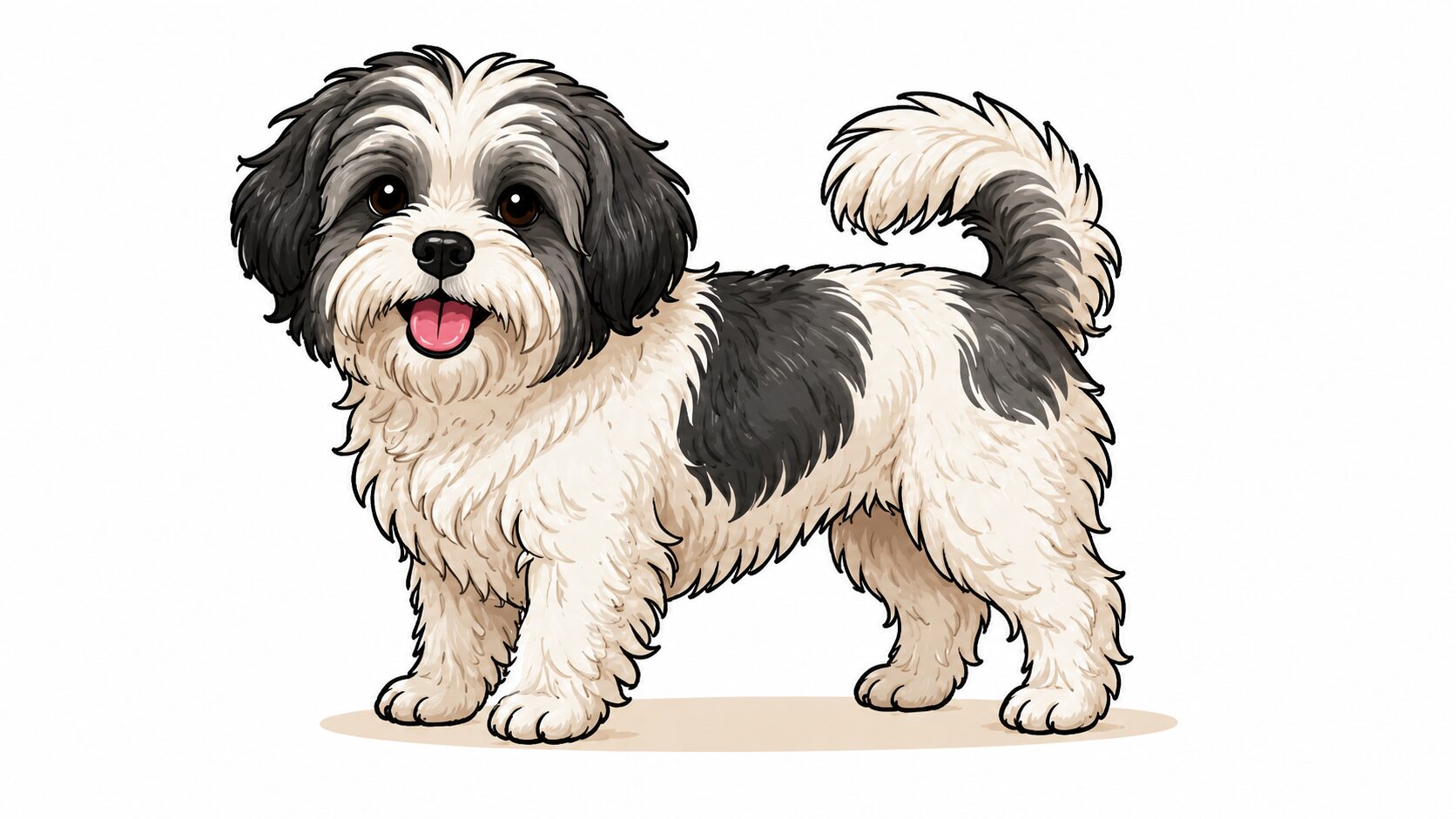
The Dutch Smoushond is a small, squarely built, and distinctly shaggy dog whose most immediately characterful physical feature is the coarse, tousled, straw-yellow coat that gives it its characteristic rumpled, slightly comical, and entirely endearing appearance. Males stand 37 to 42 centimeters at the shoulder and weigh approximately 9 to 10 kilograms. Females stand 35 to 40 centimeters. The overall impression is of a compact, well-proportioned small dog of solid substance that carries its frame with the lively, alert energy of a breed that has always been expected to do more than sit decoratively.
The head is broad and short, with a domed skull and a short, broad muzzle. The eyes are large, round, and dark, set wide apart, and carry the warmly cheerful, intelligent expression that is one of the breed’s most immediately appealing features. The eyebrows, formed by longer, coarser hair above the eyes, and the beard and mustache that frame the muzzle, give the Dutch Smoushond its most characteristic facial expression: the appearance of a small, shaggy, good-humored professor who has had a slightly disheveled morning.
The ears are set high, pendant, and of medium length, covered with shorter hair and hanging close to the cheeks without the long feathering of spaniel-type breeds.
The body is square in profile, with a broad, deep chest, a level back, and well-muscled hindquarters. The tail is of medium length and carried gaily when the dog is active.
The coat is the breed’s most defining and most breed-specific visual feature. It is coarse, wiry, and tousled in texture, forming the characteristic beard, mustache, and eyebrows on the face, and covering the body in a dense, somewhat unkempt double layer that is always straw yellow in color. Shades of straw yellow range from light hay-yellow through richer golden tones to deeper, darker straw, but any color outside this straw yellow range is a disqualifying fault under the FCI standard. The slightly disheveled appearance of the coat is characteristic and correct, and the breed should not be trimmed or tidied to smoothness.
Housing And Living Requirements
The Dutch Smoushond is a more adaptable breed in terms of living environment than its working heritage might initially suggest, combining the compact size of a small companion dog with a moderately active character that manages varied domestic settings reasonably well.
The breed can adapt to apartment living, though with the honest caveat that it can become a nuisance barker, and this tendency is more pronounced in smaller, quieter spaces where every external sound provokes a vocal response. A home with a garden, even a modest one, provides more appropriate outlet for the breed’s alert, lively character and reduces the circumstances that trigger persistent barking.
Inside the home, the Dutch Smoushond is a warm, cheerful, and actively engaged companion. The breed is described as the Gentleman’s companion for its history of close association with its owner’s daily life, and this closeness is genuinely expressed in the modern dog’s preference for proximity to its people. A comfortable dog bed in a social position suits the breed’s people-oriented nature during rest periods.
The breed does enjoy swimming and is noted as an excellent swimmer, which is an unexpectedly athletic quality in a small stable and companion dog. Access to safe swimming opportunities is a genuinely enjoyable exercise option for Dutch Smoushond owners.
Exercise Requirements
The Dutch Smoushond has moderate exercise needs that are achievable for a wide range of committed owners, one of the practical qualities that made it an appropriate companion for the Amsterdam gentleman merchants who were its primary historical patrons. A daily walk of 30 to 45 minutes combined with active indoor play sessions meets the baseline needs of most adults.
The breed is more energetic and physically capable than its small size and companion dog heritage might initially suggest. The terrier-type working character inherited through its Schnauzer ancestry and reinforced through the Border Terrier contributions to the revival program gives the Dutch Smoushond a genuine working energy that benefits from regular purposeful activity.
Puzzle toys and enrichment activities are genuinely important between structured outdoor sessions, engaging the breed’s alert intelligence and preventing the restlessness and nuisance barking that develop in any terrier-type breed when mental stimulation is insufficient. Swimming, where accessible, is a particularly enjoyed activity. Scent work engages the ratting heritage productively.
Grooming Requirements
The Dutch Smoushond’s coarse, wiry, tousled coat is its most visually distinctive feature and its most specialized grooming commitment. The characteristic shaggy, slightly disheveled appearance that defines the breed is correct and should be preserved rather than eliminated through aggressive tidying.
The coat requires brushing two to three times a week to prevent matting in the dense double layer and to remove debris from the beard and facial furnishings that accumulate food, water, and outdoor material during everyday activities. A metal comb used through the beard and eyebrows after brushing removes any remaining tangles in these areas.
Stripping rather than clipping is the appropriate coat maintenance for the Dutch Smoushond, as in other wire-coated breeds of similar Schnauzer and terrier heritage. Hand-stripping the dead outer coat, typically twice yearly, maintains the correct wiry texture and the rich straw-yellow color. Clipping softens the coat texture over time, producing a lighter, less correctly-textured result. For show dogs, hand-stripping is standard. Pet owners may choose professional clipping as a more practical alternative, accepting the gradual change in coat texture.
The beard and facial furnishings require particular daily attention to keep them clean after meals and water. Dental care should be established as a consistent routine from puppyhood. Ears should be checked and cleaned weekly. Nails should be trimmed monthly.
Diet And Nutrition
The Dutch Smoushond is a small, moderately active breed with daily caloric needs that should be matched to its actual size and activity level. A high-quality small breed formula with a named protein source as the first ingredient provides the nutritional foundation the breed requires. Small breed formulas address the higher metabolic rate and the dental disease predisposition of small dogs, making them the most appropriate choice for the Dutch Smoushond.
Most adults do well on two measured meals per day. Portion control is genuinely important throughout the dog’s life. The breed’s small size means that even modest overweight places disproportionate strain on joints and contributes to the dental crowding that small breeds are predisposed to.
Training treats are effective motivators given the breed’s food motivation and should be counted into the daily calorie total. Fresh water should always be available.
Compatibility
The Dutch Smoushond is a warmly family-compatible breed that brings the cheerful, affectionate, lively character of a small Dutch ratter and stable companion to its household relationships with a consistency that reflects its centuries of development alongside the merchants and gentlemen of Amsterdam.
With its own family, the breed is demonstrably affectionate and devoted. The Smous is cheerful and gentle, affectionate and free spirited by nature, has a lively disposition but is not nervously over-active, nor easily frightened, and this accurate characterization from the breed standard reflects a genuine and consistently expressed temperament.
With children, the breed is generally patient and playful when socialized from puppyhood. Its small size requires appropriate handling awareness from children, but the breed’s good-natured, lively character makes it a genuine companion for children who interact respectfully with small dogs.
With strangers, the breed is typically friendly and outgoing, reflecting its history as a companion in the sociable, commercially active environment of the Amsterdam exchange. It is not a suspicious guardian breed, though its alert nature means it will announce arrivals with vocal conviction.
With other dogs, the Dutch Smoushond is generally sociable and adaptable, doing well with other dogs when properly socialized from early in life. With cats, it can coexist comfortably when raised alongside them. With small animals including guinea pigs, ferrets, birds, and rodents, the ratting prey drive that is part of the breed’s working heritage is genuine and should not be assumed absent. A dog crate is useful during puppyhood and the settling-in period.
Behavior And Temperament
The Dutch Smoushond’s temperament is one of the most warmly described in the small working dog world, reflecting the genuinely cheerful, engaged, and good-natured character that centuries of development as a companion alongside the busy commercial life of Amsterdam produced. The breed is lively but not hyperactive, alert but not nervous, affectionate but not clingy, and possessed of the terrier-type working intelligence and independence that its working heritage naturally produced.
The cheerfulness is genuine and pervasive. The Dutch Smoushond approaches its world with the good-humored, curious enthusiasm of a small dog that has always been expected to participate fully in the activity around it rather than sitting quietly at the periphery. This quality makes it an engaging and entertaining companion and one of the more consistently pleasant small breed companions in terms of domestic atmosphere.
The alert watchdog character is present and real. The breed notices its environment with the attentiveness of a dog that was always expected to detect vermin in a stable, and in the domestic setting this alertness expresses itself as prompt vocal announcement of anything worth noting. Managing the vocal expression of this alertness through appropriate training prevents nuisance barking while preserving the legitimate watchdog function.
The ratting prey drive, reinforced both by the Schnauzer heritage and by the Border Terrier contributions to the revival program, is genuine and present. It does not typically create management problems in the domestic context beyond the standard precaution about small animals.
Training And Handling
The Dutch Smoushond is an intelligent, willing, and fundamentally trainable breed that approaches training with the engaged, food-motivated responsiveness that makes small terrier-type dogs productive training partners when the approach suits the dog’s independent character.
Positive reinforcement methods are the approach that works most reliably. The Dutch Smoushond responds to reward, to genuine engagement, and to training that feels varied and purposeful. Its food motivation makes treat-based training highly productive, and training treats are among the most effective tools available for a breed this food-motivated and this genuinely engaged with its handler.
The independent streak common to terrier-type breeds is present in the Dutch Smoushond and occasionally expresses itself as a selective responsiveness to commands when something more interesting has presented itself. Consistent, positive training from puppyhood that establishes a strong reward history for compliance produces the most reliable adult behavior.
Early socialization is important, exposing the young dog to a wide range of people, environments, sounds, and other animals during the critical developmental window. Managing the nuisance barking tendency through appropriate training from earliest puppyhood, teaching the dog to alert once and then settle, is one of the most practically important behavioral training investments for this breed.
Health And Lifespan
The Dutch Smoushond is a generally healthy breed with a lifespan of 12 to 15 years. As a relatively rare breed maintained primarily within the Netherlands with careful attention to the breed’s limited genetic diversity following its post-war reconstruction, formal health data is more limited than for more numerically established breeds. The conditions that are documented are consistent with those affecting small terrier-type breeds of similar Schnauzer and working dog heritage.
The most significant systemic health consideration for the breed as a whole is not a specific disease but the limited genetic diversity resulting from the war-period bottleneck and the reconstruction from a small founding population of approximately thirty foundlings and four Border Terriers. Responsible breeders work actively to manage this constraint through careful pedigree management within the small breeding population.
Hip Dysplasia Abnormal hip joint development is documented at low rates, consistent with small to medium-sized terrier-type breeds generally. Maintaining appropriate weight throughout the dog’s life and avoiding high-impact repetitive activities during the growth phase are the most meaningful preventive measures.
Patellar Luxation Kneecap dislocation is documented in the breed at low rates consistent with small breed predispositions generally. OFA patellar evaluation is recommended for breeding animals.
Eye Conditions Eye conditions are documented at low rates. Regular annual veterinary eye examinations allow for early detection.
Dental Disease As with all small breeds, the smaller mouth creates crowding that significantly accelerates periodontal disease. Establishing consistent dental care from puppyhood and scheduling annual professional veterinary cleanings provides the most effective prevention.
Ear Infections The pendant ears create some susceptibility to moisture accumulation. Weekly inspection and cleaning is appropriate preventive maintenance.
Routine preventive care, including regular vet check-ups, consistent dental hygiene, up-to-date vaccinations, and parasite prevention, provides the foundation for a healthy Dutch Smoushond across its impressive lifespan.
Price And Availability
The Dutch Smoushond is essentially unavailable outside the Netherlands, where the breed’s small but dedicated community of breeders maintains the reconstructed population with careful attention to genetic health and breed type. The breed is not recognized by the AKC, has no established breeding community in North America, and essentially does not appear in international shelter or rescue systems.
Within the Netherlands, the Hollandse Smoushonden Club maintains the breed registry and coordinates with breeders who produce litters according to the FCI standard and the club’s health testing requirements. Dutch breeders do not aim for mass popularization abroad, preferring to maintain quality over quantity within the small established population.
International buyers must engage directly with Dutch breeders willing to export and must navigate the health certification, documentation, and transport requirements of international dog import. The FCI-affiliated Nederlandse Smoushonden Club is the most appropriate starting point for anyone seriously pursuing the breed from outside the Netherlands.
Conclusion
The Dutch Smoushond is a breed that emerged from the stables and commodity exchanges of 19th century Amsterdam, nearly disappeared twice before a formal breed club could even establish itself, was devastated by the Second World War more completely than almost any other European breed, and was resurrected in the 1970s partly because a Dutch woman was moved by a photograph of her murdered childhood friend’s dog and decided that something of that specific Dutch identity should survive what the war had taken. The breed that H.M. Barkman van der Weel rebuilt from thirty shaggy yellow foundlings and four Border Terriers is not identical to the pre-war Dutch Smoushond, as no reconstructed breed can be, but it carries the essential character, the straw-yellow wiry coat, the cheerful good nature, the alert intelligence, and the shaggy beard that gave it its name, and it carries the memory of the community that both gave it its name and suffered alongside it during the occupation. For the rare owner in or near the Netherlands who acquires one through the breed club, the Dutch Smoushond offers a genuinely warm, characterful, and historically resonant companion unlike any other small breed. Get properly set up before bringing one home. Our Best Dog Products page has everything you need for cheerful, shaggy, whole-heartedly devoted Dutch stable dogs that carry the remarkable history of Amsterdam’s gentlemen’s companion into every home they grace.