

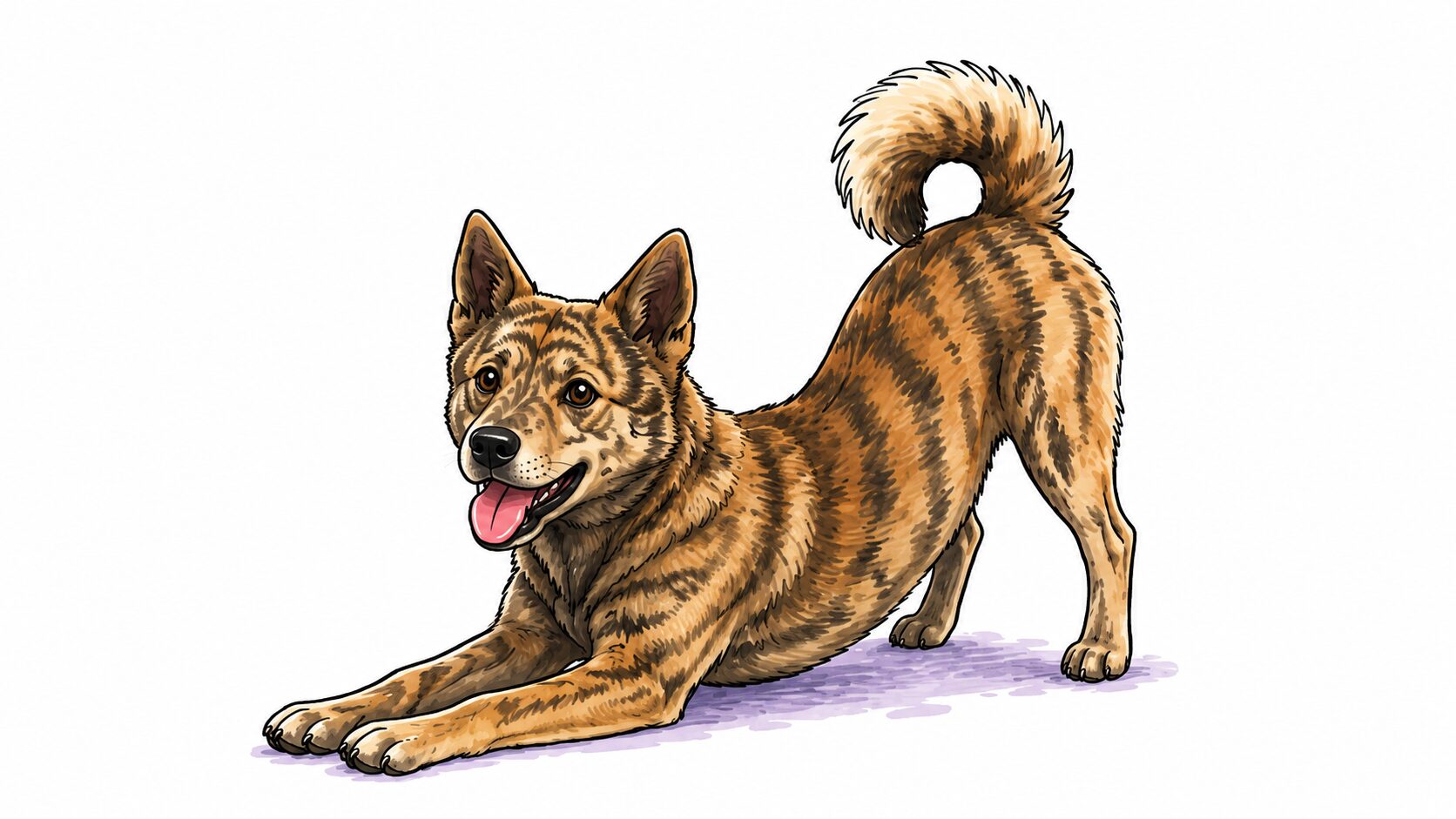
Origin And History
The Donggyeongi is one of Korea’s oldest and rarest native dog breeds, a medium-sized spitz-type hound distinguished by the most immediately recognizable physical characteristic of any Korean breed: a naturally bobbed or entirely absent tail that has defined the dog’s identity across more than a thousand years of documented Korean history. It takes its name from Donggyeong, the name used for the city of Gyeongju during the Goryeo dynasty, where the breed originated and where it has been concentrated throughout its history. Today it is protected as Natural Monument No. 540 by South Korea’s Cultural Heritage Administration, the fourth Korean breed to receive this designation, and its survival is the result of active conservation efforts that rescued it from the edge of extinction following the devastation of the Japanese Colonial Era.
The breed’s documented history in Korea is among the longest of any recognized dog breed in East Asia. Clay dog figurines excavated from ancient tombs of the Silla Kingdom, dated to the 5th and 6th centuries AD, depict short-tailed dogs whose physical description matches the Donggyeongi with sufficient clarity that Korean cynologists and archaeologists accept them as early representations of the breed type. Written records confirm the breed’s presence in Gyeongju by the first half of the second millennium: the Samguk Sagi, Chronicles of the Three States, published in 1145, contains references that scholars have associated with the breed, and later works including the Jeungbomunhyunbigo of 1770 and the Donggyeong Jabgi of 1845 include explicit descriptions of the bobtailed dog of Gyeongju.
DNA analysis has provided the most precise scientific context for the breed’s origin. Research indicates that the Donggyeongi and the Korean Jindo, Korea’s most internationally recognized native breed, separated from a common ancestor approximately 900 years ago. This shared ancestry explains the visual similarity between the two breeds, with the Donggyeongi appearing much like a Jindo that has had its tail removed or dramatically shortened, though the bobbed tail of the Donggyeongi is entirely genetic rather than the result of any physical intervention. The specific genetic mechanism is a mutation in the T-box transcription factor gene, the same gene responsible for natural bobtails in other breeds including the Australian Shepherd and the Pembroke Welsh Corgi.
Historically, the Donggyeongi served as both a hunting companion and a household companion, valued by the royalty and nobility of the Silla Kingdom and later by ordinary Korean families in the Gyeongju region. The breed was used to hunt small game and rodents across Korea’s rugged terrain, and its combination of agility, scenting capability, and loyal character made it a versatile working and companion dog across many centuries.
The Japanese Colonial Era of 1910 to 1945 nearly destroyed the breed. Japanese colonial authorities targeted the Donggyeongi for two distinct reasons. First, the breed’s physical appearance resembled the Komainu, the lion-dog statues that guard the entrances of Japanese Shinto shrines, and Japanese authorities apparently found this resemblance to sacred Japanese imagery in a Korean dog offensive or inappropriate. Second, the Donggyeongi’s lack of tail was interpreted by both Japanese colonial authorities and some Koreans influenced by Japanese cultural values as a sign of bad luck or deformity. Thousands of Donggyeongi were slaughtered during this period, their pelts used for fur, reducing the breed’s population to a critically small remnant.
Recovery after 1945 was slow. The association of the short tail with bad luck persisted in Korean popular culture for decades, and the breed’s numbers remained dangerously low through the mid-20th century. Systematic conservation efforts began in 2005 when the Institute for the Conservation of Donggyeong Dogs, established through a partnership between Gyeongju City and West Laval University, created a dedicated breeding facility to protect and rebuild the breed population. The Korean Kennel Club certified the Donggyeongi as Korea’s fourth recognized native breed in 2010, and on November 6, 2012, the Cultural Heritage Administration of Korea designated the breed as Natural Monument No. 540. Breeding and distribution outside Gyeongju began in 2018 as population numbers recovered sufficiently to permit wider placement. The breed is not recognized by the FCI, AKC, or UKC. The total current population is estimated at approximately 600 purebred individuals.
Breed Overview
| Trait | Details |
|---|---|
| Origin | Gyeongju, South Korea |
| Breed Group | Spitz-type / Hound (KKC) |
| Height | 43–55 cm (17–22 inches) |
| Weight | 14–25 kg (31–55 pounds) |
| Lifespan | 12–14 years |
| Coat | Double coat; crisp, shiny outer coat; dense, soft undercoat |
| Colors | White, yellow, black, brindle |
| Tail | Naturally bobbed or absent |
| KKC Recognition | 2010 (Korea’s 4th native breed) |
| Natural Monument | No. 540 (2012) |
| FCI / AKC Recognition | Not recognized |
Appearance And Size
The Donggyeongi is a medium-sized, spitz-type dog of balanced and athletic proportions that presents with the clean, well-muscled appearance of a breed shaped by practical working selection across many centuries. It stands 43 to 55 centimeters at the shoulder and weighs between 14 and 25 kilograms. Sources vary slightly on the precise range, with some citing shoulder heights of 44 to 50 centimeters and weights of 14 to 18 kilograms as the more typical central range. The overall impression is of a capable, well-proportioned hound of moderate bone and genuine athletic ability, carrying its substance with the alert, energetic bearing characteristic of the spitz group.
The head closely resembles that of the Jindo, which reflects the shared ancestral origin the DNA evidence confirms. It is moderately broad and slightly wedge-shaped, with a defined stop and a muzzle of moderate length. The eyes are typically dark and alert, and the ears are upright and triangular, contributing to the characteristic attentive expression shared by both breeds.
The body is well-muscled and slightly longer than tall, with a moderately deep chest and strong hindquarters. The legs are straight and sturdy, built for the agile movement across rugged terrain that the breed’s hunting heritage required.
The coat is described consistently as having crisp, shiny outer hair with fine tips, over a dense and soft undercoat. This double coat provides meaningful weather resistance appropriate for the variable climate of the Korean peninsula. Colors include yellow, white, black, and brindle patterns, with the yellow and white varieties most commonly depicted in historical records and contemporary conservation breeding.
The tail is the breed’s most immediately defining physical feature and the characteristic that sets it apart from every other Korean native breed. The Donggyeongi is born with either a very short bobtail or no tail at all, produced by the T-box transcription factor gene mutation that creates this anatomical variation. The absence or near-absence of a tail gives the breed its most distinctive silhouette and historically was the characteristic that made it a target for persecution.
Housing And Living Requirements
The Donggyeongi’s housing requirements reflect its heritage as an active hunting and companion breed developed across the rugged outdoor environments of the Korean peninsula. The breed thrives with meaningful outdoor access and space for regular active movement, and rural or semi-rural environments are the most naturally appropriate settings.
A securely fenced garden is important for a breed with active hunting instincts and the athleticism to act on them. The Donggyeongi’s spitz heritage and hunting character mean it takes an engaged interest in everything in its environment, and adequate containment prevents the breed’s instincts from becoming a management problem.
The breed can adapt to suburban settings when owners are genuinely committed to daily exercise and mental stimulation. Urban apartment living is a poor match for a breed this active and this outdoor-oriented. Inside the home, a well-exercised Donggyeongi is an affectionate and warm companion that bonds closely with its household. A comfortable dog bed in a social position suits the breed’s people-oriented nature during rest periods.
The dense double coat provides meaningful cold weather insulation appropriate for Korean winters. In hot, humid climates, outdoor exercise should be scheduled for cooler parts of the day.
Exercise Requirements
The Donggyeongi is an active, athletic breed with genuine daily exercise needs that reflect its heritage as a hunting dog across varied Korean terrain. At least 60 minutes of vigorous daily exercise is appropriate, combining structured walks with active outdoor play and activities that engage both the physical capability and the intelligence of a breed that has always been expected to make its own working decisions.
A fenced yard with lots of space for running will help this breed thrive, and this assessment accurately reflects the breed’s preference for outdoor movement and exploration. Varied walking routes, hiking across varied terrain, and activities that engage the hunting and tracking instincts provide the most genuinely satisfying exercise for a breed this working-heritage-oriented.
Puzzle toys and enrichment activities provide meaningful cognitive engagement between outdoor sessions. A GPS tracker is a practical safety investment for outdoor exercise management in any open or unfenced area, particularly for a breed with active hunting instincts that may follow prey interest further than intended.
Grooming Requirements
The Donggyeongi’s double coat requires consistent but manageable grooming. Brushing two to three times a week under normal conditions removes loose hair, prevents minor matting, and keeps the coat in healthy condition. During the seasonal shedding periods in spring and fall, when the undercoat releases, more frequent daily brushing is necessary to manage the output effectively.
The coat’s crisp, shiny texture provides natural weather resistance and some self-cleaning quality, reducing the bathing frequency required. Bathing every six to eight weeks is appropriate under normal conditions. The coat dries relatively efficiently after bathing given its dense but not excessively long structure.
Ears should be checked and cleaned weekly. The naturally erect ear carriage of the spitz type reduces the ear infection risk compared to pendant-eared breeds, but regular inspection remains appropriate preventive maintenance. Dental care should be established as a consistent routine from puppyhood. Nails should be trimmed monthly.
Diet And Nutrition
The Donggyeongi is a medium-sized, active breed with daily caloric needs that should be matched to its actual size and activity level. A high-quality medium breed formula with a named protein source as the first ingredient provides the nutritional foundation the breed requires.
Most adults do well on two measured meals per day. Portion control is important throughout the dog’s life. Given the breed’s endangered status and the small total population, maintaining appropriate weight and health across every individual is a meaningful contribution to the breed’s overall welfare as well as the individual dog’s longevity.
Training treats are effective motivators given the breed’s intelligence and food motivation, and should be counted into the daily calorie total. Fresh water should always be available.
Compatibility
The Donggyeongi is described across sources as generally friendly and loyal, with the alert, active character of a spitz-type hunting breed and the genuine family devotion of a dog that has historically been valued as a household companion alongside its working capabilities.
With its own family, the breed is affectionate and loyal, forming close bonds with the people it lives with and expressing those bonds with the engaged, attentive warmth of a spitz-type breed that has always positioned itself at the center of household life. The breed was historically valued as a companion to Korean royalty and nobility as well as to ordinary families, reflecting a genuine warmth and accessibility that has been part of the breed’s character across its long history.
With children, the breed is generally friendly when socialized from puppyhood. Its moderate size and active, playful energy make it an engaging companion for older children who participate in outdoor activities. Early and consistent socialization is the most important investment in the breed’s social ease with all household members and visitors.
With strangers, the alert spitz character means the Donggyeongi notices and responds to unfamiliar presences with the attentive watchfulness of a breed that has always taken its guardian and sentinel role seriously. Early socialization ensures this natural alertness is expressed as appropriate discernment rather than anxious reactivity.
With other dogs, the breed is generally sociable when properly socialized from early in life. With small animals, the hunting prey drive should be acknowledged and managed appropriately. A dog crate is useful during puppyhood and the settling-in period.
Behavior And Temperament
The Donggyeongi’s temperament reflects both its spitz heritage and its centuries of development as both a working hunting dog and a household companion in Korean culture. It is alert, active, intelligent, and possessed of the independent working character that Korean hunting dogs share with primitive and ancient working breeds from across the Asian continent.
Donggyeongis are alert, active dogs best suited for experienced pet parents. They’re intelligent but strong-willed, and they may become unmanageable if not adequately trained. This assessment is consistent across sources and accurately captures the breed’s character: a dog of genuine capability that requires experienced, consistent handling to express its best qualities in a domestic context.
The hunting instinct is genuine and present, reflecting the breed’s centuries of use for pursuing small game across Korean terrain. This instinct expresses itself in the domestic setting as keen alertness to environmental stimuli, interest in small moving animals, and the focused, independent working attention of a dog that has always been expected to make its own hunting decisions.
The friendliness and loyalty that are consistently noted reflect the companion dog heritage that has been as central to the breed’s history as its hunting capability. The Donggyeongi that served Korean royalty as a companion dog across the Silla Kingdom developed a genuine warmth and accessibility that the breed retains today.
Training And Handling
The Donggyeongi is an intelligent breed that takes well to training when approached with the consistency, patience, and genuine understanding of its independent working character that primitive and ancient hunting breeds generally require.
Positive reinforcement methods are the approach that works most reliably. The Donggyeongi responds to reward and genuine engagement, and its food motivation makes treat-based training productive when training treats are used purposefully. The breed’s strong-willed, independent character means that boring, repetitive training sessions produce declining engagement, while varied, purposeful sessions that engage the breed’s intelligence and feel collaborative produce the most reliable outcomes.
Early socialization from puppyhood is essential for a breed with this level of alertness and independent working character. Exposing the young Donggyeongi to a wide range of people, environments, sounds, and other animals during the critical developmental window shapes the adult dog’s ability to navigate varied social contexts with confident, appropriate responses.
The breed is not appropriate for first-time dog owners given its independent character and the specific understanding of primitive, ancient working breeds that effective Donggyeongi training requires. Experienced owners who have worked with Korean or other Asian primitive breeds will find the Donggyeongi’s character familiar and manageable.
Health And Lifespan
The Donggyeongi is a generally healthy breed with a lifespan of 12 to 14 years. Its development through centuries of natural and working selection in the demanding environments of the Korean peninsula, without the intensive inbreeding or extreme physical trait selection that affects many modern breeds, has produced a constitution that is generally robust. There are no known genetic conditions tightly associated specifically with the Donggyeongi breed as distinct from other dogs, which is one of the more positive health assessments available for any breed in this series.
The most significant health management concern for the breed as a whole is not a specific disease but the extremely small and genetically constrained population that the breed’s near-extinction history created. With approximately 600 purebred individuals worldwide, pedigree management and prevention of inbreeding are the most practically significant health considerations for the breed community. Pedigree records are maintained specifically to prevent inbreeding within this dangerously small gene pool, and prospective owners are advised to check these records carefully when acquiring or breeding Donggyeongi.
Hip Dysplasia Abnormal hip joint development is documented at low rates consistent with medium-sized hunting breeds generally. Maintaining appropriate weight throughout the dog’s life and avoiding high-impact repetitive exercise during the growth phase are the most meaningful preventive measures.
Patellar Luxation Kneecap dislocation is documented in the breed at low rates. Maintaining appropriate weight reduces the mechanical stress that worsens luxation.
Cataracts and Eye Conditions Eye conditions are documented at low rates consistent with other spitz-type breeds. Regular annual veterinary eye examinations allow for early detection.
General Health Monitoring Given the breed’s small population and the limited formal health data available for such a rare breed, working with veterinarians who are open to the breed’s specific background and to genetic screening tools available for primitive breeds is the most practical health management approach for Donggyeongi owners outside Korea.
Routine preventive care, including regular vet check-ups, consistent dental hygiene, up-to-date vaccinations, and parasite prevention, provides the foundation for a healthy Donggyeongi across its lifespan.
Price And Availability
The Donggyeongi is one of the rarest breeds in the world by total population, with approximately 600 purebred individuals concentrated almost entirely in South Korea, primarily in and around Gyeongju where the breed’s principal conservation facility is managed by the Korea Gyeongju Dog Wonderland Conservation Association. Distribution outside Gyeongju within Korea only began in 2018, and the breed has essentially no established presence outside the Korean peninsula.
The breed is not recognized by the FCI, AKC, UKC, or any kennel organization outside Korea, and international acquisition would require direct engagement with the Korean conservation breeding community under circumstances where export of a protected Natural Monument breed raises significant regulatory and ethical considerations.
Prospective buyers within Korea should contact the Korea Gyeongju Dog Wonderland Conservation Association directly and should be prepared to verify the pedigree records maintained to prevent inbreeding within the small population. Outside Korea, the breed is for practical purposes unavailable.
The Korean government’s Natural Monument designation is the most important institutional framework supporting the breed’s survival, and any acquisition of a Donggyeongi should be approached with full awareness of the conservation responsibility that comes with owning one of approximately 600 remaining individuals of an endangered Korean national heritage breed.
Conclusion
The Donggyeongi has been present in the Gyeongju region since at least the 5th and 6th centuries, depicted in clay figurines found in Silla Kingdom burial tombs, documented in Korean historical records spanning a millennium, valued as a companion to Korean royalty and as a working hunting dog for ordinary farmers, almost entirely destroyed by Japanese colonial authorities who found its resemblance to sacred shrine dogs offensive and its missing tail unlucky, and saved from extinction by a partnership between Gyeongju City and a Canadian university that established a conservation breeding facility in 2005. It became Natural Monument No. 540 in 2012, the fourth Korean breed to receive this protection, and its population has gradually recovered to approximately 600 individuals. It is an ancient, gentle, alert, and capable Korean spitz-type hound whose bobtailed silhouette connects it to a millennium of Korean cultural history that its small population makes genuinely irreplaceable. For the rare owner within Korea who acquires one through the conservation breeding program, the Donggyeongi offers a connection to Korean natural heritage and a partnership of genuine working intelligence and loyal companionship that no other breed in Korea can replicate. Get properly set up before bringing one home. Our Best Dog Products page has everything you need for alert, loyal, bobtailed Korean heritage dogs that carry over a thousand years of Silla Kingdom history into every home they grace.