
Finding the best axolotl quarantine tub is something every responsible axolotl keeper should do before they ever need one — not after. A quarantine tub is the separate container you use to house your axolotl during illness, treatment, recovery, or when introducing a new animal before placing it into your main tank. Without one, your only option when your axolotl becomes unwell is to treat it in the main display tank — which means medicating your filter bacteria, disrupting your nitrogen cycle, and potentially harming beneficial organisms you have spent weeks establishing. This guide covers everything: why a quarantine tub is essential for every axolotl keeper, how to set one up correctly, what features to look for, and our top verified Amazon picks. Pair this guide with our full axolotl care guide and our health care guides on the best axolotl methylene blue, best axolotl aquarium salt, and best axolotl indian almond leaves for the complete health management picture.
Why Every Axolotl Keeper Needs a Quarantine Tub
The quarantine tub is not an advanced keeper’s accessory — it is a basic necessity that every axolotl owner should have set up and ready from day one. Here is exactly why it matters so much.
It protects your main tank during illness treatment. The most effective treatments for the most common axolotl health problems — including methylene blue for fungal infections and aquarium salt baths for skin irritation — cannot safely be used in the main display tank. Methylene blue kills the beneficial bacteria in your filter. Salt at therapeutic doses stresses live plants and can affect the filter bacteria over sustained periods. Treating in a separate tub keeps your main tank completely undisturbed and your nitrogen cycle intact.
It allows full water changes without disrupting the main tank. During recovery from illness, the most important treatment is clean water — ideally a 100% water change every 24 hours in a small quarantine container. This level of water change frequency in your main tank would destroy the bacterial colony in your filter. In a small, filter-free quarantine tub, daily full water changes are fast, practical, and enormously beneficial for recovery.
It provides a stress-free observation environment. An axolotl in a smaller, quiet container is easier to monitor closely for changes in behaviour, appetite, gill condition, and skin health than one in a large display tank where it may hide in caves or behind hides for extended periods. Daily observation of a recovering axolotl is much more practical in quarantine than in a 40-gallon setup.
It protects a new axolotl before introduction. Any new axolotl — regardless of where it comes from — should spend a minimum of 30 days in a quarantine container before being introduced to a tank with an existing axolotl. This prevents the transmission of parasites, pathogens, and infections that a new animal may be carrying asymptomatically. According to Caudata.org, the longest-running online community for salamander and newt keepers, failure to quarantine new arrivals is one of the most common causes of illness spreading between otherwise healthy axolotl collections.
It is useful for breeding protocols. If you decide to breed your axolotls — after reading our articles on whether axolotls mate and how axolotls mate — a quarantine tub is invaluable for conditioning individual breeding animals separately, for housing the female post-spawning while she recovers, and for providing a safe space for egg batches during incubation with methylene blue treatment.
According to research published in Aquaculture, quarantine and isolation protocols are one of the most important biosecurity practices in captive aquatic salamander management — the combination of clean water, stress reduction, and treatment isolation significantly improves recovery outcomes compared to treating animals in their main display environment.
What Makes the Best Axolotl Quarantine Tub?
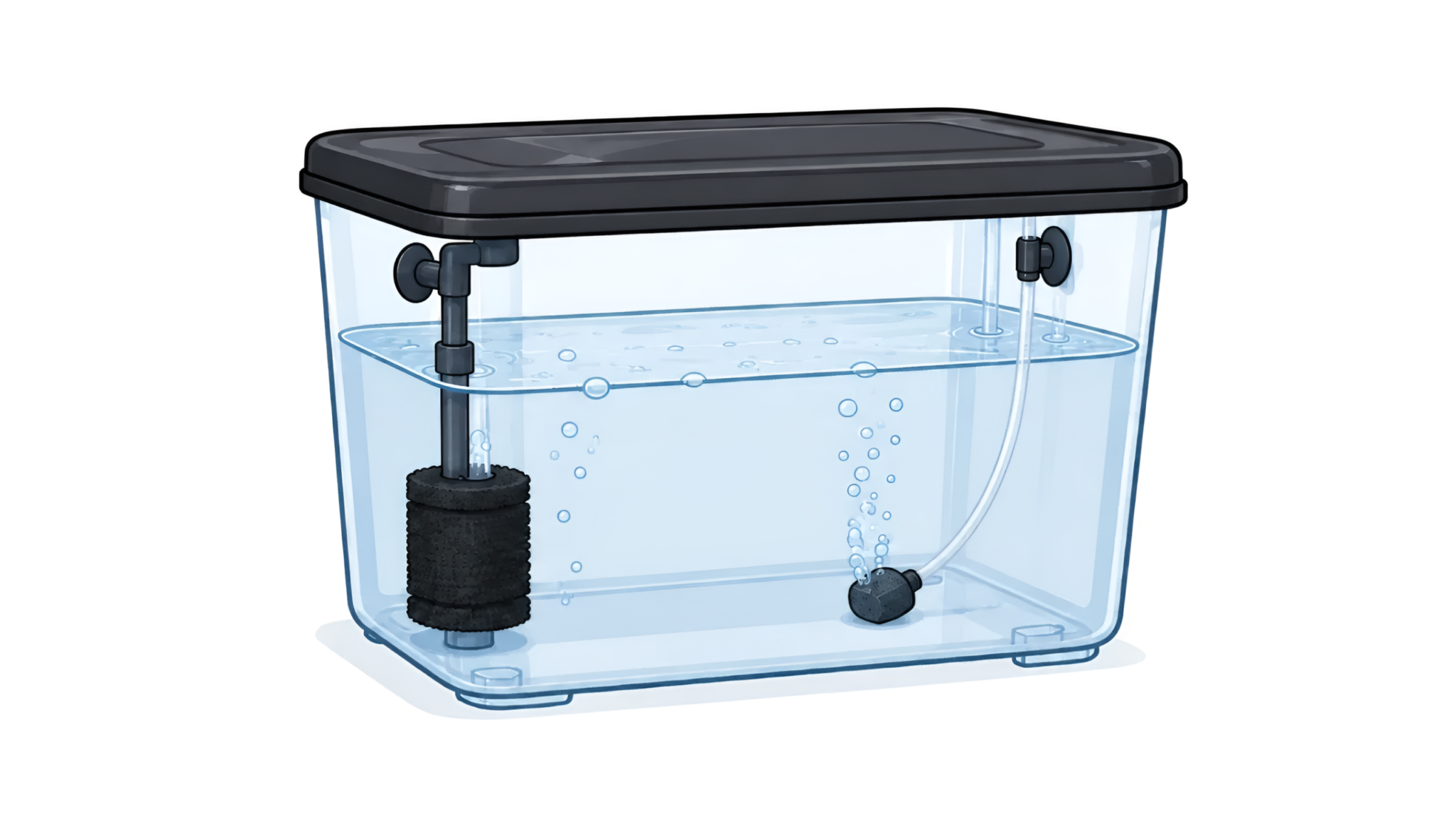
Appropriate volume — 10–20 gallons. A quarantine tub does not need to be large — it is a temporary housing solution, not a permanent home. 10–15 gallons is ideal for a single adult axolotl in quarantine. Enough water volume to provide stability between daily water changes, but small enough that those daily full water changes take minimal time and water. Too small (under 5 gallons) and temperature and chemistry fluctuate too rapidly. Too large and daily full water changes become impractical.
Clear sides for easy observation. Being able to see your axolotl clearly from all angles without opening the container is essential for daily health monitoring. Clear or semi-transparent containers are strongly preferred over opaque ones. Watching gill condition, body posture, skin colour, and movement patterns is how you assess whether your axolotl is improving or deteriorating during treatment.
A secure lid with ventilation. Axolotls jump — even in quarantine, and especially when stressed. A lid with ventilation holes or gaps (for gas exchange) that cannot be easily pushed open by a distressed axolotl is important. Many plastic storage totes have lid clips or latches that keep the lid in place while still allowing adequate airflow.
BPA-free, food-safe plastic. The container must be made from food-safe, BPA-free plastic that will not leach chemicals into the water your axolotl is living in. This is particularly important during salt or methylene blue treatment, which can make plastic less stable if the plastic is not food-grade. Sterilite and Rubbermaid storage totes made in the USA are consistently food-grade BPA-free.
Easy to clean and rinse between uses. A quarantine tub that is used for daily 100% water changes and treatment baths needs to be easy to clean thoroughly between sessions. Smooth-sided, seamless-bottom containers without complex internal geometry are much easier to clean than textured or ribbed containers.
The right footprint for where you will use it. Think about where you will physically run your quarantine tub — on a table, a shelf, next to your main tank, or in a bathroom. Measure your available space and choose a container whose footprint fits your specific situation.
Quarantine Tub vs. Dedicated Quarantine Tank — Which Is Right?
Many keepers wonder whether they should use a simple plastic storage tub or invest in a dedicated glass aquarium as their quarantine setup. Both have their place, but for most axolotl keepers the plastic storage tub wins for practical reasons.
Plastic storage tubs (the standard quarantine tub approach) are inexpensive, lightweight, easy to clean and store when not in use, resistant to breakage, and available in exactly the sizes needed for a quarantine setup. Their main limitation is that they are opaque on three sides, making observation slightly less ideal than a clear aquarium. However, a clear-sided tub or a tub with a clear lid resolves this substantially.
Dedicated glass aquariums in a 10–20 gallon format are fully transparent for observation from all angles, give a better aesthetic view of your animal’s condition, and can be set up more permanently if you run a frequent quarantine rotation (such as with a breeding programme). The tradeoff is cost, weight, breakage risk if knocked, and the storage challenge of a glass aquarium when not in use. Many keepers with a single axolotl find a glass quarantine tank unnecessary.
For most single-axolotl keepers, a 15–20 gallon plastic storage tub from Sterilite or Rubbermaid is the most practical and widely recommended quarantine solution. For breeders or keepers running multiple axolotls, a dedicated small aquarium may be worth the additional investment.
How to Set Up Your Axolotl Quarantine Tub
Step 1: Prepare the tub. Rinse the new tub thoroughly with plain water — no soap, no cleaning products. Even brand-new tubs can have manufacturing residue or dust on the interior surface. Rinse multiple times until the water runs completely clean, then allow to air dry before use.
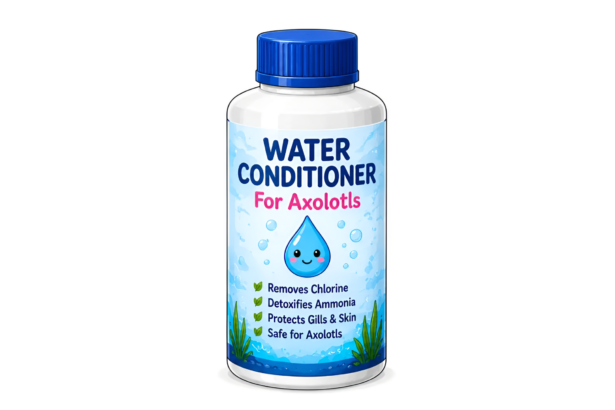
Step 2: Fill with dechlorinated water. Fill your quarantine tub with tap water treated with Seachem Prime. Treat every bucket of tap water before adding it to the tub. Prime neutralises chlorine and chloramines that would harm your axolotl and, in a quarantine tub without a filter, temporarily detoxifies any ammonia present.
Step 3: Match the temperature. Verify the quarantine water temperature with a tank thermometer and ensure it is within 1–2°F of your axolotl’s main tank temperature before transfer. An axolotl moved into significantly colder or warmer water experiences thermal shock on top of whatever health issue it is already dealing with — an added stress that impairs recovery. Keep the quarantine tub in a cool location and use your main tank temperature as the reference. For temperature guidance, see our guide on what temperature axolotls need.
Step 4: Add a hide. Even in a temporary quarantine setup, your axolotl needs somewhere to shelter. A small flat piece of slate, an overturned bowl, or a simple hide provides the cover that dramatically reduces stress in a small, unfamiliar container. Stress reduces immune function — exactly what a recovering axolotl cannot afford. A small Indian almond leaf in the quarantine water also provides gentle tannin support that helps reduce stress and inhibit surface pathogens.
Step 5: Add treatment if applicable. If your axolotl is in quarantine for illness treatment, add the appropriate treatment — methylene blue, salt, or other treatment — at the correct dose once the tub is set up and temperature-matched. See our best axolotl methylene blue and best axolotl aquarium salt guides for correct dosing.
Step 6: Perform daily 100% water changes. In a filter-free quarantine tub, daily full water changes are the most important maintenance task. Each morning, prepare fresh dechlorinated water at the correct temperature, gently transfer your axolotl to a holding container, completely empty and rinse the tub, refill with the fresh treated water, and return your axolotl. Add any treatment products to the fresh water before transfer. This routine keeps ammonia at 0 throughout the treatment period — which is the single most important factor in successful recovery. Monitor ammonia with your water test kit daily; any reading above 0 means your water change was insufficient or the axolotl is producing more waste than expected.
Our Top Axolotl Quarantine Tub Picks
Best Overall: Sterilite 15-Gallon Industrial Tote (Single, BPA-Free)
The Sterilite 15-Gallon Industrial Tote is the single most widely recommended quarantine tub in the axolotl keeping community. At 15 gallons it provides ideal water volume for a single adult axolotl — enough stability between daily water changes without making those changes impractical. Sterilite products are made in the USA and are BPA and phthalate-free according to Sterilite’s own product specifications, making them food-grade safe for axolotl water contact. The latching lid design keeps the tub securely closed (preventing escape) while allowing some airflow at the lid edges. The dark body blocks light from all sides, which reduces stress for an axolotl recovering in an unfamiliar environment — dark, quiet, sheltered conditions are what a stressed animal needs. The integrated handles make the tub easy to move and empty during daily water changes.
Best Clear-Sided Option for Observation: Sterilite 32-Quart Clear Plastic Storage Box with Aquarium Latches
For keepers who prioritise visibility for close daily health monitoring, the Sterilite 32-Quart Clear Plastic Storage Box provides clear sides that allow observation of your axolotl from multiple angles without opening the lid. At 8 gallons, it is sized for juvenile axolotls and smaller adults. The “aquarium latches” on the lid — a feature Sterilite notes is designed for reptile and aquatic use — keep the lid securely closed against an animal trying to push out. The clear body allows close monitoring of gill condition, skin colour, body posture, and movement patterns that would be harder to see through an opaque tub wall. This is the preferred format for keepers who want to observe their axolotl during treatment without the stress of repeatedly opening the lid.
Best Large-Format Option for Two Axolotls: Sterilite 20-Gallon Latch Tote
For keepers housing two axolotls together — after reading our guides on whether axolotls are cannibalistic and whether axolotls can have tank mates — the Sterilite 20-Gallon Latch Tote provides the larger volume needed to house two animals together in quarantine if both are affected simultaneously, or to house one animal while maintaining enough space for comfortable temporary housing during a longer treatment period. The 20-gallon format also works well for keepers who want a quarantine tub with enough water volume to maintain more stable temperature throughout the day without using a dedicated cooling device.
Best Budget Option: Sterilite 10-Gallon Stacker Tote
For keepers on a tight budget, for those quarantining a juvenile axolotl, or for those who want a dedicated temporary salt bath container rather than a full quarantine setup, the Sterilite 10-Gallon Stacker Tote is a well-built, BPA-free option at a very accessible price. At 10 gallons it is at the lower end of the appropriate quarantine volume for an adult axolotl, which means daily 100% water changes are critical to keep ammonia from building between changes. However, it is manageable and entirely appropriate for shorter quarantine periods or for housing juveniles.
What to Keep in Your Quarantine Supply Kit
A quarantine tub is most effective when you have all the supplies you need on hand before an illness strikes — not scrambling to order them once your axolotl is already unwell. Here is what to keep stocked:
A bottle of Seachem Prime for dechlorinating every daily water change. A bottle of Kordon Methylene Blue for fungal infections and gill stress recovery. A box of API Aquarium Salt for salt bath treatments and supportive quarantine water. A supply of Indian almond leaves for antimicrobial tannin support in quarantine water. A water test kit — specifically a second kit or at minimum a refill of the ammonia reagent dedicated to quarantine testing so you are not sharing the same kit between the main tank and quarantine. A tank thermometer dedicated to the quarantine tub. A turkey baster for the quarantine tub that is kept separate from your main tank baster. A set of feeding tongs for quarantine feeding. A small hide or piece of flat slate for shelter in the tub.
Keep all quarantine supplies physically separate from your main tank equipment to prevent cross-contamination.
How Long Should an Axolotl Stay in Quarantine?
For illness treatment: Continue quarantine until symptoms have fully resolved and no new signs of illness have appeared for at least 3–5 days. For fungal infections treated with methylene blue, this typically means 7–14 days of treatment followed by 3–5 days of observation in clean water before returning to the main tank. For ammonia burn, the recovery period depends on the severity — mild cases may resolve in 3–5 days, more severe gill damage can take 2–3 weeks of clean-water recovery.
For new arrivals: A minimum of 30 days in quarantine before introduction to any tank containing an existing axolotl. This window is long enough for most parasites and bacterial infections to manifest visibly if present, but short enough not to be overly disruptive for a healthy new axolotl. During this period, feed normally, monitor closely, and watch for any signs of illness, unusual behaviour, or physical abnormalities.
Axolotls can live comfortably in a well-managed quarantine tub for extended periods as long as daily water changes are performed consistently, temperature is maintained correctly, a hide is provided, and food is offered at the normal feeding schedule. A properly managed quarantine environment is stressful primarily in the first 24–48 hours of adjustment — after that, most axolotls settle into a reasonable routine.
Frequently Asked Questions
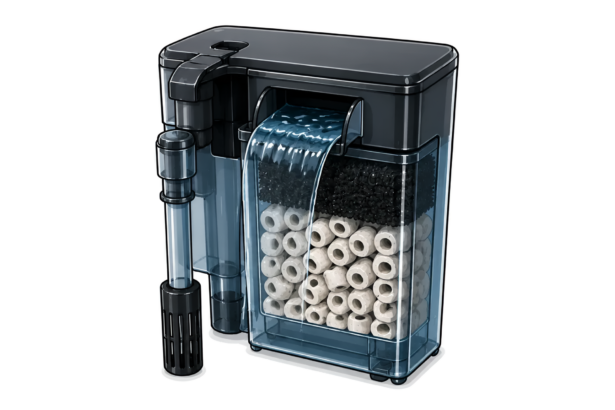
Do I need a filter in my quarantine tub? No — and adding a filter to a quarantine tub that will be used for methylene blue treatment is counterproductive since methylene blue kills filter bacteria. In a filter-free quarantine tub, daily 100% water changes replace the function of the filter. Always treat replacement water with Seachem Prime before adding.
Can I use an old food container as a quarantine tub? Only if it is food-grade, BPA-free, and has never contained anything other than food. Cleaning chemicals and even food residues from cooking can persist in plastic and contaminate quarantine water. It is safer and more reliable to use a dedicated, purpose-bought container.
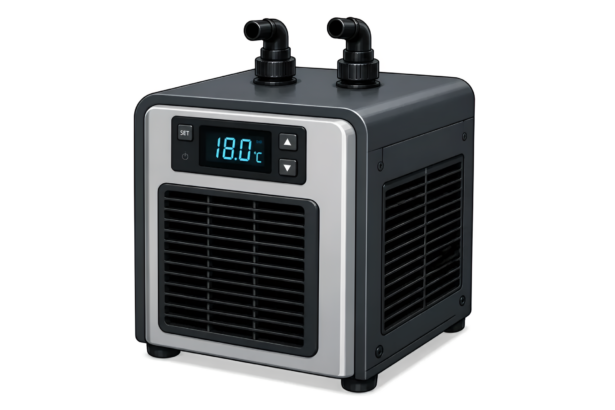
How do I keep the quarantine water cold enough for my axolotl? The most practical approach is to keep the quarantine tub in the coolest room in your home, away from direct sunlight. Add a few ice cubes in a sealed bag to the water if the ambient temperature is causing the quarantine water to climb above 68°F. A small clip-on cooling fan pointed at the water surface of the open tub also works. For extended quarantine periods in warm climates, a small dedicated water chiller may be needed.
Should I add a hide in the quarantine tub? Yes, always. A small, flat piece of slate, an overturned bowl, or any smooth, non-toxic object that your axolotl can shelter beneath dramatically reduces stress in the quarantine environment. A stressed axolotl recovers more slowly than a sheltered, calm one.
Can I reuse my quarantine tub between animals? Yes, with thorough cleaning between uses. After each quarantine, empty the tub fully, rinse with plain water, allow to air dry, and store. If methylene blue was used, be aware that it stains plastic — accept this as a permanent cosmetic feature of a dedicated quarantine tub.
Prepared Is Protected
The best time to have your quarantine tub ready is before you need it. When an axolotl shows signs of illness, being able to immediately set up a clean, temperature-matched quarantine environment — rather than scrambling to find a container — gives you the best possible start on a successful recovery. It takes ten minutes to set up and costs less than a tank filter, but it can make the difference between an illness that resolves quickly and one that spirals into a much more serious situation. For the complete, keeper-tested guide to every product your axolotl depends on — from the tank and filtration to food, enrichment, and health supplies — Best Axolotl Products is your comprehensive resource for the best gear in every category of axolotl care.