
Knowing the best axolotl methylene blue to use — and critically, how to use it correctly — is one of the most valuable pieces of health knowledge an axolotl keeper can have. Methylene blue is one of the oldest and most effective treatments available for fungal infections, certain bacterial conditions, and gill stress in aquatic animals. For axolotls, who are particularly vulnerable to fungal infections on their external gill plumes and skin, methylene blue is a genuinely important tool to keep in your health kit. Used correctly at the right dose in the right context, it is highly effective. Used incorrectly — in the main tank, at too high a dose, or for conditions it cannot treat — it destroys your filter, stains your equipment permanently, and may harm your axolotl. This guide covers everything you need to know: what methylene blue is, exactly when and how to use it with axolotls, what products to use, and what to avoid. Pair this guide with our full axolotl care guide and our guides on the best axolotl quarantine tub, best axolotl aquarium salt, and best axolotl indian almond leaves for the complete axolotl health care picture.
What Is Methylene Blue and How Does It Work?
Methylene blue (methylthioninium chloride) is a synthetic phenothiazine dye that has been used in medicine and aquaculture for over a century. In aquarium contexts, it is valued primarily for its antifungal and antibacterial properties. Methylene blue works through several mechanisms that make it particularly useful for aquatic animals with external gill structures:
It interferes with the respiration of fungal cells and certain bacteria by disrupting their electron transport chain — essentially blocking the cellular energy production pathway of pathogens. According to research published in Aquaculture, methylene blue at therapeutic concentrations effectively inhibits the growth of the fungal species most commonly responsible for external infections in aquatic salamanders, including Saprolegnia species — the most frequent cause of the white fluffy fungal growth that axolotl keepers encounter on gill plumes and skin.
Methylene blue also functions as an oxidising agent that promotes cellular respiration in animal tissue — it actually increases the oxygen-carrying capacity of cells under hypoxic (low-oxygen) stress. This property makes it particularly useful for axolotls suffering from ammonia burn or hypoxic gill stress, as it can support cellular recovery during and after the damaging event. According to research in Comparative Biochemistry and Physiology, the ability of methylene blue to act as a reversible redox indicator and cellular respiratory support agent makes it uniquely suited to treating oxygen-stressed aquatic tissue.
The characteristic deep blue colour of methylene blue is not just cosmetic — it indicates active dye concentration in the water. As methylene blue is depleted through its chemical reactions, the colour fades. When the water has returned to clear or only faintly blue, the active treatment concentration has been consumed and a fresh dose or water change is needed.
When Is Methylene Blue Appropriate for Axolotls?
Methylene blue is a targeted treatment for specific conditions, not a general tonic or preventative. Here is exactly when it is and is not appropriate.
Fungal infections (Saprolegnia). This is the primary and most common use case for axolotl methylene blue treatment. White or grey fluffy growth on gill plumes, the face, or skin — particularly around wounds or stress-weakened tissue — is typically a fungal infection. Methylene blue is highly effective at treating early to moderate Saprolegnia infections when used correctly in a quarantine tub. It is significantly more powerful than aquarium salt alone for established fungal infections.
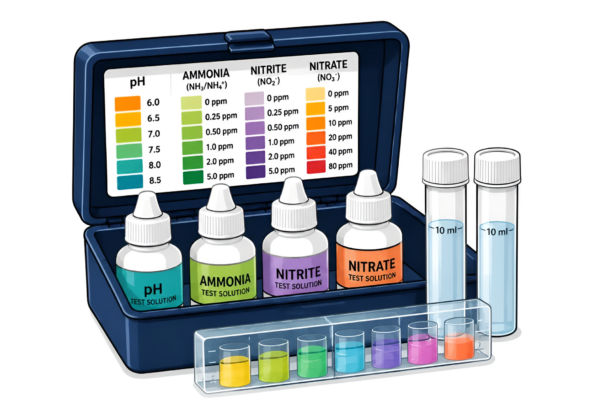
Ammonia burn recovery. When an axolotl has been exposed to elevated ammonia — particularly during a cycling failure, missed water change, or filter malfunction — the gill tissue suffers oxidative damage. Methylene blue’s cellular respiratory support function makes it genuinely beneficial during recovery from ammonia exposure. Always address the ammonia problem first (large water change, dose of Seachem Prime, re-check with your water test kit) and then use methylene blue treatment in a quarantine tub to support gill healing during recovery.
Egg treatment for breeders. Methylene blue is widely used in axolotl and fish breeding to prevent fungal infection of fertilised eggs during incubation. It is added to the incubation water at a low dose to protect eggs from the Saprolegnia fungus that commonly colonises unfertilised eggs and can spread to healthy eggs. If you are considering breeding your axolotls, our guide on how axolotls mate is worth reading alongside this treatment information.
Secondary bacterial infection support. Methylene blue has mild antibacterial properties that can support recovery from secondary bacterial infections in wound sites and gill tissue. However, for established bacterial infections, methylene blue alone is not typically sufficient — it works best as a supportive element alongside improved water quality and, if necessary, antibiotic treatment prescribed by an exotic animal veterinarian.
What methylene blue does NOT treat. Methylene blue does not treat internal parasites, viral infections, serious systemic bacterial infections, or injuries caused by physical trauma. It is also ineffective against the parasites or illnesses that affect tank mates, so those situations require different treatment approaches.
Critical Rule: Never Use Methylene Blue in the Main Tank
This is the most important rule in axolotl methylene blue treatment, and it cannot be emphasised strongly enough. Methylene blue kills the beneficial bacteria that live in your filter media and make your tank biologically safe. Adding methylene blue to your main display tank will crash your nitrogen cycle — potentially within hours — and create a dangerous ammonia spike that is directly harmful to your axolotl. Every methylene blue treatment for axolotls must be performed in a separate quarantine tub with no filter running.
This means setting up a clean container with freshly dechlorinated water at the correct temperature (60–68°F as detailed in our what temperature axolotls need guide), adding the methylene blue dose, then gently transferring your axolotl for the treatment period. After treatment, return your axolotl to fresh, clean quarantine water or the main tank and allow the treated water to be disposed of. Never return treated water to the main tank.
Correct Methylene Blue Dosing for Axolotls
Axolotl methylene blue dosing differs from fish dosing because axolotls are significantly more sensitive to chemical treatments than most fish. The correct dose is lower than what many product labels recommend for fish, and treatment periods must be monitored carefully.
Short bath treatment (most commonly used): Prepare a container of freshly dechlorinated, temperature-matched water. Add methylene blue to achieve a light to moderate blue colour — approximately 1–2 teaspoons of Kordon Methylene Blue solution (2.303% concentration) per 10 gallons, or enough to produce a clearly visible but not dark blue colouration. Submerge your axolotl for 5–10 minutes, monitoring continuously. Remove immediately if your axolotl shows signs of stress — curling, erratic movement, excessive mucus, or loss of orientation. Return to clean fresh water after the bath period. This can be repeated once daily.
Extended quarantine water treatment: For less acute cases or continued support during recovery, a lower dose can be maintained in quarantine water — approximately 1 teaspoon per 20 gallons, producing a light blue tint. Change the quarantine water fully every 24 hours with fresh dechlorinated water and a fresh dose of methylene blue. Maintain this for 5–7 days or until the fungal growth has clearly resolved. Always verify temperature remains correct with a tank thermometer throughout treatment.
Egg treatment: For breeding applications, a very dilute dose — just enough to produce a pale blue tint — is added to incubation water without any filter running. Change the incubation water and refresh the methylene blue dose daily.
What Makes the Best Axolotl Methylene Blue?
Known, consistent concentration. Aquarium-grade methylene blue products from established brands have clearly stated concentrations — typically 2.303% for Kordon’s product — that allow consistent, repeatable dosing. Unknown or variable concentrations make precise dosing impossible.
No unnecessary additives. Pure methylene blue solutions with no additional active compounds are safest for axolotl use. Some products combine methylene blue with other medications that may not be appropriate for amphibians.
Liquid solution format. Liquid methylene blue solutions are significantly easier to dose accurately and dilute for aquarium treatment than powder forms. For axolotl use, a liquid solution with a dropper or measured cap is the practical choice.
Trusted, established aquarium brand. Kordon is the most widely used aquarium methylene blue brand and has decades of documented use in fish and amphibian health care.
Our Top Axolotl Methylene Blue Picks
Best Overall: Kordon Methylene Blue Disease Preventative (4oz)
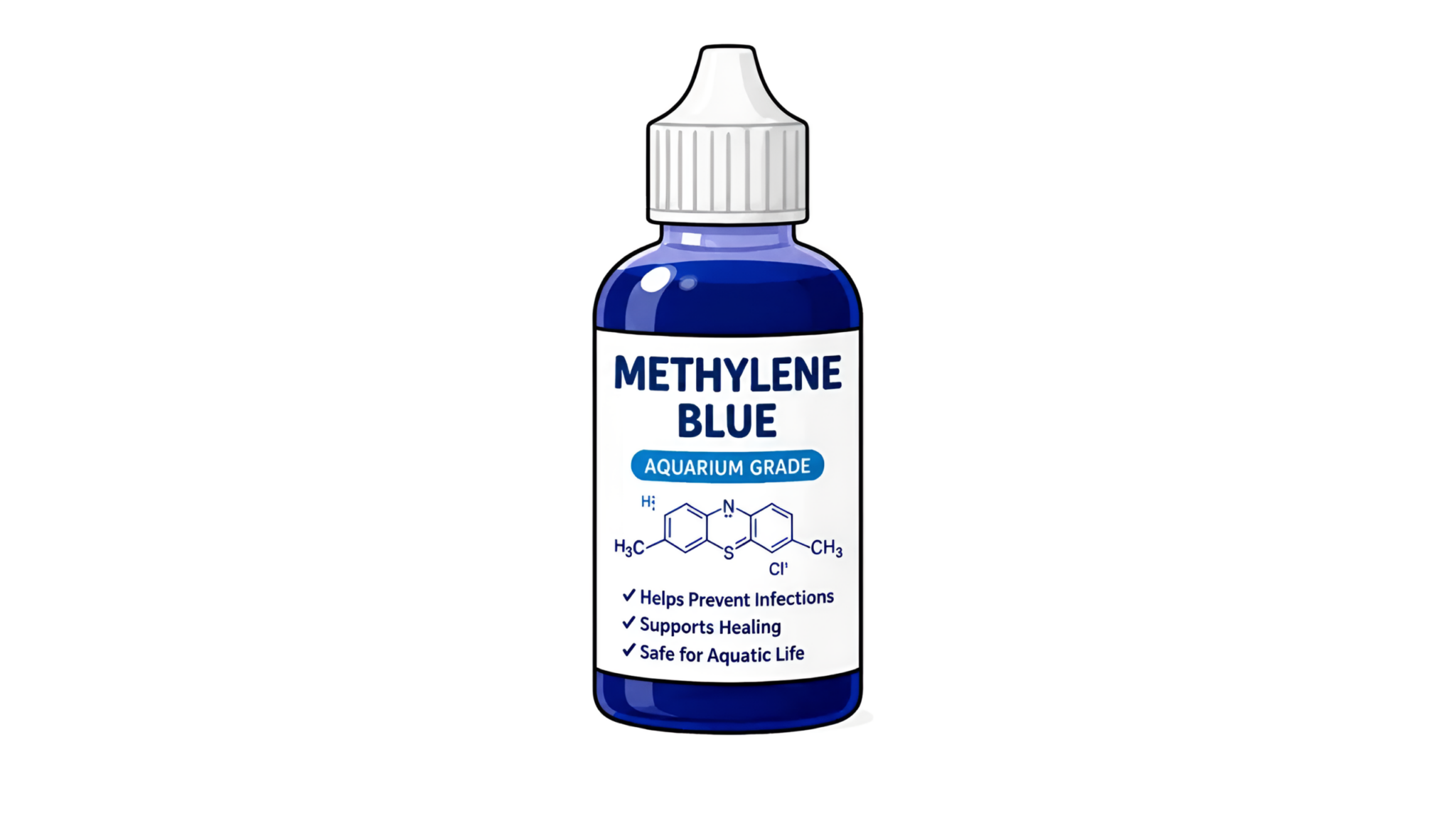
The Kordon Methylene Blue Disease Preventative (4oz) is the gold standard for aquarium methylene blue treatment and the one consistently recommended by experienced axolotl keepers. Kordon’s formulation uses a 2.303% concentration of methylene blue in a ready-to-use liquid solution that has been the industry reference standard for decades. According to Kordon’s own product documentation, it is safe for use with freshwater and saltwater fish, amphibian eggs, and freshwater invertebrates at appropriate doses.
The 4oz bottle provides a generous supply for multiple treatment courses. At the low doses appropriate for axolotls, a single bottle will cover many months of quarantine treatments. Kordon Methylene Blue is available consistently on Amazon, arrives reliably intact, and has a long shelf life when stored away from direct light. This is the methylene blue to keep in your axolotl health kit — it is the most trusted option available to aquarium keepers and the one with the best documented track record for amphibian use.
Best for High-Precision Dosing: Kordon Methylene Blue (16oz)
For breeders, keepers with multiple axolotl tanks, or anyone who performs methylene blue treatments regularly — including ongoing egg incubation treatment during breeding seasons — the Kordon Methylene Blue (16oz) offers the same trusted formulation in a larger volume at a significantly better cost-per-ounce ratio. The larger bottle is particularly practical for breeders who use methylene blue in incubation water daily during egg hatching — a use our article on whether axolotls mate and how axolotls mate provides context for. Store away from direct light to preserve potency over the longer use period.
Best Lab-Grade Option for Maximum Purity: XIXISUSU 1% Methylene Blue Solution (2oz Dropper Bottle)
For keepers who want the highest purity formulation available — particularly those who are precise about exact dosing — the XIXISUSU 1% Methylene Blue Solution (2oz Dropper Bottle) provides a pharmaceutical/laboratory-grade 1% concentration in a light-resistant glass dropper bottle for precise measurement. The 1% concentration (compared to Kordon’s 2.303%) actually makes dosing slightly more forgiving since you need a slightly larger volume to achieve the same water concentration, reducing the risk of inadvertent overdose. The light-resistant bottle protects potency during storage. This product is explicitly listed for aquarium and amphibian use and is an excellent choice for keepers who want maximum precision and purity assurance.
Best Large Format Value: Methylene Blue 1% Aqueous Solution (250mL)
For keepers who need a larger quantity of 1% methylene blue solution — particularly breeders running extended egg treatment protocols or those managing multiple quarantine situations simultaneously — the Methylene Blue 1% Aqueous Solution (250mL) provides substantial volume at laboratory-grade purity. At 250mL of 1% solution, this is enough methylene blue for an extremely large number of axolotl treatment courses. Store in a cool, dark location to preserve potency over the extended use period.
How to Perform a Methylene Blue Treatment on an Axolotl Step by Step
Step 1: Set up your quarantine container. Use a clean container — see our best axolotl quarantine tub guide — filled with freshly dechlorinated water. Treat the water with Seachem Prime. Verify the temperature matches your main tank (60–68°F) using a thermometer. Do not add a filter — methylene blue kills filter bacteria.
Step 2: Add methylene blue. For a bath treatment, add Kordon Methylene Blue to produce a medium blue colour — approximately 1 teaspoon per 10 gallons as a starting point. The water should be clearly blue but not opaque. For an extended quarantine treatment, use a lighter dose — approximately 1 teaspoon per 20 gallons.
Step 3: Transfer your axolotl. Gently move your axolotl from the main tank using a clean container or your hand — avoid nets, which can catch and damage gill plumes. Lower it gently into the treatment water.
Step 4: Monitor continuously. Never leave your axolotl unattended during a methylene blue bath. Watch for signs of stress throughout. The first 1–2 minutes of adjustment are normal — slight increased movement is expected. Sustained distress signals (body curling, loss of orientation, excessive mucus, frantic attempts to escape the water surface) require immediate removal.
Step 5: Complete the treatment. For a bath: remove after 5–10 minutes and transfer to clean dechlorinated quarantine water to rest. For extended quarantine: leave in the treatment water for 24 hours, then perform a 100% water change with fresh dechlorinated water and a fresh methylene blue dose. Repeat daily for 5–7 days.
Step 6: Monitor the main tank during treatment. While your axolotl is in quarantine, use this opportunity to check and improve conditions in the main tank. Test water parameters with your water test kit, perform a water change, and identify and address the underlying cause of the illness — typically water quality issues, temperature problems, or injury. Our guides on how to clean an axolotl tank and how often to clean an axolotl tank are essential reference points.
Step 7: Return your axolotl once recovered. Only return your axolotl to the main tank once the fungal growth has fully resolved and no new growth has appeared for at least 2–3 days. Ensure the main tank conditions are fully corrected before transfer.
Important Warnings and Precautions
Methylene blue stains permanently. This is not a minor inconvenience — methylene blue will permanently and immediately stain anything it contacts: skin, clothing, countertops, silicone sealant, plastic equipment, and hands. Wear gloves and protect your work surface before handling this product. Use dedicated equipment for methylene blue treatments that you do not mind being permanently stained blue. Dispose of treated water carefully to avoid staining your sink or drain surroundings.
Methylene blue kills biological filter media. As stated above — never add to the main tank. This extends to any equipment that shares contact with your main filter — do not use the same siphon, net, or container between a methylene blue treatment and the main tank without thorough rinsing.
Remove activated carbon before any methylene blue treatment. Activated carbon in a filter rapidly adsorbs methylene blue from the water, neutralising the treatment within minutes. If you are running any carbon filtration in your quarantine setup — remove it entirely before adding methylene blue.
Do not combine with other medications without veterinary guidance. Methylene blue can interact with other aquarium treatments in ways that are harmful to axolotls. Combine only with salt or Indian almond leaves — treatments well-documented as compatible — unless directed by a veterinarian.
Consult a vet for serious or unresponsive cases. If a fungal infection does not show clear improvement after 5–7 days of correct methylene blue treatment, or if your axolotl’s condition is deteriorating, consult an exotic animal veterinarian. Serious infections may require prescription antifungal medications that are beyond what methylene blue can address.
Frequently Asked Questions
Can I use methylene blue in my main axolotl tank? No. Methylene blue kills the beneficial bacteria that cycle your tank. Always use methylene blue in a separate quarantine container with no filter running, then return your axolotl to the main tank after treatment.
How much methylene blue do I use for an axolotl? At Kordon’s 2.303% concentration, approximately 1 teaspoon per 10 gallons for bath treatment (5–10 minutes), or 1 teaspoon per 20 gallons for extended quarantine water. Always start at the lower end and observe carefully.
How long should a methylene blue bath last for an axolotl? 5–10 minutes for a bath treatment, with continuous monitoring. Do not exceed 15 minutes. For extended quarantine, keep at a diluted dose for 24 hours then perform a full water change and redose.
Will methylene blue stain my axolotl? Temporarily, yes — the characteristic blue dye will tint the lighter-coloured axolotl morphs slightly during treatment. This fades over several days as the dye is metabolised and released. It is completely harmless.
Can methylene blue treat all fungal infections in axolotls? It is highly effective against Saprolegnia fungal infections — the most common type in axolotl tanks — at early to moderate stages. Very advanced or deep-tissue fungal infections may require veterinary prescription antifungals. For mild early fungal growth, aquarium salt baths may be sufficient before progressing to methylene blue.
How do I dispose of methylene blue treated water? Pour slowly down a sink drain, being aware that it will temporarily stain light-coloured porcelain or plastic. Flush the drain with several litres of plain water immediately after. Do not pour onto plants or soil, as methylene blue inhibits photosynthesis at higher concentrations.
The Right Treatment, at the Right Time, at the Right Dose
Methylene blue is not a product you use every day — but when you need it, there is very little that does the job better. Keeping a bottle of Kordon Methylene Blue in your health kit, alongside your aquarium salt and Indian almond leaves, means you are prepared for the most common axolotl health challenges before they become emergencies. If you want a complete, keeper-tested guide to every product that supports excellent axolotl care — from the tank and filtration right through to food, enrichment, and the full health supply kit — Best Axolotl Products is your definitive resource for the best gear in every category.